Palmavera nuraghe

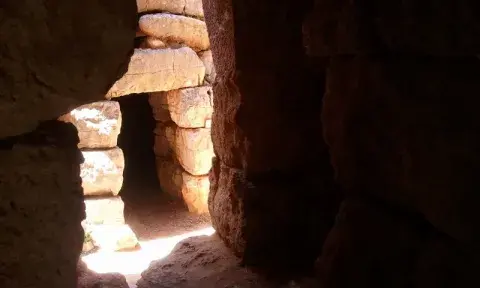
Nuraghe Palmavera is one of 7000 nuraghe scattered all over the island of Sardinia, which means there are at least 3 of them any square kilometer. Most of them are almost completely destroyed, but many still stand majestically - mute witnesses of their own inscrutable destination and mysterious p...

Nuraghe Palmavera is one of 7000 nuraghe scattered all over the island of Sardinia, which means there are at least 3 of them any square kilometer. Most of them are almost completely destroyed, but many still stand majestically - mute witnesses of their own inscrutable destination and mysterious people who built them. They were dated back at 1900 BC to 700 BC. So unique and unexampled, in the modern era they became the symbol of Sardinia. What are they? In the most immediate definition they are cone-shaped towers built of stone boulders without use of any mortar. Nobody really know what they were for. All different kinds of theories were invented: nuraghi would be religious temples, military strongholds, rulers' residences or simply common dwelling etc. Not so common though... Nuraghe Palmavera is one of better preserved. It is easily accessible from Alghero - if yo have a car first go to Fertilia, then proceed in the direction of Capo Caccia. You will find Palmavera on your right hand side, just next to the road. Be careful parking - there is really little room. As an alternative you could go there on a bike. In Alghero you will find many to rent.

Holy Mary of Grace

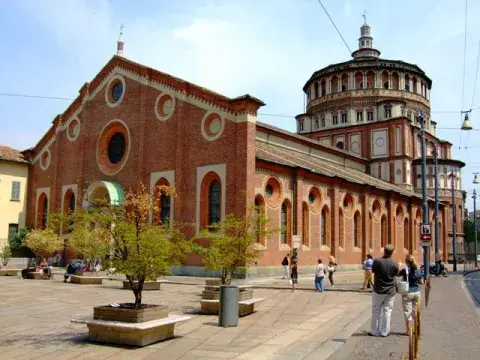
This church built during the Renissance period is really special. It is not only the beautiful church that attracts so many visitors but also the Dominican monastery and the Da Vinci´s masterpiece ´Last Supper´ within the church.
It is of course enlisted on a UNESCO Worl...

This church built during the Renissance period is really special. It is not only the beautiful church that attracts so many visitors but also the Dominican monastery and the Da Vinci´s masterpiece ´Last Supper´ within the church.
It is of course enlisted on a UNESCO World Heritage List.

This church is another landmark owned to the Visconti family. Count Gaspar Vimercati,  started the construction in the 15th century.

Donato Bramante designed the church that was destined to be a sepulchre for the duke of Milan, Ludovico il Moro. Finally, the duke´s wife was buried here but the duke himself was ousted from church so he couldn´t buried with his wife.Even though the church suffered some damage during the World War II it was restored soon after.

Even though the church is built mostly in Renaissance style there are still some Gothic elements visible both on the exterior and interior.  The ´Last Supper´ isn´t the only work of Da Vinci. He also painted part of the portico which shows the duke Ludovico with Beatrice, Ludovico´s wife.
Some of the most prominent parts of the exterior are the work of the famous designer Bramante. He skillfully built the medallions of saints and various coats of arms.

Besides the central or principal altar one can see several chapels built along the aisles and a great choir.

Even though the ´Last Supper´ is maybe the principal attraction of the church one can not neglect the beautifully painted frescos showing the Stories of the Passion (Storie della Passione) painted by Gaudenzio Ferrari.