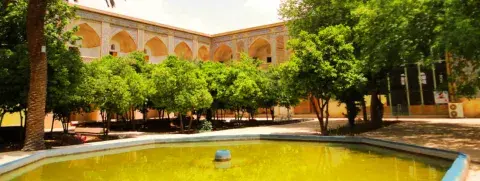
Yazdanpanah Historical House
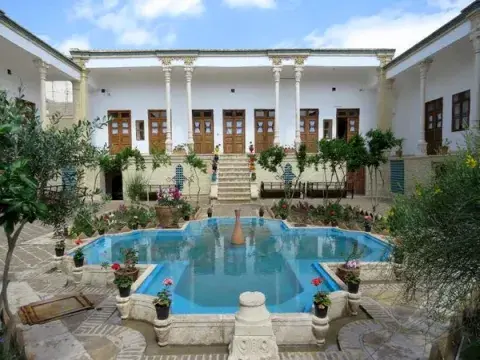
This house was built about 100 years ago.
Central yard is surrounded with four Ivans.
Rooms are in three sides of the yard.
Summer rooms and wind-tower are in the northern side in order to be cooler in summer.
Nowadays it's turned to a traditional restaurant with Iranian m...
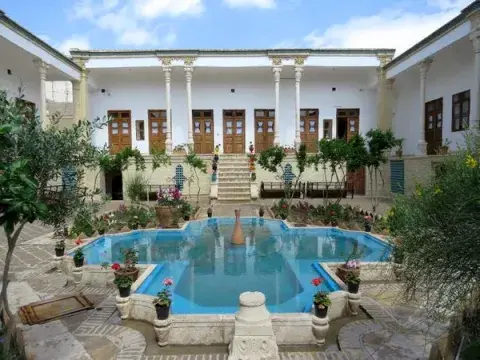
This house was built about 100 years ago.
Central yard is surrounded with four Ivans.
Rooms are in three sides of the yard.
Summer rooms and wind-tower are in the northern side in order to be cooler in summer.
Nowadays it's turned to a traditional restaurant with Iranian menu including hot dishes, cold and hot drinks.

Yazdan-panah traditional restaurant
This house was built about 100 years ago.
Central yard is surrounded with four Ivans.
Rooms are in three sides of the yard.
Summer rooms and wind-tower are in the northern side in order to be cooler in summer.
Nowadays it's turned to a traditional restaurant with Iranian m...
This house was built about 100 years ago.
Central yard is surrounded with four Ivans.
Rooms are in three sides of the yard.
Summer rooms and wind-tower are in the northern side in order to be cooler in summer.
Nowadays it's turned to a traditional restaurant with Iranian menu including hot dishes, cold and hot drinks.

Madrasa of Jahangir Khan
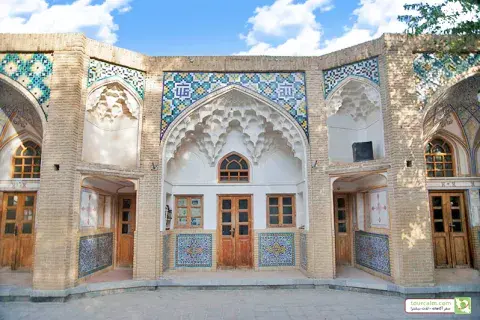
The Madrasa of Jahangir Khan is located in front Jameh Mosque of Qom.
It was founded in Safavid era.
The polygonal courtyard of Masrasa is surrounded by small rooms which are used as classes and dormitory for seminarists.
Madrassa in Islamic countries are places for educating Is...
The Madrasa of Jahangir Khan is located in front Jameh Mosque of Qom.
It was founded in Safavid era.
The polygonal courtyard of Masrasa is surrounded by small rooms which are used as classes and dormitory for seminarists.
Madrassa in Islamic countries are places for educating Islamic courses like Arabic literature, jurisprudence, Interpretations of Quran as well as Philosophy and medicine.
Madrasa of Jahangir Khan is still active but for visiting you must talk to principles in advance.

Museum of Astane
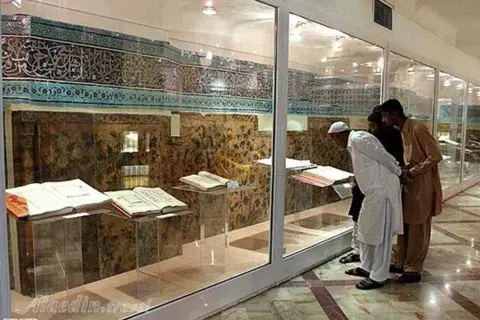
This museum belongs to the shrine of lady Fatima where you can find treasures and gifts presented to the shrine from kings and other people.
Decorative tiles of shrine in different periods, gates with delicate handicrafts and manuscripts of Quran consist main galleries of the museum.
This museum belongs to the shrine of lady Fatima where you can find treasures and gifts presented to the shrine from kings and other people.
Decorative tiles of shrine in different periods, gates with delicate handicrafts and manuscripts of Quran consist main galleries of the museum.

Kimiya Pottery workshop
Qom was considered one of centers of pottery in Iran but in recent years many pottery workshop were close in facing technology and modern life.
So I believe we should support this art that its history dates back to 7000 years ago in Iran.
In this tour we provide visiting a pottery wor...
Qom was considered one of centers of pottery in Iran but in recent years many pottery workshop were close in facing technology and modern life.
So I believe we should support this art that its history dates back to 7000 years ago in Iran.
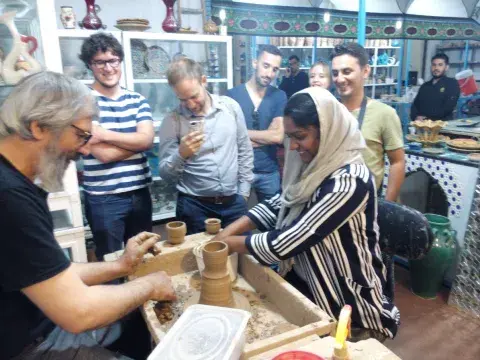
In this tour we provide visiting a pottery workshop and practicing work with pottery wheel.
In this workshop you can also experience making tiles.
We visit stunning mosques all around Iran but nobody knows how these colorful tiles are made. You can see the process and design and make you own glazed tile and take it home after kiln stage.

Furtune beads workshop "Khar-mohre workshop"
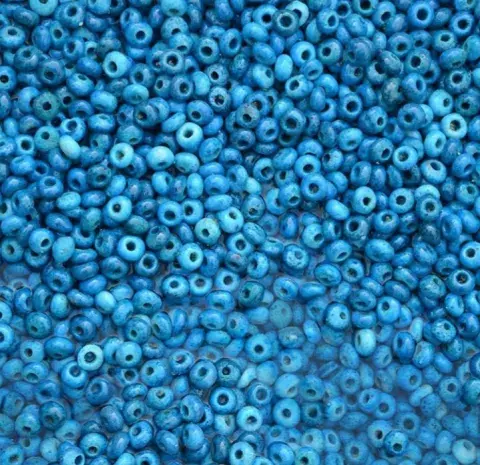
Khar-Mohre is a blue piece of silica which is considered as furtne beads among some nations and now is used as a decorative object.
The history of production of these beads dates back to 6000 years ago and some pieces were found in archeological excavations in Iran a...
Khar-Mohre is a blue piece of silica which is considered as furtne beads among some nations and now is used as a decorative object.
The history of production of these beads dates back to 6000 years ago and some pieces were found in archeological excavations in Iran and Egypt.
It can be regarded as one of ancient jewellery arts in human history.
Now You can find Khar-mohre workshops just in Qom so it is called Qom-techinque.
The materials for producing Kahar-mohre are silica, cupper oxide, sodium carbonate, lime, and ash.
This Shiny blue color is generated from these dark materials.
Making beautiful blue pieces without any color or glaze in this deep kiln is amazing.
In this workshop tourists can purchase from the shop, observe the process of production، and do it by their hands and take their work to home.

Anubanini Rock Relief
The Anubanini petroglyph is a rock relief from the third millennium BC and is located in Kermanshah Province, Iran. The rock relief is believed to belong to the Lullubi culture and is located 120 kilometers away from the north of Kermanshah, close to S...
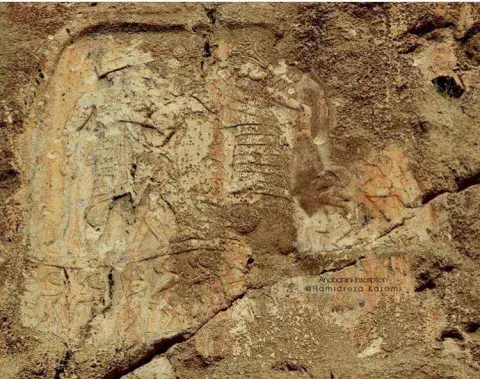
The Anubanini petroglyph is a rock relief from the third millennium BC and is located in Kermanshah Province, Iran. The rock relief is believed to belong to the Lullubi culture and is located 120 kilometers away from the north of Kermanshah, close to Sarpol-e Zahab. In this rock relief, Anubanini, the king of the Lullubi, puts his foot on the chest of a captive. There are 8 other captives, two of them kneeled behind the Lullubian equivalent of the Akkadian goddess Ishtar (recognisable by the four pairs of horns on her headdress and the weapons over her shoulders) and six of them standing in a lower row at the bottom of the rock relief. Pascal Coste has painted the rock relief in 1840. This rock relief is very similar to the Behistun Inscription to such extent that it was said that the Behistun Inscription was influenced by it. There's also an inscription in the Akkadian language. The date of the rock relief is known to be about 4800 years ago. It was damaged during the Iran-Iraq war.

Khan School
َAn old school placed at the center of Shiraz , which was was one of the biggest study-centers of Iran. It was founded by the governor of Shiraz(Allaah'Verdi Khan Gorji), in the early 18 century AD. It was once among the scholastic centers by the order of Shah Abbas safavi. I...
َAn old school placed at the center of Shiraz , which was was one of the biggest study-centers of Iran. It was founded by the governor of Shiraz(Allaah'Verdi Khan Gorji), in the early 18 century AD. It was once among the scholastic centers by the order of Shah Abbas safavi. Its great arches decorated with beautiful tiling and the anthemion ornamentation used in its architecture, the invocation and inscription of holly numbers in different sections of it. The school consists of five classrooms standing in for five holly figures of shiia (namely, Muhammad, the prophet of Islam, Ali, his groom, Fatima, his daughter, and their two sons, Hassan and Hussein) and among these classrooms one was exclusively at the service of Mullah'Sadra the Iranian famous philosopher.
The original building has been extensively damaged by earthquakes and only the impressive portal at its entrance has remained you can enjoy seeing engrossing art inside the outer arch and some intricate