Harbin Jewish New Synagogue
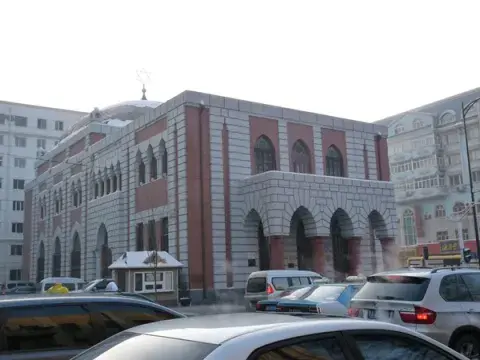
Located in Jingwei Street, Daoli Strict, Harbin, the New Synagogue was built in 1918 in a unique and special in style and finished in 1921 covering an area of more than 1,230 square meters. As the biggest of its kind in Northeast China, the New Synagogue accommodates more than 800 worshipers.
...Located in Jingwei Street, Daoli Strict, Harbin, the New Synagogue was built in 1918 in a unique and special in style and finished in 1921 covering an area of more than 1,230 square meters. As the biggest of its kind in Northeast China, the New Synagogue accommodates more than 800 worshipers.
The New Synagogue is the second Jewish synagogue in Harbin in addition to the Old Synagogue. It has not been used for worship since the Jewish people left Harbin in 1950s. It was re-opening in 1990s, being used as a club for the local Public Security Bureau. After renovation and reconstruction by the Harbin Municipal Government in 2004, the New Synagogue was transformed into a Jewish museum of history and culture, preserving and exhibiting Jewish artifacts.
Harbin once had the largest Jewish population in the Far East. In the late 10th and early 20th centuries, the New Synagogue was the largest political, economic and cultural center for Jewish people in the region. Today, the synagogue is one of the must-see attractions in Harbin due to its unique architecture and culture.
Stalin Park
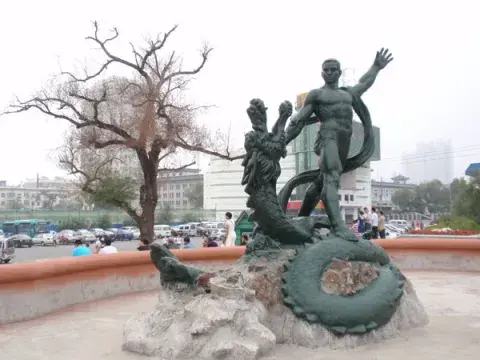
Stalin Park is one of the most famous scenic spots in Harbin City. Built in 1953, it now stands as an evidence of the friendship between China and Soviet Union at that time.
...Stalin Park is one of the most famous scenic spots in Harbin City. Built in 1953, it now stands as an evidence of the friendship between China and Soviet Union at that time.
Covering an area of 105,000 square meters, and extending 1,750 meters along the southern bank of Songhua River, the park has Railway Bridge to the east and Jiuzhan Park to the west, and faces the famous Sun Island on the other side of the river. It is characterized by Russian style flower beds and sixteen groups of art sculptures and is abundantly vegetated with trees and colorful flowers, making Stalin Park a famous summer resort at home and abroad. The place is very popular with local people on weekends.
Stalin Park is also a good place for entertainment, sport or cultural and social activities. Gymnasium, youth palace, swimming pool and river clubs were built there to cater to different people. In summer, you can see thousands upon thousands of people swim in the Songhua River or lie on the river beach, saturate in sunshine. In winter, the park is designated as one of the venues of the yearly Harbin International Ice and Snow Festival. The locals and tourists enjoy all kinds of ice and snow activities there, while the artists from all over the world would spend some days to finish their great ice or snow sculptures.
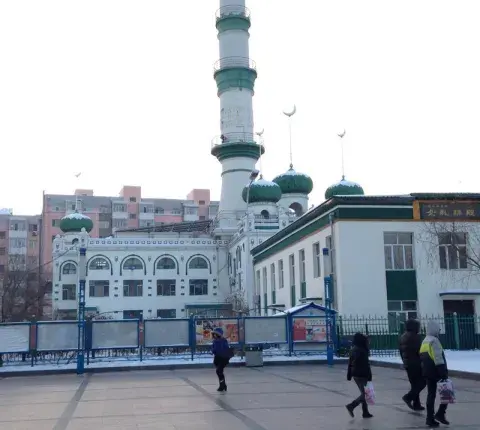
Harbin Daowai Mosque
The Harbin Mosque is located in the center of Daowai District; it was firstly built in year 1897. It is outstanding Islamic-style architecture with towering crescent on Mochizuki floor on top of each dome. The mosque formerly was divided into East Temple, West Temple and women Temple....
The Harbin Mosque is located in the center of Daowai District; it was firstly built in year 1897. It is outstanding Islamic-style architecture with towering crescent on Mochizuki floor on top of each dome. The mosque formerly was divided into East Temple, West Temple and women Temple. The main hall covers an area of 426 square meters, which is of Arab architectural style.
The major buildings are prayer hall, bath house, Xuanli Building, office room and other facilities. The minaret is another important building of the mosque, which is of a tall tower for climbing and calling Muslims for worship. And the prayer hall is covering an area of 426 square meters and 13 meters high, can hold 500 to 600 people to do prayer. There are two tall Xuanli buildings standing in the left and right side of the prayer hall.
Harbin Daowai Mosque is the largest mosque in Heilongjiang province and it receives about 100,000 Muslim from China and some others from central Asia, Malaysia and so on. It has become a must visited sites for a Muslim trip in Harbin.
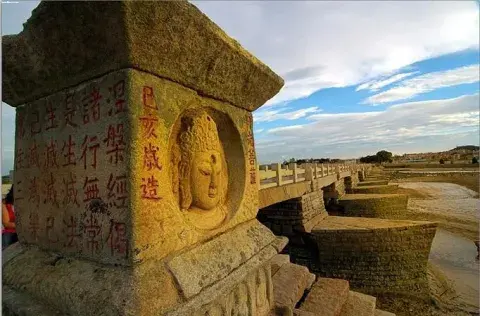
Quanzhou, discover another "Xi'an", a city along the Maritime Silk Route
If you're interested in ancient Chinese history and culture, you can't miss Quanzhou, a city which has different religions home and abroad exist harmoniously and many historic evidences well-reserved. You can either take a one-day tour or spend two or three days to explore this special city.
...If you're interested in ancient Chinese history and culture, you can't miss Quanzhou, a city which has different religions home and abroad exist harmoniously and many historic evidences well-reserved. You can either take a one-day tour or spend two or three days to explore this special city.
Quanzhou was China's major port for foreign traders, who knew it as Zaiton or "Zayton" (زيتون), during the 11th through 14th centuries. It was visited by both Marco Polo and Ibn Battuta; both travelers praised it as one of the most prosperous and glorious cities in the world.
Medieval Quanzhou was long one of the most cosmopolitan Chinese cities, with folk, Buddhist, and Hindu temples; Islamic mosques; andChristian churches, including a cathedral (financed by a rich Armenian lady) and two Franciscan monasteries. Andrew of Perugia served as the Roman Catholic bishop of the city from 1322. Odoric of Pordenone was responsible for relocating the relics of the four Franciscans martyred at Thana in India in 1321 to the mission in Quanzhou. Protestant The English Presbyterian missionaries raised a chapel around 1862. The Qingjing Mosque dates to 1009 but is now preserved as a museum. The Buddhist Kaiyuan Temple has been repeatedly rebuilt but includes two 5-story 13th-century pagodas. Among the most popular folk or Taoist temples is that to Guandi (关帝庙), the war god who is honored for his control of weather and wealth. Jinjiang also preserves the Cao'an Temple (草庵寺), originally constructed byManicheans under the Yuan but now used by New Age spiritualists, and a Confucian Temple (文庙, Wenmiao).
Notable products[edit]
- Dehua porcelain (德化瓷器)
- Huian stoneware (惠安石刻)
- Anxi Tieguanyin (安溪铁观音)
Quanzhou is generally ignored by Chinese tourists in favor of nearby Xiamen. Nonetheless, Quanzhou was one of the 24 famous historic cultural cities first approved by theChinese government. Notable cultural practices include:
- Liyuan Opera (梨园戏)
- Puppet Show (提线木偶戏)
- Gaojia Opera (高甲戏)
- Dacheng Opera (打城戏)
- Nanyin (南音), a musical style dating to the Han but performed in the local dialect
- Quanzhou Shaolin Five Ancestors Fist (泉州五祖拳)
- Yongchun martial arts
* Reference from WikiPedia.
Harbin Private Guide Tour What Should See
Harbin, which was originally a Manchu word meaning” a place for drying fishing nets” grew from a small rural settlement on the Songhua River to become one of the largest cities in Northeast China. Now It is capital of Heilongjiang province....
Harbin, which was originally a Manchu word meaning” a place for drying fishing nets” grew from a small rural settlement on the Songhua River to become one of the largest cities in Northeast China. Now It is capital of Heilongjiang province. Harbin serves as a key political, economic, scientific, cultural and communications hub in Northeast China, as well as an important industrial base of the nation. On 1897 , following the Chinese east railway build and 1917 the October Revolution succeed , lot of Russians and European move to Harbin, They built house , school, shop in Harbin, so at that time Harbin is international city , also there were more than 20 embassies in Harbin, like Russia, America, Japan , France , Spain, Germany , Holland, UK, Belgium, Denmark, Sweden…. Special history condition created a unique city style , You can find 4 famous architectural style come from western architectural history, they are renaissance style , baroque architectural, eclecticism , art nouveau, these famous architecture arrive in Harbin first after to Shanghai. Harbin local culture is based on Han culture, combined with Manchu culture and Russian culture. This combination of culture influences the local architecture style, food, music and customs.
So you come harbin for travel, you should see harbin history and culture, Ice festival , if you want to enjoy your trip , you should hire a private tour guide, she/he will tell you more about harbin and ice festival

Teddy Bear Museaum Chengdu
Teddy Bear Museaum Chengdu according to the lyrics written in 1932 by Irish song writer Jimmy Kenndy...
"If you go down in the woods today you're sure of a big surprise
If you go down in the woods today you'd better go in disguise...
Teddy Bear Museaum Chengdu according to the lyrics written in 1932 by Irish song writer Jimmy Kenndy...
"If you go down in the woods today you're sure of a big surprise
If you go down in the woods today you'd better go in disguise
For every bear that ever there was will gather there for certain
Beacuse today's the day the Teddy Bears have their picnic"
Well here's some very good news, you don't have to go down in the woods, and you don't have to go in disguise, you just have to make your way to Chengdu's Teddy Bear Museum located on the banks of Jimma Lake in Chengdu's Wenjiang district to see Teddy Bears in every imaginable costume and environment possible, and enjoy your own picnic by the lake.
Chengdu's Teddy Bear Museum, said to be the worlds largest covering more than 10,000 square meters, is home to more than 1,100 teddy bears. Teddy bears designed by world famous designers, Teddy bears wearing all manner of costumes and set in minature envoronments depicting famous events, and places including the great man-made wonders of the world such as Indiia's Taj Mahal, Egypt's Pyramids, Jordan's Petra, and of course China's Great Wall.
Teddy Bears, named after Theodore Roosevelt Jr. following the famous hunting incident of 1902 whereby he stopped a black bear being clubbed and taunted, and had it mericfully put down, were developed simultaneously by toy makers Morris Mitchtom in the USA and Richard Steiff in Germany. The bears housed in the 12 halls of Chengdu's museum have been collected from around the world with many limited editions, and rare specimens, even a Titanic Memorial Bear of which there were only 600 produced.
The museum, a great destination for families, offers a fun and entertaining look at world history, famous world events, famous accomplishments throughout history and famous works of art such as Michelangelo's David, and Van Goh's Bedroom in Arles, along with several notable characters from the modern era.
However the museum is not just all Teddy Bears, there's a Colour Painting Area designed by the famous Hong Kong artist Mr. Wang Hai which shows off a number of modern-day superstars such as Capatain Jack Sparrow from the Pirates of the Carabean, pop legend Michael Jackson, and Kund Fu master Li Xialong to name a few. An Optical Illusion Hall provides another break from the the Teddy's and a great opportunity for some weird and wonderful selfies.
Mini Barto take a break and enjoy some refreshments, and with thousands to choose from a cuddly teddy can be found waiting for you to take home from the Souvenir Bear Shop.
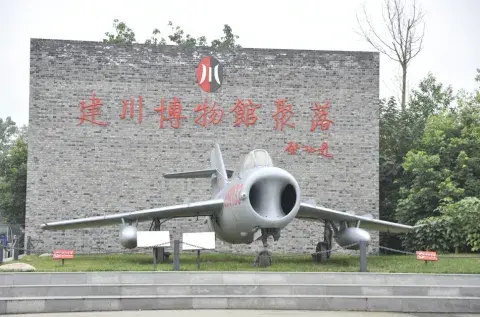
Jianchuan Museum Cluster ~ Anren
A must see of more than 30 museums displaying artifacts associated with the past 100 years of Chinese history....
A must see of more than 30 museums displaying artifacts associated with the past 100 years of Chinese history. You may also be pleasd to discover that included within the Museum Cluster grounds, visitors can find meeting rooms, entertainment, catering, and lodgings, enough to keep every member of the family happy.
The Museum’s four main feature theme groupings; Age of Red, China Folk Customs, War of Resistance, and the Wenchun Earthquake, which amazingly was opened by museum owner Dr. Fan Jianchuan just one month after the terrible disaster. The four themed grouping is joined by the “Plaza of Chinese Heroes” where 100 amazing life-sized cast-iron statues can be found standing somewhat reminiscent of Xian’s Terra Cotta Warriors.
The War of Resistance series features halls with names such as “The Core of Resistance”,“The Hall of Conventional Battlefront”, and “Heroes of the Flying Tigers”, more on this subject to follow.
The series “China Folk Custom” features the halls of “Traditional Furniture” and the Three-inch Golden Lotus”. While the “Age of Red Seals-Clocks & Badges”, and the “Age of Everyday Items” and the “New China Porcelain” halls make up the “Age of Red” series of displays.
Entrance to each individual hall is 20CNY, or you may choose a full-pass to all the series halls for only 100CNY, and generally considered to be the far better deal, as you may return within the same calendar year to visit any of the halls not entered on a previous visit.
Easy to follow signage written in both Chinese & English makes renting a traditional single seat or four seat bench bike a very good option as the plush and very extensive grounds of the Museum Cluster property cover more than 500 Acres.
Dr, Fan Jianchuan, was a child of nine when his father, accused, and subsequently pilloried for anti-revolutionary activities, instructed his son to “collect every scrap of paper on these allegations that you can” and to this day that is exactly what Dr. Fan has done. Now, being regarded as China’s most vigorous collector, Mr. Fan hauls more than 100 containers from the length and breadth of China each year. All filled with prized memorabilia collected and bought by the agents he employs in every Chinese province. One hundred and twenty one of the Cluster’s diversely rich repository of artifacts are classified to be "Class One" National Treasures of China.
When discussing the cultural revolutionary years Dr. Fan has said “Some of us hate those years, some of us think it was a great experience, the good and bad is intertwined within every person, we all have this contradiction within…I do as well. When I die and the museum is still here, I still won’t know the truth, but at least it will be there for history to judge, and that is enough for me.”
Once having seen many of Anren’s Museum Cluster displays, and noting they actually are being displayed, a person may consider such a public display of this extraordinary collection might very well reflect a change in the way today’s China looks at, and regards it's not so distant history.
Jiuzhai Valley
...
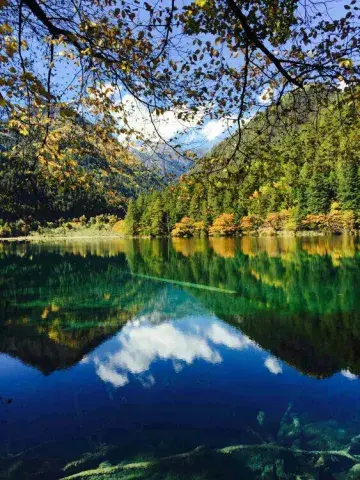
Jiuzhai Valley is nestled amongst a dozen high mountain peaks which can remain snow covered throughout the year. Meanwhile far below the white capped peaks the river valley glistens and reflects amazing landscapes in crystal clear waters.
Scattered in trapezoid fashion between these heavenly lakes, ponds and pools are one hundred & fourteen large & small waterfalls, seventeen waterfall gathering areas, five travertine banks, forty seven fountains, and eleven turbulences. All of which span, in the form of a Y shaped necklace, over an area of some 60km. Majestically sitting amongst the twelve, mostly snow covered peaks, at an elevation of 1870m, Jiuzhai Valley is the only scenic spot boasting alpine lakes, waterfalls, and travertine banks in China, and numbered amongst only a few such landscapes in the world.
The smallest water pool of the valley is only several square meters in size, while the largest, Changhai Lake, stretches on for 7 eye-pleasing kilometers. Clear all year round, the lakes simmer with gorgeous blues, yellows, oranges, greens that literally glow in the sunlight. On such bright clear days, reflecting the blue sky, white clouds, snow peaks and the surrounding forests, the lakes present a most picturesque scene throughout all four seasons. Thus it is said “no water is as good as that at the Jiuzhai Valley”.
Jiuzhai also boasts abundant flora and fauna species. The 300km2 primeval forest is home to 3,553 indigenous species including Kingdonia Uniflora, Circaeaster Agrestis, Fargesia and several other plants from the late Cretaceous to early Tertiary periods. The forest also provides a very favorable habitat for a wide variety of animals. Preliminary surveys indicate there are 693 invertebrates and 313 vertebrates in the valley. Rare species such as giant panda, snub-nosed monkey, red panda and antelope also constitute another unique attraction.
Certainly not the only reason to visit Leshan but most certanly a massive reason to do so. At over 70 meters tall Leshan's iconic 1200 year old giant seated Buddha (the worlds tallest) draws world wide visitors to this laid-back river town.
Overlooking the confluence of the rivers Dadu and Min whilst resting on feet with big toes each longer than 8 meters. Leshan's giant Buddha has shoulders spanning a whopping 28 meters, sitting below ears that dangle for 7 meters, this beautiful giant statue carved into a pink rock-face can bring visiting crowds to a near stand-still.
After getting up-close and personal with the Buddha's enormous stone head, and taking in the panoramic cliff views, descending a rather steep set of stairways allows visitors to linger at the Buddha's feet for a neck-craning view of this wonderfully incredible sight. Even the return climb to the cliff's top via hidden stone steps recessed into the right side of the cliff continues to inspire admiration for this magnificent man-made wonder.
By adding a quick boat trip , visitors will be afforded about 10 minutes to snap the perfect selfie, and or full length picture from the river to include the two river-side guards also carved into the cliff but not visible from land. The boat trips, costing 70CNY per person, leave at very regular intervals from Leshan dock are fun, and safe with each passenger being required to wear a life vest upon boardin
A word of caution, where possible try to avoid visiting this grand old Buddha during a Chinese national holiday, or on weekends when crowds are typically at their largest.