Taiyuan Attractions



Taiyuan Articles
Everlasting Spring
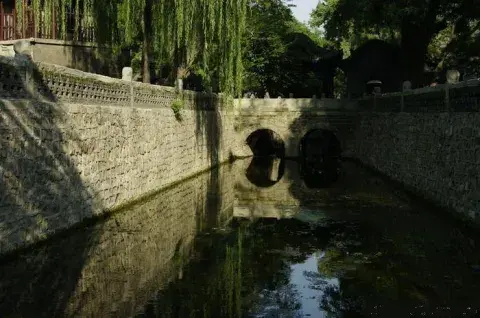
The source of Jinshui is inside Jinci Temple and there are in all three springs named Yuzhao Spring, Shanli Spring and Everlasting Spring. Sometimes the source of Yuzhao Spring and Shanli Spring is dried up while the Everlasting Spring never runs out of water....
The source of Jinshui is inside Jinci Temple and there are in all three springs named Yuzhao Spring, Shanli Spring and Everlasting Spring. Sometimes the source of Yuzhao Spring and Shanli Spring is dried up while the Everlasting Spring never runs out of water. The water comes out from the rock 5 m deep down the ground with an average flow of 1.8 m3. The temperature of the spring keeps at 17℃ all year round. The name of the spring is from a famous sentence “never grow old” in The Book of Songs.
A folk story tells that once there was a girl called Liu in Jinsheng village 20 km away from Jinci Temple got married with a man in Gutang village, where the temple was located. Her mother-in-law was very mean to her and never let her visit her parental home. She was ordered to carry water to the house from afar. It took her a whole day to carry just two buckets of water, however, the evil mother-in-law only use one bucket and pour out the water in the other bucket so as to torture the poor girl. One day Liu met an old gentleman riding on a horse half way back home, and the man wanted to get some water from her to feed his horse. Without any hesitation, Liu said yes and give the water to the man, but to her surprise, the horse drank the water in both buckets. Then Liu faced an awkward dilemma, it was already at dusk now, so there was not enough time to carry another two buckets of water, but if she went back home empty-handed, the harsh old lady would surely call her names or even abuse her. At this moment, the old man gave Liu the horsewhip and told her if she put the horsewhip in the jar, water would come out immediately and fill the jar to the full. With these words the man disappeared. Liu got home and secretly used the whip as she was told to, and it turned out the man did tell the truth. Days after, the old lady felt quite curious about how Liu could make the jar full of water without going out. She asked her daughter to secretly keep a lookout over Liu and the girl came to know the existence of the magic horsewhip. The old lady intentionally allowed Liu went back to her parents’ home and then let her daughter imitate Liu’s trick; sadly, the water kept running all time and did not stop. They could do nothing but ask Liu for help. Liu tried to stop the water flow by sitting on the jar, but the water continues to come out incessantly for thousands of years. That’s how the story goes about the Everlasting Spring.
The Buddhist Relics Tower
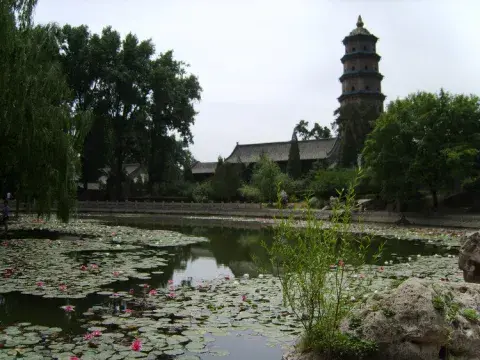
The Buddhist Relics Tower is located in Futu Court in Fengsheng Temple. The legend holds that after the death of Sakyamuni, the founder of Buddhism, his bone ash formed many shiny beads, which were called Buddhist relics (Shelizi) by his followers....
The Buddhist Relics Tower is located in Futu Court in Fengsheng Temple. The legend holds that after the death of Sakyamuni, the founder of Buddhism, his bone ash formed many shiny beads, which were called Buddhist relics (Shelizi) by his followers. Only one of the beads were buried under the tower, however, when the Qing Emperor Qianlong had the tower rebuilt, surprisingly to all, many Buddhist relics were found. How could one bead become millions of beads? Was it because the living soul of Sakyamuni did this and showed people that Buddhism could last for good? As a result people started to call the tower Buddhist Relics Tower. Built in 589 to 604 BC. (Kaihuang years in Sui Dynasty) and rebuilt in Song Dynasty, the temple was unfortunately destroyed in the beginning years of Qing Dynasty. Shanxiu, a monk in Fengsheng Temple decided to repair this tower, so he began the fund-raising immediately. For some years, he finally got the money needed to accomplish the task in 1751 (the sixteenth year under Qing Emperor Qianlong’s reign). The tower measures 38 m in height with 8 angles and seven floors, and on each floor there are 4 doors and 8 windows. The delicate spiral stairway will lead you to the top of the tower where you can enjoy the most beautiful sight of the tower at dusk when the setting sun is going down. to the east of the tower there is a court called Liushan Garden, in which two pavilions can provide you perfect places for a good rest, one is called Liushan Pavilion, the other is Banyun Pavilion. A folk tale has it that in the year 1558 the Hanging Urn Hill (Xuanweng Shan) moved slowly to the east for more than four hours and stopped just in front of the Lishan Pavilion, and that is how Liushan Pavilion got its name because in Chinese Liushan means to stop the mountain.

Jinci temple
If you travel to China and you want to see a place that has a lot of history but is not typical for foreigners why don’t you take a train to Taiyuan and go to one of the most astonishing temples of the Shanxi region, and the whole country that has more than 3000 years of history and is one...
If you travel to China and you want to see a place that has a lot of history but is not typical for foreigners why don’t you take a train to Taiyuan and go to one of the most astonishing temples of the Shanxi region, and the whole country that has more than 3000 years of history and is one of the most beautiful places you can find in your China Travel?
What is called “The Jinci Temple” is a combination of buildings from different ages and a natural landscape that frames the buildings in a perfect environment and has a relaxing atmosphere ideal for those who seek the tranquility of an ancient place.
It’s better to visit it in the early morning, it opens at seven o’clock, and it’s bigger than it seems so it’s better if you have lots of time to wander in the multiple attractions that the Jinci temple has to offer.
There are lots of buildings and statues and shrines and temples to see there but these are the must-sees and the things you cannot miss for you will not find them anywhere;
– The Saint Mother’s hall; the oldest building in the complex, it’s one of the most important places of the ancient China, so make sure not to miss it.
– The Flying Bridge across the Fish Pond: it was the first bridge built in that fashion in China and now is the only one that remains intact, its peculiarity is that it’s literally flying over the water; it has no columns in the middle.
– The Figures of Maidservants: in the Mother Hall there are some very ancient clay statues that are worth seeing.
– The Ancient Cypresses; these are three cypresses that represent a family, the “parents” are two trees of more than 3000 years old and the “son” is more than 1700 years old.- The tablets of The Writing of the Emperors; hundreds of stones tables that hold the words and laws of some of the Chinese Emperors.- The museums of paintings and Calligraphy that have taken some of the ancient residential buildings.- The Four Bronze statues that represent warriors famous in their time.
These are just some of the things you can see in the Jinci Temple, the attractions that are unique, but there are also other important things like the Boat Shaped Hall with the statue of a monk that is supposed to bring you luck in your studies, the well that has always bubbling water thanks to the underground currents, the pagoda shaped building and the temple of the Dragons, on a rock that you can go through trough a cave.
The Jinci Temple is one of the most important temples of ancient China so if you have the opportunity to make a detour in your China travel and you can spare a day in the Shanxi region make sure that you include the Jinci Temple, it’ll be a decision that you will not regret!
Top Taiyuan Tours
$1150 Per Day
6-day Shanxi Highlights Tour
Day 01 Arrival in Datong (no meal)
Arrival in Datong by train or bus in the evening, be picked up and transferred to the hotel.
Day 02 Datong (B, L)
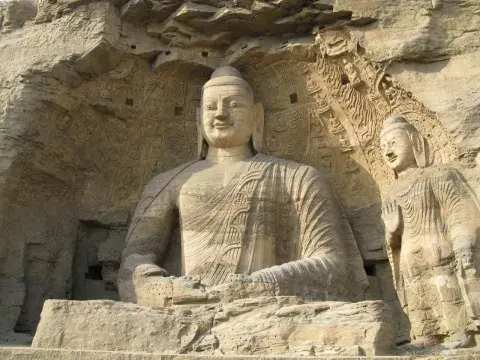
Visit the UNESCO World Cultural Heritage site – Yungang Grottoes. Then proceed to ancient Huayan Temple of Liao and Jin Dynasty and Nine Dragon Screen.
Day 03 Datong – Mount Wutai (B, L)
Drive to visit Hanging Temple, Wooden Pagoda at Ying County, which is the oldest existent fully wooden pagoda still standing in China, first built in 1056. Overnight at Wutaishan city....Read more
Day 01 Arrival in Datong (no meal)
Arrival in Datong by train or bus in the evening, be picked up and transferred to the hotel.
Day 02 Datong (B, L)
Visit the UNESCO World Cultural Heritage site – Yungang Grottoes. Then proceed to ancient Huayan Temple of Liao and Jin Dynasty and Nine Dragon Screen.
Day 03 Datong – Mount Wutai (B, L)
Drive to visit Hanging Temple, Wooden Pagoda at Ying County, which is the oldest existent fully wooden pagoda still standing in China, first built in 1056. Overnight at Wutaishan city.
Day 04 Mount Wutai – Taiyuan (B, L)
Half day tour to Mount Wutai, one of the four holy mountains for Buddhists in China, you will tour the Xiantong Temple, Pusading Temple and Tayuan Temple. After lunch, drive 4 hours to Taiyuan, the capital city of Shanxi Province.
Day 05 Taiyuan - Pingyao (B, L)
After breakfast, transfer to visit Jinci Temple, which was founded about 1,400 years ago, boasting a diverse collection of more than 100 sculptures, buildings, terraces, and bridges. Then proceed to Pingyao, you will visit Qiao Family Compound and Double Forest Temple before checking into the hotel.
Day 06 Pingyao (B, L)
Explore the old town of Pingyao escorted by your guide, including the visits to the city wall, Rishengchang Draft Bank and Ming and Qing Street. Free time at the rest of the day.
$1 Per Day
Hougou Ancient Village Tour
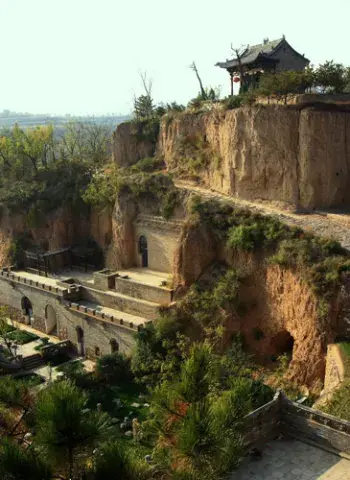
Pick up from your Taiyuan hotel 9.00am in the morning then transfer to Hougou Ancient Village (about 1 hour drive) then visit the the only ancient hamlet in China designated as a farming heritage site,Cave House there are mud cave house and brick cave houses,Enjoy free walk inside the village ,After lunch, take a 2 hrs driver to Pingyao in the afternoon.