Sri Lanka Attractions

Festive

Festive

With a population composed with many a races and religions, Sri Lanka is never short of festivals and celebrations. Every month brings a celebration either religious or cultural importance, making Sri Lanka one of the countries with highest number of celebrations and holida...

Festive

With a population composed with many a races and religions, Sri Lanka is never short of festivals and celebrations. Every month brings a celebration either religious or cultural importance, making Sri Lanka one of the countries with highest number of celebrations and holidays. 

The Sinhala-Tamil New year festival in April is the most important cultural festival in the country. The festival marks the beginning of the New Year and the end of harvesting season. A lengthy holiday and a table full of oily traditional delicacies like kokis, makes the New Year festival one of the long awaited festivals in the country.

The May full moon poya day or Vesak is the most important religious celebration in Sri Lanka, where Buddhists celebrate the nativity, enlightenment and passing away of Lord Buddha with many celebrations. Sri Lankans of every religion crowd the roads to enjoy Vesak decorations including pandals and lanterns and many a makeshift alm houses that line the roads offering every food item from beverages, dessert to main meals.

In August are the Esala festivals in Kandy and Kataragama. The Kataragama Esala Festival is a multi-religious festival where devotes use fire walking and extreme self-penance to shows their piety to Lord Kataragama. The Kandy Esala Perahera or the Dalanda Perahera is the largest cultural parade in the world and showcases the best of Sri Lankan dancing and music and the best of the domesticated tuskers in the country.

Essence

Essence

Despite its fame as a resplendent island and a leading tourist destination, the secret of Sri Lanka’s attraction lies with its people. The spice addicted, cricket crazy and tea drinking people of Sri Lanka are famed for big smiles and a bigger heart. With a culture enriched...

Essence

Despite its fame as a resplendent island and a leading tourist destination, the secret of Sri Lanka’s attraction lies with its people. The spice addicted, cricket crazy and tea drinking people of Sri Lanka are famed for big smiles and a bigger heart. With a culture enriched with three thousand years of knowledge, Buddhism and many a colonial traditions, the Sri Lankan society is a potpourri of religions and races different yet similar in many a ways. 

The Sri Lankans all love their food spicy and their tea light; an unavoidable for a country, which produces the world’s best spices and tea. Introduced to the country in the 19th century by colonial British Ceylon tea is the best tea in the world while Sri Lanka has also been known for its high quality spices since time immemorial.

In Sri Lanka, cricket is the ultimate passion which draws all the Sri Lankans together irrespective of caste, race and creed.

Other than tea and cricket, gems especially blue sapphires is synonymous with Sri Lanka. Country’s gem industry has a long, colourful history. Known also as ‘Rathnadeepa’ or the land of gems Sri Lanka had been producing brilliant blue Sapphire and red rubies among many other. Along with gems, Sri Lanka had been exporting fine crafted ivory to many royal courts of Europe. Many dainty treasures carved by local artists in ivory are found in the museum in Europe standing witness to the local skills, which is still found after being handed over father to son. 

Heading North

Heading North

Route: Bandaranaike International Airport (BIA) -Kalpitiya- Wilpattu National Park -Jaffna-Rathmalana-BIA

Highlights:

• Kalpitiya

Kalpitiya, situated nearly 130 km away from Colombo in the Puttlam district, is a fishing town based around the peninsula of Kalp...

Heading North

Route: Bandaranaike International Airport (BIA) -Kalpitiya- Wilpattu National Park -Jaffna-Rathmalana-BIA

Highlights:

• Kalpitiya

Kalpitiya, situated nearly 130 km away from Colombo in the Puttlam district, is a fishing town based around the peninsula of Kalpitiya. With the country’s largest coral reef of 307 km 2, 14 off shore islands, saltpans, mangroves swamps, salt marshes and vast sand dune beaches Kalpitiyais identifiedfor the large pods of Spinner Dolphins who could be found within a just one hour boat ride from Kalpitiya harbour.

The dolphins with nearly hundreds of members leap and jump in an aerial display in a movement known as Dolphin’s dance attracting thousands of tourists to the shallow water s of the Kalpitiya reef. Other than the most common, the spinner dolphins, other species including Risso’s Dolphin, Bottlenose Dolphin and Striped Dolphin too makes appearance although not as frequently or in such large numbers.

The sighting of sperm whales too is a common site in Kalpitiya. From November to Mid-April sperm whales gather in pods of 20-30 further West from the location of the dolphins and nearly seven nautical miles away from the land, where the depth of the ocean shows a sudden increase from hundred meters to thousand meters. These giants are not found alone as few Blue Whales, pilot whales and a pod of Pygmy Sperm Whales are often observed in the immediate area.

• Wilpattu National Park

Wilpattu National Park, named thus for hundreds of willus or ponds scattered in its 131, 693 hectares ground, is a hot spot for the leopard. Other than the leopard the national park is home thirty one species of mammals, including sloth bear, leopard, water buffalo, sambhur and spotted deer.

The bird population of the park include the painted stork, the open bill, little cormorant, Sri Lanka Jungle fowl along with many species of owls, terns, gulls, eagles, kites buzzards. Wetland bird species that can be seen in Wilpattu are the Garganey, Pin tail, Whistlingteal, Spoonbill White ibis, large white egret, Cattle egret and Purple heron.

• Anuradhapura City Tour

Sri Lanka’s third and the longest serving capital and one of the oldest continuously inhabited cities in the world Anuradhapura, is also one of the most sacred cities of World Buddhists.

The ancient city of Anuradhapura includes Ruwanweli Maha Seya, the great stupa of Lanka and the Jaya Sri Maha Bodhiya, the sacred fig tree, one of the oldest trees in the world. The serene beauty of Samadhi Buddha Statue continues to impress its beholders while an evening spent the riding the waters of Kala Wawa is unforgettable.

• Nallur Kandaswamy Hindu Temple of Jaffna

Nallur Kandaswamy temple is one of the most impressive religious building in Jaffna and one of the most significant Hindu temple complexes in the country dedicated to God Murugan.

The kovil’s 15th-century structure was vandalized by Portuguese in the 17th century and the current structure was rebuilt in 1734. Its beautifully maintained large and airy space shelters decorative brass work, larger-than-life murals, pillared halls and a colonnaded, stepped holy pool, all dominated by the golden-ochre, god-encrusted gopuram peering down one length of Point Pedro Road. The temple hosts an enormous and spectacular Hindu festival for over 25 days in July/August, which climaxes on the twenty fourth with parades of floats and displays of self-mutilation by entranced devotees.

• Nagadeepa Purana Raja Maha Viharaya

The temple situated in the island of Nagadeepa which is 30 km from Jaffna on road and another 15 minutes in a ferry attracts thousands of pilgrims throughout the year despite its extreme location.

The Stupa of the temple is known as Rajayathana stupa and was constructed nearly 2700 years ago by 2 Naga Kings Chulodara and Mahodara, whose dispute over the gem adorned golden throne, was settled peacefully by Lord Buddha. In gratitude the throne was offered to the lord Buddha, was returned to the Naga Kings and was later enshrined in the Rajayathana stupa.

The temple was a flourishing pilgrim’s site until it was repeatedly plundered by the provincial Tamil kings and Portuguese during the 17th Century. The temple was forgotten with time until it was unearthed and reconstructed in 1941 and the end of a thirty years old war had seen a revival of pilgrimage to the site.

• Kadurugoda Temple

Situated in Hunugama or Chunnakkam in Jaffna Peninsula, the Kadurugoda Temple is believed to be a part of an ancient large Buddhist Monastery and is held by some to be a site graced by Lord Buddha on his visit to Sri Lanka.First identified, excavated and recorded in 1917 the temple site with ruins of sixty stupa is believed to contain the remaining of sixty arhants, who have been based at Pukuduthivu then known as Pulangu-Divaina and have passed away of food poisoning. The earliest excavation had unearthed coins, beads, Buddha statues and coloured tiles of Anuradhapura and Polonnaruwa era.

• Shree Nagapooshani Amman Hindu Temple

Situated in the isle of Nagadeepa just thirty km form the Jaffna peninsula, Shree Nagapooshani (Bhuvaneswari) Amman Hindu Temple is wrapped in thousand years of myth and legend. Dedicated to Parvati who is known as Nagapooshani and her consort, Shiva, the temple is known to be one of the prominent 64 Shakti Peethams. Believed to have been established by Lord Indra himself the temple is believed to have been built by a Chola merchant travelling from India to Sri Lanka, however was destroyed and rebuilt in the 18th century.

• The Miracle Springs of Keerimalai

Believed to hold the magical powers to cure various physical ailments including a disagreeable face the fresh water springs of Keerimalai lies next to the soaring Indian ocean in west of Palay. A pool built surrounding the springs is a sought after bathing place believed to cure many physical ailments including disfigured faces. The Hindu temple nearby had been built by a Pandayan princess in gratitude of curing her horse shaped head, whose statue stands in a revering position by the pool.

• Bottomless Well of Nilavarai

According to legend, Seetha, wife of Rama, while on the return journey to India was overcome with thirst and the Hero King Rama had gallantly shot an arrow on to the earth creating the Bottomless well of Nilavarai.

On the more factual shade the well provides fresh water to the area around and is a source of water for domestic and irrigational purposes. Two attempts by various scientific groups had failed to identify the bottom of this well or its’water source while some believe it to be connected to the freshwater ponds in Ayiyakachchi and Keerimalei through an underground river.

• Casuarina Beach

Named for the abundance of casuarina trees the casuarina beach had been protected by the polluting human tough for the last thirty years from a ravaging war. Considered to be one of the beat beaches in the Jaffna peninsula, the powder soft sand, the shallow waters up to almost a mile towards the sea and lack of strong currents and waves make it one the ideal bathing spots in the area.

• Jaffna Fort

Constructed in 1618 by the Portuguese and later taken over by the Dutch and the British the Jaffna fort continued to be a British garrison until 1948.Buildings inside the fort include the Governor's residence, Queen's House, Jaffna, the Garrison Parade Ground, Police quarters and several buildings from the Portuguese era.

With the onset of the Sri Lankan Civil War it came under siege on several occasions and was the scene of pitched battles. From 1986 to 1995 it was under the control of the LTTE and was recaptured by the Sri Lanka Army in 1995 after a 50 day siege. Today the Fort is under an intense Archaeological and structural revamp with the assistance of the Dutch government.

• Fort Hammenhiel

Standing on a rock at the entrance to Jaffna lagoon and surrounded on all sides by the sea; Hammenhiel stood on the north, guarding the passage by water to the Key Fort in Jaffna. Built initially by the Portuguese in the seventeenth century on a small island between the island of Kayts and Karaitivu of Jaffna Peninsula, Fort Hammenhiel was later captured, rebuilt and renamed by the Dutch in memory of a ‘heel of the ham’.

In the recent history it served as a correction facility for naval personnel but had been refurbished in to a resort and restaurant where old Dutch prison cells had been converted into rooms to provide a prison cell experience.
Northern Sri Lanka

Northern Sri Lanka

North of Sri Lanka is a world apart from the rest of country. The region had always been closer to southern India than to Colombo and was repeatedly settled and invaded by Tamil migrants from southern India and has retained a unique character and culture, one whi...

Northern Sri Lanka

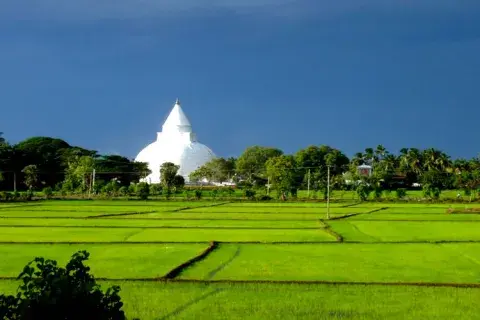
North of Sri Lanka is a world apart from the rest of country. The region had always been closer to southern India than to Colombo and was repeatedly settled and invaded by Tamil migrants from southern India and has retained a unique character and culture, one which owes as much to Hindu India as to Buddhist Sri Lanka.

The thirty year old war, which engulfed the area, had set the clock backwards in the Northern Peninsular, where LTTE terrorists and the Sri Lankan Army were engulfed in intense fighting until the war ended in 2009. The region is gradually emerging from its long years of isolation and fighting, and the painful process of rebuilding of shattered towns and villages, de-mining fields, restoring roads and returning refugees to their former homes is likely to continue for some time to come.

For the explorer, the north is Sri Lanka’s final frontier, and offers an opportunity to explore a region emerging from over twenty years of isolation and civil war.

Reaching Jaffna is now straightforward and requires no security checks or clearance, and although it still entails either a long road journey or a short flight, those who make the effort are amply rewarded.

Foremost of the attractions is the fascinating town of Jaffna, with its absorbing mixture of colonial charm and vibrant Tamil culture, while the Jaffna Peninsula and surrounding islands offer a string of remote temples, Hindu and Buddhist alike, beaches and more off-beat attractions.

Arriving in Jaffna can come as a culture to the uninitiated, and it is difficult to miss the profound Indian influence made obvious by the gradual switch from the singsong cadences of Sinhala to the quick-fire intonations of Tamil, as well as a listof other details like the Indian pop music which blares out of shops and cafés, and the hordes of kamikaze cyclists who fill the congested streets.

Yet the town has its own unique and complex identity shaped in true Sri Lankan fashion, by a wide cross-section of influences, including Muslim, Portuguese, Dutch, British and Sinhalese, with colourful temples set next to huge churches, and streets dotted with ancient Dutch and British residences.

The rural surroundings of the Jaffna town, and the source of much of its former prosperity, is the Jaffna Peninsula, a fertile arc of land criss-crossed with small country roads lined with endless walled gardens and smallholdings, growing a wide variety of crops including chillies, onions, bananas, jackfruit and grapes.

Further south, the vast track of thinly populated countryside known as Vanni, is little visited, even by locals, although the remote church at Madhu draws a steady stream of pilgrims while the war-torn town of Kilinochchi, former capital of the LTTE, provides a stark reminder of the destructions of the war.

To the west of Jaffna, a string of islands straggle out into the waters of the Palk Strait towards India. Two of them, Kayts and Karaitivu, almostjoin up with the mainland, to which they’re connected by causeways, as is Punkudutivu further west. Punkudutivu is the starting point for ferries to Nainativu, home to two important religious shrines, and the remote island of Delft.

Romantic Sri Lanka

Romantic Sri Lanka

The central highlands of Sri Lanka are filled with pictures of stirring mountains carpeted with lush green tea gardens, roaring waterfalls mingling with the clouds and landscapes shimmering in sunlight and disappearing under the rising mist.

Situated over 6...

Romantic Sri Lanka

The central highlands of Sri Lanka are filled with pictures of stirring mountains carpeted with lush green tea gardens, roaring waterfalls mingling with the clouds and landscapes shimmering in sunlight and disappearing under the rising mist.

Situated over 6000 feet above the sea level the changing faces of Sri Lanka’s great mountain ranges are best viewed at leisure and on foot. The temperature varies between 160 Celsius to 20Celsius providing an ideal climate for walking.

The most favorite and renowned hill-country location is Nuwara Eliya, The most important tea production hub of Sri Lanka, founded by Samuel Baker, the discoverer of Lake Albert and the explorer of the Nile in 1846.The city’s mild climate lent itself to become the leisure capital of the country and was the prime sanctuary of the British civil servants and planters in colonial Ceylon. Nuwara Eliya, called Little England then, was also a hill country retreat where the British colonialists could immerse in their pastimes such as fox hunting, deer hunting,elephant hunting, polo, golf and cricket.

Many of the buildings in the city hold architectural features from the colonial past such as the Queen's Cottage, General's House, Grand Hotel, Hill Club, Town Post Office and even new hotels have borrowed the colonial style. Many private homes still maintain their old English-style lawns and gardens, keeping true to the spirit of ‘Little England’.

Following closely behind is Bandarawela, a plantation town in the Badulla district. The city boasts of its fair share of waterfalls and buildings of colonial architecture including the Bandarawela Hotel, the Cargilles building, the Tennis club and Adisham Bungalow. Just eight km away fromBandarawela isElla, a sleepy village nestled in a valley gazing through Ella gap on plain nearly 1000 feet below.Ella is surrounded by hills and is perfect for walks through tea plantations to temples and waterfalls.

Another favorite hill station is Balangoda, with mountain ranges and views to beat Nuwara Eliya. Although not organized as a leisure city Balangoda and its surroundings offer one of the best views, treks and adventures in Sri Lanka. Just 15 km away from Balangoda is Belihuloyaa little hamlet with unspoiled views and opportunities for trekking, canoeing and bird watching.

Adam’s Peak or the Sri Padaya Peak, a 2,243 metres conical mountain located in the southern reaches of the Central Highlands, in the Ratnapura district is also a popular hill station especially for its religious significance. The 1.8 meter rock formation near the peak is long believed to be the sacred foot print of Lord Buddha by locals.

Rejuvenating Sri Lanka – Sri Lankan Ayurveda Experience

Rejuvenating Sri Lanka – Sri Lankan Ayurveda Experience

Ayurveda, the science of life, represents a system of healing that has been perfected over more than five thousand years. It is South Asia's ancient medication system based on herbs and diet and was country’s only treatment me...

Rejuvenating Sri Lanka – Sri Lankan Ayurveda Experience

Ayurveda, the science of life, represents a system of healing that has been perfected over more than five thousand years. It is South Asia's ancient medication system based on herbs and diet and was country’s only treatment method until the introduction of Western Medication in the 19th Century. Although an Ayurveda medication system exists parallel to the western medication system even today.

Ayurveda is called the science of eight components, which includes; cure of diseases affecting the body, treatment of children, removal of any substance which has entered the body, cure of diseases of the eye or ear, treatment of mental diseases,doctrine of antidotes, doctrine of elixirs and doctrine of aphrodisiacs.

The Ayurveda system of healing believes in treatment of not just the part affected by disease but the individual as a whole. It emphasizes on the harmony of mind, spirit and body in curing the body and focus is on prevention rather than cure.

Ayurveda practitioners approach diagnosis by using all five senses. Hearing is used to observe the conditions of breathing and speech. The study of the lethal points is of special importance. Ayurvedic doctors regard physical and mental existence together with personality as a unit, each element having the capacity to influence the others. One of the fundamental aspects of ayurvedic medicine is to take this into account during diagnosis and therapy.

Ayurvedic calls for the use of various plant parts and various minerals while animal products are used sometimes. The practice of ‘panchakarma’ is a widely used detoxifying treatment while two of the eight branches of classical Ayurveda deal with surgery. Contemporary Ayurvedic theory tends to emphasis that building a healthy metabolic system, attaining good digestion, and proper excretion lead to vitality. Ayurveda also focuses on exercise, yoga, and meditation to strike a balance between physical and mental health.

Pristine Sri Lanka

Pristine Sri Lanka

With nearly 1600 km of of palm fringed Coastline baked to perfection surrounding the country Sri Lanka is the ideal destination for beach bums worldwide. May it be windsurfing, kayaking, yachting, water skiing, scuba diving or jut lazing around for the perfect ta...

Pristine Sri Lanka

With nearly 1600 km of of palm fringed Coastline baked to perfection surrounding the country Sri Lanka is the ideal destination for beach bums worldwide. May it be windsurfing, kayaking, yachting, water skiing, scuba diving or jut lazing around for the perfect tan, Sri Lanka offers it all. The two weather systems of the monsoon winds makes Sri Lanka’s beach holiday a year round prospect. The north east winds make the south western coast sunny and the sea calm from November to March. The South West winds make the East Coast waters quiet with the constant sun shine happily in agreement.

The best of the Southern beaches include Tangalla, Beruwala, Mirissa, Bentota and Unawatuna with varying options including chic boutique hotels, glowing coral reefs, gentle sandbar sand undiscovered corners of paradise.

Beruwala is the first of the beaches to be met when travelling from Colombo. Famed for its tranquil bay with the palm shaded beach Beruwala offers excellent water sport facilities.

Benthota, the next in line is known for golden beaches dotted with luxury resorts and gentle seas, even during the rough seas. Tangalla is the rising star among the southern beaches is known for calm blue waters bordered with palm covered beaches. It is the dividing line between the tropical coves that dominate much of the south-west coast and the long, wave-lashed beaches that are found in the south-east corner of the island.

Mirissa is the beach resort for the lethargic, designed to be indulged at a slower pace watching the world pass by. It is also the best place for an ocean safari in search of blue whales and dolphins. Nights can be longer in Unawatuna, the most popular beach town in South. Many head to Unawatuna on Fridays for nonstop partying throughout the weekend yet this had not spoilt the tranquil charm in most parts. Snorkelling at the Buena Vista Reef is a thrill of a life time while boat rides to the jungle patched islands for glimpse of bird life is ideal for bird lovers.

Although Sri Lanka’s southern beaches has been long discovered by the world traveller the east coast is yet to be fully discovered. The most known among the Eastern beaches is the Arugam Bay, the high church of surfing enthusiasts’ in the region. Wildlife parks streaming with elephants, miles of lonely wide beaches and excellent views are the options available for non-surfers. Once a mere rumour, Uppuveli beach is open to the sun seekers after a three decade long civil war. The beach is quickly gaining fame as the best swimming and snorkelling location competing with the nearby Nilaveli beach and the coral gardens of the pigeon island.

On the Western corner of the country to the north of Colombo is the Negambo lagoon. Its beaches, an old favourite with local and foreign visitors and lagoon famed for lobster harvesting. The collection of resort hotels offering options of water sports competes with the urge of just sit and watches the fishing boats disappear in the horizon. Further north from Negombo is the Kalpitiya, sandwiched between the sea and the lagoon the beach is ideal for the lazing around yet the sea off Kalpitiya is the best location in the country to watch Blue whales, sperm whales and pilot whales and spinner dolphins, other species including Risso’s Dolphin, Bottlenose Dolphin and Striped Dolphin.

Untamed Sri Lanka - Celebrating a Wilder Sri Lanka

Despite its small size Sri Lanka boasts of one of the highest rates of biological endemism in the world. Nearly 16% of the animals and 23% of plants that are found in this small island are endemic to country.

Of the ninety-one species of mammals found in Sri Lanka Asian elephants, sloth bea...

Despite its small size Sri Lanka boasts of one of the highest rates of biological endemism in the world. Nearly 16% of the animals and 23% of plants that are found in this small island are endemic to country.

Of the ninety-one species of mammals found in Sri Lanka Asian elephants, sloth bear, leopards, sambar and wild buffaloes engages the majority of the attention of wildlife enthusiast. Yet the rarest mammals of Sri Lanka are the red slender Loris, Toque Macaque, and Purple-faced Langur, who according to IUCN clarifications are endangered due to habitat loss.

Meanwhile the ocean around Sri Lanka is home to large families of cetaceans including the mighty blue whales, sperm whales and lively dolphins. Altogether 26 species of cetaceans rule the waters surrounding the country, making it one of the best locations for whale and dolphin watching.

Sri Lanka has one of the richest diversity of amphibians in the world, containing over 106 species of amphibians of over 90 of which are endemic. The country has long claimed to have the highest amphibian species density in the world with a85% of endemicity ratio in Amphibians, especially in the Sinharaja rainforest.

Despite the mighty elephants and rare amphibians found in the country birds are the glory of the Sri Lanka’s wildlife. Boasting nearly 433 bird species of which 233 are resident Sri Lanka holds 20 endemic species while another 80 species have developed distinct Sri Lankan races, compared to their cousins in Indian mainland.

This diversity of Lanka’s wildlife is celebrated and conserved at many wildlife sanctuaries found around the country. With a history of protection and compassion extended to all the living beings, Sri Lanka’s first animal sanctuary had been recorded as far as third century BC with the arrival of Arhant Mahinda in the country and the introduction of Buddhism.

Today there are five large national parks in the country including the Yala National Park, Kumana, Willpattu, Galoya and Udawalawa wildlife sanctuary. Among the smaller wildlife sanctuaries are the Maduru Oya, Bundala, Horton Plains and Wasgamuwa National Parks.

The Peradeniya Botanical Gardens in the central highlands of the countrycomprises a fine display of local and foreign flora of Sri Lanka including the rarest of palm and orchid varieties.

The Elephant Orphanage in Pinnawala and AthAthuruSevana in Udawalawaprovide a refuge to many abandoned and injured elephants of various ages and sizes, making them one of the largest tamed elephant herds in the world.

A taste of the exotic

A taste of the exotic

Poised above the equator, south-east of the subcontinent, Sri Lanka is often described as ‘India lite’. And it offers the perfect introduction to this part of the world. There’s enough of a culture difference to make you feel like you’re somewhere properly exotic, and ...

A taste of the exotic

Poised above the equator, south-east of the subcontinent, Sri Lanka is often described as ‘India lite’. And it offers the perfect introduction to this part of the world. There’s enough of a culture difference to make you feel like you’re somewhere properly exotic, and yet everything is so easy. The food is fantastic, English is widely spoken, and the island’s bijoux size means you can fit a lot into a small amount of time.

Palm-lined beaches

The main tourist zone runs along the south-west coast of the island, from Negombo to Galle. Here, football pitch-sized swathes of sand are washed by the Indian Ocean and pinned down by skyscraper palms. In parts, rivers and lagoons run in to the sea, providing the ideal conditions for watersports like kayaking and paddle boarding.

Temples and tea

Elsewhere, more than 2,000 years of history have left their mark on Sri Lanka. An island that’s smaller than Scotland, it packs an astonishing amount into its borders. One minute you can be sipping a cup of traditional brew at a tea plantation, the next wandering around a vast ancient city or intricate temple.

Batticaloa

The magnificent beaches of Pasikuda and Kalkuda flank Batticaloa as two beautiful consorts protecting a dowager queen. Batticaloa is situated in the east coast of Sri Lanka with a great lagoon and a beach. On moonlit nights a melodious sound emanated from the picturesque lagoon is attributed to i...

The magnificent beaches of Pasikuda and Kalkuda flank Batticaloa as two beautiful consorts protecting a dowager queen. Batticaloa is situated in the east coast of Sri Lanka with a great lagoon and a beach. On moonlit nights a melodious sound emanated from the picturesque lagoon is attributed to its singing fish.Fascinating facets of culture include the small community of descendents of Portuguese soldiers who still cling on to a fast vanishing dialect of Creole Portuguese that is said to be similar to Medieval Portuguese. The curved coves of the beach of Pasikuda resembles the shiny edge of a serrated sickle.


The white sand is composed of granules so fine, it gives you the sensation of walking on a warm wooly surface.The longer, darker hued Kalkuda Bay is one of those whimsical picture perfect scenes with sailing boats, coconut palms and azure water that tells you “come wade in” with a naughty wink.Pasikuda, Kalkuda and Baticaloa offer safe swimming and snorkeling with clean beaches. The small number of visitors makes keeping them clean a given, which you will find out when you travel to Sri Lanka.The Dutch made their first footstep in Sri Lanka here in 1602. The Dutch fort built in 1665 near the Batticoloa Lagoon houses government offices at present. The 6m thick walls of the fort now encloses the government offices still referred to as the “Kachcheri” a Dutch word that has been corrupted in pronunciation denoting an office of some sort. Excavations on the site of the Dutch fort have found evidence of a Buddhist Stupa and Shatra traced to 1st century BC.


The ancient edifices of St Joseph’s Convent, St Michael’s College compete for attention with the Methodist Church built in 1838.The Hindu temple of Anipandi Sitivigniswara Alayar with its ornate tower entrance is the most impressive of the Hindu shrines.The descendants of the Portuguese and other foreign mercenaries who speak Creole Portuguese are today carpenters, barbers and fisherman assimilated. They have intermarried yet have preserved such customs as celebrating Christmas and dancing the Kafringa and carry names such as De Lima, Ragel, Barthelot, Andrado and Sela. Kafringa is a type of music that is cherished by the Portuguese descendants of Batticaloa quite popular with many in Sri Lanka with its strange combination of la bamba and calypso. You will hear it often at dinner time at some of the Sri Lanka beach hotels. The bands in the luxury hotels of Sri Lanka will play Kafringa if requested. Baticaloa is definitely worth a visit during your Sri Lanka tour.

Sri Lanka Articles

Top Sri Lanka Tours

$50 Per Day

Sri Lanka-Round tour

SRI LANKA-Culture and Nature 05 Days tour

DAY-01-

Negombo / Anuradhapura
After you got picked up at the airport or your hotel, you will proceed the ancient city of Anuradhapura while visiting coconut plantations and observing the famous toddy tappers at work.After you've checked into your hotel at Anuradhapura and P.M you will start the city tour of Anuradhapura, dating back to 3rd century B.C to 10th century A.D. You will visit the Sri Maha Bodhi, the Brazen Palace, the Ruwanveli Seya Dagoba (biggest dagoba in Sri Lanka), the Thuparama Dagoba, the Lankarama Dagoba, the Elephant Pond, the Abhayagiriya Monastery Complex, the world famous Samadhi Buddha Statue and the Isurumuniya Temple (Stone carving of the Sri Lankan Romeo & Juliet).
Overnight stay in Anuradhapura.


DAY-02-

Anuradhapura / Polonnaruwa / Sigiriya
After Break Fast at the hotel proceed to Sightseeing of the ancient city of Polonnaruwa (10th-12th century A.D). You will visit the modern Museum, the Parakrama Samudra, Statue of King Parakramabahu, the Library Shrine, Palace of King Parakramabahu, the Kumara Pokuna, the Shiva temple, the Thuparama shrine room with its glittering statues, the Alahana Monastery Complex, the Gal Vihare, the Lotus Pond and and the Thivanka Image House. After your afternoon tea you will proceed to Sigiriya.
Overnight stay at Sigiriya.


Day-03-

Sigiriya / Dambulla / Nalanda Gedige / Aluvihara / Kandy
In the early morning you will have the opportunity to climb the Sigiriya Rock Fortress, built 5th century A.D, see the Water Garden, Bolder Garden, Mural Paintings, The Mirror Wall, The Lion's Paws and the Royal Swimming Pool on top. Back to the hotel to have your well deserved breakfast. After this you will proceed to the Dambulla Cave Temple. This is followed by Nalande Gedige (a temple built in the geographical center of Sri Lanka), the Aluvihare Cave Temple (this is where Buddhism was brought into book form in the 1st century B.C).
Overnight stay in Kandy.


Day-04-

Kandy / Elephant Orphanage / Kandy
You will visit the Elephant Orphanage in Pinawella where you can see the feeding of baby elephants by milk bottle and elephants bathing in the river. There after visit Royal Botanical Garden Followed by a Kandy city tour including Market, Bazaar, and the famous Temple of the Tooth Ralic and a traditional Kandian Dance performance.
Overnight stay in Kandy.


Day-05-

Kandy / Nuwara-Eliya / Ella
After Breakfast at hotel leave for Ell en route visit Tea Factory and Tea Plantation.After a picturesque drive through Sri Lanka's hill country you will reach Nuwara Eliya (the so-called Little England) with its colonial hotels, the Race course and Golf Courses. Followed by a visit to the Hakgala Botanical Gardens and you will proceed to Ella, Sri Lanka's highest village.
Overnight stay at Ella.


Day-06-

Ella / Buduruwagala / Tissamaharama
After the Break fast at hotel proceed to Tissamaharama en route visit Buduruwagala and the magnificent views of Ella valley and the Rawana Water Falls. After a stop at the Buduruwagala Temple, On completion you will continue to the hotel at Tissamaharama.
Afternoon Jeep safari where you can watch leopards, elephants, bears, thousand of local and migrant birds in the wild. Just to name a few.
Overnight stay at Tissamaharama


Day-07-

Tissamaharama - South & South-West Coast
fter Breakfast at hotel You will drive back to the airport or your hotel along beautiful beaches with the opportunity to stop wherever you like to take dip. The most known beach resorts are Tangalle, Mirissa, Unawatuna, Hikkaduwa, Kosgoda, Induruwa, Bentota and Beruwala.

Please contact Me for more details.

$60 Per Day

SRI LANKA-Round Tour

SRI LANKA ROUND TOUR-CULTURE NATURE AND HERITAGE


Day-01- Colombo / Anuradhapura
Arrival, welcome & assistance at the airport. Leave for Anuradhapura. En-route visit the fishing village in Negombo which is the center of the island’s fishing community. It is largely Roman Catholic by faith, On completion leave for Elephant Orphanage in Pinnawela, which is a home to about 70 Elephants found abandoned or orphaned in the wild. Also, accompany the Elephants to a river close by to see them having their daily baths. After that proceed to Anuradhapura.

Night stay at Anuradhapura


Day-02- Anuradhapura / Mihintale / Aukana / Sigiriya
After breakfast at hotel visit the sacred ancient city of Anuradhapura founded in the 04th century B.C a UNESCO World Heritage site since 1982. It has the largest number of ancient monuments of the great Sinhala civilization.You will see some of such as Ruwanweliseya Dagoba, Thuparama Dagoba,Brazen Palace,The image of the Samadhi Buddha, The Twin Ponds, Guard Stones and the Moonstone. The ‘Sri Maha Bodhi’ or the sacred Bo tree. the oldest historically documented tree in the world. And The Isurumuniya Temple.On completion proceed to Sigiriya en route visit Mihitale and Aukana

Over night stay at Sigiriya.


Day-03- Sigiriya / Polonnaruwa
After a warm breakfast at the hotel proceed to Sigiriya and climb the Rock Fortress of Sigiriya, built 5th century A.D, see the Water Garden, Bolder Garden, Mural Paintings, The Mirror Wall, The Lion's Paws and the Royal Swimming Pool on top. On compleetion proceed to Polonnaruwa (UNESCO World Heritage Site) the Capital of Sri Lanka from the 11th to 13th century, Polonnaruwa is strewn with ruins in a resplendent state of preservation. Of these the ‘Vatadage’the ‘Thuparama Image house’ and the ‘Gal vihara’are the most spectacular and also visit the monuments such as Tivankha Image House , Parakhramabahu Statue ,Watadage , Hatadage & Archaeological Museum. On completion,

return to the hotel in Sigiriya for the night.


Day-04- Sigiriya / Dambulla / Nalanda Gedige / Kandy
After breakfast proceed to Kandy, en route visit Nalanda Gegige and the Dambulla Cave Temple, most impressive of Sri Lanka's cave Temples. On completion leave for Kandy. In the evening visit the Temple of the Tooth Relic and thereafter witness a cultural show.

overnight stay at Kandy.


Day-05- Kandy / Peradeniya / Kandy
After a warm breakfast at the hotel do a city tour of Kandy - the last capital of the Sri Lankan Kings. . Also, visit the Botanical Gardens in Peradeniya, which was originally the pleasure gardens of the Royalty. Nearly 10000 species of plants are found in this garden and it is encircled by the Mahaweli River. Evening visit the Kandy authentic market and The Bazaar

Night stay at Kandy.


Day-06- Kandy / Nuwara-Eliya
Morning proceed to Nuwara Eliya, or Little England, as it is affectionately known. During the steep ascent to Nuwara Eliya we visit a Tea Factory where we can see how tea is made and have the opportunity to buy a selection of fresh tea. Undoubtedly the best tea you will ever taste!

Overnight in Nuwara Eliya.


Day-07- Nuwar-Eliya / Horton Plains / Ella
After an early breakfast at hotel, leave for Horton Plains, The highest plateau in the country. It is one of the very important National parks in Sri Lanka.The most awesome physical feature of the Horton Plains is the escarpment that falls 880 meters to the lowlands. Aptly known as the ‘World’s End’ the view from the precipice of the countryside below towards the south coast is spectacular. On completion returned to Nuwara Eliya and proceed to Nanu Oya Railway station to catch the train and a charming train ride to Ella. Ella excellent base for keen trekkers.

Overnight stay at Ella.


Day-08- Ella / Buduruwagala / Tissamaharama
After a worm break fast at the hotel and start trekking in Ella rock the magnificent view through Ella Gap. Enchanting and spectacular sceneries among the tea plantations. On completion proceed to Yala National park . En route visit Rawana Water Fall & Buduruwagala temple.2.30pm visit yala national park by jeep .

End of the safari back to hotel at Thissamaharama .


Day-09- Tissamaharama / South Beach
Morning proceed to Mirisa / Unawatuna or Hikkaduwa beach . En route visit Mathara largest Buddha statue & Dutch fort in Galle.

Night at the south beach.


Day-10- South Beach / Colombo
Morning proceed to Colombo enroot visit boat safari at Madu river & Turtle Hatchery at kosgoda . Evening city tour of Colombo . Observing the old Parliament, the residential areas and the BMICH (Bandaranaike Memorial International Conference Hall) and visit Fort. Also, visit the Ceramics Corporation Showroom, Majestic City shopping complex and the ODEL Unlimited Dress Boutique.

Night at Colombo or transfer to the Air Port for departure.


Contact Me for the Above Program

$50 Per Day

ONE DAY TREKKING TOURS

Option - 1 :
Knuckles Mountain Range - ( unesco world Heritage site. )
Marvelous view / Pigmy forest / Waterfalls

After breakfast ( 7.30 am ) proceed to knuckles mountain range, It is informed that while going to knuckles range. we have to pass through remote village. and it around 1800 m from the mean sea level. which is a amazing area comprise with pigmy forest fauna and flora. the science of several kinds endemic birds. monkey, porcupine, wild pole and civet cats etc. and also able to have glimpse of sambur deer, barking deer, and leopard. once in a blue moon and this will be a tour that will never forget one who attend same.
After visit returning to kandy

Total working around 14 km
morning leave about at 7.30 am.


Option - 2 :
Knuckles Mountain Range - ( unesco world Heritage site. )
Marvelous view / Pigmy forest / Waterfalls

After breakfast ( 7.30 am ) proceed to knuckles mountain range, Through the amazing tea plantations and pigmy forest it is possible to witness the science of sceneries over the forest area together with waterfalls and those working under forest canopy, with a panoramic view. several kind of endemic birds, beard monkey, porcupine, wild pole and civet cats etc.
After visit returning to kandy,

Total working around 08 km
morning leave about at 7.30 am.


Option - 3 :
Bible rock
Rice land / beautiful sceneries / Remote village

A popular destinations for the adventure-seeking traveler is the bible rock. also known as the batalegala mountain. in the midst of marvelous views of craggy, densely wooded hills. it is the prominent flat topped bible rock which acquired it's pious name thanks to dutiful local victorians on account of it's resemblance to a lectern. A 798 meters high rock offer a sheer face for those who seek to scale challenging surfaces. moreover, is an ecologically important area in the central hills.
After visit returning to kandy

Total working around 8 km
morning leave about at 8.30 am.


Option - 4 :
Alagalla rock
Vegetable cultivation / Beautiful sceneries

After breakfast ( 8.30 am ) proceed to alagalla rock, The alagalla rock is a steep mountain located near the ihala kotte railway stations, it makes the entrance of the rail way to be up country. a train tunnel has been bored 300 feet, through the solid rock of the alagalla the mountain offers a variety of summit. which offers a breathtaking view of the surrounding area.
After visit returning to kandy

Total working around 8 km.
morning leave about at 8.30 am.


Option - 5:
Ritigala
Architecture / Monastic ruins / CAVE'S

After breakfast ( 7.30 am ) proceed to ritigala, This has been called as arittha pabbatha (the mountain of aritta) which can be translate as "dreadful rock" or "safty rock" or even riti trees growing upon it around 3 rd century B.C. aritta, who was the chef minister of king dewanampiyatissa who later was ordained as the fist sri lankan monk and become an arahath spend his monastic life at ritigala there are many monastic ruins of stones, terrace way a stone brige and remain of a giant stone banked pond build across a water strem.

Returning from ritigala to kandy visiting to see the dambulla cave's temple,Dambulla Cave's Temple

Dambulla cave temple also know as the golden temple of dambulla is a world heritage site declared by since 1991. King walagamba return to the throne at Anuradahapura kingdom in the 1 st centure B.C. he had a magnificent rock temple built at dambulla, in gratitude to the monk in dambulla , it is the largest and best preserved temple a most impressive place of sri lanka, the rock 160 m over the surrounding plains , more than 85 caves in the surrounding area. major attractions are spread over 5 cave's.
After visit returning to kandy,

Total working around 15 km.
morning leave about at 7.30 am.


Option - 6:
Pidurangala Rock
Ancient forest monastery / Beautiful scenerice / Opposite sigiriya

After breakfast ( 7.30 am ) proceed to pidurangala rock, History of pidurangala flows beyond the 1 & 2 century from those days. but this place becomes a prominent buddhist monastery during the king kashyapa time ( 477 - 495 AD )

some believe that sigiriya also a buddhist monastery before the king kashyapa time once he decided to build his fortress in sigiriya. he requested the monk to move to pidurangala. and had contributed lot of the development of it. it is believed that the ' uppalawanna kashyapa giri viharaya ' which was constructed by king kashyapa was located in the pidurangala.

Returning from pidurandala to kandy visiting to see the dambulla cave'temple, Dambulla cave's Temple

Dambulla cave temple also know as the golden temple of dambulla is a world heritage site declared by since 1991. King walagamba return to the throne at Anuradahapura kingdom in the 1 st centure B.C. he had a magnificent rock temple built at dambulla, in gratitude to the monk in dambulla , it is the largest and best preserved temple a most impressive place of sri lanka, the rock 160 m over the surrounding plains , more than 85 caves in the surrounding area. major attractions are spread over 5 cave's.
After visit returning to kandy,

Total working around 10 km.
morning leave about at 7.30 am.