Omo Valley Attractions

Omo Valley Articles

Top Omo Valley Tours

$1400 Per Day

Southern Omo Valley Adventure of Ethiopia

Southern Omo Valley Adventure of Ethiopia

The Omo River Valley is still a virgin environment, where tribal traditions have remained unchanged. The women still dress in elaborately decorated skins and the men celebrate adulthood with special coloured hair buns.
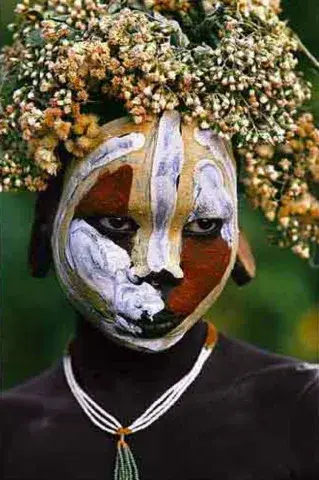
Meet the Mursi tribe whose women wear huge lip plates and whose men participate in ritualistic stick dueling; the Hamer women, among the most beautiful in East Africa and whose various metal ornaments indicate their marital status; the Karo, known for their body painting and erotic dancing; and other tribes like the Tsemay, Bana, Erbore, Konso, Gabbra and Borena, with equally fascinating customs. Up to two dozen tribes inhabit the area and we visit villages and local markets in the hope of meeting many of them.
Trip Duration: 10 Days/ 9 nights.
Travelling in a international group, with English speaking guide
Vehicle type: bus or 4 WD up on the number of pax
Itinerary

Day 1.Tuesday- ADDIS ABEBA CITY TOUR
Arrival in Addis Ababa. Welcome by the guide. Visit the sights of Addis Ababa: The Trinity Cathedral, the National Museum, Entoto Mountains, St. George Church and the “Mercato”.
O/N in MN international htl 3* (-/L/-)

Day 2. ADDIS ABEBA- ARBA MINCH
Early departure with 4x4 vehicles, driving to the city of the “40 springs”, Arba Minch. Passing through the country of the Oromo, Gurage and Wolayta.  Arrival in Arba Minch in the afternoon.
O/N in Swayness htl (B/L/D)

Day 3. KONSO- JINKA
Trip to the plains of the Omo Valley. In the town of Key Afer visit the colourful market where the Benna, Tsemay, Hamer and Ari tribes gather. In the afternoon arrive in Jinka and visit the ethnographic museum.
O/n in Goh/Orit htl (B/L/D)

Day 4. Friday- JINKA- MAGO NP- JINKA
Departure for the Mago National Park, where the Mursi people live. They are famous for the clay discs inserted in the lower lips of the women. Visit a Mursi village and check if you can watch wild animals in the savannah. In the afternoon drive back to Jinka.
O/n in Goh/Orit htl (B/L/D)

Day 5, JINKA- DIMEKA- TURMI
Trip to Dimeka to see the market of the Hamer and Karo, and then visit a village of the Hamer, one of the largest tribes in the region. Drive on to Turmi, the center of the Hamer region.
O/n in Turmi/Splendour Lodge (B/L/D)

Day 6, TURMI- OMO RATE- TURMI
Excursion in the surroundings of Turmi to see the peoples of Dassanech in Omorate, near the border with Kenya. In the afternoon return to Turmi. When there is the possibility we participate in the dance of the Evangadi Hamer.
O/n in Turmi/Splendour Lodge (B/L/D)

Day 7, TURMI- KONSO
In the morning we visit the great market of the Hamer. Later, return to Konso, passing the villages of the Weyto and Erbore. Arrive in Konso in the afternoon. Visit the traditional villages of the tribes of the Konso and the rock formation called “New York City”.
O/n in Strawberry Fields Eco Lodge (B/L/D)

Day 8, KONSO- ARBA MINCH
Enjoy a morning in the village of Konso. Then drive on back to Arba Minch. Before reaching there in the afternoon, boat excursion on Lake Chamo, near Arba Minch. In the lake surrounded by the Nechisar National Park you can watch crocodiles and hippos.
O/n in Swayness htl (B/L/D)

Day 9, ARBA MINCH- DORZE- LANGANO
Trip to the Dorze people in the Guge Mountains near Arba Minch. The Dorze are magnificent in building houses and weaving cloth. Later go on travelling to Lake Langano, the only lake in the Rift Valley where it is safe to swim.
O/n in Wenny eco lodge (B/L/D)

Day 10, LANGANO- ADDIS ABEBA
In the morning visit the National Park of the lakes Abiata and Shalla. Then drive back to Addis Ababa. Free time for shopping, walking and visit more sights. In the evening traditional farewell dinner party with folkloric dance presentations and tasting of local dish and finally transfer to the airport for the return flight. (B/-/D)
Departure

......End of the tour arrangement......
$2200 Per Day

South Cultural Tour

Day. 01: Monday - Arrival of Addis Ababa and Sight seeing
Arrival Addis Ababa and transfer to your hotel. Depending on your arrival time make sight seeing in Addis. The sight seeing includes the national museum (where you can see the Lucy fossil skeleton) found) the Ethnological museum, Trinity cathedral church, Entoto hills and Merkato.
Hotel: Adotina hotel Meals: Breakfast
Day. 02: Tuesday- Drive Arba Minch
Morning start full day drive southward of Addis for Arba Minch. En route you can visit Tiya and Melka kunture archeological site.
Hotel: Paradise Lodge Meals: Breakfast
Day. 03: Wednesday- Boat trip on Lake Chamo and Excursion to Dorze Village
Morning after breakfast spend make a boat trip on lake Chamo where the longest and fattest crocodiles of Africa take a sunbath on the shores. Hippo’s hide themselves under the water and you will see also colonies of pelicans.
Afternoon visit the area of the Dorze people. They are famous for constructing distinguished beeheeve shaped huts, terrace cultivation and the best weaving work of Ethiopia and tells about Dorze cultural life while the housewife shows us how a kind of fermented flour is made from the stem of the Enset (false banana) tree from which pork and sour tasting bread is made.
Hotel: Paradise Lodge
Day 04: Thursday- Drive to Jinka via Key Afer Market
After breakfast drive to Jinka via Key Afer market to visit the local weekly Benna and Tsemay market, which is a very colourful market that attracts neighboring tribes in the region - the Aris from Jinka, the Tsemay from Weyto and the Hamars from Dimeka area and are known for their local made showy decorative dressings and bunting hair style.
Hotel: Resort Hotel Meals: Breakfast
Day 05: Friday – Excursion to Mursi village
Morning excursion to visit the Mursi Village in Mago Park, The Mursi tribe whose women wear circular clay plate on their lower lip as well ear lobes the men are known for the fierce stick fighting. Afternoon visit Jinka Ethnographic Museum that gives a good overview of the Omo Valley people culture and way of life.
Hotel: Resort HotelMeals: Breakfast
Day 06: Saturday- Drive to Turmi via Dimeka Saturday Market
Morning after break fast drive through the fascinating uninterrupted lifestyle of Banna and Hamar communities. Driving further down into the Omo Valley, you will pass the Key Afer town and Proceed Turmi, on the way you will stop by at Dimeka to attend the Saturday market which attracts neighboring tribes from the area like Hammer, Karo and sometimes Dassanech, Further ahead, you will be driving to Turmi, homeland to the hospitable Hamar tribe.
Hotel: Buska Lodge Meals: Breakfast
Day 07: Sunday- Excursion to Omorate
Estimated Travel Time: 5 hours Approximate Distance: 114 km round trip today we take a day excursion to Omorate to visit the semi-nomadic pastoral Dassanech people at the bank of the Omo River. Embark on an optional dug-out canoe ride across the Omo River to visit a Dassanech village on the other side Or to Karo tribe which set up their beautiful village at edge of Omo River.
Hotel: Buska Lodge Meals: Breakfast
Day 08: Monday- Drive to Yabello via Konso Village
After break fast drive to Yabello en route visit Konso tribes village. The king village is very interesting and you will be meeting the king personally and he will also explain about Konso tribes social life system and all cultures.
Hotel: Yabello Motel Meals: Breakfast
Day. 09: Tuesday- Excursion to Elsod creator salt Lakes and drive to Yirgalem
Early excursion to Elosd, the crater salt lake to see the Borena people extracting mud salt for their livestock food and on the way back stop at Dubluk to see the singing well typical of Borena tribes when they serve their cattle from 20 M deep wells. Then proceed driving to Yirgalem.
Hotel: Aregash Lodge Meals: Breakfast
Day 10: Wednesday- Drive back to Addis and Departure
Early morning after break fast drive to Awassa and visit the daily local fish market at lake Awassa. Lake Awassa is one potentially great for fishing and most of the local people life has been depending on the fishing from this lake. A lot of aquatic birds can be spotted here too. Proceed driving to Addis Ababa. Evening fare well dinner at traditional restaurant and departure back to home.
“ End of the tour “


$1578 Per Day

a brilliant opportunity to explore the Omo Valley, home to a diverse and fascinating range of distinct tribal groups. Explore by 4WD with your local leader, stopping at local markets and villages t

AY 1 ADDIS ABABA

Begin this Ethiopian adventure in the capital of Addis Ababa with a welcome meeting at 2pm. Upon arrival at the airport you will be met and transferred to your hotel (approximately 30 minutes). In the afternoon you’ll take a tour of this bustling city, dotted with Italian architecture, interesting churches and friendly inhabitants. This relatively new city, established by the Emperor Menelik II in 1887, is one of contrasts – the Addis Sheraton, with its ‘singing fountain’, is one of the most luxurious in all of Africa, yet you only need to travel a few streets away to find yourself among busy markets, dirt roads and the odd goat or two wandering the street. Although Ethiopia was the only African nation never to be colonised, the Italians briefly occupied parts of it, including Addis, in the twentieth century. In many parts of the city the Italian’s legacy lives on in the form of old art deco buildings and coffee shops, particularly in the area known as the Piazza. Addis can seem daunting at times, but even the briefest foray into the busy streets can reveal interesting new insights. Your tour will include the Ethnographic Museum, set within the beautiful gardens of Haile Selassie’s former palace, and the neoclassical St George Church.

DAY 2 ARBA MINCH

Begin the day by travelling to the town of Arba Minch in the south of Ethiopia (approximately 9 hours), a region noted for its enormous variety of peoples and cultures. Many of these populations are nomadic or semi-nomadic and, far from the influence of the modern world, their ancient traditions have remained intact. While the small southern Ethiopian town of Arba Minch is rather unremarkable, its setting is not. The surrounding are undeniably dramatic – lying at an altitude of 1,300m above sea level, on green hills overlooking Lake Chamo and Lake Abaya and with mountains forming a backdrop rising to 4,000m to the west. The town is also well situated as the gateway to Nechisar National Park. On the way you will pass through the territories of several different tribes, one these being the Dorze. Break up the journey with a stop in one of their villages. The Dorze are known for their cotton weaving skills and their beehive style huts, which are some of the most distinctive traditional dwellings on the continent. Made of bamboo and a thatched roof of leaves, the conical structures are at least 6 metres tall, can be moved, and can last up to 60 years. After spending some time in a Dorze vilage, continue on to Arba Minch. You will arrive at the Paradise Lodge - our Feature Stay - early this evening

DAY 3 ARBA MINCH

With some of the most dramatic scenery in Africa, Nechisar National Park lies at the heart of the Rift Valley, covering Lakes Chamo and Abaya and the mountainous causeway between them known as the 'Bridge of God'. Today you will visit Nechisar for a game viewing walk, and experience its thrilling beauty. The open grasslands of the Nechisar Plain offer the best viewing of the diverse wildlife on offer, which numbers at 70 mammal and 342 bird species, and include Burchell’s zebra, gazelle and kudu. Lions are also found in the park but it’s rare to catch a glimpse. Waterbuck gather near the lakeshore, and there are many smaller species of buck located in the forest areas. You’ll also enjoy a boat trip on Lake Chamo, the country’s third largest, which is inhabited by a significant number of hippo and crocodile.

DAY 4 JINKA

Leaving the dramatic surrounds of Arba Minch, get on the road to the South Omo region and the administrative capital of Jinka (approximately 7-8 hours). You’ll pass through the territories of several different tribes on your way to Jinka, including the Konso, who are famous for their terraced farming. Jinka is a small mountain town virtually isolated from the rest of the country. It’s remote and rustic, yet its cling to the rest of the county is accentuated by the grass airstrip in the middle of town. People come from across South Omo to visit the local market in Jinka, particularly Ari, Bana, Besheda and Besketo people. You'll spend the night here in Jinka.

DAY 5 MURSI

Today you’ll drive to Mago National Park to learn more about what is perhaps the best-known tribe in Ethiopia – the Mursi people. They are famous for their practices of extending their lower lips with clay discs, and for stick fighting. The park is made up thick woodland and areas of open savanna, and Mursi villages lining the Mago River. You will visit one of these villages in order to learn more about this fascinating tribe. When a Mursi woman reaches 20 years old, a slit is made beneath the lower lip and a clay plate inserted. Each year a larger plate is added, stretching the lower lip until it juts out so far that a 15cm plate can be worn and the woman can pull her lip right over her head. The larger the plate, the greater her value when she is married. Mursi men do not escape entirely unscathed either, as they cannot marry until they have won a donga, or stick fight, which in the past sometimes ended in the death of one of the participants. Decorated with white clay, they whack each other with 2 metre long poles. There are consolations though - the winner is carried off by a group of eligible girls who then decide which one of them will marry him. You will return to Jinka for a second night.

DAY 6 TURMI

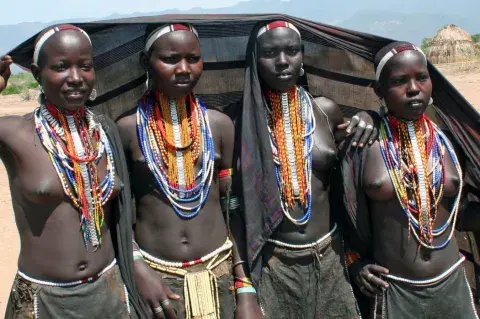
Today you will drive south (approximately 3 hours) to the town of Turmi, an important market town. The two main tribes that live in the area are the Karo and the Hamer, both of whom practise elaborate body decoration. Today you’ll visit a nearby Hamer village and learn more about this tribe. The women roll their hair into dreds called goscha using fat and dark red ochre, and their arms are wrapped in beads and copper bracelets. The tribe practise scarification, with women having scars cut into their arms or shoulders to make themselves more beautiful and as a display of their strength. They wear beaded goatskin frocks over their upper body, and married women wear thick copper necklaces. The men are also adorned with scars, for beauty or traditionally representing the number of enemies they have killed, and courageous men wear clay hair buns on their heads. The Hamer also have a similar annual ceremony to the Mursi’s stick fighting – here a young man must jump back and forth on the backs of bulls to prove himself worthy of the family's pride and of a wife, while women are ritualistically whipped in voluntary support of the initiate. You will spend the night in an eco-lodge in Turmi.

DAY 7 TURMI

Today you’ll meet the other main tribe of the area as you travel through open red earth savannah, coming across herds of gazelle, to Murile (variously named Murelle and Murle, approximately 2 hours). Here, near the Omo River, is the domain of the Karo tribe. They were once rich in cattle and lived in impressive houses, but since losing them to disease and moving to farming they live in small conical huts on stilts. They are still an impressively decorative people though, painting themselves in beautiful red, yellow, black and white designs for special occasions, using pigments made from local minerals. In a similar manner to the Hamar, the women tie their hair into tight knots that are dyed ochre, and the men plaster their hair in tight clay buns after they defeat an enemy – human or animal. They also practise scarification for beauty or to signify community importance. The skilled body and face painting has important cultural symbolism and the designs and complexity can change daily. Return to your accommodation in Turmi for the evening.

DAY 8 KONSO

Today head northeast on a drive that offers spectacular panoramic views of the surrounding scenery, including the terraced hills of Konso. Along the way, you may be lucky enough to see the small dik-dik antelope and the impressively-horned lesser kudu. All roads into South Omo pass through Konso, and this unprepossessing small town of 3,000 inhabitants is a good base for exploring the unique and complex culture of the hillside villages in the surrounding countryside. The Konso people, who historically had little contact with the rest of Ethiopia and so retain a traditionalist character, live in walled hilltop settlements with maze-like stone fences. Each village is made up of sub-compounds, and there is a central communal building called a mora, the ground floor of which is used by the men, boys and girls as a social area; adult women are excluded. Each village will have important poles or stones erected to mark special events like the initiation of a new generation or victories over enemies. Famous are the carved wooden grave markers, or waga, erected over the burial place of an important warrior. The deceased's facial features are carved into the waga and enhanced by using teeth made from animal bones. This evening you will enjoy sundower drinks, local music and dancing on the terrace of your accommodation – Kanta Lodge.

DAY 9 ADDIS ABABA AND DEPARTURE

We drive back to Arba Minch in the morning and take the flight back to Addis Ababa in the afternoon. You will enjoy the final farewell dinner in one of the famous National restaurants in the city with live local music and dancing. Here you will be able to put your new found Ethiopian dancing moves to the test by joining in with the traditional dancers.