Some Unique items in earlier China culture
Kite
The whistle of kites flying high overhead sounded like the zheng, the Chinese zither, an ancient
musical instrument, such that although not all kites made such a sound, the name of feng
zheng, wind zither, has stuck and spread from generation to generation. Feng zheng came in an
assortment of forms and colours like fish and butterflies and are sold at the gates of most
suburban parks.
Daily appliances
Appliances used on a day-to-day basis by the Chinese serve the dunctional purpose of
cultivating Habits and prctices unique to their routine, culture and lifestyle.
1. Bamboo sieves are used in the preparation of dumplings. Flour is sprinkled on the sieves
and dumplings are laid out just before they are ready for cooking in boiling water.
A traditional work is used to fry noodles and long Bamboo chopsticks are used to serve
the Noodles.
2. Typical Chinese ketchen, knives and cleavers are made of steel with a wooden handle. The
head is rounded for leverage and the bottom is flat.
3. Aluminum kettles are used by the Chinese to boil water. It is common to sit these
kettles on small portable stoves, fuelled by briquettes that are specially fit with holes
for convenient handling with long scissor-like pincers.
4. Thermos bottles have moved on from aluminum to colorful plastic Hulls.
5. Washboards of ridged wood or corrugated zinc were used until recently. Clothes are
scrubbed on the ribbed surface during washing. They are still seen in the countryside today.
6. Stinky soap, nick-named by the Shanghainese, is a simple perfumed-free soap with high
alkaline content. It's used for washing clothes and has a long history in China.
7. Decorative items line the table of a typical drawing room in a country house. It displays
what a household treasures, such like the TV set, clocks, vases, and other paraphernalia.
On the wall, both New Year paintings and poetic couple are displayed.
Household goods
A Wooden Mould--with a handle is used to make moon cakes for the moulds and impressed
on the cakes are auspicious Chinese caracters, such as FU for the luck and SHOU
for longevity or floral motifs.
Scissors--are traditionally of iron or steel. However with the rapid development of
science, the name of its maker is engraved. One of the most famous brands in China is
called Zhang Xiao Quan.
The Back Scracher--is an extended itch in it's back. The long banboo handle with a
combe head conveniently reaches round hard to get spots on the back by hand. The hardy
tool fearured is an-all in one. In the middle of the handle is a small abacus that
functions as calcuation too and doubles as massage beads. The most surprising the tiny
ear pick hiddend a mine nox at the end of the handle.
The mosquito coil incense-- is a traditional way to keep mosquitoes away. Li Zi Brand is
one of the most famous old brands in last periode.
Rea Plastic string-- is used to pack goods everwhere in China.
The Chinese Abacus-- is a tool tool to aid rapid mental calculations. The abacus has a
history of years and was popularised towards the end of the Yuan Dynasty. It was taught
in elematery school during mathematic lessons until the arrival of modern electronic calculators.
Wooden Facquer Plates-- are used to display foodstuff like fruits, rice and flour.
Portable Coal Stoves-- using specially shaped briquettes were once extremely
popular in Shanghai and some minority areas until the 1980s. Usually made of iron, the
stove use the valve to control ventilation to the stove and enable speed it up or slow
it down. Opening the valve was usually the top priority for a shool kid to do after
school, for both the preparation of hot water and dinner for the whole family.
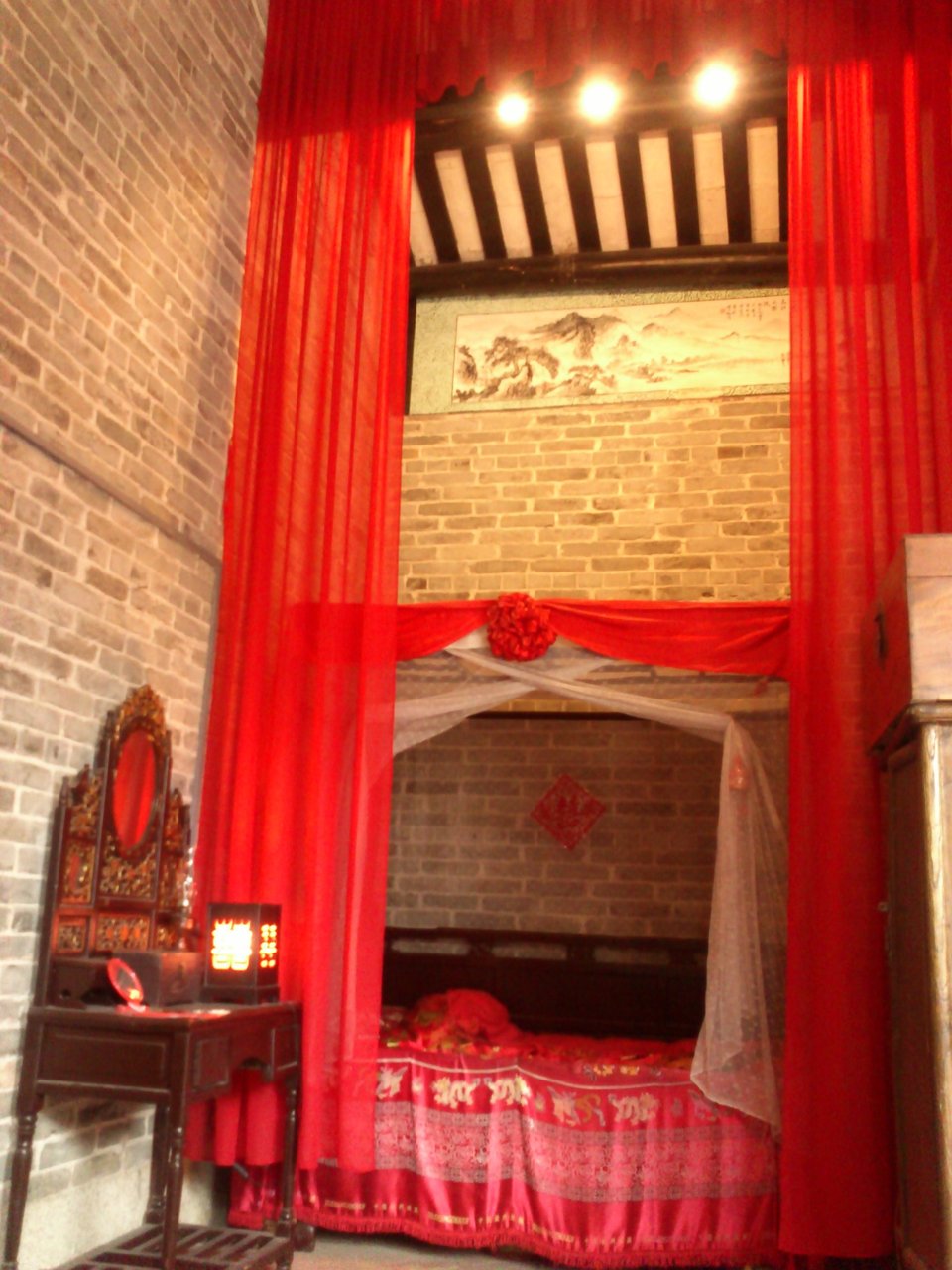
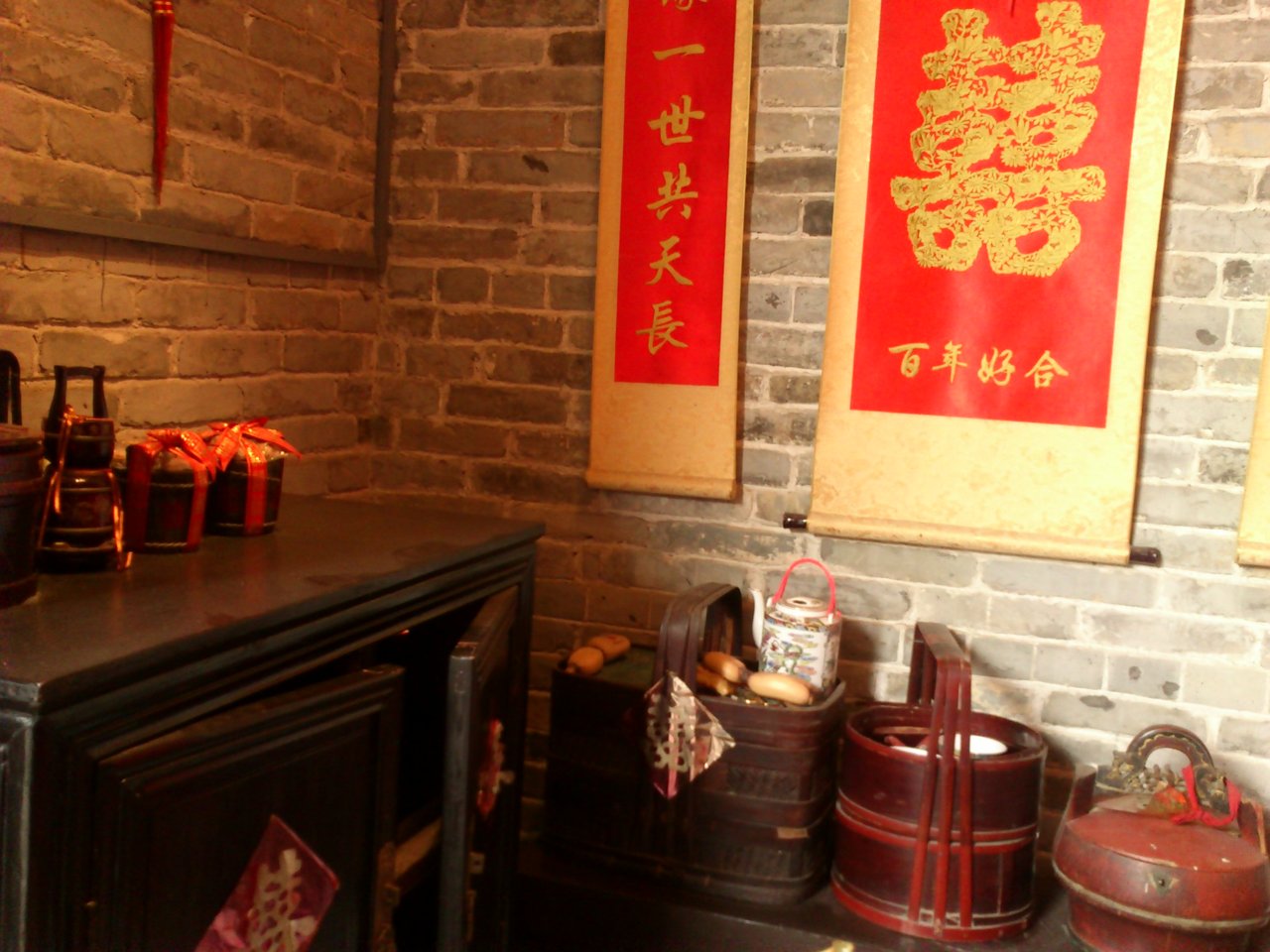
The Custom of Double Happiness in a Traditional Chinese Wedding
The Chinese character XI, for happiness, is customarily printed or cut on red paper,
doubled XI, and strategically placed within the sight of a yong bride or groom. The
story goes that in ancient Tang Dynasty, there was a student, who was making his way
to the capital for imperial examinations. Unfortunately, he fell ill on route as he
was passing through a mountain village. The young man, under the care of an herbal
doctor and his kind daughter, got well soon.
By yhe time he had to leave, the young man and the girl had fallen i love. The young man excelled
is the examinations and picked up the prize, and was ensured a promising future as an official.
The young man and the girl soon got married. During the wedding, the couple doubled the
Chinese character XI and hung them on the wall. From there on it became an auspicious
practice for newly weds to use the double happiness character.