Malaysia Attractions
Central Market KL
The Central Market was built in 1888 by the British Colonial Government to be used as a wet market for Kuala Lumpur's early citizens. It was here that the tin-miners bought their fresh produce and other food ingredients to feed their mine workers. It is located beside the Kla...
The Central Market was built in 1888 by the British Colonial Government to be used as a wet market for Kuala Lumpur's early citizens. It was here that the tin-miners bought their fresh produce and other food ingredients to feed their mine workers. It is located beside the Klang River as road communications were insufficient and the river was used as a main transport channel.
By 1933, further expansions were made to the market to include warehouses. As KL experienced rapid development in the 1970s, plans were made by the authorities to demolish the site in order to make way for the Dayabumi Complex. However, there was much objection to this move to eradicate the Market and intervention by the Malaysian Heritage Society proved timely as they successfully petitioned against the destruction of the building and the site was declared as a "Heritage Site".
This wet market was very convenient to the early city dwellers because it was within the vicinity of the Klang Bus Station, a feeder bus service for KL and PJ as well as Klang. The KL Railway Station was also within walking distance. There was always the presence of fishy smells in both the buses and trains as commuters took home their provisions.
In 1985, the Central Market was renovated and renamed Pasar Seni. It ceased being a wet market and was transformed into a indoor bazaar with more than a hundred small shops, hawker centre, restaurant, fast-food outlet, selling all kinds of souvenirs and crafts, batiks etcetera.
The Annexe building at the back of the main building houses art galleries, theatre and performing arts centre beside housing many arts & crafts shops. It is one of the major art spaces in KL and is a hotspot for creative arts activities all year round.
The walking mall, also known as Kasturi Walk is an open-air bazaar which also sells many souvenirs besides housing street musicians and buskers.
Sunway Lagoon
5 different themed parks in 1 amazing destination.
Sunway Lagoon is Asia's Best Attraction. This multi-award winning attraction is recognized by the International Association of Amusement Parks and Attractions (IAAPA) as Asia's Best Attraction for four consecutive years (2007 &nda...
5 different themed parks in 1 amazing destination.
Sunway Lagoon is Asia's Best Attraction. This multi-award winning attraction is recognized by the International Association of Amusement Parks and Attractions (IAAPA) as Asia's Best Attraction for four consecutive years (2007 – 2010).
Whether you are looking to cool down in the tropical sun @ Asia's Best Water Park, looking for a hair-raising experience @ Scream Park, enjoying the thrilling rides @ Amusement Park, getting your adrenaline pumping @ Extreme Park, or getting up close and personal with your favourite animals @ Wildlife Park, there is something for all @ Sunway Lagoon.
Sunway Lagoon is also home to the regions hottest events and concerts. Glitz and glamour, or cool and happening, Sunway Lagoon has hosted the most sought after events in the region like the MTV World Stage (2009, 2010 & 2012), Arthurs Day Celebration and the Quiksilver Revolution Tour.
With more than 80 rides and attractions, and within 15 minutes from Kuala Lumpur, Sunway Lagoon is the ultimate destination you’ll have to visit when you’re in town!


Malaysia Articles
Top Malaysia Tours
$180 Per Day
Historical Malacca full day tour(include lunch)
1 - Baba and Nyonya Peranakan Museum. Step back in time with a visit to this museum which is an actual Peranakan heritage town house and is a great example of Peranakan culture.
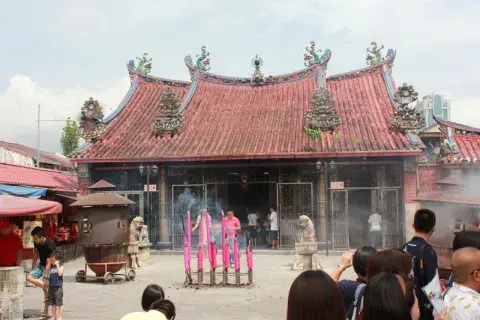
2 -Cheng Hoon Teng Temple. - Oldest Chinese temple in Malaysia and has an inscription dating 1685 commemorating the deeds of by Kapitan China Li Wei King....Read more
1 - Baba and Nyonya Peranakan Museum. Step back in time with a visit to this museum which is an actual Peranakan heritage town house and is a great example of Peranakan culture.
2 -Cheng Hoon Teng Temple. - Oldest Chinese temple in Malaysia and has an inscription dating 1685 commemorating the deeds of by Kapitan China Li Wei King.
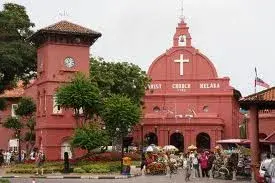
3 - Christ Church - this church was built between 1741 and 1753. It replaced a Portuguese church, which was shattered. Bricks were shipped from Zeeland in the Netherlands. On the floor of the church you will find Dutch tombstones. It is the oldest protestant church in Malaysia. On the altar you will see sacramental silverware, still bearing the Dutch coat of arms.
4 - Dutch Square - Beautiful square around Christ Church and the Stadhuys. On this square you will find the Tang Beng Swee Clock Tower, it looks Dutch, but it is not. It was built in 1886.
5 - Jonker, Heeren and adjacent streets - This is the residential heart of Old Malacca just west of the Malacca River, with its narrow winding streets, beautifully decorated houses, tiny shops, temples and mosques. The whole area is undergoing a renaissance with new shops, restaurants and hotels catering to tourists mushrooming everywhere. However, the area still has a lot of atmosphere and is worth having a look around. One of the streets in this area is Harmony Street (officially Temple street or Jalan Tokong), so called because it contains the prayer houses of Malaysia's three main faiths - the Cheng Hoon Teng Chinese temple, the Sri Poyatha Vinayagar Moorthi Hindu Temple, and the Kampung Kling Mosque.
6 - Malaysian Navy Museum, across the road from the Maritime Museum
Malay and Islamic World Museum, Jalan Kota (beside the Porta de Santiago) - it also currently houses a Museum of Torture (European medieval period) for a limited duration on the ground floor.
7 - Masjid Kampung Hulu Built in 1728, it's one of the oldest functioning mosques in Melaka together with Masjid Kampung Kling and Masjid Tengkera (Tranquerah), Jln Tengkera see the mixed architecture of Chinese, Javanese and Arab on the minarets and the roofs.
8 - Muzium Budaya/Sultanate Palace - Below the hill you will find this museum (Melaka Cultural Museum). It is a reconstruction of the istana of the sultan Mansur Shah. It was built in 1985.
9 - Porta de Santiago - You will find this remains of the old Portuguese fort A Famosa on Jalan Kota, around St Paul's Hill. What you can see nowadays is a mostly Dutch reconstruction, bearing the VOC coat of arms.
Saint Paul's Church - take a path up the hill and it will lead you to this church. It was originally built in 1521, by the Portuguese. It became a fortress in 1567, until 1596. After the Dutch siege it became St Paul's, before it was known as 10 - Nossa Senhora da Annunciada (Our Lady of Annunciation). It has been used as a burial ground for the Dutch. You can still see the tombstones, along the walls of ruins of the church.
11 - Stadthuys - completed in 1660. It is a reproduction of the former Stadhuis (town hall) of the Frisian town of Hoorn in the Netherlands which existed from 1420 until 1796. Nowadays, it houses the Museums of History and Ethnography. This is one of the oldest Dutch buildings in the east.
Stamp Museum, Jalan Kota (sandwiched between the Muzium Rakyat and the Malay and Islamic World Museum)
UMNO Museum, Jalan Kota (between the Islamic Museum and the Muzium Rakyat) - museum about the United Malays National Organisation.
Youth Museum/Melaka Art Gallery, Jalan Laksamana, beside the Christ Church. The Youth Museum is on the ground floor, the Art Gallery on the second level. You can have a bird's eye view of Dutch Square from a window on the second level.
12 - Bukit China - Bukit China is the one of the largest Chinese cemetery outside of mainland China. Graves can be found here that go back to the late Ming dynasty (mid 17th century). The earliest grave found so far dates to 1622, but unfortunately many graves were exhumed during the British occupation of Malaysia. Bukit China is a famous jogging spot for the locals and jogging tracks are available all over the hil
$100 Per Day
One Day Penang Island Temples Tour.
Visiting Peang, you must must a few beautiful temples over here. They are:
1. Kek Lok Si - The largest Buddhist temples in Southeast Asia, seven storey pagoda which combines of Chinese, Thailand and Burmese Buddhist designs.
2. Wat Chaiya Mangkalaram Thai Buddhist Temple - The world third largest reclining Buddha statue.
3. Dhamikarama Burmese Temple - The first Buddhist temple in Penang and built in 1803.
...Read moreVisiting Peang, you must must a few beautiful temples over here. They are:
1. Kek Lok Si - The largest Buddhist temples in Southeast Asia, seven storey pagoda which combines of Chinese, Thailand and Burmese Buddhist designs.
2. Wat Chaiya Mangkalaram Thai Buddhist Temple - The world third largest reclining Buddha statue.
3. Dhamikarama Burmese Temple - The first Buddhist temple in Penang and built in 1803.
4. Kuan Yin Temple (Goddess of Mercy Temple) - The earlier temple was built by Chinese settlers in George Town. Beautiful dragon-entwined pillars and carved from a type of green stone.
5. Arulmigu Sri Mahamariamman Temple is the oldest Hindu temple in Penang and features sculptures of gods and goddesses over its main entrance and facade.
6. Arulmigu Balathandayuthapani Temple - Climbing over 500 steps to reach the temple.
$120 Per Day
One Day Tour From Penang to Taiping and Kuala Kangsar.
Depart from anywhere in Penang island or mainland to Taiping. The itinenary is as follow:
1. Taiping Lake Garden - It used to mining ground before turning to a public garden in year 1880 and is the first public garden in Peninsular Malaysia
2. Taiping Zoo - The first Malaysia zoo and open daily on day and night time.
3. Kuala Sepetang Riverside.
...Read moreDepart from anywhere in Penang island or mainland to Taiping. The itinenary is as follow:
1. Taiping Lake Garden - It used to mining ground before turning to a public garden in year 1880 and is the first public garden in Peninsular Malaysia
2. Taiping Zoo - The first Malaysia zoo and open daily on day and night time.
3. Kuala Sepetang Riverside.
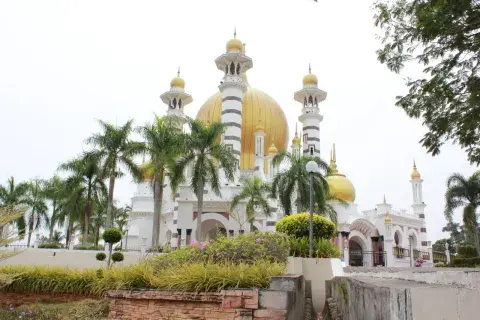
4. Ubudiah Mosque, Kuala Kangsar - One of the most beautiful mosque in Malaysia. It was designed by Arthur Benison Hubback. The total construction cost is $200,000 (in 1917 year).
5. Istana Iskandariah - A royal palace for Perak Sultanate and the official residence of Sultan of Perak since its completion in 1933. The construction of the building did not use a single nail.
6. The first Malaysia plant rubber tree.
On the way back to Penang, stopping at Bukit Tambun seafood is available upon request.