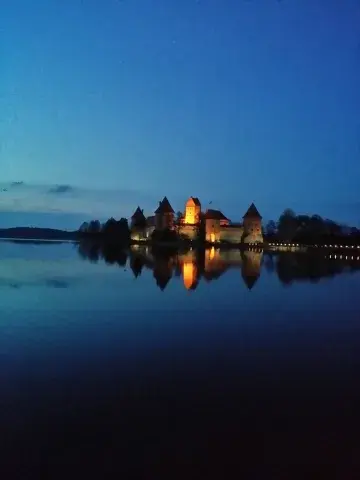
Japanese tourists in Lithuania
In their home country, which is extremely densely populated, the Japanese live and work very close to one another and see little nature,
...In their home country, which is extremely densely populated, the Japanese live and work very close to one another and see little nature,
"However, it is not easy to understand how much the Japanese really like Lithuania, and how much they hate it. They are extraordinarily polite, it is rude to say ‘no’ in their culture, so it is not easy to figure out when they say what they mean, and when it is just a ‘white lie’,” says the guide. “The positive conclusions that tourists from the country of the rising sun like Lithuania can only be drawn from the continuously increasing flow of travellers.”
Data of the Lithuanian Tourism Department show that, according to the number of tourists arriving in Lithuania from Asia, Japan has the lead. 37.5 percent more tourists from Japan visited Lithuania during the first half of 2014 than a year before.
In late September, the tour agency Baltic Tours participated and presented Lithuania in one of the world’s largest tourism exhibition, JATA Tourism EXPO Japan. Most Japanese tourists, who like to see the world by travelling, tend to first visit Italy, Greece, Germany and other bigger, more popular European destinations and only later do they come to Lithuania, looking for something less ordinary. After returning home, they are eager to tell their peers about what they have seen, even boasting a little about visiting a country which is not known in Japan.
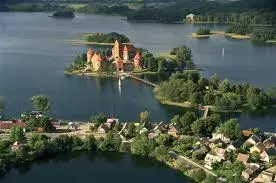
Tourists from the country of the rising sun who come to the Baltics usually tour sites listed as UNESCO heritage: the Old Town of Vilnius, Riga and Tallinn, Trakai, Rundale Palace in Latvia.
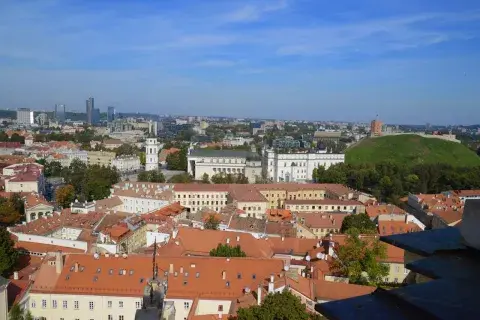
Lithuania makes the biggest impression on Japanese visitors of all the three Baltic states. “Because our architectural heritage has more baroque buildings, which the Japanese particularly like. A walk around the Old Town gives the Japanese the impression of a medieval city. True, apparently because of different cultural references, what looks old for the Japanese can sometimes prove to be actually quite new, and vice versa,”
Japanese tourists have the child-like quality of being able to notice details and enjoy them. “Sometimes I tell about Napoleon, who wanted to take away the church of St. Ann, when they see a kitten and start taking photos of it. Maybe it is because it is more often the elderly that travel to Lithuania, and they are more sentimental. So it is not surprising that sometimes live things are more interesting to them than architectural objects,”
Japanese are also quite pragmatic, they are interested in a walk around Vilnius Akropolis, the city’s biggest shopping mall: “Shopping is one of the most popular leisure activities in the world and Japan is not an exception.”
While visiting Lithuania, Japanese tourists try to taste some traditional Lithuanian foods: zeppelins, dumplings and other dishes. They only avoid cold beetroot soup, which does not seem appetizing, though they really like to order it and take photos of themselves with “the pink soup”.
Lithuanians are a little similar to the Japanese in character: “The Japanese and Lithuanians share some features of northern peoples: they are restrained, cautious, tend to keep the distance. You will not become friends with a Japanese person fast, or with a Lithuanian. A lot of time passes before the Japanese show emotions. And if their journey across the Baltic states begins in Lithuania, they become more open and emotional only in Latvia or even Estonia.”