Lhasa Attractions
Lhasa Articles
Lhasa--Holy Land
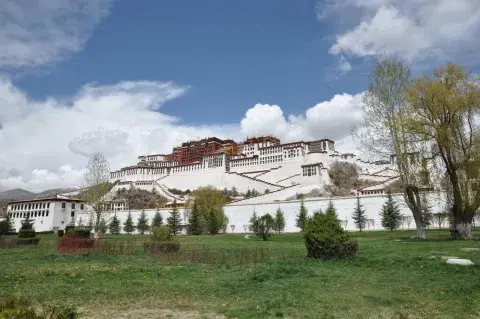
Lhasa: Meaning “Holy-Land” in Tibetan, Lhasa is located along the northern bank of the Lhasa River, a tributary of the Yarlung Zangbo River. Sitting 3,700 meters above sea level, Lhasa is a cultural city with a history of more than 1,300 years....
Lhasa: Meaning “Holy-Land” in Tibetan, Lhasa is located along the northern bank of the Lhasa River, a tributary of the Yarlung Zangbo River. Sitting 3,700 meters above sea level, Lhasa is a cultural city with a history of more than 1,300 years. It is also known as the solar city because of its abundant sunshine. The capital as well as the center for politics, economy, and culture of Tibet, it is a city with many world-famous places of interest.
Tibet Travel Permits
There are two documents required for foreign tourists who want to travel in Tibet. One is the Chinese Visa, which you can apply for in Chinese Embassy in your country, one is Tibet Permit, which you have to obtain it in order to enter Tibet....
There are two documents required for foreign tourists who want to travel in Tibet. One is the Chinese Visa, which you can apply for in Chinese Embassy in your country, one is Tibet Permit, which you have to obtain it in order to enter Tibet. we are able to assist you the process all of those above documents if you book a tour with us.
Passport & Visas
All individuals entering Tibet must hold a passport valid for at least six months. If you are entering Tibet from China, your Chinese visa will be valid, though only travelers with tourist visas (not business, resident or student visas) are permitted. Entering Tibet from Nepal, either by friendship highway or by air requires a separate visa valid for Tibet from the Chinese embassy in Katmandu (30-60 day visas are the norm and it normally takes 2 week days to obtain it.). You may apply for a group visa from us (minimum of two people in a group and you must leave China with this person unless you can change the visa inside China).
Tibet Permit
What's Tibet Permit?
Tibet Permit, also known as Tibet Tourism Bureau (T.T.B.) Permits, is necessary for entry to Lhasa or any other part of the Tibetan Autonomous Region, and is obtained as part of tour arrangements for travel to Tibet. It is issued by Tibet Tourism Bureau for restricting the number of foreign tourists traveling in Tibet.
How to apply for it?
We can facilitate to obtain it for you if you could submit your personal information to us beforehand by providing your Full name, Sex, Birth Date, Nationality, Passport Number, and Occupation. Journalists, Diplomat, and monks are forbidden to entering to Tibet. After receive your information, we will start to work with the T.T.B to applying for the permit for you. It normally takes 2 week days.
Tips for applying for a China visa:
It's better not to mention Tibet as your travel destination when you are applying for a visa to China. Because you may be refused by stating that you will go to Tibet. However, it will be much easier if you travel to Tibet after you have got a valid China visa after you entering China.
The Qinghai-Tibet Railway, the first to link Tibet to the rest of China, starts in Xining, in Northwest China's Qinghai Province and ends in Lhasa. Before the opening of the 1,956-km railway, tourists could only reach Tibet by air or road. Since the opening of the Qinghai-Tibet Railway on July 1 last year ,Tibet has witnessed a rapid growth in tourism. In the first quarter of this year, it received 116,000 visitors, up 15.8 percent on the same period last year, Tourism income has grown up 16.5 percent on the same period year on year.
The palace's opening hours will be extended from July to September, and the tickets must be booked in advance.
Lhasa also plans to build a replica of the Potala Palace in miniature.
Prior to the opening of the railway, the palace received an average of 1,400 tourists a day. During last year's peak season, however, that figure rose to 6,000. Tibet hosted more than 2.51 million tourists last year, of which 154,800 were from overseas. They spent 2.77 billion yuan in the region and the region expected to host 3 million tourists and bring in 3.4 billion yuan this year.
About beauty
When it comes to the inner beauty of human beings, words can sometimes be pale. Still, I hope to describe it with some experiences of myself and my friends as well.
When it comes to the inner beauty of human beings, words can sometimes be pale. Still, I hope to describe it with some experiences of myself and my friends as well.
This spring, I have spent almost a month traveling in Tibet with another backpacker. I clearly remember the first day when we were hiking on the Tibet-Yunnan line. We were extremely both excited and worried, just like a mother who was about to witnessing her child’s first step. On the one hand, we were totally attracted by the fascinating breathtaking scenery created by nature. On the other hand, we were moved by some Tibetans who stopped to offer us a free ride even when we were not thumbing a lift. I do think this is true beauty rooted from one’s heart which has no esthetic border at all. Also, I remember, one day, we were too thirsty to move on; we went to a house for some water, an old woman who can only spoke Tibetan offered us 5 bowels of water at one time. Her little grandson told us that she worried whether we have quenched our thirst. That moment, I couldnot help crying and felt the true beauty was full of that small dim room, without any language barrier. When we arrived in Lhasa, we saw many devout Tibetans worshiping for their beliefs and we were moved to tears uncontrollably. We knew that true beauty was planted in their sincere heart, presented with their respect and awe for life.
Though people living in the inner world are more sophisticated, there are inner beauty here and there. My old friend always gives money to beggars, once I told him not to give money to them, since most of them were fake frauds. He said that begging was just one way of life, what he needed to do was choosing whether giving money to them or not. Besides,I want to talk about another friend, who is just an ordinary worker in Suzhou, China. But he has been funding several high school students since he began to work 6 years ago. I am delighted that I have so many friends who are so helpful and kind. However, at the same time, I am shamed that I had done nothing like them. And now, I am saving all my coins for children, and I am ready to do more.
In a word, wherever we are, donot forget to learn to become a good person and always be ready to help others.
Top Lhasa Tours
$695 Per Day
TIBET 2014 SPECIAL BUDGET LHASA & EVEREST TOURS
Day 01 : Arrival in Lhasa either by train or flight, will be received and transfer to hotel Oh Dan or similar hotel Day 02 : Guided tour to Drepung in the morning, the Summer Palace & Sera monastery in the afternoon
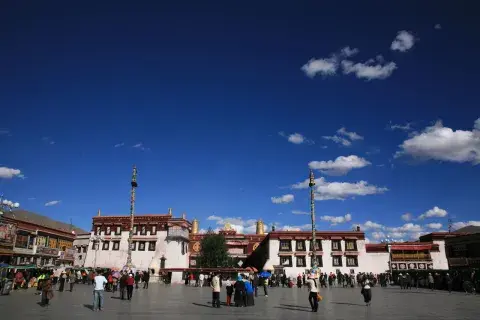
Day 03 : Guided tour to Potala Palace in the morning, afternoon the old town and Jokhang temple, Barkhor marketDay 04 : Drive from Lhasa to Gyangtse - Shigatse / 370kms / 8 hrs...Read more
Day 01 : Arrival in Lhasa either by train or flight, will be received and transfer to hotel Oh Dan or similar hotel Day 02 : Guided tour to Drepung in the morning, the Summer Palace & Sera monastery in the afternoon
Day 03 : Guided tour to Potala Palace in the morning, afternoon the old town and Jokhang temple, Barkhor marketDay 04 : Drive from Lhasa to Gyangtse - Shigatse / 370kms / 8 hrs
Little early departure from Lhasa to Gyangtse, en route we will visit the Yamdrok lake, a scenic stop at Norjing Gangsang glacier, arrival in Gyangtse, touring the Palchor Chode monastery including the Kumbum, late afternoon continue our drivingthrough the Nying Chu river valley, passing a lot of local Tibetan villages, we will visit local families as well, arrival in Shigatse in the evening, hotel stay ( 3800m ) Gang Gyen hotel
Day 05 : Shigatse - Shekar / 240kms / 5hrs
Spend the morning touring Tashi Lunpo monastery ( the main seat of Panchen Lama ) and the local traditional market, afternoon leave Shigatse, continue our overland trip on the friend-ship highway to Shekar with stops en route, hotel stay in, hotel stay in Shekar ( 4300m ), hotel stay Shekar hotel Economic wing
Day 06 : Shekar - Rombuk / 90kms / 3hrs
Early departure, drive to Rombuk, crossing Gyawu la passs where we have sun-rising panoramic view of the greatest part of the Himalaya, continue overland trip to Romuk, afternoon excursion to Everest base camp ( Hiking from Rombuk monastery up to Everest base camp and back ), spend most part of this day in Rombuk and Everest base camp, over night at Rombuk monastery guest house or tented guest house in Za Rombuk ( 5000m )
Day 07 : Everest base camp - Old Tingri - Nyalam 220kms / 7hrs
Spend a beautiful morning at base camp and then drive down to Old Tingri where we have our lunch break, then we continue our drive to Zhang Mu border, en route we will make a short scenic stop at Thong la pass over 5000m for a panoramic view of Himalaya, from there we have a scenic descending down to Nyalam, over night at guest house there ( 3700m )
Day 08 : Nyalam - Zhangmu - Kodari - cross border
After breakfast, we drive down to border town, Zhangmu ( 2700m ), go through the Chinese immigration formalities and then cross over the border, end of Tibet part tour ( Those who plan to travel back to Lhasa ) will be proposed to stay at the border town while rest of the members are crossing border to Nepal and late morning, we drive to Shigatse, over night stay there and the next day to Lhasa and depart Tibet from Lhasa either by train or flight.Based on minimum 4 pax ( FIT surcharge is $180 USD if group size ends up with only 2 or 3 participants and if clients wish to go on the scheduled trip with paying the surcharge) Booking is closed 2 weeks prior to the departure date.
Single supplement is $95 USD ( if any one wants to have a single room during hotel stays on the tour )
Tour price include :
- Tibet permits
- local Tibetan tour guide
- transfers as per itinerary where it is required
- hotel and guest house stays with daily breakfast
- guide and vehicle entrance fee for Everest national park
- food and lodge for guide and driver
- transfer from Nepal border to Kathmandu
- travel agency service surcharge
Tour price exclude :
- any airfare, airport tax
- any train fare
- lunch / dinner
- personal entrance fee for any sight on the tour ( payable on the spot )Traveling back from border to Lhasa to leave Tibet from Lhasa :
It is $125 USD for any client who plans to return to Lhasa from border ; ( Does not cover accommodation & meals, payable on the spot )
Remarks :
It is no problem to arrange to arrive in Lhasa a day or two days earlier than the fixed starting date of this trip and relax here in Lhasa before start the tour with the rest of the members. This will cost the following :
$35 for a room per extra night hotel in Lhasa with breakfast included
$75 for an arrival airport transfer ( for anyone who arrives by flight )
$55 for an arrival railway station transfer ( for anyone who arrives by train )
No independent travel allowed to visit any main sights such as palaces, temples and monasteries on your own during your free day, for anyone who is arriving earlier here in Lhasa to spend a few free days.
Departure :
May 03, May 17, June 07, June 21, July 12, July 26, Aug 16
Aug 30, Sept 13, Oct 04, Oct 18
The trip can start from Kathmandu, the departure:
May 10, May 24, June 14, June 28, July 19, Aug 02, Aug 23,
Sept 06, Sept 20, Oct 11, Oct 25.
The cost is $735 per person for the : Based on minimum 4 pax ( FIT surcharge is $220 USD if group size ends up with only 2 and $105 FIT for 3 participants and if clients wish to go on the scheduled trip with paying the surcharge) Booking is closed 2 weeks prior to the departure date.
$500 Per Day
Four-day Lhasa Holy Tour
Day 1...Read more
Day 1
Tour starts from the religious Potala Palace (3700 m ) built in the 7th century by the famous Tibetan king-Songtzen Gampo. The present one was built by the 5th Dalai Lama in the 17th century. It became known as the "Winter Palace" by the 1750, when the 7th Dalai Lama built the Norbulingka Park as his summer residence. After lunch, you will visit Jokhang monastery, situated in the old section of Lhasa. King Songtzen Gampo built this temple in the mid-7th century A.D. Now it is the most sacred place in Tibet. Pilgrims come here to pay homage from all over Tibet. Visit Barkhore Street in the evening.
Day 2
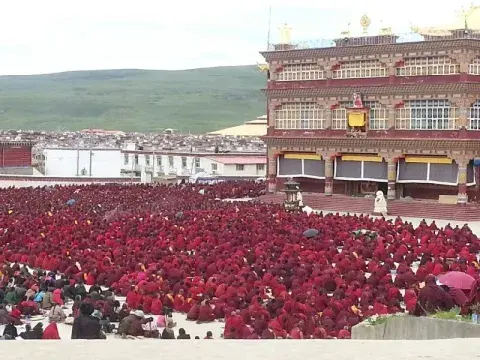
Morning: Visit Drepung monastery the sacred land of Gelug Sect., which was established in 1416 and the second, third and fourth Dalai Lama once resided in. Afterwards visit Norbulingka, the summer residence of the Dalai Lamas.
Afternoon: Visit Sera monastery, which was created in 1419 and has always been an important Buddhist seminary. As rose are planted everywhere in the monastery, it is also called “the court of wild rose”. Today still 200 lamas live in there. The "Buddhism Scriptures Debate" in Sera is very famous.
Day 3
In the morning drive to visit Ganden Monastery, which was built by Tsongkhaba in present-day Dagaze County to the east of Lhasa in 1409 soon after the Monlam Festival was over. Ganden is one of the three main monasteries of Gelug Sect. Anyhow, different from Drepung and Sera, it once played a more prominent political role in Tibetan history.
The abbot of this monastery possess of a high religious position within the system of Gelug Sect, just inferior to Dalai and Panchan. The monastery was reconstructed in 1993 and restored its original appearance. The holy stupa of Tsongkhaba is just in the monastery. On the way visit the Dark Yerpa Monastery, where you’ll visit the famous ancient meditation caves in the spectacular limestone cliffs of the Yerpa Valley.
$300 Per Day
14-day China Holy Tibet Tour
Day 1 Arrive in Tsetang
Upon arriving at Gongga Airport, accommodate at your hotel in Tsetang (90 km). Located in the southeast of Lhasa, Tsetang is 3,500 meters high. It was said the legendary ancestors of Tibetans, a monkey (Bodhisattva Avalokitesvara in the shape of a monkey) and his wife a Dakhini once lived on the Gongpori mountain in the east of the city. And so the city of Tsetang is regarded as the “Playground of Monkeys” and the Tibetans as the descended of the Monkey....Read more
Day 1 Arrive in Tsetang
Upon arriving at Gongga Airport, accommodate at your hotel in Tsetang (90 km). Located in the southeast of Lhasa, Tsetang is 3,500 meters high. It was said the legendary ancestors of Tibetans, a monkey (Bodhisattva Avalokitesvara in the shape of a monkey) and his wife a Dakhini once lived on the Gongpori mountain in the east of the city. And so the city of Tsetang is regarded as the “Playground of Monkeys” and the Tibetans as the descended of the Monkey.
In terms of geography, the fertile valleys of Yarlung and Chongye here are appropriate for development of Tibetan civilization; there were once numerous temples, shrines and Stupas in this area. Besides, Chongye is the birthplace of the 5th Dalai Lama (1617-1682). Stay at your hotel for adapting to the high altitude. It is helpful to take things easy for the first few days, and try to drink some water.
Day 2 Tsetang
Morning: At first visit monastery Samye. Located in the north of Yarlung Tsangpo River and hold in the arms of mountains, it is the oldest monastery of Tibet (8th century). The stele hanging on the entrance to the main temple shows that king Trisong Detsen took Buddhism as the state religion in 779. The monastery complex consists of several buildings, whose arrangement reflects the Buddhist conception of the structure of the universe.
Afternoon: Make a trip to visit the Yumbulakhang, a castle built in the 7th and 8th centuries during the time of the first Tibetan kings. It is far viewed that the castle is high on the rock hills and looks brightly white. The original fortress is now converted into a chapel; in the ground floor there is a shrine in honor of the early kings. The steps up are steep but it is worthy because on the top of the hill you can far view the valley and the surrounding mountain.
The Potala Palace
Day 3 Tsedang,Lhasa
After breakfast drive to Lhasa, the capital of Tibet. On the way visit Mindrolin Monastery. It was built in the late 10th century and had its current name when it was rebuilt in 1677. It is one of the three great monasteries of the Nyingma Sect. The monastery has paid attention to the research of Buddhist classics, astronomical calendar, calligraphy rhetoric and Tibetan medicines and is famous for its achievements in these fields. Over the years the recommendation of the “Chronology of the Tibetan Calendar” has been formulated by the monastery, and it is famous as the first academy of Lamaism in Tibet.
Day 4 Lhasa
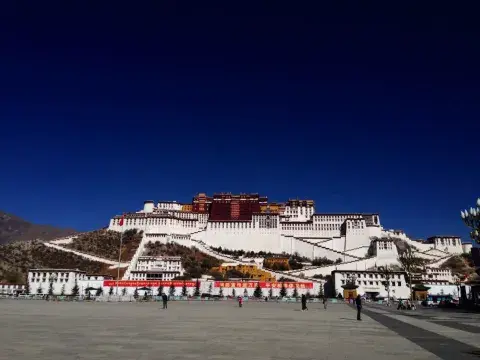
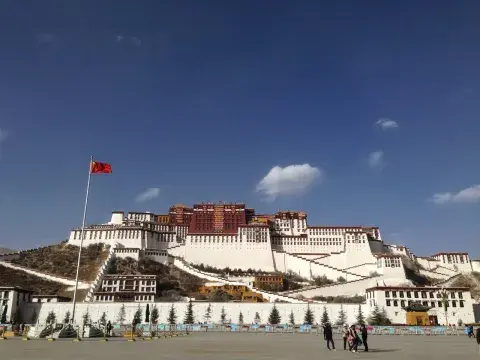
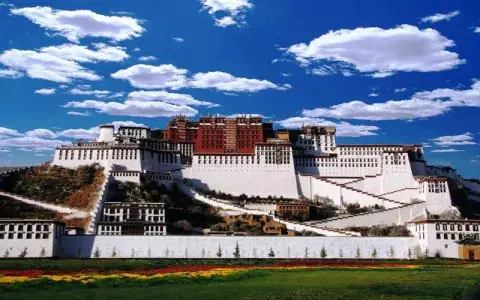
Morning: Visit Potala, which was originally constructed in 637 by Songtsen Gampo, the first king of the united Tibet, and later expanded and served as the winter residence of the Dalai Lamas as well as the religious-political nexus of traditional Tibet. The crowds of pilgrims, innumerable magnificent murals, Buddhist statues, scriptures and rare treasures altogether create a dense religious and art atmosphere that impresses every visitor.
Afternoon: Visit Jokhang monastery, the center of the Tibetan Buddhism and the sacred land of Buddhist followers where thousands of pilgrims come for worship everyday. The temple, built in 647, is the earliest wood-and-masonry structure still existing in Tibet. Walk on the Barkhor street surrounding Jokhang, a big free market with its prolific stalls for selling local specialties.
Day 5 Lhasa
Morning: Visit Drepung monastery the sacred land of Gelug Sect., which was established in 1416 and the second, third and fourth Dalai Lama once resided in. Afterwards visit Norbulingka, the summer residence of the Dalai Lamas.
Afternoon: Visit Sera monastery, which was created in 1419 and has always been an important Buddhist seminary. As rose are planted everywhere in the monastery, it is also called “the court of wild rose”. Today still 200 lamas live in there. The "Buddhism Scriptures Debate" in Sera is very famous.
Day 6 Lhasa
In the morning drive to visit Ganden Monastery, which was built by Tsongkhaba in present-day Dagaze County to the east of Lhasa in 1409 soon after the Monlam Festival was over. Ganden is one of the three main monasteries of Gelug Sect. Anyhow, different from Drepung and Sera, it once played a more prominent political role in Tibetan history.
The abbot of this monastery possess of a high religious position within the system of Gelug Sect, just inferior to Dalai and Panchan. The monastery was reconstructed in 1993 and restored its original appearance. The holy stupa of Tsongkhaba is just in the monastery. On the way visit the Dark Yerpa Monastery, where you’ll visit the famous ancient meditation caves in the spectacular limestone cliffs of the Yerpa Valley.
The Nam Tso Lake
Day 7 Lhasa,Nam Tso,Lhasa
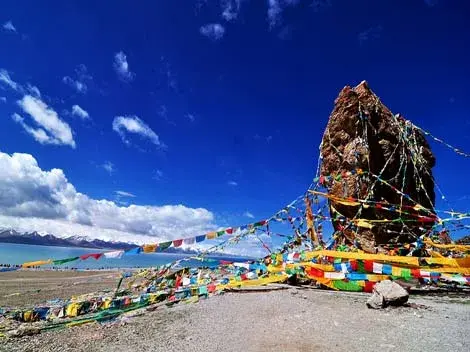
In the morning drive to Nam Tso Lake along the Qinghai-Tibet Highway. Pass by the 5,150-meter Lhachen La and reach the Nam Tso or Tengri Nor (heaven lake in Mongolian) along the newly paved way and set up camp at Tashi Dorie peninsula. Nam Tso, the biggest salty lake of Tibet, is 70 kilometers long from east to west and 30 kilometers wide from north to south, covering an area of 1,920 square kilometers with an altitude of 4,700 meters above sea level.
It is said the holy lake and the holy mountain Nyenchen Tanglha are a couple of lovers, who altogether guard the vast pasture and cattle. Explore the Tashi peninsula by walking around the holy hill, the cliffs of which have eroded over the centuries. On the way piles of mani stones stand. Also visit the nomads in yak hair tents who have been living on the pastures between the holy Nam Tso and Nyenchen Tanglha . Drive back to Lhasa.
Day 8 Lhasa,Yamdrok Lake,Gyantse
Drive to Gyantse. On the Kamba La (4796 m) have a fantastic view of the holy lake Yamdrok (4,441 m), one of the three holy lakes in Tibet and the largest habitat of waterfowls in south Tibet. On arriving, visit Pelkor Monastery as well as the splendid Kumbum Stupa (100-Thousand-Buddha Pagoda) nearby, both of them built in the 15th century and situated in the northwestern edge of Gyantse.
This typical Tibetan Buddhist monastery is the only one large building complex in Tibet that old monastery and stupas are completely preserved and characterized as a monument. It is recorded 14,000 kilograms of copper was used to make the 8-meter-high sitting statue of Sakyamuni Buddha housed in the grand hall of the temple. The 8-storey stupa is 42m high and 62m in diameters contains a total of 76 chapels with wonderful murals revered by art scholars around the world.
Day 9 Gyantse,Shalu Monastery,Shigatse
Morning: Drive to Shalu monastery, situated 20 kilometers (12 miles) southeast of Shigatse, is a perfect combination of Han and Tibet architectural styles. It was built in 1087 by Jigzun Xerab Qoinnyai. Then drive to Shigatse (3,880 m), the second largest city with 40,000 inhabitants in Tibet and the traditional capital of the Tsang.
Afternoon: Visit Tashilhunpo monastery of Gelug Sect, the seat of the Panchen Lama built in 1447 and one of the six grand monasteries in Tibet. The monastery houses a giant statue of the Maitreya Buddha, the biggest gilded statue of Maitreya (Buddha of the future) in China, and a tomb of the 4th Panchen Lama containing masses of jewels and gold. In Tibet Buddhism, Panchen Lama is just the reincarnation of Maitreya Buddha.
Day10 Shigatse,Sakya,Shegar
In the morning drive to Sakya Monastery (4.280 m), the master monastery of the Striped Sect, it is well famed with its long history, large-scale construction complex and great influence in Tibet history. Its North Monastery was built in 1073 and named Sakya (meaning “gray” in Tibetan) as it was situated on a gray mountain. What we see today is the Sakya South Monastery built in 1269 by Phagpa. The outside walls of the monastery were painted with red, white and gray, symbolizing Avalokitesvara, Manjushri and Vajrapani. Then drive over Yalung La (4,520 m) and Gyathso La (5,220 m) to Shegar (new Tingri; 4.350 m; approx. 245 km).
Mt. Everest
Day 11 Shegar,Rongbuk,Mt. Everest
After breakfast drive to Rongbuk monastery, the highest monastery in the world. This evening you will have intoxicating view of the north face of Mt. Everest, (8848) the tallest mountain on earth. Overnight at guesthouse or tent guesthouse.
Day 12 Mount Everest Base Camp,Shigatse
In the morning, enjoy the sunrise from Mt. Everest. Then drive to the Base Camp of Mt. Everest for you to take a close look at this great mountain. And you could enjoy seeing the biggest and the most well perserved glacier- Rongbu if you are lucky enough for the weather.Back to Shigatse.
Day 13 Shigatse,Lhasa
After breakfast take a different route back to Lhasa.
Day 14 Leave Tibet
Transfer to the airport or the railway station, leave Tibet