Lhasa Attractions
Take the Qinghai-Tibet Railway
People are often surprised to learn that there is an Inner Mongolia, but the vast grass sea of this northern Chinese province is sure to put you in mind of the vast Mongol hordes who once ravaged China.
A distinctly different culture makes a visit to Inner Mongolia akin to visiting an entir...
People are often surprised to learn that there is an Inner Mongolia, but the vast grass sea of this northern Chinese province is sure to put you in mind of the vast Mongol hordes who once ravaged China.
A distinctly different culture makes a visit to Inner Mongolia akin to visiting an entirely different country. Here, you’ll find a land of boundless grasslands that sway in the breeze, nomadic herdsmen, primitive yurts, and sun-baked deserts at odds with China’s modern metropolises.
No visit to the region would be complete without slipping into the saddle and seeing the grasslands from horseback. The horse was a vital part of what made Mongolia such a threat to ancient China, and to see Inner Mongolia from horseback is truly a bucket list experience.
If you need our guide/assistant/sourcing/interpreter, welcome to contact us.:)
We can custom your trip and guide you.
Please click my photo and add my contact. Let's talk details.
Thanks for reading.
Jessica In China (86-13570345653)
Lhasa Articles
Badain Jaran Desert in China
The Badain Jaran Desert (巴丹吉林沙漠) is a desert in China which spans the provinces of Gansu, Ningxia and Inner Mongolia. It covers an area of 49,000 square kilometres (19,000 sq mi). By size it is the third largest desert in China....
The Badain Jaran Desert (巴丹吉林沙漠) is a desert in China which spans the provinces of Gansu, Ningxia and Inner Mongolia. It covers an area of 49,000 square kilometres (19,000 sq mi). By size it is the third largest desert in China. This desert is home to some of the tallest stationary dunes on Earth, with some reaching a height of more than 500 meters (1,600 ft), although most average at around 200 meters (660 ft). Its tallest dune is also measured, from base to peak, as the world’s third tallest dune and highest stationary dune in the world. The desert also features over 100 spring-fed lakes that lie between the dunes, some of which are fresh water while others are extremely saline. These lakes give the desert its name which is Mongolian for “mysterious lakes”. It is also crossed by one river, the Ruo Shui (“weak water”), which has formed an alluvial plain in the desert.oli.
If you need our guide/assistant/sourcing/interpreter, welcome to contact us.:)
We can custom your trip and guide you.
Please click my photo and add my contact. Let's talk details.
Thanks for reading.
Jessica In China (86-13570345653)

Folk & Taboos in Tibet
Giving HaDa : Ha Da is a white scarf, giving Ha Da to people is the most common courtesy of Tibetan people,to show welcome, sincerity, loyalty....
Giving HaDa : Ha Da is a white scarf, giving Ha Da to people is the most common courtesy of Tibetan people,to show welcome, sincerity, loyalty. After receiving Hada, if not accustomed to plate wear, also can not be placed at will, can fold up to put up, or offering Ha Da when you pass through the mountain pass or go into the palace.
2. Toast tea: when a guest drinks, the guest must use his ring finger to touch wine on the empty bullet three times, then sip three mouthfuls, each drink the host will pour wine to the cup, finally you can finish it, it’s called "three mouthfuls one cup",which is the most formal drinking etiquette, After three mouthfuls, you can drink at will. Tea is a daily ritual. Guests come in and sit down. Housewives or children come to pour butter tea, but guests don't have to serve their own tea before they can pick it up when the host holds it in front of you. That's the polite way.
3.The Tibetans stick out their tongues to show respect or embarrassment rather than ridicule, and to put the palms together in front of their chest is a form of courtesy;
4.When greeting Tibetans, they usually add a word "la" after their name to show respect. Secondly, in the diet,they will not drink sound, chew out of sound, eat with full mouth;
5. Enter the tent of Tibetan people, bedroom, can not step on the threshold with your foot, also can not spit in front of others;
6.You cannot enter the temple without permission, especially in some remote temples. Do not smoke after entering the temple. It's okay to watch things in the temple, but don't touch and point with your hands. You can't take pictures without permission. Some places are not allowed to travel counterclockwise, others are closed to women, and in Tibet disrespect to lamas and temples,people will be criticized.When Passing temples, flagpoles, mannequins, pagodas, people all go clockwise around;
7.Tibetans absolutely do not eat donkey, horse and dog meat, and some areas do not eat fish;
8.Refrain from spitting in front or back of others, patting palms and farting;
9. Shall not cross over Buddhism instruments, fire pots;
10.The cylinder can not be reversed by the wheel.
11.Avoid touching others’ head or shoulders with your hands.
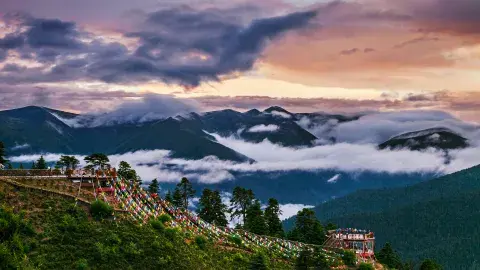
List of Commonly-used Things for Tibetan Tourists
- Clothing: warm clothes such as sweaters and down jackets, hats, scarves, gloves, slippers and sneakers;
(note: the temperature difference in the morning and evening in Tibet is quite large, reaching about 13 degrees, and thicker clothes such as thick coats or sweaters should be...
- Clothing: warm clothes such as sweaters and down jackets, hats, scarves, gloves, slippers and sneakers;
(note: the temperature difference in the morning and evening in Tibet is quite large, reaching about 13 degrees, and thicker clothes such as thick coats or sweaters should be brought along, especially in high altitude areas (such as Dingri, Everest), when the temperature drops to about 0-5 degrees in the evening of August. It is necessary to do a good job in preventing the cold. Down jacket, cotton wool pants and other warm clothes are essential.
- Electronic products and related: camera, film, battery and storage card, GSM mobile phone, socket converter;
- Cosmetics / sunscreen: moisturizer, sunglasses, sun oil, 35P sunscreen;
- Food / drugs: high calorie foods (chocolate, etc.), vitamins, safe medicine (cold medicine, gastrointestinal medicine, anti-insect plaster, band-aid, etc.), emergency drug prescriptions;
- Other: itinerary, cash (extra change), dry / wet tissue, umbrella or raincoat
Top Lhasa Tours
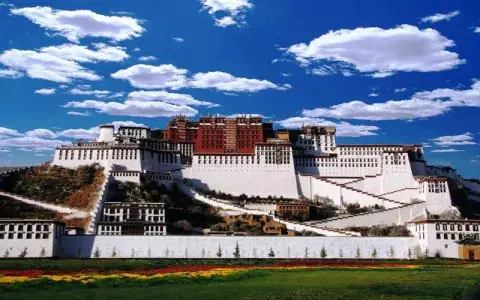
$500 Per Day
Four-day Lhasa Holy Tour
Day 1...Read more
Day 1
Tour starts from the religious Potala Palace (3700 m ) built in the 7th century by the famous Tibetan king-Songtzen Gampo. The present one was built by the 5th Dalai Lama in the 17th century. It became known as the "Winter Palace" by the 1750, when the 7th Dalai Lama built the Norbulingka Park as his summer residence. After lunch, you will visit Jokhang monastery, situated in the old section of Lhasa. King Songtzen Gampo built this temple in the mid-7th century A.D. Now it is the most sacred place in Tibet. Pilgrims come here to pay homage from all over Tibet. Visit Barkhore Street in the evening.
Day 2
Morning: Visit Drepung monastery the sacred land of Gelug Sect., which was established in 1416 and the second, third and fourth Dalai Lama once resided in. Afterwards visit Norbulingka, the summer residence of the Dalai Lamas.
Afternoon: Visit Sera monastery, which was created in 1419 and has always been an important Buddhist seminary. As rose are planted everywhere in the monastery, it is also called “the court of wild rose”. Today still 200 lamas live in there. The "Buddhism Scriptures Debate" in Sera is very famous.
Day 3
In the morning drive to visit Ganden Monastery, which was built by Tsongkhaba in present-day Dagaze County to the east of Lhasa in 1409 soon after the Monlam Festival was over. Ganden is one of the three main monasteries of Gelug Sect. Anyhow, different from Drepung and Sera, it once played a more prominent political role in Tibetan history.
The abbot of this monastery possess of a high religious position within the system of Gelug Sect, just inferior to Dalai and Panchan. The monastery was reconstructed in 1993 and restored its original appearance. The holy stupa of Tsongkhaba is just in the monastery. On the way visit the Dark Yerpa Monastery, where you’ll visit the famous ancient meditation caves in the spectacular limestone cliffs of the Yerpa Valley.
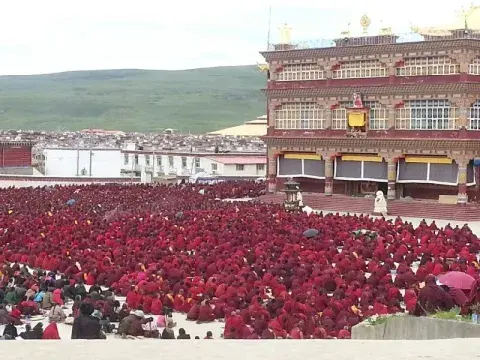
$695 Per Day
TIBET 2014 SPECIAL BUDGET LHASA & EVEREST TOURS
Day 01 : Arrival in Lhasa either by train or flight, will be received and transfer to hotel Oh Dan or similar hotel Day 02 : Guided tour to Drepung in the morning, the Summer Palace & Sera monastery in the afternoon
Day 03 : Guided tour to Potala Palace in the morning, afternoon the old town and Jokhang temple, Barkhor marketDay 04 : Drive from Lhasa to Gyangtse - Shigatse / 370kms / 8 hrs...Read more
Day 01 : Arrival in Lhasa either by train or flight, will be received and transfer to hotel Oh Dan or similar hotel Day 02 : Guided tour to Drepung in the morning, the Summer Palace & Sera monastery in the afternoon
Day 03 : Guided tour to Potala Palace in the morning, afternoon the old town and Jokhang temple, Barkhor marketDay 04 : Drive from Lhasa to Gyangtse - Shigatse / 370kms / 8 hrs
Little early departure from Lhasa to Gyangtse, en route we will visit the Yamdrok lake, a scenic stop at Norjing Gangsang glacier, arrival in Gyangtse, touring the Palchor Chode monastery including the Kumbum, late afternoon continue our drivingthrough the Nying Chu river valley, passing a lot of local Tibetan villages, we will visit local families as well, arrival in Shigatse in the evening, hotel stay ( 3800m ) Gang Gyen hotel
Day 05 : Shigatse - Shekar / 240kms / 5hrs
Spend the morning touring Tashi Lunpo monastery ( the main seat of Panchen Lama ) and the local traditional market, afternoon leave Shigatse, continue our overland trip on the friend-ship highway to Shekar with stops en route, hotel stay in, hotel stay in Shekar ( 4300m ), hotel stay Shekar hotel Economic wing
Day 06 : Shekar - Rombuk / 90kms / 3hrs
Early departure, drive to Rombuk, crossing Gyawu la passs where we have sun-rising panoramic view of the greatest part of the Himalaya, continue overland trip to Romuk, afternoon excursion to Everest base camp ( Hiking from Rombuk monastery up to Everest base camp and back ), spend most part of this day in Rombuk and Everest base camp, over night at Rombuk monastery guest house or tented guest house in Za Rombuk ( 5000m )
Day 07 : Everest base camp - Old Tingri - Nyalam 220kms / 7hrs
Spend a beautiful morning at base camp and then drive down to Old Tingri where we have our lunch break, then we continue our drive to Zhang Mu border, en route we will make a short scenic stop at Thong la pass over 5000m for a panoramic view of Himalaya, from there we have a scenic descending down to Nyalam, over night at guest house there ( 3700m )
Day 08 : Nyalam - Zhangmu - Kodari - cross border
After breakfast, we drive down to border town, Zhangmu ( 2700m ), go through the Chinese immigration formalities and then cross over the border, end of Tibet part tour ( Those who plan to travel back to Lhasa ) will be proposed to stay at the border town while rest of the members are crossing border to Nepal and late morning, we drive to Shigatse, over night stay there and the next day to Lhasa and depart Tibet from Lhasa either by train or flight.Based on minimum 4 pax ( FIT surcharge is $180 USD if group size ends up with only 2 or 3 participants and if clients wish to go on the scheduled trip with paying the surcharge) Booking is closed 2 weeks prior to the departure date.
Single supplement is $95 USD ( if any one wants to have a single room during hotel stays on the tour )
Tour price include :
- Tibet permits
- local Tibetan tour guide
- transfers as per itinerary where it is required
- hotel and guest house stays with daily breakfast
- guide and vehicle entrance fee for Everest national park
- food and lodge for guide and driver
- transfer from Nepal border to Kathmandu
- travel agency service surcharge
Tour price exclude :
- any airfare, airport tax
- any train fare
- lunch / dinner
- personal entrance fee for any sight on the tour ( payable on the spot )Traveling back from border to Lhasa to leave Tibet from Lhasa :
It is $125 USD for any client who plans to return to Lhasa from border ; ( Does not cover accommodation & meals, payable on the spot )
Remarks :
It is no problem to arrange to arrive in Lhasa a day or two days earlier than the fixed starting date of this trip and relax here in Lhasa before start the tour with the rest of the members. This will cost the following :
$35 for a room per extra night hotel in Lhasa with breakfast included
$75 for an arrival airport transfer ( for anyone who arrives by flight )
$55 for an arrival railway station transfer ( for anyone who arrives by train )
No independent travel allowed to visit any main sights such as palaces, temples and monasteries on your own during your free day, for anyone who is arriving earlier here in Lhasa to spend a few free days.
Departure :
May 03, May 17, June 07, June 21, July 12, July 26, Aug 16
Aug 30, Sept 13, Oct 04, Oct 18
The trip can start from Kathmandu, the departure:
May 10, May 24, June 14, June 28, July 19, Aug 02, Aug 23,
Sept 06, Sept 20, Oct 11, Oct 25.
The cost is $735 per person for the : Based on minimum 4 pax ( FIT surcharge is $220 USD if group size ends up with only 2 and $105 FIT for 3 participants and if clients wish to go on the scheduled trip with paying the surcharge) Booking is closed 2 weeks prior to the departure date.
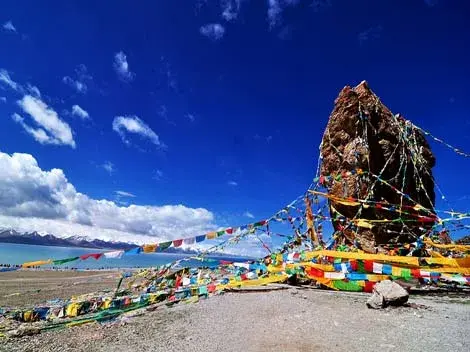
$300 Per Day
14-day China Holy Tibet Tour
Day 1 Arrive in Tsetang
Upon arriving at Gongga Airport, accommodate at your hotel in Tsetang (90 km). Located in the southeast of Lhasa, Tsetang is 3,500 meters high. It was said the legendary ancestors of Tibetans, a monkey (Bodhisattva Avalokitesvara in the shape of a monkey) and his wife a Dakhini once lived on the Gongpori mountain in the east of the city. And so the city of Tsetang is regarded as the “Playground of Monkeys” and the Tibetans as the descended of the Monkey....Read more
Day 1 Arrive in Tsetang
Upon arriving at Gongga Airport, accommodate at your hotel in Tsetang (90 km). Located in the southeast of Lhasa, Tsetang is 3,500 meters high. It was said the legendary ancestors of Tibetans, a monkey (Bodhisattva Avalokitesvara in the shape of a monkey) and his wife a Dakhini once lived on the Gongpori mountain in the east of the city. And so the city of Tsetang is regarded as the “Playground of Monkeys” and the Tibetans as the descended of the Monkey.
In terms of geography, the fertile valleys of Yarlung and Chongye here are appropriate for development of Tibetan civilization; there were once numerous temples, shrines and Stupas in this area. Besides, Chongye is the birthplace of the 5th Dalai Lama (1617-1682). Stay at your hotel for adapting to the high altitude. It is helpful to take things easy for the first few days, and try to drink some water.
Day 2 Tsetang
Morning: At first visit monastery Samye. Located in the north of Yarlung Tsangpo River and hold in the arms of mountains, it is the oldest monastery of Tibet (8th century). The stele hanging on the entrance to the main temple shows that king Trisong Detsen took Buddhism as the state religion in 779. The monastery complex consists of several buildings, whose arrangement reflects the Buddhist conception of the structure of the universe.
Afternoon: Make a trip to visit the Yumbulakhang, a castle built in the 7th and 8th centuries during the time of the first Tibetan kings. It is far viewed that the castle is high on the rock hills and looks brightly white. The original fortress is now converted into a chapel; in the ground floor there is a shrine in honor of the early kings. The steps up are steep but it is worthy because on the top of the hill you can far view the valley and the surrounding mountain.
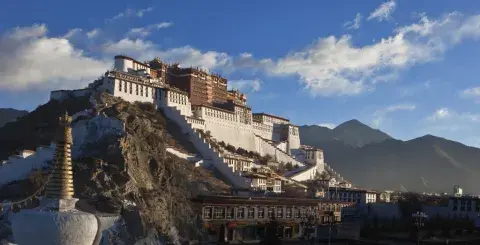
The Potala Palace
Day 3 Tsedang,Lhasa
After breakfast drive to Lhasa, the capital of Tibet. On the way visit Mindrolin Monastery. It was built in the late 10th century and had its current name when it was rebuilt in 1677. It is one of the three great monasteries of the Nyingma Sect. The monastery has paid attention to the research of Buddhist classics, astronomical calendar, calligraphy rhetoric and Tibetan medicines and is famous for its achievements in these fields. Over the years the recommendation of the “Chronology of the Tibetan Calendar” has been formulated by the monastery, and it is famous as the first academy of Lamaism in Tibet.
Day 4 Lhasa
Morning: Visit Potala, which was originally constructed in 637 by Songtsen Gampo, the first king of the united Tibet, and later expanded and served as the winter residence of the Dalai Lamas as well as the religious-political nexus of traditional Tibet. The crowds of pilgrims, innumerable magnificent murals, Buddhist statues, scriptures and rare treasures altogether create a dense religious and art atmosphere that impresses every visitor.
Afternoon: Visit Jokhang monastery, the center of the Tibetan Buddhism and the sacred land of Buddhist followers where thousands of pilgrims come for worship everyday. The temple, built in 647, is the earliest wood-and-masonry structure still existing in Tibet. Walk on the Barkhor street surrounding Jokhang, a big free market with its prolific stalls for selling local specialties.
Day 5 Lhasa
Morning: Visit Drepung monastery the sacred land of Gelug Sect., which was established in 1416 and the second, third and fourth Dalai Lama once resided in. Afterwards visit Norbulingka, the summer residence of the Dalai Lamas.
Afternoon: Visit Sera monastery, which was created in 1419 and has always been an important Buddhist seminary. As rose are planted everywhere in the monastery, it is also called “the court of wild rose”. Today still 200 lamas live in there. The "Buddhism Scriptures Debate" in Sera is very famous.
Day 6 Lhasa
In the morning drive to visit Ganden Monastery, which was built by Tsongkhaba in present-day Dagaze County to the east of Lhasa in 1409 soon after the Monlam Festival was over. Ganden is one of the three main monasteries of Gelug Sect. Anyhow, different from Drepung and Sera, it once played a more prominent political role in Tibetan history.
The abbot of this monastery possess of a high religious position within the system of Gelug Sect, just inferior to Dalai and Panchan. The monastery was reconstructed in 1993 and restored its original appearance. The holy stupa of Tsongkhaba is just in the monastery. On the way visit the Dark Yerpa Monastery, where you’ll visit the famous ancient meditation caves in the spectacular limestone cliffs of the Yerpa Valley.
The Nam Tso Lake
Day 7 Lhasa,Nam Tso,Lhasa
In the morning drive to Nam Tso Lake along the Qinghai-Tibet Highway. Pass by the 5,150-meter Lhachen La and reach the Nam Tso or Tengri Nor (heaven lake in Mongolian) along the newly paved way and set up camp at Tashi Dorie peninsula. Nam Tso, the biggest salty lake of Tibet, is 70 kilometers long from east to west and 30 kilometers wide from north to south, covering an area of 1,920 square kilometers with an altitude of 4,700 meters above sea level.
It is said the holy lake and the holy mountain Nyenchen Tanglha are a couple of lovers, who altogether guard the vast pasture and cattle. Explore the Tashi peninsula by walking around the holy hill, the cliffs of which have eroded over the centuries. On the way piles of mani stones stand. Also visit the nomads in yak hair tents who have been living on the pastures between the holy Nam Tso and Nyenchen Tanglha . Drive back to Lhasa.
Day 8 Lhasa,Yamdrok Lake,Gyantse
Drive to Gyantse. On the Kamba La (4796 m) have a fantastic view of the holy lake Yamdrok (4,441 m), one of the three holy lakes in Tibet and the largest habitat of waterfowls in south Tibet. On arriving, visit Pelkor Monastery as well as the splendid Kumbum Stupa (100-Thousand-Buddha Pagoda) nearby, both of them built in the 15th century and situated in the northwestern edge of Gyantse.
This typical Tibetan Buddhist monastery is the only one large building complex in Tibet that old monastery and stupas are completely preserved and characterized as a monument. It is recorded 14,000 kilograms of copper was used to make the 8-meter-high sitting statue of Sakyamuni Buddha housed in the grand hall of the temple. The 8-storey stupa is 42m high and 62m in diameters contains a total of 76 chapels with wonderful murals revered by art scholars around the world.
Day 9 Gyantse,Shalu Monastery,Shigatse
Morning: Drive to Shalu monastery, situated 20 kilometers (12 miles) southeast of Shigatse, is a perfect combination of Han and Tibet architectural styles. It was built in 1087 by Jigzun Xerab Qoinnyai. Then drive to Shigatse (3,880 m), the second largest city with 40,000 inhabitants in Tibet and the traditional capital of the Tsang.
Afternoon: Visit Tashilhunpo monastery of Gelug Sect, the seat of the Panchen Lama built in 1447 and one of the six grand monasteries in Tibet. The monastery houses a giant statue of the Maitreya Buddha, the biggest gilded statue of Maitreya (Buddha of the future) in China, and a tomb of the 4th Panchen Lama containing masses of jewels and gold. In Tibet Buddhism, Panchen Lama is just the reincarnation of Maitreya Buddha.
Day10 Shigatse,Sakya,Shegar
In the morning drive to Sakya Monastery (4.280 m), the master monastery of the Striped Sect, it is well famed with its long history, large-scale construction complex and great influence in Tibet history. Its North Monastery was built in 1073 and named Sakya (meaning “gray” in Tibetan) as it was situated on a gray mountain. What we see today is the Sakya South Monastery built in 1269 by Phagpa. The outside walls of the monastery were painted with red, white and gray, symbolizing Avalokitesvara, Manjushri and Vajrapani. Then drive over Yalung La (4,520 m) and Gyathso La (5,220 m) to Shegar (new Tingri; 4.350 m; approx. 245 km).
Mt. Everest
Day 11 Shegar,Rongbuk,Mt. Everest
After breakfast drive to Rongbuk monastery, the highest monastery in the world. This evening you will have intoxicating view of the north face of Mt. Everest, (8848) the tallest mountain on earth. Overnight at guesthouse or tent guesthouse.
Day 12 Mount Everest Base Camp,Shigatse
In the morning, enjoy the sunrise from Mt. Everest. Then drive to the Base Camp of Mt. Everest for you to take a close look at this great mountain. And you could enjoy seeing the biggest and the most well perserved glacier- Rongbu if you are lucky enough for the weather.Back to Shigatse.
Day 13 Shigatse,Lhasa
After breakfast take a different route back to Lhasa.
Day 14 Leave Tibet
Transfer to the airport or the railway station, leave Tibet