Iran Attractions

Iran Articles
Currency – Two names, One Currency
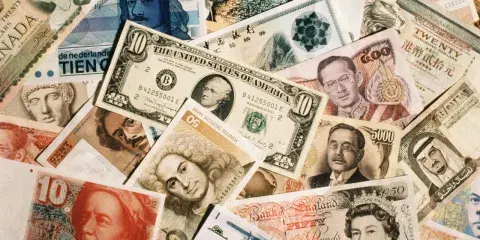
Take US Dollars or Euros with you to Iran and change them up into Iranian Rial at the local exchange offices (not the dodgy guys on the street or at the hotels which have the lower government exchange rate).
...Take US Dollars or Euros with you to Iran and change them up into Iranian Rial at the local exchange offices (not the dodgy guys on the street or at the hotels which have the lower government exchange rate).
Before you know it, you have millions of Rials and it all looks easy. However, while ALL notes state ‘Rial’ there is another ‘currency’ or ‘super unit’ that is used – Toman – which is not listed on any note or coin.
Toman is simply one tenth of the Rial price, so when
Imagine you order the food in restaurant and you are presented with bill of “32,000” which is equivalent to almost $1, unreasonably cheap, in fact the price is in Toman. To convert to Rial, you simply add a zero. therefore it is 320,000 Rial.
Travel Tips for Tehran
Tehran is a cosmopolitan city, with great museums, parks, restaurants, and warm friendly people. It deserves at least a few days of your Iranian itinerary. The city can be roughly divided into two different parts - north and south....
Tehran is a cosmopolitan city, with great museums, parks, restaurants, and warm friendly people. It deserves at least a few days of your Iranian itinerary. The city can be roughly divided into two different parts - north and south. The northern districts of Tehran are more prosperous, modern, cosmopolitan and expensive while southern parts are less attractive but cheaper.
At the time of the Zand dynasty, it was a little town that was significant from a strategic point of view. The first of the Qajar kings, Agha Mohammed Khan, named Tehran as the country's capital in 1778, and most of its growth started during the reign of a subsequent Qajar monarch, Fath-Ali Shah. The castle which Agha Mohammed Khan had built was to contain the new majestic buildings. At the same time, the city's populace was redoubled. Due to the increasing significance of the city, gates, squares and mosques were built and it was at the time of Nassereddin Shah that the city's master sketch was prepared and modern streets were constructed. Later, huge central squares like Toopkhaneh square (now Imam Khomeini) and quite a few military buildings were built. Even though the Qajar dynasty was in a period of decline, Tehran soon took the shape of a modern city. The structure of large government buildings, new streets, recreation centres, urban service organizations, and academic and methodical centres were started, even as most of the old gates and buildings were destroyed and the city's old architectural fabric replaced by a contemporary one. Tehran has also earned itself the rather unenviable reputation as a smog-filled, traffic-clogged and featureless sprawl of concrete bursting at the seams with 14 million residents. But you can also find an endless number of nice and cosy places in and around the city - if you know where to look. Tehran is also a city of parks and possesses more than 800 of them, all well-kept. The city is nearly a mile high above sea level and as a result is cooler than other cities in the middle east. Summer temperatures are around 32°C or about 90-95°F. The air tends to be very dry. A combination of factors make Tehran a pleasant place to visit: The dry climate which is constantly cool (at least in the evenings), the proximity of the mountains, the parks and gardens where flowers blossom all through the year, the alleys of trees in the avenues or even smaller streets, and even the water that runs down from the upper city along deep and wide gutters which look like small rivers during spring. The Alborz range on the north of Tehran, which hosts the highest peak in Iran, provides fantastic conditions for ski lovers in the winter. In winter, the mountain hotels and ski-clubs at Shemshak, and Dizine are full several days a week. Some specialist skiers consider the snow value in northern Tehran to be some of the best in the world.
Azadi Tower. has been the longstanding symbol of Tehran. It was constructed to commemorate the 2,500th anniversary of the Persian empire, combines elements of Sassanid and Islamic architecture. The entrance of the tower is directly underneath the main vault and leads into the Azadi Museum on the basement floor.
Tehran City Theater (Tehran Theater of the Performing Arts; Te'atr e Shahr), Enqelab Ave., Valiasr Ave., ☎ 982166460592 ,982166460594. Architect Ali Sardar Afkhami designed the main building in the 1960s, later expanded. edit
Baharestan. the historic Iranian parliament building, inaugurated in 1906.
Senate of Iran (Kakh-e Majles-e Sena). Designed by architect Heydar Ghiaï, the construction was led by Rahmat Safai. The dome is one of the most technically challenging projects in the entire endeavor. edit
Khaneh Honarmandan (Artists' House), South of Honar Park, North Mousavi Ave., Taleqani Ave., Tehran, ☎ +982188310457 (fax: +982188311600)
Tughrul Tower. a 12th-century monument, located in the city of Rey, Iran. Tuğrul Tower is near Rashkan castle. edit
Rashkan Castle.
Shah-Abdol-Azim shrine, Rey. contains the tomb of: ‘Abdul ‘Adhīm ibn ‘Abdillāh al-Hasanī (aka. Shah Abdol Azim). Shah Abdol Azim was a fifth generation descendant of Hasan ibn ‘Alī and a companion of Muhammad al-Taqī. He was entombed here after his death in the 9th century.
Toopkhaneh (Imam Khomeini Square; Tūpkhūneh; Cannon House). a major town square (Maidan-e Toopkhaneh) and a neighborhood in the south of the central district of Tehran.
Ibn Babawayh Cemetery (Ibn-e Baabevey), Rey.
Grand Bazaar (Bâzâr Bozorg-e Tehrân), (South of Tehran. (''Metro: Panzdah-e-khordad''). The main entrance is on 15 Khordad Ave.). A historical market. The Grand Bazaar is located in southern Tehran; its many corridors are over 10 km in length. There are several entrances, some of which are locked and guarded at night free.
Milad Tower. Milad tower is the fourth tallest tower in the world and 12th tallest freestanding structure in the world, and it is visible from almost everywhere in Tehran. Note that tickets to enter the observation lounge must be reserved in advance. There is a rotating restaurant at 390m above the ground, which has become one of the most expensive restaurants in the country.
Mausoleum of Ayatollah Khomeini, (Metro: Haram-e-Motahar, on the southern edge of the city). Free.
Museums
Golestan Palace
Tehran has more than 50 museum and 100 art galleries.
Treasury of the National Jewels, (Ferdosi St, near the corner of Jomhuriyeh Eslami Ave; next to the Iranian Central Bank). Saturday to Tuesday from 2PM to 4:30PM. The largest collection of jewels found anywhere in the world. You'll get to see the collection of jewels including Darya-e-Noor diamond, the sister diamond to the Kuh-e-Noor diamond. Other highlights include the world's largest uncut ruby and a free standing golden globe made from 34 kilograms of gold and an astounding 51,366 precious stones. Admission: IRR150,000. Free tours (with paid admission) are given in English.
National Museum of Iran, 30 Tir Ave, Emam Khomeini Ave, [9]. Contains some of the most precious and significant artefacts from ancient Persia (dating back to 5000BC) and post-Islamic Persia (800AD). The must sees are the Salt Man, a prince who was naturally mummified in a salt mine for 2000 years. His clothes and jewels are still intact. Furthermore, there are statues of Parthian kings and there are many examples of Persian columns and structures. The building itself is a masterpiece from 1930s Iran.
Golestan Palace. the oldest of the historic monuments in Tehran. The Complex consists of 17 palaces, museums, and Halls. The Golestan (Rose Garden) citadel is one of mainly visited places in Tehran, which was the Qajars' royal residence, and its garden is an oasis of coolness and peace in the heart of the city. The major building, architecturally unpretentious, houses a museum with objects from the Qajar period in the self-important style of last century. In the Golestan garden, a one-story pavilion to the right and a short distance from the entrance, shelters one of the best organized museums in Tehran. It encloses about thirty showcases presenting almost everything related to Iran, which makes up the critical originality of Iranian life in the a variety of provinces of the country.
Niavaran Palace, is a historical complex which consists of several buildings and a museum. The Sahebqraniyeh Palace, from the time of Naser al-Din Shah of Qajar dynasty, is also located inside the complex.
Abgineh Museum (Glassware Museum), (No.75, 30th of Tir Ave., Jomhuri Ave.), ☎ +982166708153, 982166708154, [12]. prehistoric Glass and Ceramics
Sa'd Abad Gallery of Fine Arts
Carpet Museum & National Rug Gallery, exhibits a variety of Persian carpets from all over Iran, dating from 18th century to present. It has a library that contains 7,000 books.
Reza Abbasi Museum, named after Reza Abbasi, one of the artists in the Safavid period. The collections of this museum belong to a period from the 2nd millennium BC to the early 20th century.
Tehran Museum of Contemporary Art, Features the works of great artists such as Van Gogh, Pablo Picasso and Andy Warhol. The collection of these paintings were selected by the former Empress Farah Diba.
Darabad Museum of Natural History. Iran's most famous museum for nature and wildlife edit
Saadabad Palace, is a palace built by the Pahlavi dynasty of Iran in the Shemiran area of Tehran.The complex was first inhabited by Qajar monarchs and royal family in the 19th century.Currently, parts of the Saadabad Palace compound are museums, in which visitors can roam through and look at the rich history of Iran.
Time Museum, No. 12, Baqdadi St., Zaferanieh St., Vali Asr Ave., ☎ +98 21 241 7336/7. The 700 Sq. m building is situated in a 6000 Sq. m garden. It is embellished with various dazzling Iranian arts and crafts such as ornamental brickwork, arched ceiling decorated with painting, plasterwork, tile work, nodular wood work and stone work. The garden includes biological clocks, sundials, and geologic measures of time. The building includes mechanical clocks, watches, and calendars.
Money Museum, Mirdamad street. Coins and banknotes from different historic periods.
Bagh-e Ferdows (The Mohammadieh Palace), Tajrish, Shemiran, North Tehran, between Zafaraniyeh and Jafar Ābād. It is part of a palace complex consisting of two castles, the North Castle and the South Castle, of which the former has decayed. Since 2002, it houses Film Museum of Iran.
Persian Poetry: Saadi
Abū-Muhammad Muslih al-Dīn bin Abdallāh Shīrāzī, Saadi Shirazi (Persian: ابومحمد مصلح الدین بن عبدالله شیرازی), known by his pen-name Saʿdī (Persian: سعدی) or simply Saadi, was one of the major Persian poets and literary men of the medieval period....
Abū-Muhammad Muslih al-Dīn bin Abdallāh Shīrāzī, Saadi Shirazi (Persian: ابومحمد مصلح الدین بن عبدالله شیرازی), known by his pen-name Saʿdī (Persian: سعدی) or simply Saadi, was one of the major Persian poets and literary men of the medieval period. He is not only famous in Persian-speaking countries, but has been quoted in western sources as well. He is recognized for the quality of his writings and for the depth of his social and moral thoughts. Saadi is widely recognized as one of the greatest poets of the classical literary tradition. His best known works are Bustan (The Orchard) completed in 1257 and Gulistan (The Rose Garden) in 1258. Bostan is entirely in verse (epic metre). It consists of stories aptly illustrating the standard virtues recommended to Muslims (justice, liberality, modesty, contentment) and reflections on the behavior of dervishes and their ecstatic practices. Gulistan is mainly in prose and contains stories and personal anecdotes. The text is interspersed with a variety of short poems which contain aphorisms, advice, and humorous reflections, demonstrating Saadi's profound awareness of the absurdity of human existence. The fate of those who depend on the changeable moods of kings is contrasted with the freedom of the dervishes. Saadi distinguished between the spiritual and the practical or mundane aspects of life. In his Bustan, for example, spiritual Saadi uses the mundane world as a spring board to propel himself beyond the earthly realms. The images in Bustan are delicate in nature and soothing. In the Gulistan, on the other hand, mundane Saadi lowers the spiritual to touch the heart of his fellow wayfarers. Here the images are graphic and, thanks to Saadi's dexterity, remain concrete in the reader's mind. Realistically, too, there is a ring of truth in the division. The Sheikh preaching in the Khanqah experiences a totally different world than the merchant passing through a town. The unique thing about Saadi is that he embodies both the Sufi Sheikh and the travelling merchant. They are, as he himself puts it, two almond kernels in the same shell.
Top Iran Tours
$158 Per Day
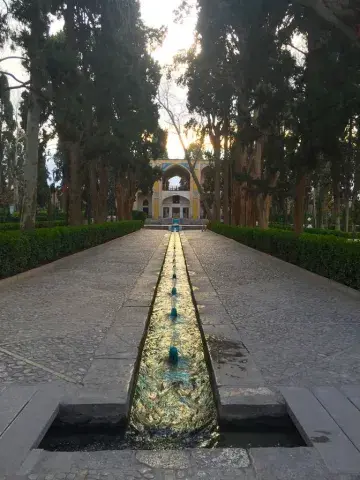
2 Days of Kashan
This tour is specialized for watching the process of making herbal water and enjoying the smell of blossoms. Moreover, we've chosen the highlights of the amazing city of Kashan.
A cosy old guesthouse is provided as the accommodation and local dishes as the meals, in this tour.
Arrival and departure are Tehran and the vehicle, depends on the number of travelers, can be sedan, minibus or bus.
$1500 Per Day
14 days around Iran Tehran to Tehran
14 days Tehran to Tehran
Day 1
Arrival at Tehran, meet your private tour guide, transfer to Hotel, Overnight Tehran.
Depending on your arrival time and your preference, have choices of Northern Tehran sightseeing.
Enjoy diner by the Darband streams where you can see young Tehran citizens walk up and down the stream.
Day2: Old Tehran Walking Tour
...Read more14 days Tehran to Tehran
Day 1
Arrival at Tehran, meet your private tour guide, transfer to Hotel, Overnight Tehran.
Depending on your arrival time and your preference, have choices of Northern Tehran sightseeing.
Enjoy diner by the Darband streams where you can see young Tehran citizens walk up and down the stream.
Day2: Old Tehran Walking Tour
Let’s walk together in Tehran most chaotic area! The central part of Tehran. We will go to visit a palace which have seen three dynasties and more than 7 kings lived there and 4 kings had crowning ceremonies in it, Golestan Palace. After enjoying a cup of coffee in Golestan palace garden we can go to the enormous bazaar of Tehran and ramble through it, when we get enough of it, let’s enjoy a traditional Persian food or a Kebab.
After lunch we will go to National museum of Tehran and get the chance to know these thousands- year- old priceless pieces.
If it is days between Saturday and Tuesday we can substitute National Jewelry museum with any of the main attractions.
Day 3: Kashan
On the way to Kashan, we may stop in Qom to see the mullah’s city and give a visit to Masuma shrine, th second holy shrine in Iran.For visiting this shrine ladies are supposed to wear traditional way of hijab which will be provided by shrine officials.
Giving a visit to Fin Garden in Kashan then move to the center of the city and enjoy lunch in one of Kashan’s historical houses.
After lunch doing some sightseeing: Broujerdi & Tabatabii Houses the residence of merchants who brought the Persian carpet into fame more than a century ago.
Accommodation : Historical house
Day 4: Deset and ities in the middle of Desert
If you are not claustrophobic we will walk in the corridors of underground shelter in Nushabad, Near Kashan and after that we will head to Abu Zeid Abad to enjoy desert and Dunes.
After visiting a two floor Qanat in Ardestan we will head to Nain.
Going to Nain a city in the middle of desert where we can give a visit to one of the oldest touristic mosque in Iran and having a scenery of a ruined castle by the side of it. If it’s not a public holiday we can visit caved handmade textile workshops in Mohammadieh.
Overnight Ardakan or Aqda
Day 5 :
In the morning Drive to Chak Chak a Zaroastrian fire temple in the mountains.
Then on the way to Yazd visit Maybod and its attractions Dovecots were old form of land fertilizer factory which are extinct now. Though you can see one of the renovated ones in Meybod and if we are lucky and the pottery workshop is open we will make vase of our own!
After Checking in to the hotel and a short rest going to Mirhakhmagh and a two floor water reservoir where Iranian traditional body building takes place in it.
Day 6 :
Yazd is the city of Zoroastrian’s: visiting Ostudans(grave), Temple, and if you like a new museum about their lifestyle.
We will walk through narrow turning allies and visit the magnificent entrance of Jame mosque with its tall minarets and amazing ceramic work.
Dowlat Abad Garden is a Persian garden which was built centuries ago.
In the evening we will enjoy tea in one of roof café in old part of town to enjoy sunset.
Early night to be ready for the next day long drive.
Day 7 :Pasargad
To day we have one of the longest drive on our way to Pasargad.
On the way we will stop in Abarkuh by the 4000 years old cypress tree and enjoy a good cofee there. Then drive the rest of the way to Pasargad, near Pasargad there is a restaurant which serves Pasargad’s local food which is specializedto that area and cooked by local housewives.
After this enjoyable lunch, Let’s go to a place where Persians are the most proud of, Cyrus the great tomb!
Over night Aghamir eolodge in Sa’adatshahr.
Day 8: Persepolis, necropolis
( probably you have read all about this main site ) so I keep calm and let you enjoy it with a dedicated guide of Persepolis!
In the evening meet warm Iranians in Hafez tomb reciting his poems.
Overnight Shiraz
Day 9:
Early in the morning visit the marvelous glass and light work in Nasirolmolk mosque.
Explore the beauties of Zand architecture: Vakil mosque, Vakil Hammam and
AttractiveMoshir Serai In bazaar with tantalizing handy crafts and artwork.
Day 10 drive to Isfahan
You’ll enjoy the 33Bridge and Khajoo Bridge after checking in to your hotel in Isfahan.
Day 11 :Isfahan
Marvel at the amazing royal square (Meydan-e- Naghshe Jahan).
Imam mosque perplexing features besides the impressive tile work at Sheikh Lotfollah mosque will give you the impression of how perfect were Persian tiles art, then it’s the time for plaster art in music room at Aliqapoo palace to amaze you after enjoying lunch we can enjoy the beauty of Chehel sotune (40 columns).
Accommodation: 3* hotel
Day 12: Isfahan
Going to the Armenian neighborhood, visiting Vank church which has the characteristic of Zoroastrian Muslim and Christianity all to together after that we and enjoy live traditional Persian music at music.
If you were in the mood of short hike we may go to Ruins of Zoroastrians fire temple to have a panoramic view of Isfahan.
Did you know there were shaking minaret in Isfahan which literally shakes with 5 Richter if you shake the other brick minaret with pushing and pulling by hands?!
Accommodation: 3* hotel
Day 13: Abyane
Visit this exotic village which was so remote that they could keep Their language safe after Muslim Invasion and still talk in old Persian language named Pahlavi.
On the way Natanz
Overnight Abyaneh
Day 14:
Depending on your departure time Drive To IKIA
Drive 4 hours to Air port.
$60 Per Day
Qashqaei nomads Tour
Hi there!
...Read moreHi there!
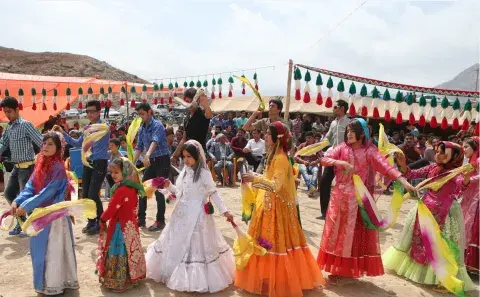
Would you like to herd sheep with the Qashqaei shepherds? I have a planned trip to the Zagros mountains, near Shiraz. There, we can meet the Qashqaei nomads, a people that have remained separate from the mainstream Iranian society. It’s guaranteed that you will be immersed in their authentic culture. During your stay, you yourself will become like a nomad. As many nights as you wish, you can spend sleeping under the stars in the tents that the Qashqaei themselves stay. In the morning, you too will wake up to make bread with your hosts. Your meals will include natural, organic, and fresh milk products like yogurt and cheese made by you and your hosts. During the day, you can learn special crafting techniques using string firsthand. You can even dress like the Qashqaei by wearing their colorful traditional clothing!
If you don’t want to miss this once in a lifetime opportunity, don’t hesitate and call me. I can plan a visit based on the number of days you wish to spend on this trip. Imagine, you could become friends with the Qashqaei nomads and visit the awe-inspiring Zagros mountains!
See you soon!