India Attractions
red fort
The Red Fort is a historical fort in the city of Delhi in India. It was the main residence of the emperors of the Mughal dynasty for nearly 200 years, until 1857.Constructed in 1639 by the fifth Mughal Emperor Shah Jahan as the palace of his fortified capital Shahjahanabad
The fort was plundered of its artwork and jewels during Nadir Shah's invasion of the Mughal Empire in 1747. Most of the fort's precious marble structures were subsequently destroyed by British colonialists following the Sepoy Mutiny of 1857. The forts's defensive walls were largely spared, and the fortress was subsequently used as a garrison.The Red Fort was also the site where British colonialists put the last Mughal Emperor on trial before exiling him to Rangoon in 1858.
nice place to take rest and have fun
by metro to chandni chownk get out of station and move to the fort
Private Tour: Day Trip to Agra from Delhi including Taj Mahal and Agra Fort
"A white marble tomb built in 1631 - 48 in Agra, seat of the Mughal Empire, by Shah Jehan for his wife, Arjuman Banu Begum, the monument sums up many of the formal themes that have played through Islamic architecture. Its refined elegance is a conspicuous contrast both t...
"A white marble tomb built in 1631 - 48 in Agra, seat of the Mughal Empire, by Shah Jehan for his wife, Arjuman Banu Begum, the monument sums up many of the formal themes that have played through Islamic architecture. Its refined elegance is a conspicuous contrast both to the Hindu architecture of pre-Islamic India, with its thick walls, corbelled arches and heavy lintels, and to the Indo-Islamic styles, in which Hindu elements are combined with an eclecticassortment of motifs from Persian and Turkish sources."______ Marvin Trachtenberg and Isabelle Hyman.
The Taj Mahal is considered the finest example of Mughal architecture, a style that combines elements from Persian, Indian, and Islamic architectural styles. In 1983, the Taj Mahal became a UNESCO World Heritage Site and was cited as "the jewel of Muslim art in India and one of the universally admired masterpieces of the world's heritage."
The Taj! An awe-inspiring poetry in marble stands high and serene by the banks of the River Yamuna is an inspiring result of the application of architectural and scientific research.
The tomb laid out in rectangular shape can be approached through an immense gateway with huge arch and alcoves strewn on either side that stands tall and erect, as though guarding something precious. Three other smaller gateways follow the red sandstone towers topped with domes in white marble together make a pretty picture.
The Taj is an experience of its own kind, while on the one hand its magnanimity is so sublime, so on the other the exquisite inlay work and detailed craftsmanship together with the calligraphy is simply amazing. The combination simply leaves one absolutely mesmerized. The sheer splendour of the mausoleum is consummate, and the vastness is simply monumental.
The tomb is at the northern end with an expanse of greenery and fountains between it and the gateways. The ceiling is adorned with floral patterns and the décor of floors with geometric designs. The inner of the main structure is in lakhauri [a kind of earthen brick], which have been carefully covered with marble, whereas the adjoining structures are covered with red sandstone.
Majestic and sensuous, glistening brightly in the afternoon sun, the bulbous dome and minarets with a slight inward tilt, have all been inscribed meticulously with the Holy Verses bringingforth the arabesque ornamentation. The white marble from Makrana in Rajasthan has added its own natural beauty to this mausoleum that attracts tourists from all over the world.
As one goes around, the most breathtaking part remains the exquisite inlay work that looks up from every nook and corner of the façade. The blooms are worked out in immense detail and every dot and alphabet of the Holy Quran is neatly etched, cut and inlaid to perfection. The flowers, chiefly lilies mirror the Mughal love for gardens. One particular flower on the tomb of Mumtaz Mahal is said to have been inlaid with 35 different precious stones. Thecentral hall is surrounded by eight rooms that have a corridor running through them. The aura of serenity is all pervading, while translucent glass separates them to let-in the dim sunlight, making the interiors look solemn and intriguing. Indeed a masterpiece that none would ever be able to replicate including the orginal craftsmen, artisans and designers themselves.
While a visitor is still managing to grasp the symmetry of the structures set across the length and breadth of the complex, the Taj Mahal appears deep in the distance, indeed a spectacular sight to behold, forever!
However, it is the dome that leaves one gasping in awe. While the outer dome rises to 44.4 metres in height, the inner is 24.35 metres an architectural and technical feat. Ismail Afandi from Turkey, who also worked for the Ottomans is said to have been its designer. Marking an amalgam of Hindu and Islamic architecture are the typically Hindu Chhatris [An umbrella like structure] at the dome base from the corners. Shah Jahan has similarly left his individual imprint in several other aspects of the architecture as well.
The cenotaph over Shah Jahan’s tomb has an inkwell, while that of Mumtaz Mahal a slate over it, as it is said a man writes his desires on the woman’s heart. The epitaphs in addition to regular pronouncements about the individual have verses from the Holy Quran. The exquisite craftsmanship marks the marble lattice screens, which are elaborately worked out in oriental design enclose the cenotaphs. The tombs lie below the cenotaphs in a basement, undisturbed and in absolute quiet environs. What we do not see now are the bowls full of jewels on Mumtaz Mahal’s tomb, the Persian carpets on the floor and the silver doorways and overhanging chandeliers that once made up the inner décor.
Coming out of prevailing solemnity in the environ, one gets speechless with awe at the grandeur of the by gone era, enticing particularly the panels with lilies and tulips together with iris flowers that symbolise death. The Makrana marble will perhaps never again be handled; with so much grace and care and such elegance of balancing the ornamentation on it. The beauty and splendour of elegant craftsmanship that makes up the inlay work and calligraphy in fact, further accentuates the deathly calm of the mausoleum and in the quietude, it is the softly filtering rays of the sun through the lattice work on marble panels that strikes one as unusually ethereal in nature.
Outside one would have to crane one’s neck to look up at the apex of the dome, high and mighty agains the skyline. Secluded and singular in majesty, the structure stands clearly apart from everything around it. The balance of all the elements, the garden, the fountain and water channel and in the end the gateway, all look exquisitely managed to provide maximum harmony in terms of visual appeal. The sheer beauty of the outside of a monument marks the serenity within.
The Taj Mahal, for which not only the course of river Yamuna is said to have been diverted but as per interpretation of the Archaeological Survey of India, the Yamuna was incorporated into the garden design for the belief that its one of the rivers of Paradise.
The moods of the Taj vary from dawn to dusk. It looks milky white in the soft light that characterizes early morning, while the afternoon sun makes it glisten bright and dazzling in the overhead sunlight, almost looking like a jewel against the opaque blue of the skyline and then comes a moonlit Taj breaking into the night sky, majestic and simply beautiful in a sense that cannot be put into words. The sensuous appeal can never be more heightened as on a full moon night when it shines like a pearl making the visitor stand agape at the spectacle. The romanticism and sheer majesty of the structure is unbelievably true! No wonder if millions of people chose it amongst the World’s top wonders.
The romanticism and sheer majesty of the structure is unbelievably true! No wonder if millions of people chose it amongst the World’s top wonders.
By Car (Please contact me for the same)
Amazing things to see and do in New Delhi, Old Delhi and suburbs
Delhi, a melting-pot of cultures, traditions, races, cuisines, monuments, religions, classes, lifestyles etc has a tourist attraction in practically every one of its nooks and corners .
Delhi's famous tourist attractions you'll find listed in practically every travel guide. The more disce...
Delhi, a melting-pot of cultures, traditions, races, cuisines, monuments, religions, classes, lifestyles etc has a tourist attraction in practically every one of its nooks and corners .
Delhi's famous tourist attractions you'll find listed in practically every travel guide. The more discerning amongst you visitors to Delhi, however, will need to rely on the first-hand knowledge of a an experienced local guide who will help you explore the city's delights. Sorry, I can't list those delights here, because you might just decide, thereafter, that you don't even need a guide!
Sorry, no pictures here for peeping toms. You could contact me for my guiding services, however, through the link provided on this web page.
India Articles

Why & How to book from your Tour Operator?
Why to book your holidays from Local Tour Operators ????
...
Why to book your holidays from Local Tour Operators ????
Travel agency and Tour operators will assist you in setting guidelines for you as to what place should you visit and where to stay and other important points that are difficult for you to access while planning out for a tour. Even if you plan an entire Tour, there still would be many marvels left unexplored. So, proceed with an holiday package where you will be lavishly offered an unmatched tour experience. No matter what part you want to visit, you have to take the advice of your Tour Operator and Travel Agency.
How to Book Your Trips from Tour Operators - Things You Must Know
Traveling to India can be a tricky part for you, especially when you are traveling here for the first time. Having experienced tour operators by your side can give you an instant VIP treatment as soon as you land India. Given below are the steps to hire the finest tour operator for your India trip:
Ask for all the inclusions plus exclusions of the trip package
Get the complete set of general T&C of the company to avoid any hassle later on
Ask for a 24x7 service from him and confirm it again at the time of booking
Cross check the Hotel category that your tour operator has booked you on
Set your budget accordingly and plan your tour with your tour operator openly
It is advisable to check your itinerary carefully to avoid bad tour experience
Clear all your doubts with your tour operator beforehand
Give the tour operator a genuine feedback for the goodwill of their services
Take time and delicately plan your tour as you do not want to waste your leisure time and money
Finally, first you need to be sure what you want to experience from your trip and How much you want to spend.
Carrefour Wholesale Cash & Carry India Pvt Ltd
Plot Outside, Parasvnath Complex, Seelampur Metro Station Complex, Seelampur, Delhi - 110053
(011) 39810705, 39810706 18001027887
Kite Museum
Kite Museum is one of the most unique museums in Ahmedabad and houses an extraordinary collection of rare indian fighter kites built over in five decades.
...Kite Museum is one of the most unique museums in Ahmedabad and houses an extraordinary collection of rare indian fighter kites built over in five decades.
Established in 1985, the museum is a brainchild of Bhanubhai Shah, who carefully treasured these uniquely crafted kites for more than fifty years that were not only meant to adorn the azure skies but also stood out as examples of rare collectibles.
From kites that have been crafted from 400 pieces of paper to the kites of unique colours, the Kite Museum, Ahmedabad is one of the major tourist attractions of Ahmedabad.
According to the history Mr Shah was very fond of not only flying kites but also collecting them. Collecting rare and unique kites was his hobby and acting on that hobby he planned to open a space where he and other kite enthusiasts could display their collection. The museum has a collection ranging from huge kites which are 22 by 16 feet to some of the smallest kites.
Apart from the traditional Indian designs, the museum also houses one of the most lavishly designed and decorated kites — hexagonal Rokoku which are beautiful Japanese kites.
In addition to all the kites displayed at the museum one can even find snippets and information on them; hence a visit to the museum is a must for an enriching experience as kite flying is one of the oldest sports of India.
The adjacent part to the museum has a theatre, which on various occasions is a venue of various cultural activities.
Kite Museum is open from 10:00 to 12:00 and 16:00 to 18:00 hrs on all days except Mondays.
Top India Tours
$141 Per Day
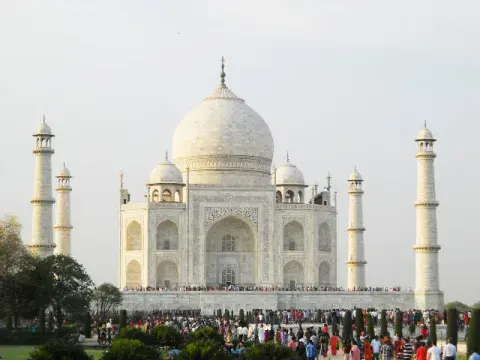
2 Days Private Taj (Agra) Tour with Fort and Fatehpur Sikri from New Delhi
2 Days Private Taj (Agra) Tour with Fort and Fatehpur Sikri from New Delhi
Destinations Covered: Delhi – Agra (Taj Mahal, Agra Fort) –Fatehpur Sikri – Delhi
Tour Duration – 2 Days
Tour Summary
...Read more2 Days Private Taj (Agra) Tour with Fort and Fatehpur Sikri from New Delhi
Destinations Covered: Delhi – Agra (Taj Mahal, Agra Fort) –Fatehpur Sikri – Delhi
Tour Duration – 2 Days
Tour Summary
Our Taj City tour offers you to witness the splendour of one of the most magnificent city in India. Agra is a beautiful city also known as a Taj City, Agra stands on the banks of river Yamuna. The greatest tourist attraction in Agra is Taj Mahal & Fort, Taj Mahal is one of the current Seven Wonders of the World . Experience the charm of Mughal era and witness the wonderful example of Mughal art & architecture.
Tour Highlights..
• Explore The Current Seven wonder of the World Taj Mahal ...
• Enjoy the Lunch & Dinner at Famous Restaurant.
• Explore the Mughal Dynasty by Expert Tour Guide.
• Visit Agra fort known as the treasure house of Mughal Empire.
• Enjoy the Tonga ride at Taj Mahal.
• Experience the charm of Mughal era and witness the wonderful example of Mughal art & architecture.
Detailed Itinerary
Day 1
Our driver will pick you early in the morning at 7 AM from New Delhi Hotel. later He will drive you to Agra. Agra is located at a distance of approx. 235 KM from New Delhi. After a 4-5 hours’ journey we reach Agra.
On arrival at Agra around 11 AM and Check in Hotel after fresh up, warm welcome by your English Speaking guide and short intro about your tour and proceed to Visit epitome of love- Taj Mahal
The majestic view of Taj Mahal is breath taking and attracts heavy tourist population throughout the year. Taj Mahal was constructed by Shah Jahan in loving memory of his wife Mumtaz.. Acclaimed by the archaeologists world over as the finest example of Mughal architecture, it reflects a style that combines elements from Persian, Turkish and Indian architectural styles.
After TajMahal Visit Enjoy your complementary Lunch at Local Restaurant...
After Lunch , visit Agra Fort
Agra fort was known as the treasure house of Mughal Empire. The monument was constructed with red sandstone and white marble. Agra fort features magnificent palaces, large rooms, brilliantly constructed mosques and beautifully carved chambers. Diwan-i-Khas, Diwan-i-Am, Moti masjid, Mina Masjid and Nagina Masjid are main attractions inside the fort.
After Fort Visit Driver will take you at Marble factory & some famous shops. Later back to Hotel and enjoy your dinner at Local Restaurant or Hotel.. Overnight at Hotel.
Day 2
Morning after breakfast, check out from Hotel and chauffeur will take you to visit Fatehpur Sikhri.
Built in the honor of saint Sheikh Salim Chisti, Fatehpur Sikhri was Akbar's capital and is hailed for its imperial contents. It is a perfectly preserved red sandstone town, which encases several imperial palaces, castles, tombs & chambers, each of which is a living proof of precious Indian Architectural Heritage. The inner citadel of this city houses prominent evidences of Mughal epoch and their highly refined architecture, skillful artistry, exceptional craftsmanship and a blend of two or more styles of constructions. Here, you will get to see some finest monuments namely Diwan-i-Am, Diwan-i-Khas, Panch Mahal, Buland Darwaza, tomb of Saint Sheikh Salim Chishti, and Jama Masjid (one of the largest mosques In India). Here, experience the charm of Mughal era and witness the wonderful example of Mughal art & architecture.
After completing your visit, you will be driven to Delhi Hotel,
Note: Delhi – Agra tour is valid between 1 April 2013 to 31 March 2014 (except Fridays Calendar dates)
Package Cost (per person basis)
• Single sharing basis - $ 352
• Twin Sharing Basis - $ 213
• Triple Sharing Basis - $ 183
• PKG cost for 4 Person- $ 161
• PKG cost for 5 Person - $ 155
• PKG cost for 6 Person - $ 154
• PKG cost for 7 Person - $ 146
• PKG cost for 8 Person - $ 141
Package Tour includes
• Sightseeing with English speaking tour guide.
• One Night Hotel Accommodation on Single/Twin/Triple sharing basis.
• Entry Fee of Taj Mahal, Agra Fort & Fatehpur Sikri .
• Complementary Lunch and Dinner at Local Restaurant.
• Delhi to Agra – Fatehpur Sikri – Delhi by Private air condition Car.
• Mineral water
• All taxes and service charges.
Package does not include
• Air or train fare
• Camera fee at monuments
• Expense arising out of unexpected circumstances like natural calamities, flight cancellation or delay
Payment & Cancellation Policy
• 30 days prior commencement of tour, No cancellation charges
• 29-10 days prior commencement of tour, 25% of travel cost
• 09-3 days prior commencement of tour, 50% of travel cost
• Less than 03 days prior commencement of tour, No Refund
$50 Per Day
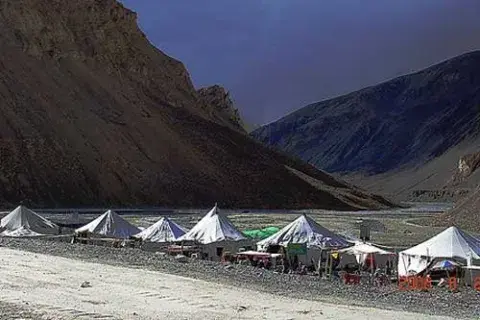
Golden Triangle And Khazuraho Tour Pacakge
Total Tour Itinerary Details
Day 01: Arrive Delhi
After you have arrived in the late evening you will be taken to your hotel. The capital of India is Delhi which includes seven ancient cities, from the period of 11th century to 20th century. Spend a comfortable night at the hotel.
Day 02: Delhi-Explore Delhi
Once you have done with your morning breakfast you will be taken to visit the famous Red Fort, Qutub Minar and Humayun's Tomb. Spend a comfortable night at the hotel.
Day 03: Delhi – Agra (210 Kms, 4-5 hrs drive) & Explore Agra
...Read moreTotal Tour Itinerary Details
Day 01: Arrive Delhi
After you have arrived in the late evening you will be taken to your hotel. The capital of India is Delhi which includes seven ancient cities, from the period of 11th century to 20th century. Spend a comfortable night at the hotel.
Day 02: Delhi-Explore Delhi
Once you have done with your morning breakfast you will be taken to visit the famous Red Fort, Qutub Minar and Humayun's Tomb. Spend a comfortable night at the hotel.
Day 03: Delhi – Agra (210 Kms, 4-5 hrs drive) & Explore Agra
Agra is the destination you will be taken to in the morning and while the way to Agra you will be taken to visit Fatehpur Sikri, Once you reach Agra, transfer to hotel and after that you will be taken to visit magnificent Taj Mahal and Agra Fort. Spend a comfortable night at Agra.
Day 04: Agra - Gwalior (120 Kms, 2–3 hrs drive) & Explore Gwalior
Once you have your breakfast you will be taken to Gwalior and once you reached there you drive will be to splendid Gwalior Fort, Man Mandir Palace & Sas Bahu ka Mandir. Spend a comfortable night at Gwalior.
Day 05: Gwalior - Khajuraho (302 Kms, 6-7 Hrs Drive)
Next morning after breakfast you will be taken to visit Jai Vilas Palace & Museum, then Khajuraho will be your next destination, on the way you will be taken to visit Orchha. Spend a comfortable night at khajuraho.
Day 06: Explore Khajuraho
World famous Kama-Sutra Temples and other various temples are the attractions that you will be taken to after the morning. Spend a comfortable night at khajuraho.
Day 07: Khajuraho - Orcha (172 Kms, 3-4 hrs drive)
Next morning you will be taken to Orcha. Spend the time there and have a comfortable night at Orcha.
Day 08: Orchha - Kota (340 Kms, 6-7 hrs drive)
Day 09: Kota – Jaipur (232 Kms, 5-6 hrs drive)
Bundi, Once you arrive at Jaipur vist the Jaipur market. Spend a comfortable night at Jaipur.
Day 10: Explore Jaipur
Your visit to Jaipur attraction will start in the morning itself and you will be taken to Amber Fort, Jaigarh Fort, along with taking the pleasure of Elephant ride at Amber fort. Jaipur is famous for embroidered fabrics, blue pottery, silver jewelry, carpets and semi-precious stones and so you can enjoy shopping all this. In the evening you will be taken to Chokhi dani (an ethnic village resort) for dinner wherein you will get a clear picture of the village life of Rajasthan and more than that, you can take the pleasure of various traditional Rajasthani dances, puppet show and various other interesting activities.
Day 11: Jaipur – Delhi/Mumbai Fly to Delhi/Mumbai.
$100 Per Day
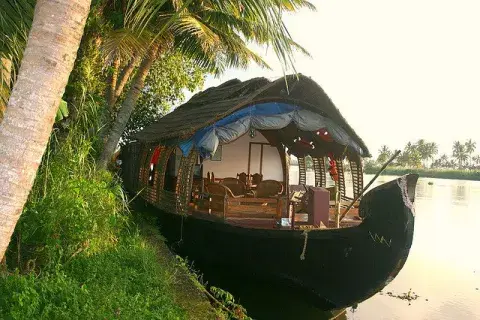
Houseboat in the backwaters.
The Backwaters of Kerala is unique and is found nowhere else in the world. Backwaters are a network of lakes, canals and estuaries and deltas of forty-four rivers that drain into the Arabian Sea. The backwaters of Kerala are a self supporting eco-system teeming with life. The canals connect the villages together and are still used for local transport. Over 900 km of this labyrinthine water world is navigable.Kumarakom and Alleppey (new name Alappuzha) are the prominant Backwater tourist attractions in Kerala.
...Read moreThe Backwaters of Kerala is unique and is found nowhere else in the world. Backwaters are a network of lakes, canals and estuaries and deltas of forty-four rivers that drain into the Arabian Sea. The backwaters of Kerala are a self supporting eco-system teeming with life. The canals connect the villages together and are still used for local transport. Over 900 km of this labyrinthine water world is navigable.Kumarakom and Alleppey (new name Alappuzha) are the prominant Backwater tourist attractions in Kerala.
The most exciting aspect of Kuttanadu is the Kettuvallam (traditional Houseboat) which has become the most popular tourism product in India today. In a land as water bound as Kerala it wouldn't be an unusual sight, but for a visitor to God's Own Country a houseboat gliding along the vast green expanse of the backwaters is the most amazing spectacle in the world. Even more enchanting is a holiday in the houseboats of Kerala.
A cruise along the palm-fringed waterways of Kerala in a luxury houseboat is the most enchanting holiday experience in India today. In a world gifted with beauty, you will skim past ancient Chinese fishing nets, water lilies, lush paddy fields, coir villages, rustic homes, temples and coconut groves. A guided tour down the backwaters would provide you with a complete and most enchanting experience on the back waters of Kerala and will also reveal to you some interesting facts about the life of local village people. There is a Kerala that lives along these backwaters throbbing with its own unique culture. For you, as a visitor to Kerala it can be incredibly different and unusual experience just floating in the backwaters in a country craft.