Henan Province Attractions
Henan Province Articles
Pit Yard in Sanmen Xia
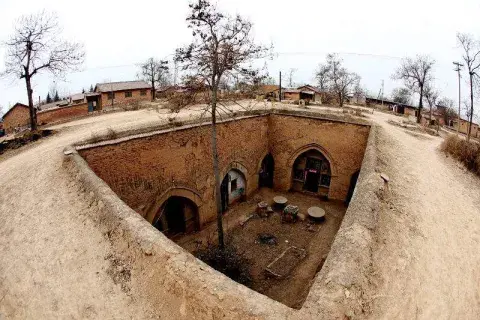
Hi, Everyone, Today I'd like to introduce some characteristic landscape in Henan Province, and some of it exits in Shaan'xi and Shan'xi Province. But the part in Henan is one of the most magnificent. And this special landscape is called as"Pit Yard".
...Hi, Everyone, Today I'd like to introduce some characteristic landscape in Henan Province, and some of it exits in Shaan'xi and Shan'xi Province. But the part in Henan is one of the most magnificent. And this special landscape is called as"Pit Yard".
Pit Yard is also called as Well Courtyard, it is built in the ground, looks like some holes on the ground. It is the relics of living in the cave in ancient times, with a history of 4000 years.
Nowadays Pit Yard mainly distributes in Shanxian Couty in Sanmenxia City of Henan Province, Yuncheng City in Shanxi Province, Longdong City in Gansu Province and some other place of Shaan'xi Province. and the most shining part is located in Sanmenxia. And today I will talk more about the Pit Yard in Sanmenxia.
There are three flat areas where the Pit Yard is well protected in Shanxian County, which is Dongfan Yuan, Zhangcun Yuan and Zhangbian Yuan. There are still almost 100 Pit Yards remaining here up until now, and many people still living there. The most well-protected pit yard has a history of more than 200 years, and more than 6 generations have lived there.
The most representive villages are Miaoshangcun Village, Beiyingcun Village and Qucun Village in Shanxian County.
And Pit Yard is also the origin of Yangshao Culture. Yangshao Culture is one of the most important culture in China. its representives are peace and harmony. It started from Song Dynasty.
If you have time, I warmly welcome you and your family come to see Pit Yard for yourselves, you will definitely get shocked by this significent and magnificent architectures.
You are welcome to come to Shanxian County in Shanmenxia of Henan Province any time.

Peony Festival--you mustn't miss in April China
The followings are the latest pictures taken in April, Luoyang, China .
There are more than 1000kinds of peony flowers, here are just a few of them.
No pictures or words could ever describe the beauty.
Please enjoy.
...
The followings are the latest pictures taken in April, Luoyang, China .
There are more than 1000kinds of peony flowers, here are just a few of them.
No pictures or words could ever describe the beauty.
Please enjoy.
Hongqi Canal
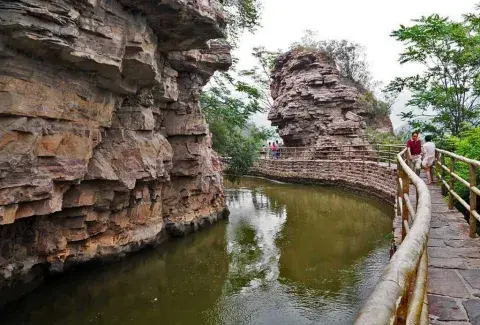
Hongqi Canal is a man-made canal, which is located at Lin County, Anyang Municipality, Lin County is in the junction of Henan Province, Shan'xi Province and Hebei Province, and it is the place which is in serious condition of drought and in a bad shortage of water.
...Hongqi Canal is a man-made canal, which is located at Lin County, Anyang Municipality, Lin County is in the junction of Henan Province, Shan'xi Province and Hebei Province, and it is the place which is in serious condition of drought and in a bad shortage of water.
According to historical materials, Lin County has been in serious drought condition since Ming Dynasty-AD 1436, hundreds of natural disasters has taken place in Lin County from Ming Dynasty to the foundation of New PRC, and there are 39 times of no harvest of crops in Lin County because of drought. So the people of Lin County has been trying hard enough to find way out to solve drought problem, though the achievements are little.
And what's more, in 1959, the only 4 rivers in Lin County has dried up, so Lin County had to find water out of Lin County, back then, Lin's government decided to transfer the Zhuzhang River to Lin County, and Zhuzhang River is in Shan'xi Province, after the approvement of Shan'xi government, Lin's people decided to make a canal to transfer the water into Lin County.
The construction of Red Flag Canal started at the Feb of 1960, and ended at Jul of 1969, the project took nearly 10 years, 1250 mountaintop had been hewn, 151 aqueducts had been set up, 211 tunnels had been digged, built 12408 constructions of every type, digged and layered 22250 thousand cubic meters of earth and stones, the total length of Red Flag Canal is 70.6 meters, from Shicheng Town, Shan'xi Province to Rencun Town, Henan Province, main and branch canal distributed in every towns of Lin County.
2013, Hongqi Canal Economic Development Zone upgraded into Red Flag Economic Development Zone of National Level after the approval of State Council, and it is the 8th National Economic Development Zone approved by State Council.
2015 is the 20th anniversary of Red Flag Canal.
Hongqi Canal breed Red Flag Canal Spirit, many people sacrificed their life during the process of the construction of Hongqi Canal, and many of those sacrificed were yong men/women, and they overcome a tramendous amount of obstacles and difficulties before the victory of the construction of Hongqi Canal, it is the momument of national spirit, the signal of national culture, hard working, striving for success and cooperation spirit are all belongs to Hongqi Canal Spirit. it can inspires people to over obstacles and create miracles.
1990, the head of Henan Province instructed Hongqi Canal become into a tourist area, to transfer spiritual wealth into Material wealth.
2002, Hongqi Canal was evaluated as 5A tourist area by Chinese government.
2006, Hongqi Canal was listed the National Key Historical Protection Unit by the State Council.
One more thing I have to say here: many movies has been made in Hongqi Canal and many movies about the Hongqi Canal has been made.
In 20th Century, one famous French director came to Hongqi Canal and made a very famous Documantary Video about Red Flag Canal.
Whatever, Hongqi Canal warmly welcome friends frome all over the world to have a look.
Some pictures belows:
Top Henan Province Tours
$300 Per Day
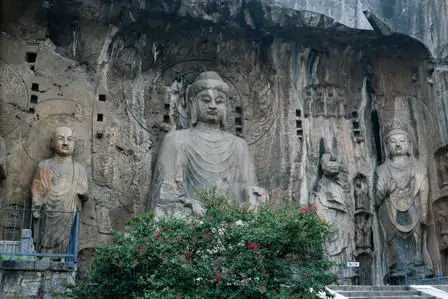
Luoyang Day Tour
Details:
Pick up from your hotel or train station in Luoyang. Have one day excursion tour to the Shaolin Temple. Shaolin Temple is located in the Songshan Mountains, 80 km south-east of Luoyang.
Details:
Pick up from your hotel or train station in Luoyang. Have one day excursion tour to the Shaolin Temple. Shaolin Temple is located in the Songshan Mountains, 80 km south-east of Luoyang.
Shaolin Temple was established in 495AD by Emperor Xiaowen in Beiwei Dynasty for the purpose of housing the famous Indian monk, Batuo, who came to Luoyang, the ancient capital for spreading Buddhism at that period. Emperor Xiaowen was a dedicated believer of Buddhism so he decided to construct the temple at the foot of the Songshan Mountains to welcome Batuo, who translated many Buddhist documents and had several hundred followers there.ir capital from Datong to Luoyang at the end of the 5th century. Now Shaolin Temple is reputed as the Number One Temple under Heaven which was listed as UNESCO’s World Cultural & Natural Heritage List in 2010 as part of the "Historic Monuments of Dengfeng.
Outside the temple and move on to the next big attraction – Pagoda Forest, a graveyard for the monks through the ages.
The Kung Fu Show is performed by the professinal performance team from Shaolin Tagou Kung Fu School. Shaolin Kung fu is the most influential martial arts schools in China. In the less than half performance, you will see “Shaolin Boxing” and “Shaolin Stick” typical of Shaolin Kungfu.End of service, transferred back to Luoyang.
$300 Per Day
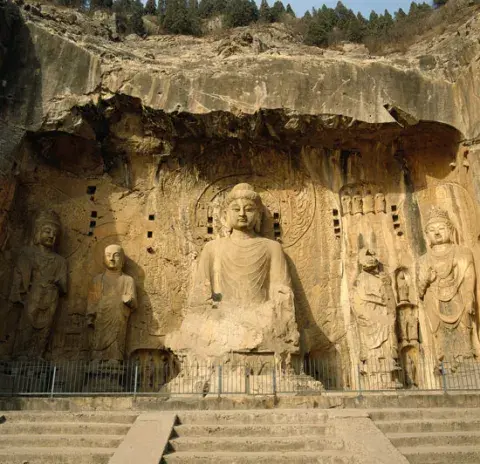
11-day Silk Road Adventure Tour
Day 1 Arrive in Xi`an
Morning:Arrive in Xi`an.After accomodating at your hotel,have a city tour to the Ancient City Wall,which is the best-kept and biggest city walls in China.
Day 2 Xi`an
Morning:The highlight of your tour today is the 'Eighth Wonder' of the world, Terracotta Warriors and Horses Museum, which is a huge underground military museum constructed as an accessory pit of Qin Shi Huang Mausoleum.A English-speaking guide is necessary for you to understand the greatness of the Terracotta Warriors....Read more
Day 1 Arrive in Xi`an
Morning:Arrive in Xi`an.After accomodating at your hotel,have a city tour to the Ancient City Wall,which is the best-kept and biggest city walls in China.
Day 2 Xi`an
Morning:The highlight of your tour today is the 'Eighth Wonder' of the world, Terracotta Warriors and Horses Museum, which is a huge underground military museum constructed as an accessory pit of Qin Shi Huang Mausoleum.A English-speaking guide is necessary for you to understand the greatness of the Terracotta Warriors.
Afternoon:In the afternoon, visit the Bell Tower and one of the landmarks of Xi`an, the Big Wild Goose Pagoda. Originally built to collect Buddhist scriptures, now the pagoda has been a symbol of this ancient capital city.
Evening:Enjoy a marvelous Tang Dynasty Dinner Show at the Tang Dynasty Palace.
Day 3 Lanzhou,Xiahe
Take a flight in the morning from Xi`an to Lanzhou,which takes only one hour.After arriving in Lanzhou,drive to Xiahe County (the county is very beautiful and is nicknamed the "small Tibet"), where you will visit the Songke Grasslands (aka Sanke Grasslands) and theLabrang Lamasery. It takes about three and half hours from Lanzhou to Xiahe.
The Mogao Grottoes
Day 4 Dunhuang
Return to Lanzhou and take a flight from Lanzhou to Dunhuang at around 1:40 pm,after one and 40 mins you will arrive in Dunhuang.In the afternoon,pay a visit to the Mogao Grottoes.There are about 30 caves open to the public, and a English-speaking guide is quite necessary for you to understand the history behind the murals.
Day 5 Dunhuang
Ride camel to the Echoing-Sand Mountain and the Crescent Lake.Crescent Spring (Yueya Quan) is in theEchoing-Sand Mountain (Mingsha Shan), 6 km (4 mi) south of Dunhuang. It is an oasis in the desert. Riding a camel on the desert of the Echoing-Sand Mountain is a great experience. You can enjoy the beautiful wavy shapes of the smooth yellow dunes against the deep blue sky, and imagine you are traveling the ancient Silk Road.
After the day sightseeing, be transferred to the Liuyuan Railway Station for the overnight train to Turpan.The train from Dunhuang to Turpan takes around 11 hours.(Train No. 1043 Dep 20:15 - Arr 04:46)
Day 6 Turpan
Explore the unique irrigation project -Karez Wells.This irrigation system of wells connected by underground channels is considered to be one of the three great ancient projects in China.
Then come to visit the Ruins of the Ancient City of Jiaohe, which is a good vantage point for seeing the surrounding landscape of vineyards and orchards followed by desert and mountains.Later come to the Grape Valley. Lastly, pass through the Flaming Mountain, the temperature of the surface of the mountain can reach as high as 70 degree celsius.
The Heavenly Lake (Tian Chi)
Day 7 Urumqi
Take a train from Turpan to Urumqi,which takes about 2 and half hours.Take a bus from the People`s Park to the Heavenly Lake (Tian Chi),a beautiful blue mountain lake finely contrasted with steep forested hills, high meadows and snowy Heavenly Mountain peaks behind.There you can walk, take electric carts, cable cars and a boat cruise on the lake.
Day 8 Urumqi
Visit the beautiful Nanshan Pasture (aka the Nanshan Grassland),
Return to the downtown of Urumqi in the afternoon and go shopping in the International Grand Bazaar.There are a mind-boggling array of international and Chinese goods including Uyghur hand-made carpets,Russian woodcarvings,silverware from the United Arab Emirates, various dried fruits and nuts,etc.
Day 9 Kashgar
Morning transfer to the airport for the flight to Kashgar. Be met and checked into the hotel. Then visit the Sunday Bazaar and the Id Kah Mosque( (艾提尕尔 or aiti gaer in Chinese),which is regarded as the biggest mosque in China. Then visit the Apak Hoja Tomb - a tomb of the descendants of an Islamic sage
The Id Kah Mosque (艾提尕尔 or aiti gaer in Chinese)
Day 10 Kashgar
After breakfast, take a visit to the beautiful Lake Karakuli,a sparking glacial lake located at the foot of "the Father of Glaciers" – Muztagata Mountains. A railway connnecting China with Pakistan goes by the lake. The lake is famous for its beautiful scenery and clarity. Colors of its water range from light to dark under reflection.
Return to the downtown of Kashgar and visit the old town of the city.
Day 11 Urumqi Departure
Take a train from Kashgar to Urumqi and take a flight from Urumqi to your next destination.
$75 Per Day
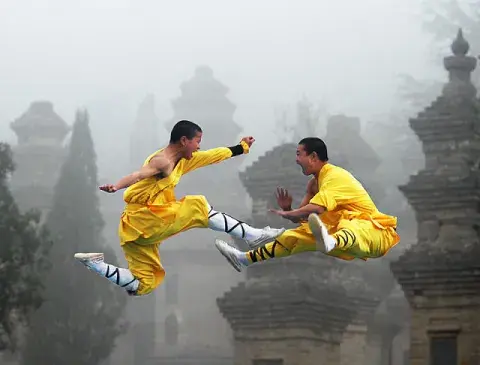
Luoyang Shaolin One Day Private Tour
Pick up from your hotel or train station in Luoyang. Have one day excursion tour to the Shaolin Temple. Shaolin Temple is located in the Songshan Mountains, 80 km south-east of Luoyang.
Shaolin Temple was established in 495AD by Emperor Xiaowen in Beiwei Dynasty for the purpose of housing the famous Indian monk, Batuo, who came to Luoyang, the ancient capital for spreading Buddhism at that period.
...Read morePick up from your hotel or train station in Luoyang. Have one day excursion tour to the Shaolin Temple. Shaolin Temple is located in the Songshan Mountains, 80 km south-east of Luoyang.
Shaolin Temple was established in 495AD by Emperor Xiaowen in Beiwei Dynasty for the purpose of housing the famous Indian monk, Batuo, who came to Luoyang, the ancient capital for spreading Buddhism at that period.
Emperor Xiaowen was a dedicated believer of Buddhism so he decided to construct the temple at the foot of the Songshan Mountains to welcome Batuo, who translated many Buddhist documents and had several hundred followers there capital from Datong to Luoyang at the end of the 5th century.
Now Shaolin Temple is reputed as the Number One Temple under Heaven which was listed as UNESCO’s World Cultural & Natural Heritage List in 2010 as part of the "Historic Monuments of Dengfeng. Outside the temple and move on to the next big attraction – Pagoda Forest, a graveyard for the monks through the ages.
The Kung Fu Show is performed by the professinal performance team from Shaolin Tagou Kung Fu School. Shaolin Kung fu is the most influential martial arts schools in China. In the less than half performance, you will see “Shaolin Boxing” and “Shaolin Stick” typical of Shaolin Kungfu. End of service, transferred back to Luoyang.