China Attractions

 ...
... How to Get There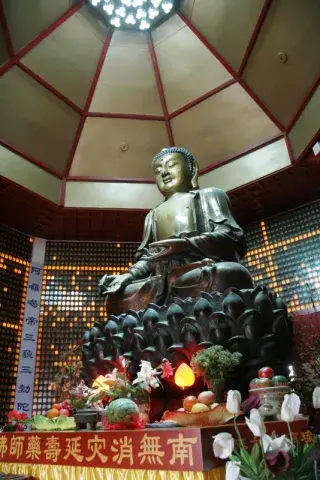
Jiming Temple
Jiming Temple was founded in 300 AD during the Eastern Jin Dynasty. Since then it has been destroyed and reconstructed several times. It was last destroyed by fire in 1973 and restored again in 1981. It is now one of Nanjing’s most active temples.
...
Jiming Temple was founded in 300 AD during the Eastern Jin Dynasty. Since then it has been destroyed and reconstructed several times. It was last destroyed by fire in 1973 and restored again in 1981. It is now one of Nanjing’s most active temples.
The seven story high Bhaisajyaguru Pagoda (Yaoshi Ta, 药师塔) was renovated in 2006 and is again open for visitors.
Those interested in temples could combine a trip to Jiming Temple with a trip to Xuanzang Temple at Jiuhuashan, just a 15 minute walk to the east.

How to get there
It would be ideal to walk or bike to Jiming temple since it is located near Jiuhuashan, just off Beijing Dong Lu and next to Xuanwu Lake.
The back entrance connects to the Nanjing Ming Dynasty City Wall. The top of this section of the wall can be reached from the entrances at Jiefang Men and Jiuhuashan.
Unfortunately for travellers that choose to take the bus, there are at least 3 bus stops that take the Jiming Temple name. Jiming Temple is right next to the Paleontology Museum and a couple hundred meters west of the city government buildings.
Study Abroad in Chengdu with USAC
Students from around the world are invited to learn Chinese and take Chinese studies courses as well as undertake a unique cultural experience with the Universities Studies Abroad Consortium (USAC). The progrm has both semester and full year options.
Students from around the world are invited to learn Chinese and take Chinese studies courses as well as undertake a unique cultural experience with the Universities Studies Abroad Consortium (USAC). The progrm has both semester and full year options.
See the official Chengdu USAC website
Lao Bian Dumplings
The Lao Bian dumpling restaurant in Shenyang is very famous, as it is the original location of the now nationwide chain. Lao Bian is one of the oldest restaurants in Shenyang, and nearly all visitors are sure to make a stop here.
The restaurant has a ...
The Lao Bian dumpling restaurant in Shenyang is very famous, as it is the original location of the now nationwide chain. Lao Bian is one of the oldest restaurants in Shenyang, and nearly all visitors are sure to make a stop here.
The restaurant has a very big selection of dumplings and other dishes. Waiters with “tea shooters”, teapots with very long spouts, can very skillfully and accurately “shoot” tea in your cup from far across the table.
If you go with a large group and dine in a private room, the staff may give you a presentation about the history of the restaurant, and if you order it, a demonstration of “lucky dumpling soup”.
Location: Right in the middle of Middle Street. Across the street from Pizza Hut.

The Tale of Qiantong - A Visit Into History
Sometimes when travelling in China, the massive crowds, teeming traffic, and simply that which is unfamiliar makes us hungry for an extra rest. So here we were, having escaped the Shanghai masses to the more peaceful surrounds of Ningbo, some four ho...
Sometimes when travelling in China, the massive crowds, teeming traffic, and simply that which is unfamiliar makes us hungry for an extra rest. So here we were, having escaped the Shanghai masses to the more peaceful surrounds of Ningbo, some four hours journey to the south. While we still desired to unwind a bit more, we still felt the need to catch up on some Chinese history.
What to do? We first stopped by the Ningbo Tourism Office in Tianyi Square to pick up some local travel brochures. We then discussed our plans over a few cold beers at “Grandma’s”, our personal name for a little restaurant with reliable service and cold beers for just 3 RMB (just under $0.40 US!) per large bottle. The comfortable environment produced a decision.... Qiantong!
Qiantong you ask? Just exactly what and where is Qiantong? Well, according to the brochure, it's about an hour and a half south east of Ningbo, around 10 km from the town of Ninghai near the Ningbo-Taizhou- Wenzhou Expressway. Qiantong is an old Song/Qing Dynasty town whose history dates back 800 years. Fortunately I knew a local Chinese girl who lived in Ninghai, so a quick phone call, and naturally she would be happy to be our guide.
A trip to Ningbo South Bus Station secured us tickets for an early morning bus the next day. There were seven of us, two Americans, two Australians (one 6 years old) and three lovely Chinese companions. Our bus was comfortable and air conditioned and the one hour trip to Ninghai would have been a pleasant and restful journey were it not for the bus driver, aka the horn blower from hell. The blare of the horn was very frustrating for those who might have wanted a rest on the journey, but this is China, so we did not allow it to spoil our day.
We were met at Ninghai by our lovely guide, Dream. After getting acquainted, we hopped on suburban bus No 106, right outside the bus station. The fare was 1 RMB and buses departed every few minutes, so there was no seating issue. After being deposited a few kilometers down the road, we took one look at the next bus, a fourteen seater that 30 people were trying to fit into, and quickly elected for two taxis for the rest of the journey, as the 35 RMB fare ($4 US) was a small price to pay for comfort.
The trip to Qiantong took us down some bumpy dusty country lanes, but the rice paddies and brilliant colours of the autumn rural scenery made the 20 minute journey a pleasant one.

And at last, we arrived. Qiantong was a quaint old village, reminiscent of a Jiangsu water town, but without a lot of water. A local boy named Tong adopted us as a guide, a common practice for kids in a tourist area. We later learned that 80% of Qiantong's 2,000 residents have the family name Tong.
The village was picturesque with old world narrow lanes, some water lined, others merely pedestrian paths. There were no vehicles except for the occasional ubiquitous bicycle. A middle aged woman was squatting to wash clothes in the rivulet, while 30 yards upstream another woman was rinsing her vegetables.

Despite the numerous street stalls and gift shops, wood carvings and statues, local fruit and drink vendors, the atmosphere was quiet and relaxed. My daughter Michelle, the 6 year old, was fascinated by an old woman churning traditional tofu, and was even happier when the old woman let her help turn the churn.

We stopped at a little indoor-outdoor restaurant; it was a lovely day, so we opted to sit outside. Lunch was cold local beer with country style stir fried foods, which appeared totally at home with the bench tables and wooden stools. Our international group naturally produced many spectators and some light hearted discussion from nearby local men, spinning yarns to each other.

One of our party, had a small dose of gastritis and was not looking forward to a battle with a squat toilet. To his complete surprise he was very happy to find a brand new western toilet within this centuries old building. While eating our delicious country fare, Rex, one of the Americans, noticed an old barber shop and told us it reminded him of his youth, so he decided to have a haircut.
We looked the barbershop, an old, well lived room with cardboard packing lining the ceiling. We tried to decide what was the oldest, the room, the chair or the barber himself. Rex, being the daring type, deposited himself in the chair and gave himself up to the care of the proprietor. Of course the shop and window was soon crowded with curious locals and Chinese banter filling the air. We could only sit back, drink our beer, and watch. There was no need to worry we found, as this barber was a veteran and in little time at all, the job was done and Rex and barber were equally content.


Our day in Qiantong was still not yet complete. For an entry fee of a mere 5 RMB ($0.60 US) we were treated to a display of a traditional Song Dynasty wedding, complete with drums, Sudan chair, musicians and even red carpet. Rex was so pleased by his new haircut that he rounded up a group of local “girls” and had them pose with him.

And so, after a very peaceful day of escape, we returned to Ninghai by local bus. An express bus to Ningbo thankfully did not include a horn-loving driver. The trip home was a pleasant journey, and we all were quite content with our day trip to Qiantong.
Qiantong is located 10 km from Ninghai city near Ningbo-Taizhou- Wenzhou Expressway. An alternative bus route is to take the 108 or 102 bus from Ningbo south station, then transfer to the number 3 bus at Ninghai station. The ticket price 40 RMB. Opening Hours: 0800 – 1730 all year long. Telephone: 0574 – 6537 2777
The Great Wall Roller-skate Rink
Roller-skating is alive and strong in Nanjing. The Great Wall Music Roller-skate Rink is supposedly the most popular roller-skating rink in Nanjing. It’s open all day and can get very busy later in the evening. Tickets are only 11 yuan per person which includes skate rental...
Roller-skating is alive and strong in Nanjing. The Great Wall Music Roller-skate Rink is supposedly the most popular roller-skating rink in Nanjing. It’s open all day and can get very busy later in the evening. Tickets are only 11 yuan per person which includes skate rental. There is no English signage, nor are there any attendants that speak English.
How to Get There:
The Roller-skating Rink is located in central Nanjing just off of Zhongshan Bei Lu and close to Hunan Road.


Chaotian Palace and Nanjing City Museum
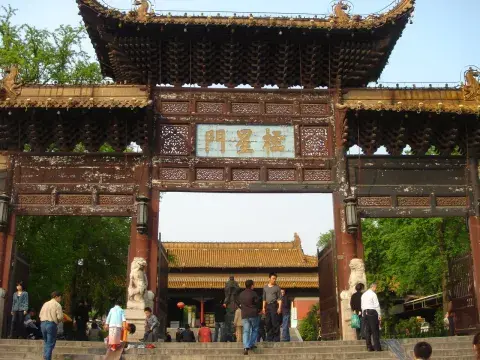
The Nanjing City Museum focuses on Nanjing’s history. A range of exhibits are featured within the halls of Chaotian Palace. Since there is a lot of walking to be done outside, it is best to visit when the weather is nice.
Most of the general...
The Nanjing City Museum focuses on Nanjing’s history. A range of exhibits are featured within the halls of Chaotian Palace. Since there is a lot of walking to be done outside, it is best to visit when the weather is nice.
Most of the general signs are in English, but many of the artifact labels are not translated into English. English speaking tour guides are occasionally available for 60 yuan.
Artifacts from the Shipyard
From 1405 to 1433 Zheng He (郑和) made seven voyages west of China. These adventurs carried Zheng He and his crew to Southeast Asia, India, and even as far as Africa. At the time Nanjing was the capital of China’s Ming Dynasty, and Zheng He’s ships were built in Nanjing. The shipyard has since been excavated, and remains from the ships and the tools used to build them are on display at the museum. It was said to be the only ancient ship building excavation site in China.
Six Dynasties Period
Located in Dacheng Hall is an exhibit focused on Nanjing during the Six Dynasties period.
Exhibition of Nanjing History and Culture
This exhibition is worth a look, but it is easy to miss as it is hidden in a building with a relatively insignificant appearance just to the west of Dacheng Hall. The exhibitions contain information on Nanjing’s history from as early as the time of “Nanjing homo erectus” all the way up to the present.
How to Get There
Chaotian Palace is located between Mochou Lu (莫愁路), Jianye Lu (建业路), and Wangfu Street (王府大街). It is a 10 minute walk west of Zhangfuyuan Subway Station.
Remember not to confuse Nanjing City Museum with Nanjing Museum which is a totally different museum.

China Articles

What is Food Attraction America President 's Wife in Beijing
US president's wife Michelle arrived in Beijing 20th March 2014, She visit China with her daughters and her mother ....
US president's wife Michelle arrived in Beijing 20th March 2014, She visit China with her daughters and her mother . They together visit forbidden city with China 's Chairman wife Miss Peng, and for food , they try Beijing famous food Beijing Duck , they choice Dadong Duck resturant in Duanjiehu branch in Chaoyang dirstrict ,what is they ordered, Appetizer: Hot&Sour Cucumber Slice, goose liver in cherry tomato,Main Dish :Chef Dongs Fried Beef in Spicy Black Bean Sauce, Sauteed Diced Chicken and Peanut with Spicy Sauce, Chef Dongs Braised Egglant, Fried Osmanthus Rice Noodles, Braise Winter Bamboo Shoot with Shitake, Sauteed Broccoli with Carlic, Quick -Fired Beef with Shallot, DaDong"SuperLean "Roast Duck. Main Meal: Yangzhou Fried Rice, Dumpling Stuffed with 3 delicacies, Traditional Beijing Noodle with Soy Bean Paste, Steamed Buns Stuffed with White Cabbage. So when you travel to Beijing , you can choice these kind of dish.
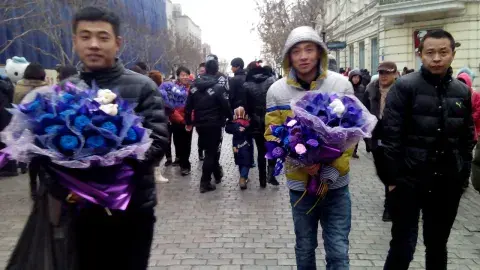
Harbin zhongyang street during the holidays
Harbin zhongyang street , long time before around 1900 , it called Chinese street....
Harbin zhongyang street , long time before around 1900 , it called Chinese street. This year on Lantern festival and Valentine's Day on Feb.14th 2014 , they are same day , the zhongyang street are very busy , you can see from pictures , and some people sell flower to who walking on the zhongyang street visitors , you can see men young people or women young people hold A bouquet of flower or two bouquet lowers, it is Very festive atmosphere.
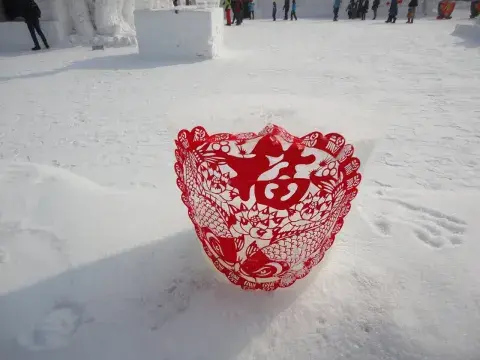
The ancient Ice Lantern Make in Harbin
people use a Plastic bucket and pour into the water then , put outside in cold weather , let them freezing , after freezing they take out the ice , and make a hole inside the ice, hole can put a candle , the candle can make the ice bright , so that is ancient method to make the ice lantern .
...people use a Plastic bucket and pour into the water then , put outside in cold weather , let them freezing , after freezing they take out the ice , and make a hole inside the ice, hole can put a candle , the candle can make the ice bright , so that is ancient method to make the ice lantern .
Top China Tours
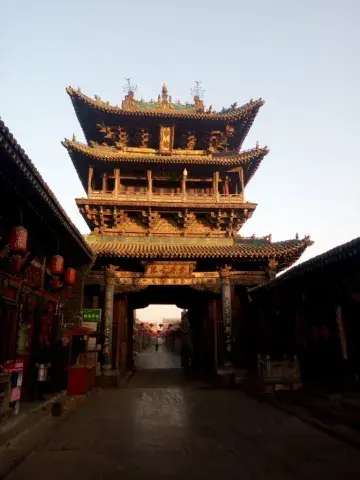
$53 Per Day
Pingyao Highlights Walking Tour
Pingyao Highlights Walking Day Tour
With our guide to know the Ancient Pingyao better!
Our guide will meet you at your hotel lobby at 08:00 or 08:30, then show you the ticket office to get the ticket for the museums we will visit later.
...Read morePingyao Highlights Walking Day Tour
With our guide to know the Ancient Pingyao better!
Our guide will meet you at your hotel lobby at 08:00 or 08:30, then show you the ticket office to get the ticket for the museums we will visit later.
First we will visit the 700 years old City wall, We will climb up from south gate and have a walk on the wall. We are not sure how many km we can walk, because of the renovating of the wall. Normally we will walk from south gate to the Yunlu Exit.
Then visit the Confucius temple, there is a old building named Dacheng Hall which is over 840 years old. From outside, we can see the big wood joints to lift the big roof around the building which is named Dougong. Due to this design, there are less columns inside the hall for giving the big space for the statues and the prayer. We have chance to see the Confucius statue and learn the philosophy of Confucius. If you like, you can pray for you and your children to get better study.
There is the Paper Cutting master named Wentao nearby the exit of Confucius temple. She is very smart and create the new style paper cutting with much more details and good wishes on it. Her products are made by hanks. It is worth to visit and buy as a souvenir from Pingyao. From the table standing and wall hangings. Please remember, take the red one because of red is the traditional and happy color. But the white one is the best. It is really difficult to choose, because of all of them are really nice.
Then you can have coffee break or tea break if you need at Chummy coffee, after this, visit the City god temple (ChenghuangMiao) which is most beautiful temple inside the wall. Because of the roof is covered by the colorful glazed tiles. There is not only city god and also the three money gods, Now you know why pingyao was the financial center.
Next we will visit the Ancient government building, to see the pingyao politics center in the ancient time. It is the complete building with officials bed room, kitchen and private garden. Follow the guide to look the official’s life from the 250km far away from the hometown.
Have a stroll in the alley to the Rishengchang exchange bank, which is the first bank all of china.You can not miss it.
After lunch, walk to the Ming and Qing street, this is the shopping street full of the stores on the both side of street. You can find alot things here , from post card to lacquered boxes, and wall panels. One more place to see, it is the Armed escort agency also named security and transport service for the business man before the bank founded.
Inlcusions
1.private english speaking tour guide servcie
2.bottle water for the tour
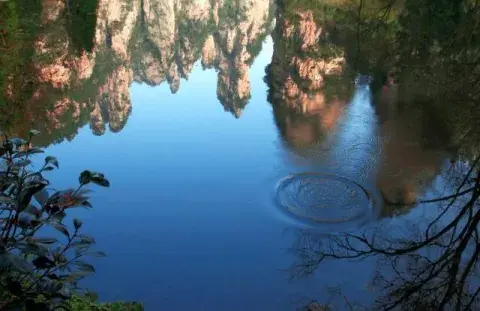
$310 Per Day
3- Day Popular Tour In Zhangjiajie
Day 1 Zhangjiajie National Forest Park
Full day trip to Zhangjiajie National Forest Park,take Bailong Elevator up Yuanjiajie,Bailong Elevator is the said to be the worlds tallest full-exposure outdoor lift,double-deck sightseeing elevator.Yuanjiajie is the inspiration for Hallelujah Mountain in AVATAR , Where you will also find the aptly named First Bridge under Heaven, Lover Peaks and so on.
...Read more
Day 1 Zhangjiajie National Forest Park
Full day trip to Zhangjiajie National Forest Park,take Bailong Elevator up Yuanjiajie,Bailong Elevator is the said to be the worlds tallest full-exposure outdoor lift,double-deck sightseeing elevator.Yuanjiajie is the inspiration for Hallelujah Mountain in AVATAR , Where you will also find the aptly named First Bridge under Heaven, Lover Peaks and so on.
Continuing to Tianzi Mountain, it takes you 40 minuts from Yuanjiajie to Tianzi Mountain by public bus, after arriving in Tianzi Mountain, you will have a bird’s-eye view of all the mountains and valleys of the Wuling Mountains. Visit Western Sea, Helong Park, Viewing Terrace etc.Take Tianzi cablecar down and check in hotel for a rest.
Accommodation: Wulingyuan Downtown
Day 2 Baofeng Lake & Glass Bridge
After breaking in the hotel, we head to Baofeng Lake where is the masterpiece of nature and human beings’wisdom. Baofeng Lake is pure just like a big crystal among Bao feng mountain Range.When you cruise, you can hear authentic song from Tujia minority people,you can fully understand the harmony and peace between human beings and nature.
Transfer to Zhangjiajie Grand Canyon, have a walking on the Glass Bridge, Glass Bridge is the highlight of Zhangjiajie Grand Canyon, located in Zhangjiajie Grand Canyon, Zhangjiajie Grand Canyon Glass Bridge is the highest and longest transparent glass bridge with a length 430 meters and a width 6 meters. It is 300 meters above the ground level and it can bear 800 persons standing on it at the same time. (need to book the tickets in advance)
Accommodation: Wulingyuan Downtown
Day 3 Tianmen Mountain
Full day to explore Tianmen Mountain,take the longest cablecar in the world up Tianmen Mountain,have a walk on the mountain plank road built along the face of cliffs. You will feel like walking in a fairy land when the mist is still heavy.The must-visit scenic spots are: Tianmen Cave, Glass Road, Tianme Temple.
See you off in the airport and looking forward to seeing you again in Zhangjiajie.
$200 Per Day
CHENGDU, A PANDA CITY, A GOURMET CITY, A TEA CITY, LOOKING FOWARD TO YOUR ARRIVAL
Chengdu, with an area of 12,400 square kilometers and a polulation of about 14,170,000 is not just the biggest provincial capital in west China, but also the only city in the history of China whose name has reminded the same for 3,000 years since its establishment. In Chinese, "Cheng" means "success or successful" and "Du" means "big city or capital". This "Successful City" boasts a long history. It is believed that everything about Chengdu has their origin from "Sanxingdui Ruins", from where you can deeply discover the history story of Chengdu.
...Read moreChengdu, with an area of 12,400 square kilometers and a polulation of about 14,170,000 is not just the biggest provincial capital in west China, but also the only city in the history of China whose name has reminded the same for 3,000 years since its establishment. In Chinese, "Cheng" means "success or successful" and "Du" means "big city or capital". This "Successful City" boasts a long history. It is believed that everything about Chengdu has their origin from "Sanxingdui Ruins", from where you can deeply discover the history story of Chengdu.
Giant pandas definitely are the best calling card and trademark of Chengdu. Every year, million of people are attracted by giant pandas to spend their holidays here, go sightseeing here, make investment here and even settle here permanently. The reason is that for people around the world, the charm of giant pandas cannot be replaced by anything else.
Various kinds of wonderful food shall be another reason attracting you to visit Chengdu. Of the four most famous schools of culinery art in China (Beijing cuisine, Sichuan cuisine, Jiangsu cuisine, Guangdong cuisine), Sichuan cuisine boasts tongue-numbing, hot, delicate and fresh taste and a variety of flavors, as "each dish has its unique taste and no two dishes have the same flavor." Such spcial flavors as fish-flavored, gongbao (with peanuts), and water-boiled are incomparable at home and abroad.
"The teahouses in Sichuan top the world, and those in Chengdu Top Sichuan." This widespread saying not only points out the status of Chengdu's teahouses but also the inseverable ties between Chengdu culture and tea. Like bars in Paris and cafes in Vienna, teahouse add a touch of refinement and leisureliness to Chengdu, an ancient yet modern metropolis. The practice of driking tea prevailed in Sichuan as earlt as prior to the Qin and Han Dynasties.
Wish you can have a nice trip in Chengdu. You will love it.