China Attractions

Wenshu Monastery

In 1691 it was believed that the monk Ci Du reached such a state of enlightenment that he reportedly shook the ground and radiated light. Local officials concluded he must be the reincarnation of Manjusri and the monastery was renamed Wenshu (Manjusri). The Zen Buddhist monastery w...

In 1691 it was believed that the monk Ci Du reached such a state of enlightenment that he reportedly shook the ground and radiated light. Local officials concluded he must be the reincarnation of Manjusri and the monastery was renamed Wenshu (Manjusri). The Zen Buddhist monastery was originally built between 605-617 during the Tang Dynasty.

The Wenshu temple itself is easily the best-preserved temple in Chengdu. It is an imposing three story building as each story has a high ceiling. Three large paintings on the first floor should not be missed as each painting weaves an intricate tale about Buddhism in China or India. The paintings are filled with Buddhist symbolism set on a background of Indian and Chinese natural wonders and landmarks. If you speak Chinese, the monks will be more than happy to tell you about the paintings.

The monastery is a shady, quiet place to stroll about. Rugged rock gardens and bonsai trees bring a peaceful setting to a monastery crammed into urban China. Different buidlings around the complex contain nearly 1000 calligraphic works done by famous calligraphers from China, and suprisingly Japan. The inclusion of Japanese works is a testament to the shared religious friendship that transcends two nations historically at odds.

  
Next to the Wenshu Temple, the Peace Pagoda of a Thousand Buddhas is a new addition to the monastery at 22 meters in height. The tallest iron cast pagoda in China features six bells at its top which chime with the wind. Naturally the monastery also has a large teahouse on the east side. If you visit the monastery, definitely have a meal at the vegetarian restaurant next to the teahouse. Dishes range from Y4-75, and they are excellent. Don’t be worried by the words "pork" and "beef" all over the bilingual menu, they use fake substitutes for meat. Also, don’t be scared away by dishes which the menu says are spicy. Compared to hotpot, they aren’t really spicy at all.

Recently a pleasant tourist neighborhood was built just to the east of the entrance. There are plenty of dining and shopping options if you are craving either after a stroll at the monastery.

Directions: The Wenshu Monastery is just off of the east side of Renmin Zhonglu down an alley called XiZhuShi Jie. If you take the 16 or 99 bus north along Renmin Lu, listen carefully, because the driver will call out "Wenshu Yuan" when you reach that stop. If you take a taxi, the fare should be Y10 or less from Tianfu Square. 

Tea Market

The Tea Market is my new favorite place in Shanghai. Definitely off the beaten track, the market is only mentioned in one of several Shanghai guide books I  own. I had always been interested in visiting the tea market, but w...
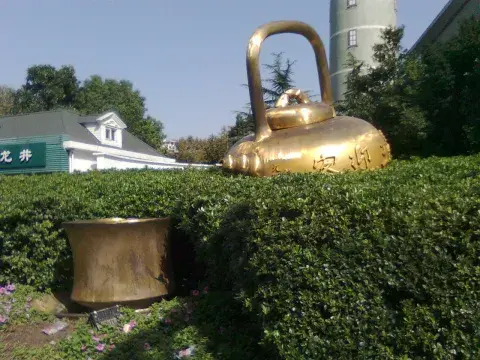
The Tea Market is my new favorite place in Shanghai. Definitely off the beaten track, the market is only mentioned in one of several Shanghai guide books I  own. I had always been interested in visiting the tea market, but was never sure exactly what I would find.  I took a taxi, although in retrospect, I  could have taken the metro, as the market is  merely 5 minutes walk from the Main Shanghai Station. The taxi ride was 20RMB from the center of the city. The driver dropped us off pretty close to the market,  but we still had to wander a  bit to find its exact location. 


The market is on one large street with many tea stalls. I let myself believe this was the only section until I stepped into a stall on the left side and happened upon a long alleyway behind the street containing hundreds of more stalls. I bought tea from a few different shops. While one shop did rip me off (by about 10RMB, so I cannot really complain), I eventually found a fantastic shop run by a sweet young man who spoke English very well. He invited me to sit down to taste several different teas while he explained how to make the tea. He taught me quite a bit; did you know that the temperature of the water really makes a big difference?  He combined different flowers and herbs to help me with my ailments. The final product was a hibiscus, sweet chamomile and rose tea that is beautiful and wonderfully sweet.  He also explained that he is the only shop in the market that sells a green tea that can be brewed with cold water, perfect for ice tea in the steaming hot Shanghai summers.
 
The tea market is an experience not to missed by anyone. Even if you do not fancy yourself as a tea lover, trust me – you too will become a believer. I myself am now a convert.
 
Try to visit “Candy” at stall B-26 for some personal attention.  Since the government keeps threatening to move the market, call him at 137-0168-7221 to make sure he is not in a new location. Upon my last visit he promised they would be there through the year. Enjoy!

Metro, any line. Look for DaTong Lu (大同路). The market is only 5 minutes away from the station, but bring a map – the route requires a few funny turns to find it. Otherwise, just take a taxi to the intersection of Datong Lu and Zhongshan Lu (中山路), and then head left on Datong Lu. The market verges to the left, you’ll see the stalls.

Beijing Chaoyang Diabetes Hospital

If you are diabetic, or suspect that you might be, you should visit Beijing Chaoyang Diabetes Hospital. The hospital was opened in July 2004 and is the brainchild of Dr. Wang Zhili. Dr. Wang completed his postgraduate study in London, and is also a Fellow of the Royal Society of Medicine. ...
If you are diabetic, or suspect that you might be, you should visit Beijing Chaoyang Diabetes Hospital. The hospital was opened in July 2004 and is the brainchild of Dr. Wang Zhili. Dr. Wang completed his postgraduate study in London, and is also a Fellow of the Royal Society of Medicine. The hospital’s up-to-date equipment includes an X-ray department, fundus photography department, and a CTS scanner. The hospital aims to raise the standard of diabetes treatment and control throughout China. It departs from the traditional method of automatically dispensing oral medicines for type II diabetes, instead opting to support the body with insulin whilst at the same time implementing a regime of exercise and diet to help the body recover as much natural function as possible. In this way some patients are ultimately able to control the disease without long-term use of drugs or insulin.
 
Unlike most Chinese hospitals, waiting times are not too long. If you require a blood glucose test it is well worth making the trip rather than queuing half the day in an ordinary general hospital. The hospital offers the most modern treatment methods in China. The staff are friendly and enthusiastic, and while English speaking staff are usually available, it might be best to bring a Chinese friend along if possible. In the event that a hospital stay is needed, in-patient charges are very reasonable.


Take subway Line 1 and get off at DaWang Road (Exit A). Then catch bus No.30 and get off at Daojia Yuan stop.

Nanjing Food Court (Nanjing Da Paidang)

I was impressed by the distinctive local features of this restaurant.  As you approach the entrance, two elderly male hosts wearing white mandarin jackets, white round dicers, and towels on their right shoulder enthusiastically direct you inside. Upon entering...

I was impressed by the distinctive local features of this restaurant.  As you approach the entrance, two elderly male hosts wearing white mandarin jackets, white round dicers, and towels on their right shoulder enthusiastically direct you inside. Upon entering, you will be surprised by the expansive hall and its old-fashioned, yet tasteful decoration. The first floor is more of a dining hall with tables that seat 4 to 12 guests. The second floor alternatively offers small, private rooms.  The rooms are more comfortable and offer a better viewing angle of the first floor through the wooden windows, but you have to pay spend a minimum of 200 yuan (including alcohol and beverage) in order to obtain a room.

The cuisine served at the ’food court’ is traditional Huaiyang Chinese dishes.  To me, the flavor here simply makes my mouth water. The first time I dined at the food court, two guests and I ate for 190 yuan. The second time 7 of us compiled a bill of more than 500 yuan, so the average expense works out to about 60-70 yuan per person. One last detail well worth a mention is the inclusion of a daily Suzhou Pingtan performance (storytelling and ballad singing in Suzhou dialect), which begins at 7 o’clock. Credit cards are accepted here as well.

How to Get There: Check the Lion’s Bridge article.

Other Locations
Deji Plaza (德基广场)
Usually open until 10:00pm
+86 (0)25 8472 2777

No. 96 Caochangmen Dajie (草场门大街96号)
Usually open until 10:00pm
+86 (0) 25 8621 8777

Repulse Bay

Qian Long Waterway

Just north of the city center (Wenchang Pavillion) lies the tree and park lined Hu Cheng Canal 护城河 (also called the Qian Long Waterway). Yanfu Road runs along the waterway. Emperor Qianlong used this route to enter the city and visit Slender West Lake. For 50 Yuan dragon boats can be hired at the Imperial Dock to retrace the emperor’s route. The experience of the ride is recommended as the waterway likely appears not too different than it did to Qianlong centuries ago. The dock is between the Tian Ning Temple and Ye Chun Teahouse.


The somewhat silly replica boats at the Imperial Dock

At night the lights along the waterway illuminate the canal, bridges, and pagodas in the area making for a perfect after-dinner stroll. Also near the waterway, on the north bank of the river, is the easy-to-spot outdoor bird and plant market (花鸟市场). The market is yet another great place to wander about and hopefully score a unique gift.


China Articles

Top China Tours

$53 Per Day

Pingyao Highlights Walking Tour

Pingyao Highlights Walking Day Tour

With our guide to know the Ancient Pingyao better!

Our guide will meet you at your hotel lobby at 08:00 or 08:30, then show you the ticket office to get the ticket for the museums we will visit later.

First we will visit the 700 years old City wall, We will climb up from south gate and have a walk on the wall. We are not sure how many km we can walk, because of the renovating of the wall. Normally we will walk from south gate to the Yunlu Exit.

Then visit the Confucius temple, there is a old building named Dacheng Hall which is over 840 years old. From outside, we can see the big wood joints to lift the big roof around the building which is named Dougong. Due to this design, there are less columns inside the hall for giving the big space for the statues and the prayer. We have chance to see the Confucius statue and learn the philosophy of Confucius. If you like, you can pray for you and your children to get better study.

There is the Paper Cutting master named Wentao nearby the exit of Confucius temple. She is very smart and create the new style paper cutting with much more details and good wishes on it. Her products are made by hanks. It is worth to visit and buy as a souvenir from Pingyao. From the table standing and wall hangings. Please remember, take the red one because of red is the traditional and happy color. But the white one is the best. It is really difficult to choose, because of all of them are really nice.

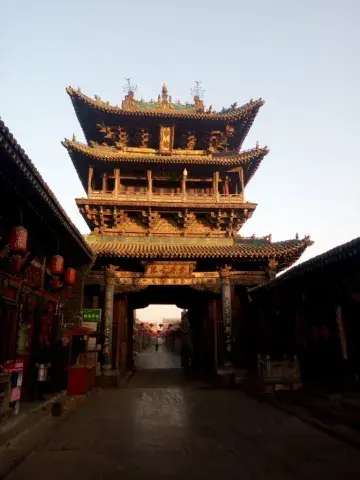
Then you can have coffee break or tea break if you need at Chummy coffee, after this, visit the City god temple (ChenghuangMiao) which is most beautiful temple inside the wall. Because of the roof is covered by the colorful glazed tiles. There is not only city god and also the three money gods, Now you know why pingyao was the financial center.

Next we will visit the Ancient government building, to see the pingyao politics center in the ancient time. It is the complete building with officials bed room, kitchen and private garden. Follow the guide to look the official’s life from the 250km far away from the hometown.

Have a stroll in the alley to the Rishengchang exchange bank, which is the first bank all of china.You can not miss it.

After lunch, walk to the Ming and Qing street, this is the shopping street full of the stores on the both side of street. You can find alot things here , from post card to lacquered boxes, and wall panels. One more place to see, it is the Armed escort agency also named security and transport service for the business man before the bank founded.

Inlcusions

1.private english speaking tour guide servcie

2.bottle water for the tour


$310 Per Day

3- Day Popular Tour In Zhangjiajie

Day 1    Zhangjiajie National Forest Park

Full day trip to Zhangjiajie National Forest Park,take Bailong Elevator up Yuanjiajie,Bailong Elevator is the said to be the worlds tallest full-exposure outdoor lift,double-deck sightseeing elevator.Yuanjiajie is the inspiration for Hallelujah Mountain in AVATAR , Where you will also find the aptly named First Bridge under Heaven, Lover Peaks and so on.

Continuing to Tianzi Mountain, it takes you 40 minuts from Yuanjiajie to Tianzi Mountain by public bus, after arriving in Tianzi Mountain, you will have a bird’s-eye view of all the mountains and valleys of the Wuling Mountains. Visit Western Sea, Helong Park, Viewing Terrace etc.Take Tianzi cablecar down and check in hotel for a rest.
Accommodation: Wulingyuan Downtown

Day 2    Baofeng Lake & Glass Bridge

After breaking in the hotel, we head to Baofeng Lake where is the masterpiece of nature and human beings’wisdom. Baofeng Lake is pure just like a big crystal among Bao feng mountain Range.When you cruise, you can hear authentic song from Tujia minority people,you can fully understand the harmony and peace between human beings and nature.

Transfer to Zhangjiajie Grand Canyon, have a walking on the Glass Bridge, Glass Bridge is the highlight of Zhangjiajie Grand Canyon, located in Zhangjiajie Grand Canyon, Zhangjiajie Grand Canyon Glass Bridge is the highest and longest transparent glass bridge with a length 430 meters and a width 6 meters. It is 300 meters above the ground level and it can bear 800 persons standing on it at the same time. (need to book the tickets in advance)
Accommodation: Wulingyuan Downtown

Day 3    Tianmen Mountain

Full day to explore Tianmen Mountain,take the longest cablecar in the world up Tianmen Mountain,have a walk on the mountain plank road built along the face of cliffs. You will feel like walking in a fairy land when the mist is still heavy.The must-visit scenic spots are: Tianmen Cave, Glass Road, Tianme Temple.

See you off in the airport and looking forward to seeing you again in Zhangjiajie.

$200 Per Day

CHENGDU, A PANDA CITY, A GOURMET CITY, A TEA CITY, LOOKING FOWARD TO YOUR ARRIVAL

Chengdu, with an area of 12,400 square kilometers and a polulation of about 14,170,000 is not just the biggest provincial capital in west China, but also the only city in the history of China whose name has reminded the same for 3,000 years since its establishment. In Chinese, "Cheng" means "success or successful" and "Du" means "big city or capital". This "Successful City" boasts a long history. It is believed that everything about Chengdu has their origin from "Sanxingdui Ruins", from where you can deeply discover the history story of Chengdu.

Giant pandas definitely are the best calling card and trademark of Chengdu. Every year, million of people are attracted by giant pandas to spend their holidays here, go sightseeing here, make investment here and even settle here permanently. The reason is that for people around the world, the charm of giant pandas cannot be replaced by anything else. 

Various kinds of wonderful food shall be another reason attracting you to visit Chengdu. Of the four most famous schools of culinery art in China (Beijing cuisine, Sichuan cuisine, Jiangsu cuisine, Guangdong cuisine), Sichuan cuisine boasts tongue-numbing, hot, delicate and fresh taste and a variety of flavors, as "each dish has its unique taste and no two dishes have the same flavor." Such spcial flavors as fish-flavored, gongbao (with peanuts), and water-boiled are incomparable at home and abroad.

"The teahouses in Sichuan top the world, and those in Chengdu Top Sichuan." This widespread saying not only points out the status of Chengdu's teahouses but also the inseverable ties between Chengdu culture and tea. Like bars in Paris and cafes in Vienna, teahouse add a touch of refinement and leisureliness to Chengdu, an ancient yet modern metropolis. The practice of driking tea prevailed in Sichuan as earlt as prior to the Qin and Han Dynasties.

Wish you can have a nice trip in Chengdu. You will love it.