China Attractions
Leshan Giant Stone Buddha
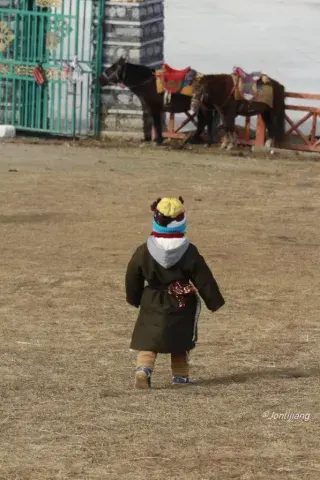
This superb adventure in remote China combines the experience of real Tibetan culture with a spectacular trek through the beautiful valleys of Riwoche and Moxi to the Monastery below the ice-fluted shark's fin of Minya Konka (7556m), the world's third highest peak outside the Himalaya. Situated o...
This superb adventure in remote China combines the experience of real Tibetan culture with a spectacular trek through the beautiful valleys of Riwoche and Moxi to the Monastery below the ice-fluted shark's fin of Minya Konka (7556m), the world's third highest peak outside the Himalaya. Situated on the eastern edge of the Tibetan Plateau, Minya Konka is also one of the most sacred mountains to Tibetan Buddhists, equal in status to Mount Kailas in Western Tibet. Impressive mountain panoramas and austere glaciers, babbling brooks and river torrents, azure blue lakes, enchanting mixed woodland, grazing yaks and their nomadic herders, chortens, mani walls, prayer flags and elaborately decorated Gompas can all be found here.
Our week long trek begins just south of Kangding. the 'Gateway to Tibet'. We make a steady ascent of the Riwoche valley with its soaring cliffs and fast river torrents. At the head of this valley we enter a high grazing area where we will encounter the temporary settlements of the nomadic yak herders. Climbing to cross the 4900 metre Bhuchu La, we then descend the beautiful Moxi valley eventually entering forests of rhododendron, juniper, birch and oak which in October become a riot of Autumnal colours. We stay overnight in the Konka monastery and the climax of our trek is the climb to the ridge above for unrivalled views of Minya Konka and the Daxue range of 6000-metre snowy peaks. Although Minya Konka is the undoubted centre-piece of this great trekking holiday to a little visited mountain region of Sichuan, there is much more to the holiday than this, admittedly, superbly photogenic mountain.
If you want to see real Tibetan culture, this is where you should come. This holiday will give you an insight into the rural life of the Kham region and also of the Minyak people who are an ethnic group distinct again from their Khampa neighbours. Combined with a fascinating journey through Sichuan province, with its many spectacular monasteries, gigantic 'hill paintings' and the great Mani Pile of Tagong, and sightseeing in the city of Chengdu, including the Pandas at the world famous breeding centre. This is a world class trekking holiday and also a real adventure and travel experience in an area visited by very few Westerners.
China Articles
Guangzhou weather
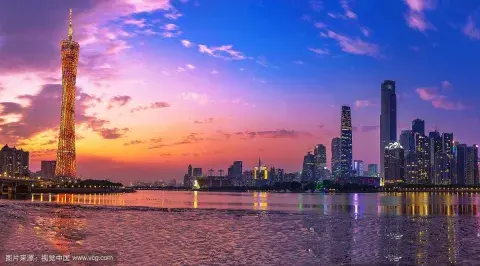
From December to February, it is the winter season in Guangzhou, when you travel in Guangzhou or nearby cities please take more clothes with you, haha, any questions feel free to ask me ..my name is Albert who based in Guangzhou and nearby cities.
...From December to February, it is the winter season in Guangzhou, when you travel in Guangzhou or nearby cities please take more clothes with you, haha, any questions feel free to ask me ..my name is Albert who based in Guangzhou and nearby cities.
Guangzhou is just two cities away from Hongkong, if u travel from Hongkong, this weather is useful for you as well.
Guangzhou only has two seasons, which is Summer and Winter. if you travel in Guangzhou in the month other than December,January,February,you are no need to bring more clothes, you can just hangout out with T-shirt and enjoy the cozy wind.
Yue Xiu Park /Five Ram Statue
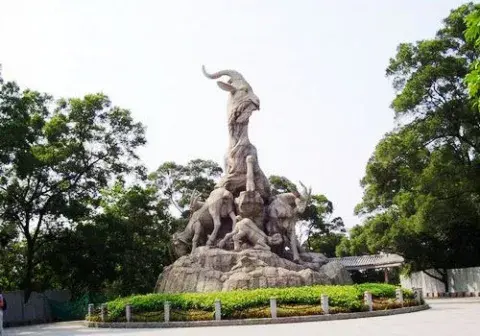
Yuexiu park is the largest comprehensive park in guangzhou.“ ”Yuexiu “ the name from the park main body yuexiu mountain, which the west han dynasty, the south Vietnamese king zhao tuo has built "the han platform" on the mountain....
Yuexiu park is the largest comprehensive park in guangzhou.“ ”Yuexiu “ the name from the park main body yuexiu mountain, which the west han dynasty, the south Vietnamese king zhao tuo has built "the han platform" on the mountain.
Park has ancient archway ChuTing and foshan ancient city wall, sifang fort, sun yat-sen memorial, sun yat-sen reading matter tablet, wu ting-fang's tomb, cure MingShaoWu manner burial, seamen's pavilion, Five Ram stone, Five Ram statue legend group of spherical water tower, etc.(all significent places to Chinese)
The area of the park has been one of the eight famous places of historic interest since the yuan dynasty.In 2006, the park was rated as a national 4A tourist attraction

Shenzhen interpreter | Shenzhen sourcing agent | Shenzhen translator
Your first-choice China sourcing agent, Shenzhen sourcing agent and Shenzhen interpreter-- China SourceLink. Our company is founded to help overseas buyers to source verified suppliers and products with good quality....
Your first-choice China sourcing agent, Shenzhen sourcing agent and Shenzhen interpreter-- China SourceLink. Our company is founded to help overseas buyers to source verified suppliers and products with good quality. Our role is to bridge the gap between international buyers and domestic manufacturers in Shenzhen due to language and cultural barriers, and information asymmetry by providing professional service in sourcing and logistics for your products, interpretation and translation for your visit. As your sourcing agent in Shenzhen, we also caters to the needs of those who intend to incorporate their business in China. In the process of a legal entity formation, we not only help you to register a company from an administrative perspectives, but also provides your with the insightful marketing information to determine your business scope. During your business operation, our accounting and tax service will help you for preserving resources, reducing your tax burden, and streamlining your accounting procedures. Shenzhen is known as a sourcing capital for electronics, which is also where our expertise lies. Most of our agents has technical background and a relevant industrial experience in telecommunication, consumer electronics, power energy, software engineering,etc. This is why with their help you will be able to identify the qualified wholesalers, manufacturers, and factories for targeted merchandise with a desire price. With the help of their expertise you will also be able to find the right factories or R&D engineering teams for prototyping or original design manufacturing(ODM). All of our sourcing agent also excellent working proficiency both in Chinese and English, and therefore can be served also as your interpreters during your visit to Shenzhen.
Top China Tours
$53 Per Day
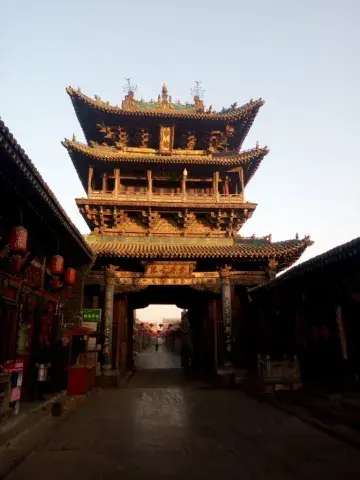
Pingyao Highlights Walking Tour
Pingyao Highlights Walking Day Tour
With our guide to know the Ancient Pingyao better!
Our guide will meet you at your hotel lobby at 08:00 or 08:30, then show you the ticket office to get the ticket for the museums we will visit later.
...Read morePingyao Highlights Walking Day Tour
With our guide to know the Ancient Pingyao better!
Our guide will meet you at your hotel lobby at 08:00 or 08:30, then show you the ticket office to get the ticket for the museums we will visit later.
First we will visit the 700 years old City wall, We will climb up from south gate and have a walk on the wall. We are not sure how many km we can walk, because of the renovating of the wall. Normally we will walk from south gate to the Yunlu Exit.
Then visit the Confucius temple, there is a old building named Dacheng Hall which is over 840 years old. From outside, we can see the big wood joints to lift the big roof around the building which is named Dougong. Due to this design, there are less columns inside the hall for giving the big space for the statues and the prayer. We have chance to see the Confucius statue and learn the philosophy of Confucius. If you like, you can pray for you and your children to get better study.
There is the Paper Cutting master named Wentao nearby the exit of Confucius temple. She is very smart and create the new style paper cutting with much more details and good wishes on it. Her products are made by hanks. It is worth to visit and buy as a souvenir from Pingyao. From the table standing and wall hangings. Please remember, take the red one because of red is the traditional and happy color. But the white one is the best. It is really difficult to choose, because of all of them are really nice.
Then you can have coffee break or tea break if you need at Chummy coffee, after this, visit the City god temple (ChenghuangMiao) which is most beautiful temple inside the wall. Because of the roof is covered by the colorful glazed tiles. There is not only city god and also the three money gods, Now you know why pingyao was the financial center.
Next we will visit the Ancient government building, to see the pingyao politics center in the ancient time. It is the complete building with officials bed room, kitchen and private garden. Follow the guide to look the official’s life from the 250km far away from the hometown.
Have a stroll in the alley to the Rishengchang exchange bank, which is the first bank all of china.You can not miss it.
After lunch, walk to the Ming and Qing street, this is the shopping street full of the stores on the both side of street. You can find alot things here , from post card to lacquered boxes, and wall panels. One more place to see, it is the Armed escort agency also named security and transport service for the business man before the bank founded.
Inlcusions
1.private english speaking tour guide servcie
2.bottle water for the tour
$310 Per Day
3- Day Popular Tour In Zhangjiajie
Day 1 Zhangjiajie National Forest Park
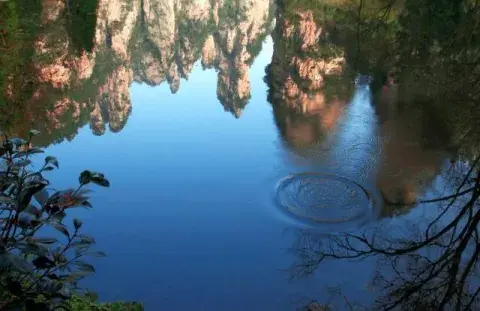
Full day trip to Zhangjiajie National Forest Park,take Bailong Elevator up Yuanjiajie,Bailong Elevator is the said to be the worlds tallest full-exposure outdoor lift,double-deck sightseeing elevator.Yuanjiajie is the inspiration for Hallelujah Mountain in AVATAR , Where you will also find the aptly named First Bridge under Heaven, Lover Peaks and so on.
...Read more
Day 1 Zhangjiajie National Forest Park
Full day trip to Zhangjiajie National Forest Park,take Bailong Elevator up Yuanjiajie,Bailong Elevator is the said to be the worlds tallest full-exposure outdoor lift,double-deck sightseeing elevator.Yuanjiajie is the inspiration for Hallelujah Mountain in AVATAR , Where you will also find the aptly named First Bridge under Heaven, Lover Peaks and so on.
Continuing to Tianzi Mountain, it takes you 40 minuts from Yuanjiajie to Tianzi Mountain by public bus, after arriving in Tianzi Mountain, you will have a bird’s-eye view of all the mountains and valleys of the Wuling Mountains. Visit Western Sea, Helong Park, Viewing Terrace etc.Take Tianzi cablecar down and check in hotel for a rest.
Accommodation: Wulingyuan Downtown
Day 2 Baofeng Lake & Glass Bridge
After breaking in the hotel, we head to Baofeng Lake where is the masterpiece of nature and human beings’wisdom. Baofeng Lake is pure just like a big crystal among Bao feng mountain Range.When you cruise, you can hear authentic song from Tujia minority people,you can fully understand the harmony and peace between human beings and nature.
Transfer to Zhangjiajie Grand Canyon, have a walking on the Glass Bridge, Glass Bridge is the highlight of Zhangjiajie Grand Canyon, located in Zhangjiajie Grand Canyon, Zhangjiajie Grand Canyon Glass Bridge is the highest and longest transparent glass bridge with a length 430 meters and a width 6 meters. It is 300 meters above the ground level and it can bear 800 persons standing on it at the same time. (need to book the tickets in advance)
Accommodation: Wulingyuan Downtown
Day 3 Tianmen Mountain
Full day to explore Tianmen Mountain,take the longest cablecar in the world up Tianmen Mountain,have a walk on the mountain plank road built along the face of cliffs. You will feel like walking in a fairy land when the mist is still heavy.The must-visit scenic spots are: Tianmen Cave, Glass Road, Tianme Temple.
See you off in the airport and looking forward to seeing you again in Zhangjiajie.
$200 Per Day
CHENGDU, A PANDA CITY, A GOURMET CITY, A TEA CITY, LOOKING FOWARD TO YOUR ARRIVAL
Chengdu, with an area of 12,400 square kilometers and a polulation of about 14,170,000 is not just the biggest provincial capital in west China, but also the only city in the history of China whose name has reminded the same for 3,000 years since its establishment. In Chinese, "Cheng" means "success or successful" and "Du" means "big city or capital". This "Successful City" boasts a long history. It is believed that everything about Chengdu has their origin from "Sanxingdui Ruins", from where you can deeply discover the history story of Chengdu.
...Read moreChengdu, with an area of 12,400 square kilometers and a polulation of about 14,170,000 is not just the biggest provincial capital in west China, but also the only city in the history of China whose name has reminded the same for 3,000 years since its establishment. In Chinese, "Cheng" means "success or successful" and "Du" means "big city or capital". This "Successful City" boasts a long history. It is believed that everything about Chengdu has their origin from "Sanxingdui Ruins", from where you can deeply discover the history story of Chengdu.
Giant pandas definitely are the best calling card and trademark of Chengdu. Every year, million of people are attracted by giant pandas to spend their holidays here, go sightseeing here, make investment here and even settle here permanently. The reason is that for people around the world, the charm of giant pandas cannot be replaced by anything else.
Various kinds of wonderful food shall be another reason attracting you to visit Chengdu. Of the four most famous schools of culinery art in China (Beijing cuisine, Sichuan cuisine, Jiangsu cuisine, Guangdong cuisine), Sichuan cuisine boasts tongue-numbing, hot, delicate and fresh taste and a variety of flavors, as "each dish has its unique taste and no two dishes have the same flavor." Such spcial flavors as fish-flavored, gongbao (with peanuts), and water-boiled are incomparable at home and abroad.
"The teahouses in Sichuan top the world, and those in Chengdu Top Sichuan." This widespread saying not only points out the status of Chengdu's teahouses but also the inseverable ties between Chengdu culture and tea. Like bars in Paris and cafes in Vienna, teahouse add a touch of refinement and leisureliness to Chengdu, an ancient yet modern metropolis. The practice of driking tea prevailed in Sichuan as earlt as prior to the Qin and Han Dynasties.
Wish you can have a nice trip in Chengdu. You will love it.