Beijing Attractions

Beijing Articles
Chinese KnotⅠ
Chinese Knot is often considered a Spring Festival Mascot. It is a pretty symbol of China known by the world. It is also a very old and traditional knot-work. According to historical records, the Chinese began to tie knots to keeping a record of events in remote antiquity....
Chinese Knot is often considered a Spring Festival Mascot. It is a pretty symbol of China known by the world. It is also a very old and traditional knot-work. According to historical records, the Chinese began to tie knots to keeping a record of events in remote antiquity. Big knots for big events while small knots for small ones. It became a sort of decorative art in the Tang or Song Dynasty. Later in the Ming or Qing Dynasty, people named the knots and attached different meanings to them. For example, Ruyi (如意) Knot stands for good luck, and Double-fish Knot stands for prosperity, and True-lover Knot symbolizes true love. Chinese Knot is special and unique because each Chinese knot is made of a single unbroken string. Chinese Knot varies in color, style, and meaning. Red knots are the commonest while auspiciousness is the essential theme. Nowadays, Chinese Knot has become an important element of modern fashion. Today it has developed its own industry, which includes two major series: hanging decorations and dress decorations.
Lucky Money (压岁钱, Ya Sui Qian)Ⅱ
Then why was it renamed Ya Sui Qian ? It was because the character “岁”, which means “year”, pronounces the same with the character “祟”, which means “evil spirit”. The ancient Chinese believed children were generally weaker than adults and as a result easier to get hurt by the evil spirits....
Then why was it renamed Ya Sui Qian ? It was because the character “岁”, which means “year”, pronounces the same with the character “祟”, which means “evil spirit”. The ancient Chinese believed children were generally weaker than adults and as a result easier to get hurt by the evil spirits. Ya Sui Qian symbolized an amulet that could hold down the evil spirits. People gave Lucky Money to children in Spring Festival, the beginning of a Chinese New Year, hoping that the kids could pass the year and grew up safely. However, nowadays, the superstitious meaning of Lucky Money weakens and it is merely a gift to delight the youngsters.
Lucky Money (压岁钱, Ya Sui Qian)Ⅰ
Lucky Money (压岁钱, Ya Sui Qian) is an essential ingredient in China's Spring Festival. Lucky Money has a long history. Its origination can be traced back to the Han Dynasty. It was originally called Ya Sheng Qian. Ya Sheng Qian was not the coin in circulation. It was just shaped as coins....
Lucky Money (压岁钱, Ya Sui Qian) is an essential ingredient in China's Spring Festival. Lucky Money has a long history. Its origination can be traced back to the Han Dynasty. It was originally called Ya Sheng Qian. Ya Sheng Qian was not the coin in circulation. It was just shaped as coins. People at that time wore it and took it as a lucky talisman. In the Tang Dynasty, it was a convention prevailing at imperial court to give out money as a gift for one’s relatives, friends in Spring Festival. Later in Song and Yuan Dynasty, the convention became popular among the civilians and some changes took place. People began to give money as a gift to children. Therefore precisely speaking, Lucky Money came into being in the Song or Yuan Dynasty.
Top Beijing Tours
$200 Per Day
Private Beijing Antique Shopping Tour with Lunch
Start your private tour with pickup from your central Beijing hotel, and meet your private guide.
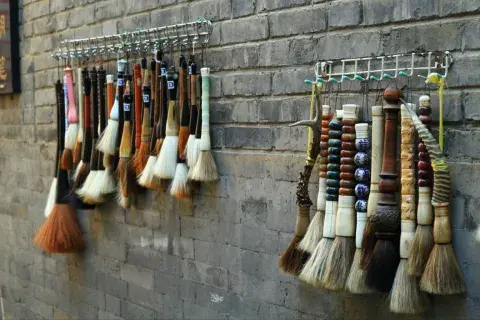
Hop inside your private, climate-controlled vehicle and travel to your first stop: Liulichang Antique Street. Situated in old Beijing, this history-steeped street is lined with stone shop-houses selling antique books, handicrafts, paintings, rubbings, glazed pottery, and other treasures.
Hear about Liulichang’s history, and get advice from your guide as to the best shopping opportunities....Read more
Start your private tour with pickup from your central Beijing hotel, and meet your private guide.
Hop inside your private, climate-controlled vehicle and travel to your first stop: Liulichang Antique Street. Situated in old Beijing, this history-steeped street is lined with stone shop-houses selling antique books, handicrafts, paintings, rubbings, glazed pottery, and other treasures.
Hear about Liulichang’s history, and get advice from your guide as to the best shopping opportunities. Sift through the traditional shops and stands, and explore the side lanes (hutongs), where the shops still bear original Ming and Qing architectural features like ornately carved doors and upswept roofs.
Next, drive to Panjiayuan Market, a so-called ‘weekend market’ that’s open daily. Weave through the throng of stands, perusing the huge array of antiques, curios, ceramics, Tibetan rugs, calligraphy, and other finds.
After shopping here, refuel with lunch at a Chinese restaurant, and continue to Baoguosi Cultural Market, set around an old temple. Scour the courtyards of vendors hawking stamps, books, coins and jade, and get tips on scouting out and clinching the best deals from your guide.
If time allows, squeeze in a visit to Hongqiao Market, a mall known for its pearl traders, and electronics, art, clothes, and accessories shops. Trawl for bargains, and haggle over pearls and other precious gems as perfect keepsakes of your time in Beijing.
After seven hours, your tour concludes with a hotel drop-off.
$50 Per Day
One day tirp to Bajiao Zhai, a noticeable Danxia Landform.
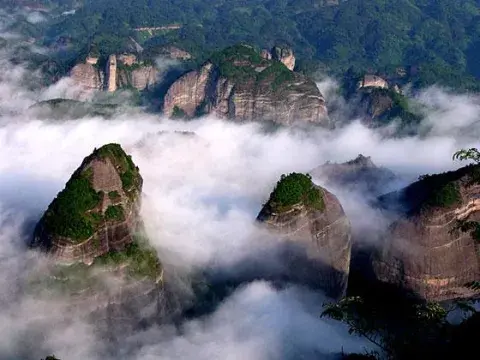
This is a tailor-made trip for nature-lovers and fans of photography. Danxia rock formation in the inland basin is a red rock debris, and later uplift due to the movement of the earth-crust, erosion of rocks by the water and weathering, which was dominant in the hillside to collapse back, kept down the rocks to form the red mountain block. This area was listed in the Natural Heritage of the world in 2009 by UNESCO. Bajiao Zhai Village is a combination of strategic place, steepy mountian, elegant scenery and secluded remote....Read more
This is a tailor-made trip for nature-lovers and fans of photography. Danxia rock formation in the inland basin is a red rock debris, and later uplift due to the movement of the earth-crust, erosion of rocks by the water and weathering, which was dominant in the hillside to collapse back, kept down the rocks to form the red mountain block. This area was listed in the Natural Heritage of the world in 2009 by UNESCO. Bajiao Zhai Village is a combination of strategic place, steepy mountian, elegant scenery and secluded remote. It is reputed as the "Soul of Danxia Landform". Here you can enjoy the sunrise or sunset and the sea-cloud. 1. I'll pick you up at 8:00 am in your hotel, and transfer to Bajiao Zhai Village by our private van. On the way, you can enjoy some terraced fields, bamboo groves and the wooden residences of the natives.(3.5 hours by ride) 2. First, we'll visit the village and have lunch in the village, and then we'll hike the mountains, the scenery including the group of snails looking up the sky, the ancient trail, Eye-stone, Joss stick of dragon's head and the Treasured sword Peak.(4 hours by hike) 3. After appreciating the sunset, after dinner in Ziyuan county, we'll take the bus back to your hotel around 10:00 pm.