Beijing Attractions
Beijing Articles
Baishun Hutong
The layout of Bada Hutong is like a centipede with one trunk joining the other alleys together. The alleys are all connected with each other, so there are no dead ends. Most of the residents here are native Beijing people....
The layout of Bada Hutong is like a centipede with one trunk joining the other alleys together. The alleys are all connected with each other, so there are no dead ends. Most of the residents here are native Beijing people. They still live in the old courtyard together with different families, which is one feature of the old Beijing lifestyle. The living environment is very comfortable and simple.
Baishun Hutong is of 804 feet (245 meters) long and 19 feet (5.7 meters) wide. This alley was named Cypress (Baishu) in the Ming Dynasty (1368 – 1644 AD). Among the eight great alleys, this one is the most famous one, for there were two distinctive constructions built on it: Taiping Guild Hall and Jintai Guild Hall. Now, the two halls are transformed to ordinary courtyard dwellings.
Eight Great Hutongs
Bada Hutong (Eight Great Hutongs), once the synonym for the red-light district in Beijing, refers to an area in the city center to the west of Guanyin Temple and near the Dashilar Street...
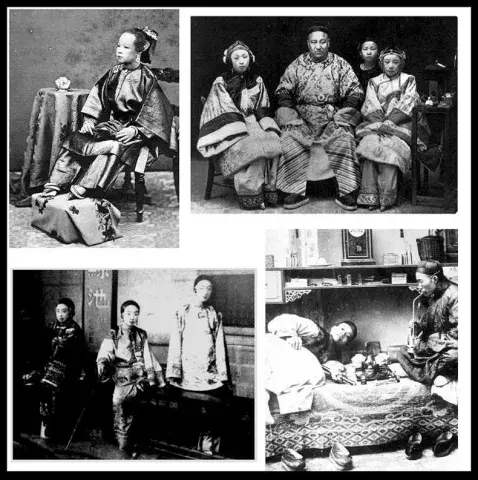
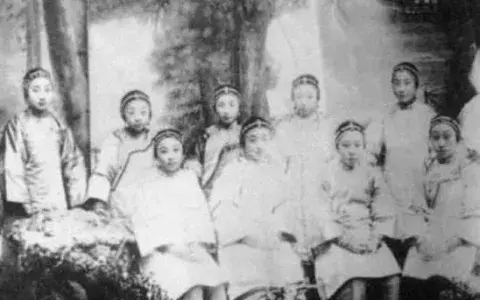
Bada Hutong (Eight Great Hutongs), once the synonym for the red-light district in Beijing, refers to an area in the city center to the west of Guanyin Temple and near the Dashilar Street outside the Qianmen Gate. The area features eight alleys from west to east named Baishun, Yanzhi, Hanjia, Shaanxi, Stone (Shitou), Zongshu Xiejie, Zhujia, and Xiaoli.During the middle and late Qing Dynasty (1644 - 1911 AD), the eight alleys used to be the red-light district near theForbidden City, attracting many officials. In that time, there were nearly hundreds of brothels, with many classy ones, distributed in the eight alleys. Nowadays, visitors can imagine the old days of Beijing through the well-preserved ancient brothel constructions, while wandering in the present residences and boutiques or staying in the traditional courtyard inns to meet the local people.
Transportation to Daqing Bank
Daqing Bank...
Daqing Bank
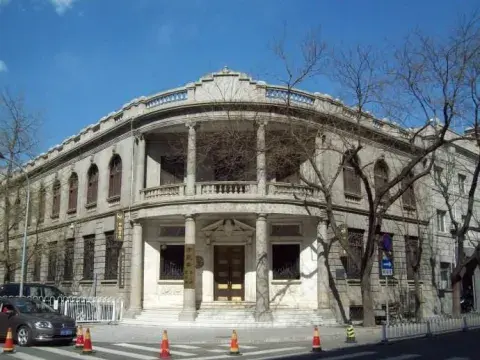
Daqing Bank of the Qing Dynasty, the earliest central bank in China, was founded in 1905. It was the oldest bank in Xijiaomin Lane, located at the intersection with Renmin Dahuitang West Road. Unfortunately, the two-story building was taken down in 1982, and now only a western arch with a grey carved iron-gate remains in the doorway. On the two sides of it are old houses with grey walls and black tiles. There is no plaque telling its story, making this site very inconspicuous.
Transportation
By subway
Take subway line 2 to Qianmen Station (Exit C), and walk north to find the east end of the lane. Get off at Hepingmen Station (Exit A2 or B2) and then walk north to the west end.
By bus
Take bus Tourist Line 1, 2, Tourist Line 2, 5, or 120, and get off at Tiananmen Square West Station. Then walk north to find the east end of Xijiaomin Lane.
Take bus 7, 14, or 70, and get off at Hepingmen Nei Station. Then walk north to find the west end.
Top Beijing Tours
$200 Per Day
Private Beijing Antique Shopping Tour with Lunch
Start your private tour with pickup from your central Beijing hotel, and meet your private guide.
Hop inside your private, climate-controlled vehicle and travel to your first stop: Liulichang Antique Street. Situated in old Beijing, this history-steeped street is lined with stone shop-houses selling antique books, handicrafts, paintings, rubbings, glazed pottery, and other treasures.
Hear about Liulichang’s history, and get advice from your guide as to the best shopping opportunities....Read more
Start your private tour with pickup from your central Beijing hotel, and meet your private guide.
Hop inside your private, climate-controlled vehicle and travel to your first stop: Liulichang Antique Street. Situated in old Beijing, this history-steeped street is lined with stone shop-houses selling antique books, handicrafts, paintings, rubbings, glazed pottery, and other treasures.
Hear about Liulichang’s history, and get advice from your guide as to the best shopping opportunities. Sift through the traditional shops and stands, and explore the side lanes (hutongs), where the shops still bear original Ming and Qing architectural features like ornately carved doors and upswept roofs.
Next, drive to Panjiayuan Market, a so-called ‘weekend market’ that’s open daily. Weave through the throng of stands, perusing the huge array of antiques, curios, ceramics, Tibetan rugs, calligraphy, and other finds.
After shopping here, refuel with lunch at a Chinese restaurant, and continue to Baoguosi Cultural Market, set around an old temple. Scour the courtyards of vendors hawking stamps, books, coins and jade, and get tips on scouting out and clinching the best deals from your guide.
If time allows, squeeze in a visit to Hongqiao Market, a mall known for its pearl traders, and electronics, art, clothes, and accessories shops. Trawl for bargains, and haggle over pearls and other precious gems as perfect keepsakes of your time in Beijing.
After seven hours, your tour concludes with a hotel drop-off.
$50 Per Day
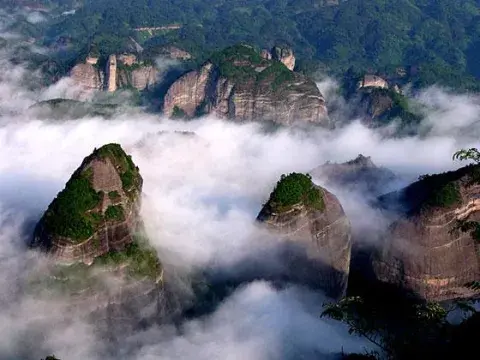
One day tirp to Bajiao Zhai, a noticeable Danxia Landform.
This is a tailor-made trip for nature-lovers and fans of photography. Danxia rock formation in the inland basin is a red rock debris, and later uplift due to the movement of the earth-crust, erosion of rocks by the water and weathering, which was dominant in the hillside to collapse back, kept down the rocks to form the red mountain block. This area was listed in the Natural Heritage of the world in 2009 by UNESCO. Bajiao Zhai Village is a combination of strategic place, steepy mountian, elegant scenery and secluded remote....Read more
This is a tailor-made trip for nature-lovers and fans of photography. Danxia rock formation in the inland basin is a red rock debris, and later uplift due to the movement of the earth-crust, erosion of rocks by the water and weathering, which was dominant in the hillside to collapse back, kept down the rocks to form the red mountain block. This area was listed in the Natural Heritage of the world in 2009 by UNESCO. Bajiao Zhai Village is a combination of strategic place, steepy mountian, elegant scenery and secluded remote. It is reputed as the "Soul of Danxia Landform". Here you can enjoy the sunrise or sunset and the sea-cloud. 1. I'll pick you up at 8:00 am in your hotel, and transfer to Bajiao Zhai Village by our private van. On the way, you can enjoy some terraced fields, bamboo groves and the wooden residences of the natives.(3.5 hours by ride) 2. First, we'll visit the village and have lunch in the village, and then we'll hike the mountains, the scenery including the group of snails looking up the sky, the ancient trail, Eye-stone, Joss stick of dragon's head and the Treasured sword Peak.(4 hours by hike) 3. After appreciating the sunset, after dinner in Ziyuan county, we'll take the bus back to your hotel around 10:00 pm.