Beijing Attractions
Beijing Articles
Yuan Dynasty City Wall Relics ParkⅠ
With a length of 9 kilometers (6.6 miles), the Yuan Dynasty City Wall Relics Park extends across Haidian and Chaoyang districts from west to east and is the largest linear park in Beijing....
With a length of 9 kilometers (6.6 miles), the Yuan Dynasty City Wall Relics Park extends across Haidian and Chaoyang districts from west to east and is the largest linear park in Beijing. The moat dug in the Yuan Dynasty (1271-1368) flows through the park and divides it into two parts connected by six bridges. The north section is the city wall relics protected area and the south section is planted with trees, flowers and grass dotted with sculptures, pavilions and murals.
As its name suggests, this park was built on the city wall relics of the Yuan Dynasty (1271-1368). The original city wall was 600 meters (656 yards) long constructed of rammed-earth in which poles and crossbars were used to reinforce it. The east and west walls were built where the inner city wall of Beijing is located. The south wall spanned from east to west today's Chang'an Street while the north wall was 5 kilometers (3.1 miles) from the Anding Gate (Andingmen). Visitors can find the city wall relics in the Yuan Dynasty City Wall Relics Park in Haidian District. In addition, the whole park shows the prosperous Yuan Dynasty through murals and sculptures.
Memorial of Jiaozhuanghu Tunnel Warfare SiteⅡ
An 800-meter-long tunnel and a five-storey blockhouse have now been renovated and opened to tourists. Inside the tunnel are meeting rooms, command posts, individual shelters, traps, planks, gunshot holes, warehouses and some other things....
An 800-meter-long tunnel and a five-storey blockhouse have now been renovated and opened to tourists. Inside the tunnel are meeting rooms, command posts, individual shelters, traps, planks, gunshot holes, warehouses and some other things. Entrances to the tunnels are camouflaged in ingenious ways: a pot hole, a water jar, a kitchen range, a pig pen and a donkey stall could all be entrances. These tunnels show the mighty force of the Chinese people and their great creativity.
There are other interesting tourist activities here. One can visit the ruins of tunnel warfare, watch films and listen to stories of the Jiaozhuanghu people's struggle against the Japanese aggressors. Another interesting activity is sharing a special meal of steamed corn bread, cornmeal porridge and pickles, which were the only foods available during the war. For tourists curious to know the real life of that period, the video showing the daily life of the Jiaozhuanghu people is the best choice.
Admission Fee:
Free
Opening Hours:
08:00-18:00
Bus Route:
934 (Dongzhimenwai-Jiaozhuanghu) (东直门外-焦庄户) , and then you could arrive at the Memorial of Jiaozhuanghu Tunnel Warfare Site (焦庄户地道战遗址纪念馆).
Memorial of Jiaozhuanghu Tunnel Warfare SiteⅠ
The Memorial of Jiaozhuanghu Tunnel Warfare Site is located in Jiaozhuanghu Village, Longwantun Town of Shunyi District, about 60 kilometers (37 miles) northeast of Beijing....
The Memorial of Jiaozhuanghu Tunnel Warfare Site is located in Jiaozhuanghu Village, Longwantun Town of Shunyi District, about 60 kilometers (37 miles) northeast of Beijing. It features photos and an article once used in tunnel warfare, and presents a historical picture of the Jiaozhuanghu people's valiant fight for victory in the world-wide anti-fascist war.
These attractive tunnels were built during the period of China's War of Resistance against Japan (1937-1945). In the battle, the Jiaozhuanghu people summed up their experience of repelling the enemy and protecting themselves, and they developed a new method, one of Tunnel Warfare. They built 11.5 kilometer-long tunnels (7 miles), extending in all directions and forming a network of tunnels. With fierce, cruel enemies, the tunnels helped them greatly, and dealt a heavy blow to the Japanese aggressors. Even in the world war history, such a new form of fighting was a great wonder.
Top Beijing Tours
$200 Per Day
Private Beijing Antique Shopping Tour with Lunch
Start your private tour with pickup from your central Beijing hotel, and meet your private guide.
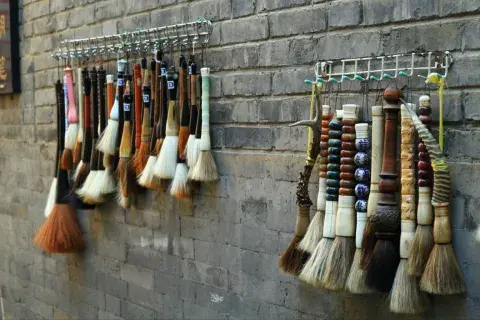
Hop inside your private, climate-controlled vehicle and travel to your first stop: Liulichang Antique Street. Situated in old Beijing, this history-steeped street is lined with stone shop-houses selling antique books, handicrafts, paintings, rubbings, glazed pottery, and other treasures.
Hear about Liulichang’s history, and get advice from your guide as to the best shopping opportunities....Read more
Start your private tour with pickup from your central Beijing hotel, and meet your private guide.
Hop inside your private, climate-controlled vehicle and travel to your first stop: Liulichang Antique Street. Situated in old Beijing, this history-steeped street is lined with stone shop-houses selling antique books, handicrafts, paintings, rubbings, glazed pottery, and other treasures.
Hear about Liulichang’s history, and get advice from your guide as to the best shopping opportunities. Sift through the traditional shops and stands, and explore the side lanes (hutongs), where the shops still bear original Ming and Qing architectural features like ornately carved doors and upswept roofs.
Next, drive to Panjiayuan Market, a so-called ‘weekend market’ that’s open daily. Weave through the throng of stands, perusing the huge array of antiques, curios, ceramics, Tibetan rugs, calligraphy, and other finds.
After shopping here, refuel with lunch at a Chinese restaurant, and continue to Baoguosi Cultural Market, set around an old temple. Scour the courtyards of vendors hawking stamps, books, coins and jade, and get tips on scouting out and clinching the best deals from your guide.
If time allows, squeeze in a visit to Hongqiao Market, a mall known for its pearl traders, and electronics, art, clothes, and accessories shops. Trawl for bargains, and haggle over pearls and other precious gems as perfect keepsakes of your time in Beijing.
After seven hours, your tour concludes with a hotel drop-off.
$50 Per Day
One day tirp to Bajiao Zhai, a noticeable Danxia Landform.
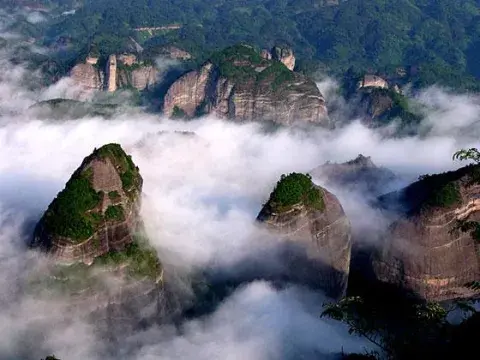
This is a tailor-made trip for nature-lovers and fans of photography. Danxia rock formation in the inland basin is a red rock debris, and later uplift due to the movement of the earth-crust, erosion of rocks by the water and weathering, which was dominant in the hillside to collapse back, kept down the rocks to form the red mountain block. This area was listed in the Natural Heritage of the world in 2009 by UNESCO. Bajiao Zhai Village is a combination of strategic place, steepy mountian, elegant scenery and secluded remote....Read more
This is a tailor-made trip for nature-lovers and fans of photography. Danxia rock formation in the inland basin is a red rock debris, and later uplift due to the movement of the earth-crust, erosion of rocks by the water and weathering, which was dominant in the hillside to collapse back, kept down the rocks to form the red mountain block. This area was listed in the Natural Heritage of the world in 2009 by UNESCO. Bajiao Zhai Village is a combination of strategic place, steepy mountian, elegant scenery and secluded remote. It is reputed as the "Soul of Danxia Landform". Here you can enjoy the sunrise or sunset and the sea-cloud. 1. I'll pick you up at 8:00 am in your hotel, and transfer to Bajiao Zhai Village by our private van. On the way, you can enjoy some terraced fields, bamboo groves and the wooden residences of the natives.(3.5 hours by ride) 2. First, we'll visit the village and have lunch in the village, and then we'll hike the mountains, the scenery including the group of snails looking up the sky, the ancient trail, Eye-stone, Joss stick of dragon's head and the Treasured sword Peak.(4 hours by hike) 3. After appreciating the sunset, after dinner in Ziyuan county, we'll take the bus back to your hotel around 10:00 pm.