Beijing Attractions

Guangji Temple

Located on Inner Fuchengmen Street, in the Xicheng District, it is one of the most famous Buddhist temples in China. It is now the headquarters of the Chinese Buddhism Association, and the center to conduct national Buddhist activities.

Originally built in the Jin Dynasty (1115-1234), addit...

Located on Inner Fuchengmen Street, in the Xicheng District, it is one of the most famous Buddhist temples in China. It is now the headquarters of the Chinese Buddhism Association, and the center to conduct national Buddhist activities.

Originally built in the Jin Dynasty (1115-1234), additions were made to it by successive dynasties. The present was completed during the Ming Dynasty (1368-1644), the original structure having undergone three expansions, three fires, and three reconstructions. It now covers an area of 5.766 acres. The major structures are the main gate, the Heavenly King Hall, Mahavira Hall, Yuantong Hall (or Buddhisattva Hall) and Sutra Hall.

The Main Gate includes three arched doors, joined to each other by connecting walls. Each door is adorned with colored glazed eaves and accompanied by a stele. Passing through the gate, visitors will see the Bell Tower and the Drum Tower, and will find themselves facing the middle Heavenly King Hall. Inside the Hall, the bronze statue of the Maitreya Buddha is sitting in the dominant place, guarded by the four Heavenly Kings. On the roof of the hall is a Wheel of Dharma, designed to suggest the infinite power of Buddha.

In the second courtyard is the Mahavira Hall. In front of the hall is a bronze vessel that was made in 1793, during the reign of Emperor Qianlong of the Qing Dynasty (1644-1911). This fine vessel is 2 meters (6.56 feet) high, cast with the eight treasures of Buddhism -"the wheel, spiral shell, umbrella, canopy, flower, vase, fish, and knot". Inside the hall are statues of Buddha and 18 arhats (Buddhist practitioners said to have special powers). Across their backs is a painting by an artist of the Qing Dynasty. The painting, 5 meters (16.4 feet) high and 10 meters (32.8 feet) wide, is a great artwork, as the artist has painted it with his fingers rather than a brush pen.

The Yuantong Hall in the third courtyard is the residence of Buddhisattva.

The two-storied Sutra Hall of the fourth yard houses the collection of sutras and treasures. It is filled with curiosities that have been given as gifts by friendly Buddhists of other states, and over 100,000 volumes of sutras. Amongst these, the sutras written in blood from the Song (960-1279) and Ming Dynasties are especially precious.

Take Bus No.101, 102, 103, 114, 121, 202
Chongwenmen Church

The Chongwenmen Church of Beijing Christian Council was first established in 1870 when it was then called Asbury Church. It was the first church constructed by the American Methodist Church in northern China. The scale of this church was smaller than its present size. It was originally designed t...

The Chongwenmen Church of Beijing Christian Council was first established in 1870 when it was then called Asbury Church. It was the first church constructed by the American Methodist Church in northern China. The scale of this church was smaller than its present size. It was originally designed to hold 400 to 500 people. Although the church appears now as it did back then, its current seating capacity is 2,000 people. As the number of believers increased, the Methodist church began reconstruction of the building, which was completed in 1882. During the Yihetuan Movement (Boxer Rebellion) of 1900, the church was burned down. In 1902, the Qing Dynasty Government appropriated money to rebuild the Asbury Church and was completed in the spring of 1904. This is the main structure we have here today.

The Chongwenmen Church is one of the largest Christian Protestant churches in Beijing, and it enjoys high prestige both at home and abroad. Its architectural style shows grace, ingenuity, and a blend of many cultures. The church consists of two levels. The main level, at 8,245 square meters, is divided into two sections: the main hall that seats 400 people, and the side chapel that seats 300. These two sections are separated by a movable partition so that they can be used separately or as one large room. The second level is the basement, which boasts a seating capacity of 800-1000. Services are filmed and viewed in the basement via closed-circuit television. In 1990, Beijing People's Municipal Government approved the church as a historical relic in the municipal district.

Beijing Articles

Top Beijing Tours

$200 Per Day

Private Beijing Antique Shopping Tour with Lunch

Start your private tour with pickup from your central Beijing hotel, and meet your private guide. 
 
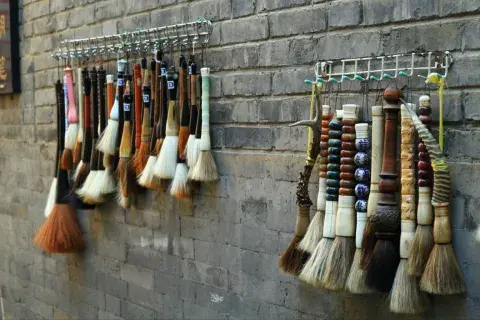
Hop inside your private, climate-controlled vehicle and travel to your first stop: Liulichang Antique Street. Situated in old Beijing, this history-steeped street is lined with stone shop-houses selling antique books, handicrafts, paintings, rubbings, glazed pottery, and other treasures. 
 
Hear about Liulichang’s history, and get advice from your guide as to the best shopping opportunities. Sift through the traditional shops and stands, and explore the side lanes (hutongs), where the shops still bear original Ming and Qing architectural features like ornately carved doors and upswept roofs. 
 
Next, drive to Panjiayuan Market, a so-called ‘weekend market’ that’s open daily. Weave through the throng of stands, perusing the huge array of antiques, curios, ceramics, Tibetan rugs, calligraphy, and other finds. 
 
After shopping here, refuel with lunch at a Chinese restaurant, and continue to Baoguosi Cultural Market, set around an old temple. Scour the courtyards of vendors hawking stamps, books, coins and jade, and get tips on scouting out and clinching the best deals from your guide. 
 
If time allows, squeeze in a visit to Hongqiao Market, a mall known for its pearl traders, and electronics, art, clothes, and accessories shops. Trawl for bargains, and haggle over pearls and other precious gems as perfect keepsakes of your time in Beijing. 
 
After seven hours, your tour concludes with a hotel drop-off.
$50 Per Day

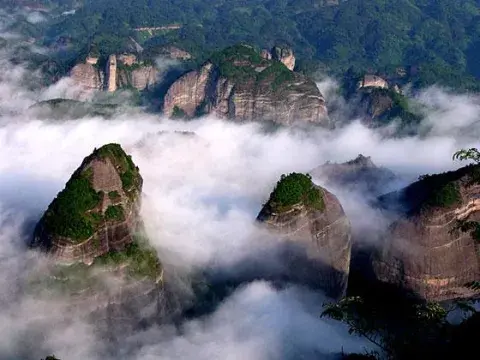
One day tirp to Bajiao Zhai, a noticeable Danxia Landform.

This is a tailor-made trip for nature-lovers and fans of photography.  Danxia rock formation in the inland basin is a red rock debris, and later uplift due to the movement of the earth-crust, erosion of rocks by the water and weathering, which was dominant in the hillside to collapse back, kept down the rocks to form the red mountain block. This area was listed in the Natural Heritage of the world in 2009 by UNESCO. Bajiao Zhai Village is a combination of  strategic place, steepy mountian, elegant scenery and secluded remote. It is reputed as the "Soul of Danxia Landform". Here you can enjoy the sunrise or sunset and the sea-cloud. 1. I'll pick you up at 8:00 am in your hotel, and transfer to Bajiao Zhai Village by our private van. On the way, you can enjoy some terraced fields, bamboo groves and the wooden residences of the natives.(3.5 hours by ride) 2. First, we'll visit the village and have lunch in the village, and then we'll hike the mountains, the scenery including the group of snails looking up the sky, the ancient trail, Eye-stone, Joss stick of dragon's head and the Treasured sword Peak.(4 hours by hike) 3. After appreciating the sunset, after dinner in Ziyuan county, we'll take the bus back to your hotel around 10:00 pm.