Beijing Attractions




Beijing Articles
Marco Polo BridgeⅢ
Lining the bridge are two rows of carved white marble balustrades topped by posts carved with figures of lions....
Lining the bridge are two rows of carved white marble balustrades topped by posts carved with figures of lions. The people of Beijing have a saying to the effect that "the lions of the Lugou Bridge are too numerous to count," which is explained by the fact that the lions are carved in a great variety of aspects and distributed unequally among the 280 white marble posts. A pair of vividly carved reclining stone elephants and a number of other animal figures guards each end of the bridge.
On July 7, 1937, the first shot of the War of Resistance Against Japan rang out beside the Lugou Bridge. But now all signs of the war have long since disappeared. As the sun sets, the furnaces of nearby Shijingshna Steel Works cast a red glow across the sky, lighting up the bridge in fiery splendor.
Marco Polo BridgeⅡ
The Lugou Bridge is situated at a strategic point on the one overland route to the capital from the south. Bridge construction was begun in 1189 and completed four years later. The bridge is 235 meters long of white marble. It has 11 arches and as many broad piers....
The Lugou Bridge is situated at a strategic point on the one overland route to the capital from the south. Bridge construction was begun in 1189 and completed four years later. The bridge is 235 meters long of white marble. It has 11 arches and as many broad piers. At the extremes of the bridge there are two stone stelae, one recording the history of the renovation work carried out in the reign of Emperor Kangxi (1662-1722), and the other bearing the inscription "The Moon over the Lugou Bridge at Dawn" in the handwriting of Emperor Qianlong.
Marco Polo BridgeⅠ
The Marco Polo Bridge is located 15 kilometers southwest of Beijing proper. Known also as the Guangli Bridge, it spans the banks of the Yongding River....
The Marco Polo Bridge is located 15 kilometers southwest of Beijing proper. Known also as the Guangli Bridge, it spans the banks of the Yongding River. According to historical records, the "Lugou River is also called the Heishui (Black Water) River." In the local dialect in ancient times, lu (reed) meant black; thus the Heishui River became known as the Lugou River, and the bridge was accordingly given the same name.
Historical records also inform us that the Lugou River was "violent and flowed extraordinarily rapidly." With the post-1949 construction of the Guanting Reservoir upstream from the bridge, a multitude of trees were planted on the river banks and the formerly disposition was also tamed, no longer presenting he constant danger of floods. The Lugou River was also known as the Wuding (Lacking Stability) River, and despite the fact that Emperor Kangxi had the auspicious name Yongding (Eternal Stability) bestowed upon it, it was only after the founding of the People's Republic that eh river truly became "eternally stable." After seven centuries, however, the river water remains as swift as ever. Owing, however, tot eh extraordinarily durable construction of the bridge's foundation; the endless battering of the torrential current has left no mark on it.
Top Beijing Tours
$200 Per Day
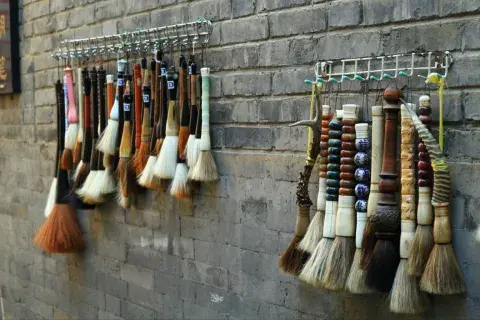
Private Beijing Antique Shopping Tour with Lunch
Start your private tour with pickup from your central Beijing hotel, and meet your private guide.
Hop inside your private, climate-controlled vehicle and travel to your first stop: Liulichang Antique Street. Situated in old Beijing, this history-steeped street is lined with stone shop-houses selling antique books, handicrafts, paintings, rubbings, glazed pottery, and other treasures.
Hear about Liulichang’s history, and get advice from your guide as to the best shopping opportunities....Read more
Start your private tour with pickup from your central Beijing hotel, and meet your private guide.
Hop inside your private, climate-controlled vehicle and travel to your first stop: Liulichang Antique Street. Situated in old Beijing, this history-steeped street is lined with stone shop-houses selling antique books, handicrafts, paintings, rubbings, glazed pottery, and other treasures.
Hear about Liulichang’s history, and get advice from your guide as to the best shopping opportunities. Sift through the traditional shops and stands, and explore the side lanes (hutongs), where the shops still bear original Ming and Qing architectural features like ornately carved doors and upswept roofs.
Next, drive to Panjiayuan Market, a so-called ‘weekend market’ that’s open daily. Weave through the throng of stands, perusing the huge array of antiques, curios, ceramics, Tibetan rugs, calligraphy, and other finds.
After shopping here, refuel with lunch at a Chinese restaurant, and continue to Baoguosi Cultural Market, set around an old temple. Scour the courtyards of vendors hawking stamps, books, coins and jade, and get tips on scouting out and clinching the best deals from your guide.
If time allows, squeeze in a visit to Hongqiao Market, a mall known for its pearl traders, and electronics, art, clothes, and accessories shops. Trawl for bargains, and haggle over pearls and other precious gems as perfect keepsakes of your time in Beijing.
After seven hours, your tour concludes with a hotel drop-off.
$50 Per Day
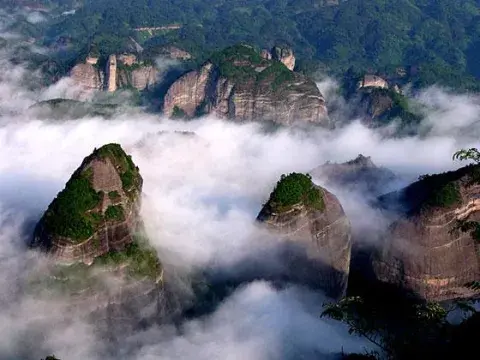
One day tirp to Bajiao Zhai, a noticeable Danxia Landform.
This is a tailor-made trip for nature-lovers and fans of photography. Danxia rock formation in the inland basin is a red rock debris, and later uplift due to the movement of the earth-crust, erosion of rocks by the water and weathering, which was dominant in the hillside to collapse back, kept down the rocks to form the red mountain block. This area was listed in the Natural Heritage of the world in 2009 by UNESCO. Bajiao Zhai Village is a combination of strategic place, steepy mountian, elegant scenery and secluded remote....Read more
This is a tailor-made trip for nature-lovers and fans of photography. Danxia rock formation in the inland basin is a red rock debris, and later uplift due to the movement of the earth-crust, erosion of rocks by the water and weathering, which was dominant in the hillside to collapse back, kept down the rocks to form the red mountain block. This area was listed in the Natural Heritage of the world in 2009 by UNESCO. Bajiao Zhai Village is a combination of strategic place, steepy mountian, elegant scenery and secluded remote. It is reputed as the "Soul of Danxia Landform". Here you can enjoy the sunrise or sunset and the sea-cloud. 1. I'll pick you up at 8:00 am in your hotel, and transfer to Bajiao Zhai Village by our private van. On the way, you can enjoy some terraced fields, bamboo groves and the wooden residences of the natives.(3.5 hours by ride) 2. First, we'll visit the village and have lunch in the village, and then we'll hike the mountains, the scenery including the group of snails looking up the sky, the ancient trail, Eye-stone, Joss stick of dragon's head and the Treasured sword Peak.(4 hours by hike) 3. After appreciating the sunset, after dinner in Ziyuan county, we'll take the bus back to your hotel around 10:00 pm.