Muslim heritage tour of Rethymnon Select ratingGive it 1/5Give it 2/5Give it 3/5Give it 4/5Give it 5/5 Rate
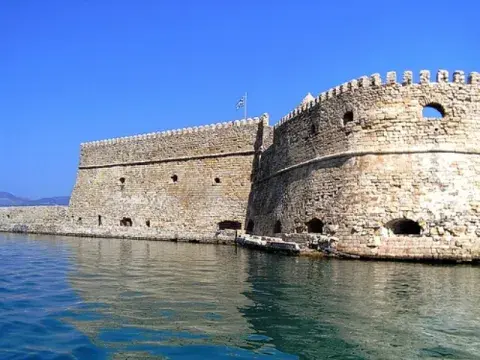
Koules Select ratingGive it 1/5Give it 2/5Give it 3/5Give it 4/5Give it 5/5 Rate Koules is the landmark of Heraklion, the Venetian castle located in the city´s harbor. This fortress was built by Venetians in the early 13th century and they called it Castello a Mare or Rocca a Mare. There are stories that rebels were tortured in the dark rooms on the ground floor of the ... Koules is the landmark of Heraklion, the Venetian castle located in the city´s harbor. This fortress was built by Venetians in the early 13th century and they called it Castello a Mare or Rocca a Mare. There are stories that rebels were tortured in the dark rooms on the ground floor of the fortress. The construction of the fortress continued until the mid 16th century. Its walls are built of stone while the outer walls are up to 9 meters thick. Even though today only two entrances are used there were three originally. There was also a lighthouse tower and some rooms on the inside of the fortress were used as the quarters for soldiers and officers.
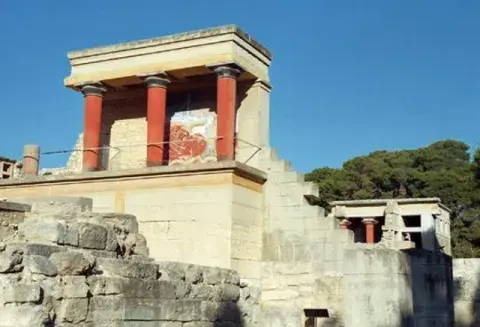
Knossos Select ratingGive it 1/5Give it 2/5Give it 3/5Give it 4/5Give it 5/5 Rate Knossos is an archeological site at Heraklion, the largest city on Crete. It was the capital of Minoan Crete. According to the mythology, Knossos is home of the Minotaur, a creature part man and part bull. The site was discovered by Sir Arthur Evans in 1900s. He invested much of his money in the ... Knossos is an archeological site at Heraklion, the largest city on Crete. It was the capital of Minoan Crete. According to the mythology, Knossos is home of the Minotaur, a creature part man and part bull. The site was discovered by Sir Arthur Evans in 1900s. He invested much of his money in the reconstruction of the place trying to restore some monuments to its original form. The site was occupied by people since the Neolithic Period and since then every period left its own trave. No wonder the site is the most visited tourist attraction on Crete. Among many monuments there is the Minoan Knossos Palace which spreads on 20,000 square meters. It has a central courtyard and it is surrounded by four wings. There is also the Little Palace, the Royal Villa that was owned by nobilities or priests. The house of frescoes contains a number of walls which are decorated with frescoes. There are other valuable and beautiful monuments which prove why Knossos is the most visited here. History lovers will surely enjoy here.
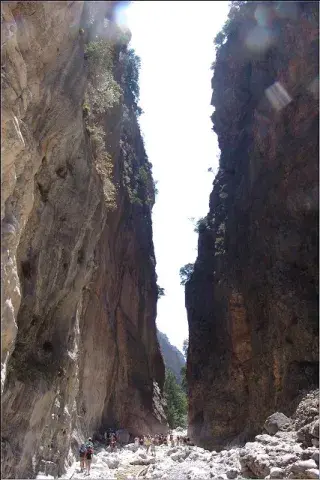
Samariá Gorge Select ratingGive it 1/5Give it 2/5Give it 3/5Give it 4/5Give it 5/5 Rate Samariá Gorge or Canyon Φαράγγι Σαμαριάς is a National Park since 1962 situated on the Greek island Crete. It is one of the most visited tourist attractions on the island. The Samaria Canyon is 16km long which makes ... Samariá Gorge or Canyon Φαράγγι Σαμαριάς is a National Park since 1962 situated on the Greek island Crete. It is one of the most visited tourist attractions on the island. The Samaria Canyon is 16km long which makes it the longest Canyon in Europe. It goes from Omolos Plateau to the Libyan Sea. The canyon was created by the flow of a small river between the White Mountains and Mt. Volakais. The hike through the National Park is 13 km long while the other 3 km do not belong in the National Park area. Organized walking tours are offered here. The Gates it the most famous part of the gorge because at places is 4 m wide and the rocks rise to a height of almost 300 m or 1,000 feet. The Samariá Gorge is home to the Cretan goat or kri-kri which lives only on this area. If you are lucky then you´ll see other endemic species which found their home here. This national park took the name of the uninhabited village and its church Ossia Maria. Even though the walk through the gorge lasts about five to seven hours and can be tough it is really a must if you´re on Crete.