Mt Bromo

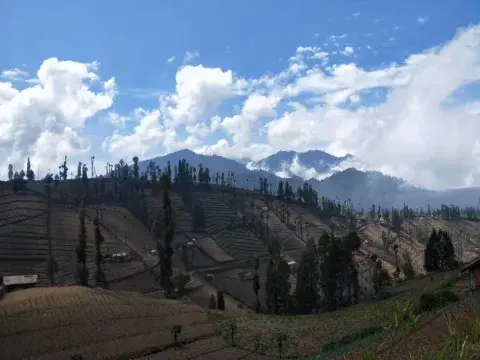
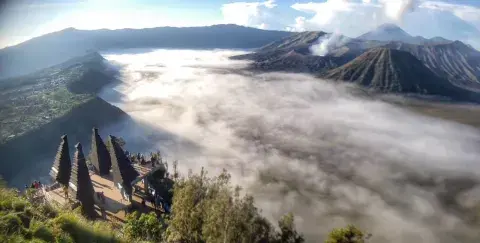
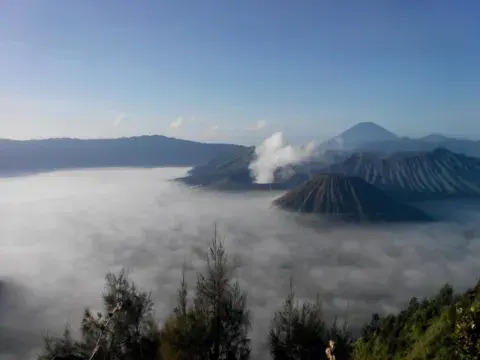
Bromo mountain is become most touristic destination in East Java. It has mesmerizing sunrise view, with Volcanic Mountain and huge farm field also traditional way of life of tengger peoples (local tribe who been living at mountain surround for long time ago).

Bromo mountain is one among m...

Bromo mountain is become most touristic destination in East Java. It has mesmerizing sunrise view, with Volcanic Mountain and huge farm field also traditional way of life of tengger peoples (local tribe who been living at mountain surround for long time ago).

Bromo mountain is one among many beautiful places in the region which belong to National Park -Bromo Tengger Semeru National Park. The national covers a total area of 5,250 hectares with the hingest mountain in Java is part of it, Semeru mountains, 3.676 meter above sea level.

The name of national park (Bromo Tengger Semeru National Park) is taken from main part of the area, first Bromo mountain, second, Tengger is the name of local tribe (hindust peoples) who been living in the area for long time ago, then the last is the Semeru is also the name of mountain, which is the highest mountain in Java. 

the National Park is lies right in the border of 4 different cities, Lumajang Region, Pasuruan Region, Probolinggo Region and Malang city region. that why there are many route to get into this national park. Every route you take has particular advantage and disadvantage. the most common route is from Probolinggo, cos the route will lead you to the villager area and also hotel area (the hotel is a bit expensive, with very basic service).

Mount Bromo has to be one of the easiest volcano to climb while it\'s equipped with stairs to reach the crater lips, as the local Tengger people do the ceremony once a year climbing up to the crater lips and throw the harvests as gifts to the God.

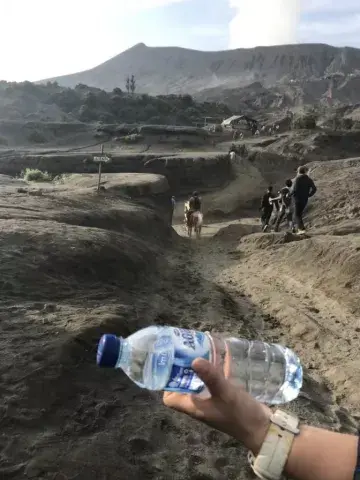
Another panoramic view right next to the crater still waiting to be discovered, an experience to stroll around the black sand desert while riding local\'s race horses ; and an imaginative green savana as we call it Teletubbies Hills.

Ourtrip1st proudly present you this volcano\'s beauty and the scenic setting surrounds it for the homeland experiences during your trip in Indonesia.

Ijen Crater with Blue Fire

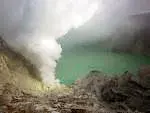
Kawah Ijen or Ijen Crater is volcano which has the largest acided lake in the world, about 20 Km wide and the volume of the crater proximately around 36 cubic hectometres (29,000 acre•ft).

The summit of ijen crater is about 2.799 meter high,  it took and effort for peoples to reach a...

Kawah Ijen or Ijen Crater is volcano which has the largest acided lake in the world, about 20 Km wide and the volume of the crater proximately around 36 cubic hectometres (29,000 acre•ft).

The summit of ijen crater is about 2.799 meter high,  it took and effort for peoples to reach at the top. Mostly it take  two-hour hike is required to reach rim of the crater (1.5 kilometers) from the summit, and 45 minutes to hike down to the bank of the crater, a guide necessary.

The caldera or the lake of Kawah Ijen harbors  has turquoise colored, the color it came from acidic crater lake that leaks sulphurous gases constantly then mix the the water spring that come of from bottom of crater area.

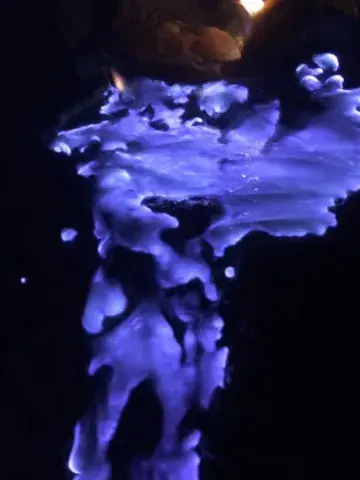
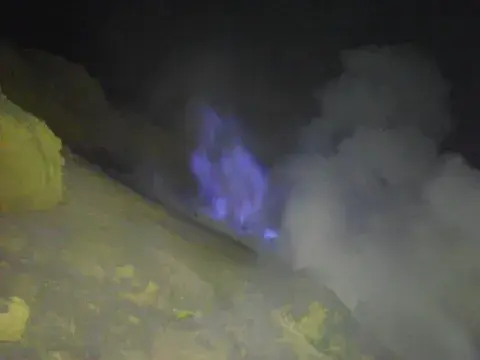
at Nigh the hot gases burn out to emit an amazing blue glow unique color  in some part of the bottom of crater, it well known as "Blue fire" pure fire that emerge beneth the earth.

the blue fire emerge because the gases and also liquid sulphur emerge from the cracks in the volcano come up with high pressure and temperature (up to 600°C) and when it contact with the air suddenly it ignite and burn  as it flows down the slopes among the pipe giving the feeling of blue lava flowing.

Kawah ijen is becoming very well known in the world, as the only one natural blue fire. But not many peoples know that actually ijen is not only amazing touristic destination. From Dutch colonial age, Kawah Ijen is work place for sulphur miner.

The liquid sulphur that leaking from beneath the earth channeled through a network ceramic-steal pipe line, the liquid with bright red color molten, pours slowly through ceramic-steal pipelines, then end of on the ground and liquid sulphur mix with Oxygen it condense instantly then change the color becoming bright yellow when it cools down.

All then miner have to break the yellow cooled sulphur into pieces, the nearby crater in very dense of sulfuric smoke (gas) that emerge of crater which can make peoples hardly to breath and also make the eyes itchy. The miner have to deal with such harsh enviromment an able to collect sulfur put in the their bamboo basket and carried it down the hills. Mostly the miner carried weight of basket up to 60 Kg - 100 kg and they carried it twice a day.

The miner carried it down, weight it up at post point, then the officer (from private company) note how much they carried in their basket, every 1 kg of sulfur paid for 800 - 900 IDR.

The workers work in extremely hazardous condition with insufficient protection. Most of them suffers from numerous respiratory problems due to breathing toxic fumes day in and out. At times they work at night under to escape the heat of the sun, and to earn extra income.
Authentic Java Tours

Experience Authentic Java: the awesome scenery, the distinctive culture, the fascinating history, the fine historical remains, and the welcoming Javanese people.

Authentic Java Tours is led by an English-speaking expat, Graeme, who has a thorough knowledge of Java and Madura, having lived...

Experience Authentic Java: the awesome scenery, the distinctive culture, the fascinating history, the fine historical remains, and the welcoming Javanese people.

Authentic Java Tours is led by an English-speaking expat, Graeme, who has a thorough knowledge of Java and Madura, having lived in Indonesia for 25 years, and his co-organizer, Samsul, who comes from Java. With their outstanding network of local contacts they really know Java. Graeme has written numerous articles on Indonesia for magazines, both in Indonesia and internationally. He was a contributor to the most recent edition of the Rough Guide to Indonesia, and his photographs of Indonesia have been published in a variety of magazines.

The tours take you to the real Java beyond the obvious tourist spots providing an opportunity for you to explore at first hand the local culture and the hidden beauty of Java. Benefit from Graeme's authoritative and intelligent commentary en route, and see places that many have not.

Travel on your own, with family, friends, or in small like-minded groups, that are as discerning as you are: curious-minded people interested in engaging with authentic local culture.

All tours depart from Surabaya.