


The East Lake
Along with the West Lake in Hangzhou and the South Lake in Jiaxing, Shaoxing’s East Lake make up the three most famous lakes in Zhejiang Province. The East Lake is smaller than its counterparts, but it is regarded as a magical lake by...
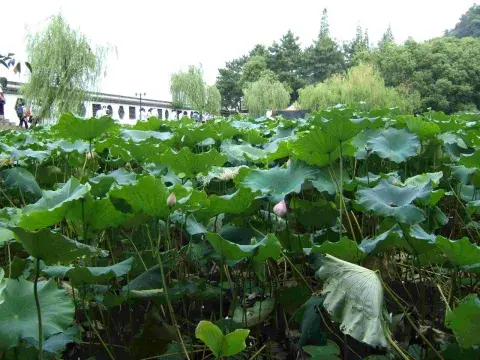
Along with the West Lake in Hangzhou and the South Lake in Jiaxing, Shaoxing’s East Lake make up the three most famous lakes in Zhejiang Province. The East Lake is smaller than its counterparts, but it is regarded as a magical lake by the Chinese. The combination of cliffs, grottos, and stone bridges is the reason why the East Lake deserves its magical reputation. Taking a boat ride on the East Lake, you can discover its natural beauty from a variety of viewpoints. You can also take the boat into the caves, and you will be simply awed by the scenery. From the mountain top beside East Lake, you can enjoy another unbeatable view of the "Oriental Venice".
Local bus routes No. 1, 107, 117, 137, 157, 207.

The Shen's Garden
The Shen’s Garden is located at Luxun Middle Street, about 200 meters away from the Luxun Native Place. This garden boasts more than 800 years of history. Shen is the family name of the garden’s former owner, hence the name, "The Shen’s Garden". This garden is also&nbs...
The Shen’s Garden is located at Luxun Middle Street, about 200 meters away from the Luxun Native Place. This garden boasts more than 800 years of history. Shen is the family name of the garden’s former owner, hence the name, "The Shen’s Garden". This garden is also known as the Love Garden, in accordance with one classic love story. Lu You (1125-1210), one of China's most famous poets, actually authored more poems than any other poet in Chinese history, nearly 10,000! In the year 1151 Lu You met his lover Tang Wan in this very garden, and then composed a poem on the wall in the garden. In the Chinese tradition, parents are responsible for the marriages of their children. Young adults were not necssarily permitted to marry to the one he or she most desired. Sadly, Lu You and his lover suffered the same fate as they too were not allowed to marry. Their last date was spent in The Shen's Garden, so visitors come to the Shen’s Garden not only for the beautiful ambiance, but also to understand this heartbreaking love story. The Shen’s Garden is an obvious symbol of love, so young people often come here to display their love to one another.


Famous Textile City: Shaoxing
Keqiao District, Shaoxing City is a 20-minute drive from Xiaoshan Hangzhou International Airport, an hour’s drive to Ningbo in the east, and a two-hour drive to Shanghai in the north.
...Keqiao District, Shaoxing City is a 20-minute drive from Xiaoshan Hangzhou International Airport, an hour’s drive to Ningbo in the east, and a two-hour drive to Shanghai in the north.
Located here is the world’s largest fabric procurement market, with more than ten thousand suppliers, more than thirty thousand kinds of fabrics, and daily traffic volume of one hundred thousand people.
Representatives from apparel factories throughout the country will come here every day to choose fabrics, but many foreign businessmen also purchase fabric here.
A lot of the fabric in Asia Textile City in Guangzhou also comes from here.
If you need our guide/assistant/sourcing/interpreter, welcome to contact us.:)
We can custom your trip and guide you.
Please click my photo and add my contact. Let's talk details.
Thanks for reading.
Jessica In China (86-13570345653)