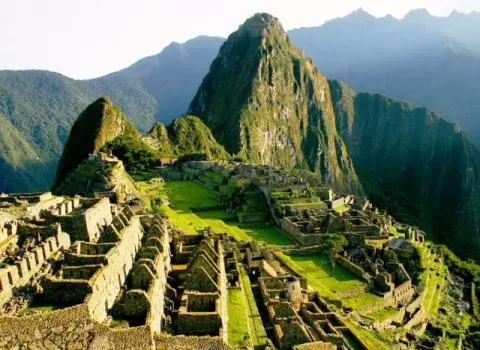
Machu Picchu would mean ˝Old Peak˝. Machu Picchu is one of the world´s most famous and most popular tourist attractions. It dates to the 15th century and it is attributed to the Inca tribe which lived high in the Cusco Region in Peru. The site is located at 2,430 m above sea level, some 80 km away from the nearest town of Cusco.
As one of the most important archeological sites in the world Machu Picchu was enlisted on a UNESCO World Heritage List in 1983 and since then a lot of effort was invested in its restoration and preservation.
I is believed that the construction of the site begun at the beginning of the 15th century for the Inca emperor Pachacuti. At the time of the Spanish conquest the site was abandoned by the Inca.
Machu Picchu consists of a complex of palaces, temples, plazas as well of the homes of ordinary people. Since the site is located so high in the mountains its location has a perfect setting for many occasions such as in case of war, ceremonies to contribute gods and high ranked society as well as for the use of a retreat.
Around the site there are numerous trails and sites that descend from the top in the forest in the Andes. It seems that there is a connection of the monuments and mountains with the astronomical events. This also speaks in favor of the universal purpose of the construction of Machu Picchu.
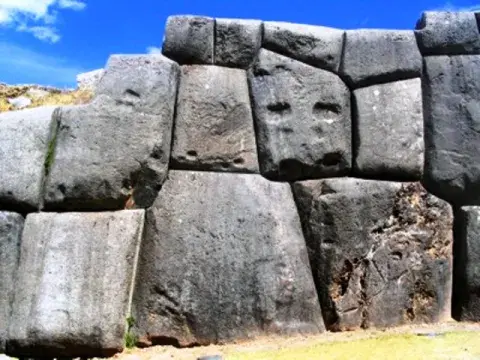
The magnificence of the site lies in the fact that at the time of the construction the Inca had no iron nor wheels, and yet they succeeded to build such a remarkable site.
The most important things within the site is the Funerary Rock Hut. I is believed that at this place the Incan noble people were mummified.
There is also the Royal Tomb which one can reach by going down stairs. It is in a form of a cave where one can see ceremonial niches and the Inca cross that represents the three levels of existence.
People at the site can enjoy in the views and stories about the Sacred Plaza, Sacred Rock, the Central Plaza, Intiwatana (post of the sun used for the predication of the solistice), and the Condor Temple.
And, of course, visitors will most probably see Alapaca (an animal very similar to a llama)
Even though today the majority of people are familiar with Machu Picchu, at least from photos and stories, the site somehow managed not to get familiar to the world outside of Peru or Latin America up until the 20th century when the American historian Hiram Bingham made it famous. According to the history resources his trip to the top using the Inca trails lasted six full days.
Today, numerous visitors can use the train to get up there while they can also follow the trails and experience the real climb.