Lama Temple
Yonghegong,popularlay know as the 'Lama Temple',is a famous lamasery in the northeastern part of Beijing.It is located next to the northern side of the second ring road.
Lama Temple is the largest lamasery and one of the best preserved lama temples at the present time in Beijing with a total area of 66,400 square meters.
There is a tremendous statue of Buddha standing in a pavilion ,which was carved out of a single trunk of white sandalwood..It's 26 meters high,8 meters in diameter.It was recorded in the 'Guinness Book of Would Records' in 1990.
Tours That Go to Lama Temple
Lama Temple
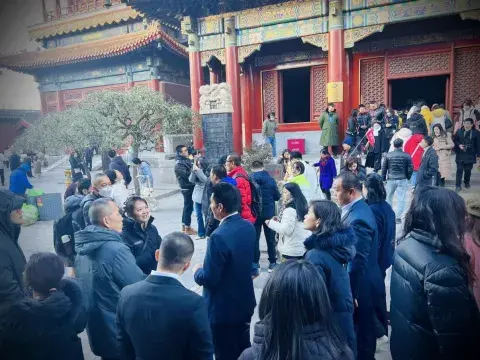
This is tour starts at the Lama Temple, one of the best examples of sacred temples in Beijing. Its rich diversity of architecture styles includes Han, Mongolian, Manchurian and Tibentan style.
...Read moreThis is tour starts at the Lama Temple, one of the best examples of sacred temples in Beijing. Its rich diversity of architecture styles includes Han, Mongolian, Manchurian and Tibentan style.
Lama Temple, also called Yonghe Palace, is the largest and best preservedlamaseryin Beijing. It once was the residence of Emperor Yongzheng (the third emperor of Qing dynasty). After his death, it was converted into lamasery in 1744 and so Yonghe Palace became the national center of Lama administration.
Occupied an area of 66,400 square meter, Lama Temple is comprised of torii, Grand Hall, Yongyou Hall, Falun Hall and Hall of Boundless Happiness. It is dotted with screen wall with carved murals and decorated archways. The interior pavement leads to the main halls. The evergreen pine and cypress add the peaceful and secluded atmosphere.
The Yonghe Palace with the distinctive ethnic characteristics of Manchuria, Han, Mongolia and Tibet has the highest rank in China.
The following details describe the main building inside Lama Temple.
At the south courtyard stand three high monuments, a huge screen wall and two stone lions. Passed through monuments, a pavement leads you to Zhaotai Gate (the gate of Lama Palace) in the north.
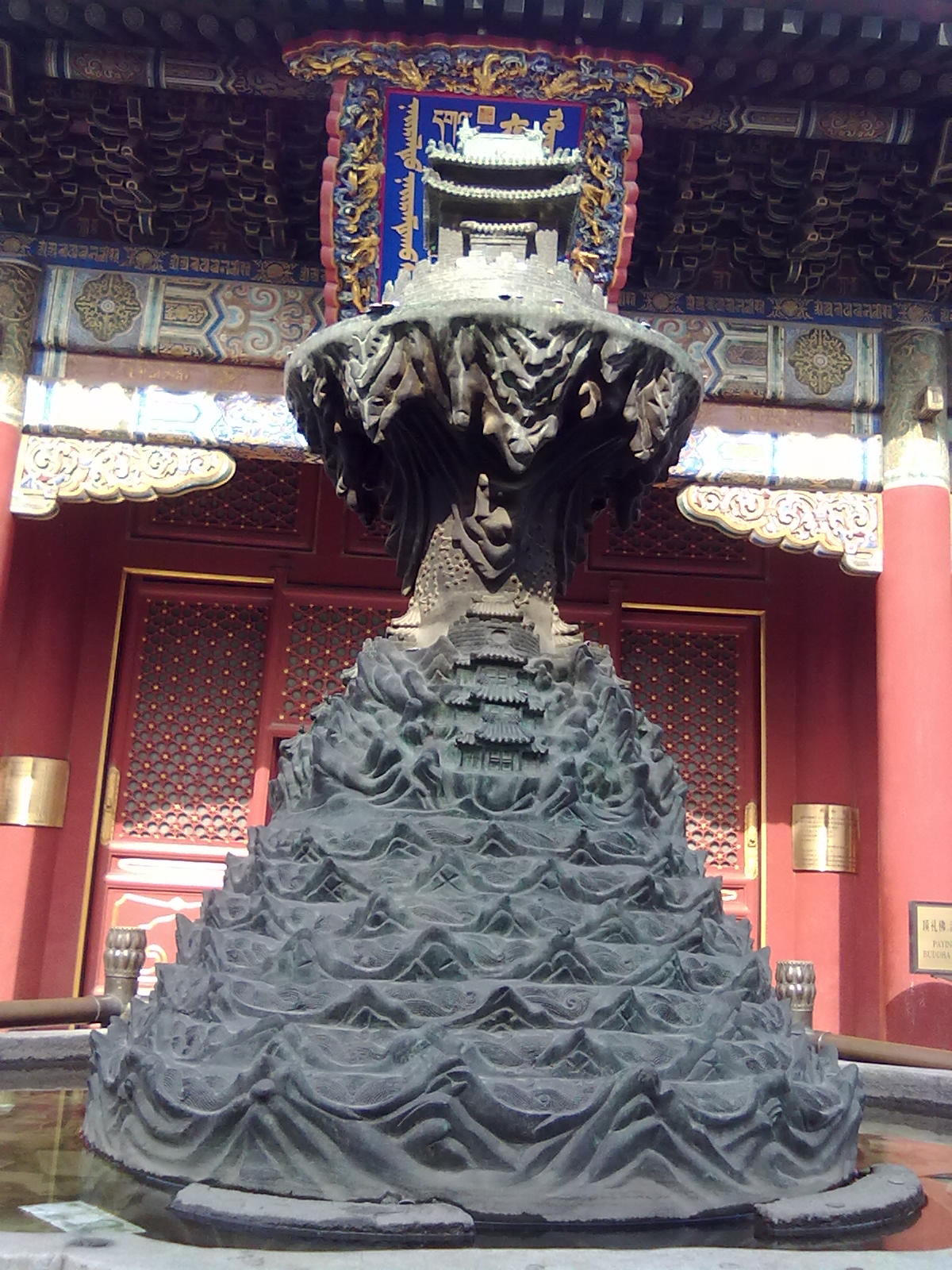
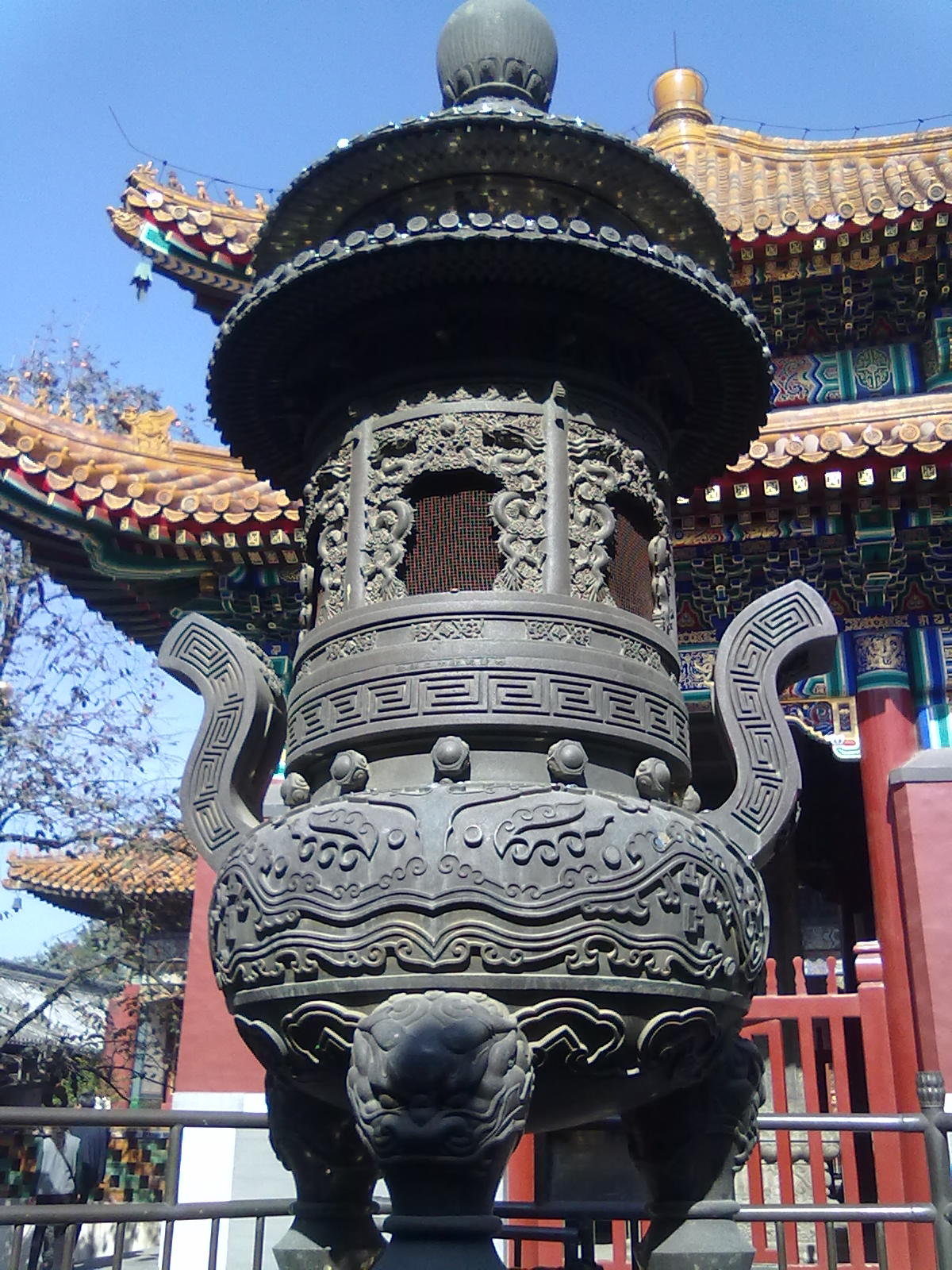
Inside the gate stand Bell Tower and Drum Tower on both sides. A huge copper pan by the side of Drum Tower weighs 8 tons which was used to cook La Ba Congee (eaten on the eightn day of the twelfth lunar month). To the north is an octagonal tablet which describes the history of Lama Temple.
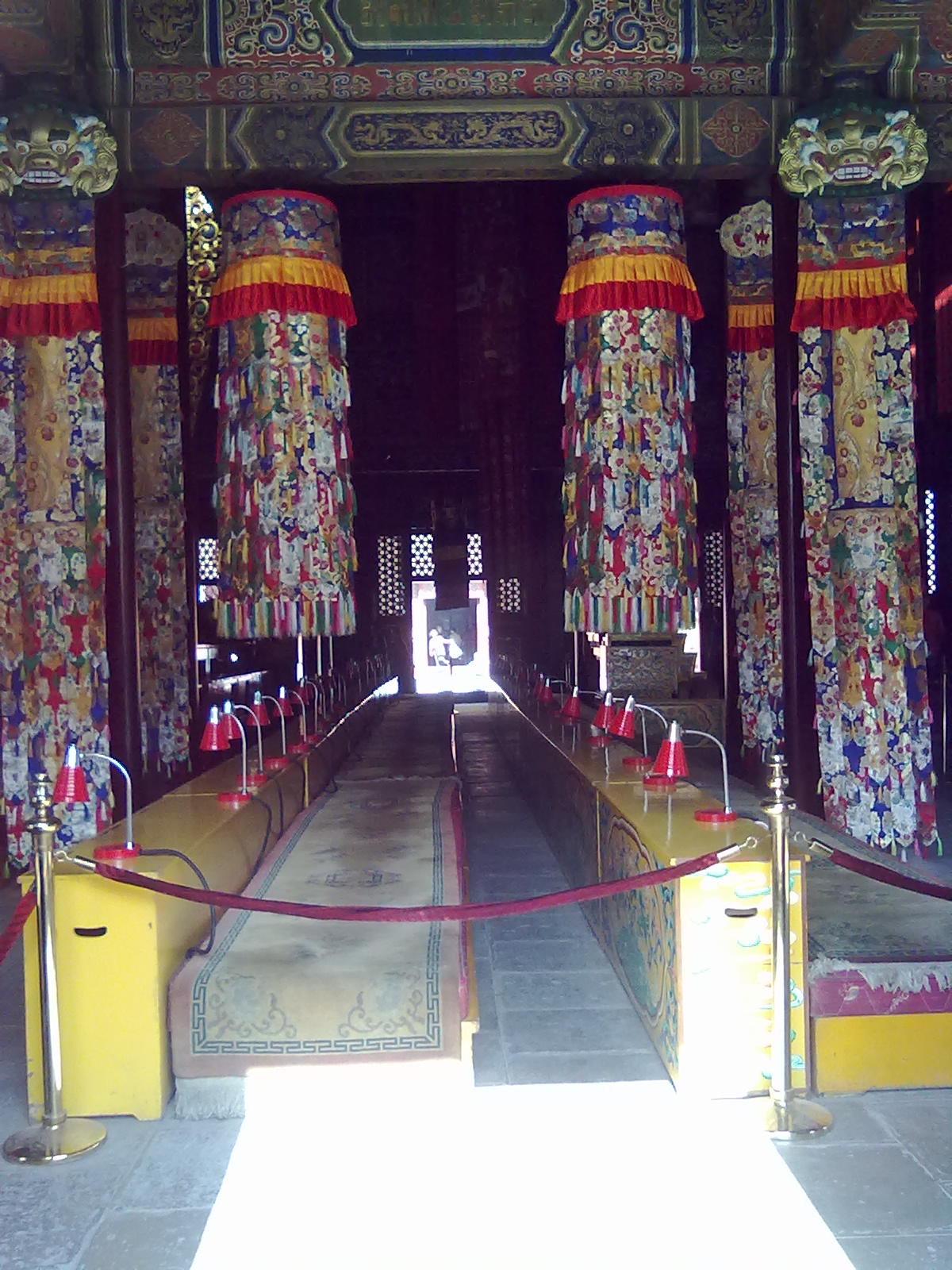
Grand Hall once was the place which was used to receive civil and military officials. In the north of the hall shrine three 2-meter-high sculptures of Buddha. They are Sakyamuni, Medicine Guru Buddha and Amita Buddha. North of Grand Hall is Yongyou Hall which is the location for lamas for reading ures and holding Buddhist ceremonies. In the center of the hall is a Buddha which was carved out of sandalwood.
In center of Falun Hall is a Buddha with the height of 6.1 meters which is the founder of Tibetan Buddhism, Tsongkhapa. This bronze statue was completed in 1924 and cost 200,000 silver dollars. Behind the Tsongkhapa is an Arhat Hill containing 500 Arhats all elaborately carved out of padauk.
There is another spectacular in Hall of Boundless Happiness, i.e. the sculpture of Maitreya that is 18 meter high and about 8 meters is below the ground.
Now the Lama Palace is an important heritage site under state protection.
Lama Temple
This is tour starts at the Lama Temple, one of the best examples of sacred temples in Beijing. Its rich diversity of architecture styles includes Han, Mongolian, Manchurian and Tibentan style.
...Read moreThis is tour starts at the Lama Temple, one of the best examples of sacred temples in Beijing. Its rich diversity of architecture styles includes Han, Mongolian, Manchurian and Tibentan style.
Lama Temple, also called Yonghe Palace, is the largest and best preservedlamaseryin Beijing. It once was the residence of Emperor Yongzheng (the third emperor of Qing dynasty). After his death, it was converted into lamasery in 1744 and so Yonghe Palace became the national center of Lama administration.
Occupied an area of 66,400 square meter, Lama Temple is comprised of torii, Grand Hall, Yongyou Hall, Falun Hall and Hall of Boundless Happiness. It is dotted with screen wall with carved murals and decorated archways. The interior pavement leads to the main halls. The evergreen pine and cypress add the peaceful and secluded atmosphere.
The Yonghe Palace with the distinctive ethnic characteristics of Manchuria, Han, Mongolia and Tibet has the highest rank in China.
The following details describe the main building inside Lama Temple.
At the south courtyard stand three high monuments, a huge screen wall and two stone lions. Passed through monuments, a pavement leads you to Zhaotai Gate (the gate of Lama Palace) in the north.
Inside the gate stand Bell Tower and Drum Tower on both sides. A huge copper pan by the side of Drum Tower weighs 8 tons which was used to cook La Ba Congee (eaten on the eightn day of the twelfth lunar month). To the north is an octagonal tablet which describes the history of Lama Temple.
Grand Hall once was the place which was used to receive civil and military officials. In the north of the hall shrine three 2-meter-high sculptures of Buddha. They are Sakyamuni, Medicine Guru Buddha and Amita Buddha. North of Grand Hall is Yongyou Hall which is the location for lamas for reading ures and holding Buddhist ceremonies. In the center of the hall is a Buddha which was carved out of sandalwood.
In center of Falun Hall is a Buddha with the height of 6.1 meters which is the founder of Tibetan Buddhism, Tsongkhapa. This bronze statue was completed in 1924 and cost 200,000 silver dollars. Behind the Tsongkhapa is an Arhat Hill containing 500 Arhats all elaborately carved out of padauk.
There is another spectacular in Hall of Boundless Happiness, i.e. the sculpture of Maitreya that is 18 meter high and about 8 meters is below the ground.
Now the Lama Palace is an important heritage site under state protection.
Private Two-Day Comprehensive Tour of Beijing and the Great Wall at Mutianyu
You won't miss anything in this comprehensive tour! You will visit all of the World-Renowned Attractions in Beijing:
...Read moreYou won't miss anything in this comprehensive tour! You will visit all of the World-Renowned Attractions in Beijing:
Day 1:
Pick up from your hotel at 8:30 AM.
-Tiananmen Square - Stroll around this public square
-Forbidden City -Delve into this "City".
-Jing Shan Park - Climb to the mountain top for a bird's eye view
Lunch: Enjoy authentic Chinese Cuisine at a local restaurant
- Hutongs: Take a step back in time by 300 years. Stroll or take a rickshaw ride (Optional) through this unique "ancient" Beijing - ancient dwellings with residents, shops and narrow alleys.
- Lama Temple: Visit this great temple with a functioning monastery. Admire the three fabulous artworks.
Return to you hotel
Day 2:
Pick up from your hotel at 8:30 AM.
-Great Wall of Mutianyu - Experience once-in-a life-time hike (2 to 3 hours). Take memorable pictures.
Lunch-Enjoy authentic Chinese Cuisine at a local restaurant.
Summer Palace - The best preserved imperial garden in the world (Take a boat-ride in the lake to enjoy the panoramic view
Return to your hotel.
The tour fee is USD 595 for 2 people.
More the merrier:
For every additional client it costs $ 120 only per person.
Included:
English Speaking Tour Guide.
Hotel pickup and drop-off.
Air-Conditioned car with professional driver.
Extra:
Discretionary & incidental expenses such as souvenirs

Private One-Day Walking Tour of Beijing With Public Transportations.
What a way to see Beijing! What is better than to walk among the "Baijingese" not just see but feel and experience Beijing! Besides it is a great exercise! A wonderful way to start your day. Come and join us!
Your English-Speaking Guide will meet you at your hotel Lobby at 8:30 AM.
...Read moreWhat a way to see Beijing! What is better than to walk among the "Baijingese" not just see but feel and experience Beijing! Besides it is a great exercise! A wonderful way to start your day. Come and join us!
Your English-Speaking Guide will meet you at your hotel Lobby at 8:30 AM.
The famous sites in and around Beijing are:
- Tian'anmen Squ. are.
- Forbidden City
- Jingshan Park.
- Hutongs.
- Drum Tower.
- Summer Palace.
- Temple Of Heaven.
- Lama Temple.
- Confucious Temple.
- Ming Tombs.
- Olympic Park.
- Markets.
Choose any three to optimize your sight-seeing experience!
We will use public transport bus, subway if you like, to experience our commute and feel our daily life and customs.
Lunch at a local Chinese restaurant.
Total time is 6 to 8 hours, depending of the weather, traffic and you! The time at each site will also be according to your preference. Your our guide will work with you to plan the day and visit the specific sites that you prefer.
At the end of the tour, your guide will be more than happy to suggest any other place you may wish to go.
The tour fee is USD 195 for 2 people.
More the merrier:
For every additional client it costs $80 only per person.
Tour Includes:
Your English-Speaking Tour Guide.
Lunch.
Public transportation fee.
Sightseeing Tickets fee.
Extra:
Personal spends.
Gratuities.

Folk Culture Explore
Picking up from your hotel around 9:00am and proceed to visit Lama Temple. It is the biggest lamasery in Beijing. You can visit the whole temple within 1-2 hours. Then move on to Beijing Confucius Temple. The Beijing Confucius Temple is the second largest Confucian Temple in China just after the one in Confucius' hometown of Qufu. The temple was first built in 1302 and used to pay respects to Confucius. Continue to move on to the next door to the temple is Imperial College(Guozijian)....Read more
Picking up from your hotel around 9:00am and proceed to visit Lama Temple. It is the biggest lamasery in Beijing. You can visit the whole temple within 1-2 hours. Then move on to Beijing Confucius Temple. The Beijing Confucius Temple is the second largest Confucian Temple in China just after the one in Confucius' hometown of Qufu. The temple was first built in 1302 and used to pay respects to Confucius. Continue to move on to the next door to the temple is Imperial College(Guozijian). The Imperial College (Guozijian), which is located next to the temple of Confucius, was the highest institute of learning from the Yuan Dynasty (1279-1368) to the Ming Dynasty (1368-1644) and Qing Dynasty (1644-1911) in China's traditional educational system. It was officially built in 1306 and was positioned west of the Temple of Confucius built in 1302. The layout followed the ancient architectural rules "temple on the left and school on the right."
Lama Temple:
As a result of the ancient architecture, every element of the temple is entirely symmetrical, with main halls on a north-south axis and wing halls on both sides. It comprises of a courtyard in the south and five main halls in separate courtyards in the north: the Hall of the Heavenly Kings, the Hall of Harmony and Peace, the Hall of Everlasting Blessings, the Hall of the Dharma Wheel and the Pavilion of Infinite Happiness. Furthermore, this splendid temple combines various architectural styles of the Han, the Manchu, the Mongolian and the Tibetan.
Imperial College:
The Guozijian, often translated into English as the Imperial Academy or Imperial College was the national central institute of learning in ancient Chinese dynasties. It was the highest institute of learning in China's traditional educational system. Emperors in imperial China would also frequently visit the Guozijian to read Confucian classics to thousands of students.
Lunch at a special characteristic restaurant(1.5 hours).
Then we enjoy sauntering through the Fangjia Hutong. Hutongs are a trademark of old Beijing. After this nostalgic day trip, you are transferred back to your hotel in Beijing about 5:00pm.
Fangjia Hutong:
From hutongs, one can discover how Beijingers, in the course of centuries, advanced from vulgarity to refinement. In numerous hutongs are scattered residences of famous personnel, and these places are repositories.
User reviews
Re

Leave a review
Add Review

Photos of Lama Temple
