Zhuang Nationality: An Ethnic Group Worshiping Bronze Drums
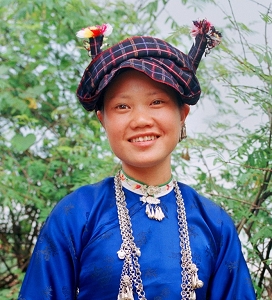
Zhuangs in Yunnan have a population of 1,144,000, of whom 80% live in Wenshan Zhuang-Miao Autonomous Prefecture in southeast Yunnan. Zhuang women are good at spinning and weaving, whose Zhuang brocade is famous for its colorful and delicate patterns. Zhuang clothes and ornaments well reveal their aesthetic standards. The men usually wear home-made blue jackets with buttons down the front, loose trousers and dark blue turbans. The shoes, caps and vests of Zhuang women have vivid patterns of flowers, birds, animals or important figures embroidered with colorful silk threads.
Zhuang Man Using Five Different Names in his Life
A Zhuang man has five different names in his life: 1.“Yimao” is used to refer to all male infants, 2. a pet-name, 3. another name after entering the school, 4. another name after marriage, 5. another name when old. The last two names are regarded more important than other positions like official titles.
The Bronze-drum Performance: A Dance with Great Enthusiasm
Yunnan is the home of bronze drums and one of the birthplaces of bronze drums of the world. It has been proved that Zhuangs began to use bronze drums in the middle of the Spring and Autumn Period (770~476 B.C.). In the historical data, especially those of the Qing Dynasty, there are records about the Zhuangs beating bronze drums while dancing, which indicates that the bronze-drum performance has long been popular with the Zhuangs.
The Flower Street and “Red Rope for Love”: A Zhuang Marriage Custom
"The folk song is the first matchmaker” is a popular Zhuang saying. The Song Festival falls on March 3rd on the lunar calendar and all the youth within a distance of tens of miles will come to the Flower Street (also called the Song Street) to find their sweethearts through singing in an antiphonal style. Zhuang youth in Hekou of Yunnan use a “red marriage rope” to express their love. On the wedding day when the bridegroom comes to the bride’s house, the first thing for him to do is to tie his “marriage rope” to the bride’s “marriage rope” fastened to the table at the door, which indicates their life-long devotion.