Tibetans Living In Shangri-La
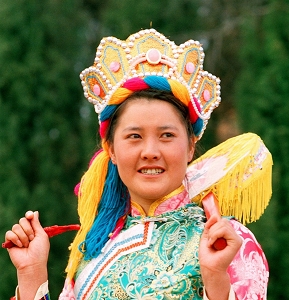
Tibetans in Yunnan, the descendants of the Qiang who led a nomadic life in Northwest China in ancient times, have a population of 128,400, most of whom live in Diqing Tibetan Autonomous Prefecture in Northwest Yunnan. They believe in Tibetan Buddhism. The highland barley is the staple food of Tibetans and their yak-butter tea always gives you an ever-lasting impression.
Shangri-La: A Dreamland
In 1933, James Hilton, a well-known British writer, described Shangri-La, a place of idyllic beauty, in his novel “The Lost Horizon”. In the 1990s, it was agreed that Shangri-La, a Tibetan transliteration which means “the sun and the moon in the heart”, is Diqing Plateau which is in the northwest of Yunnan and has lofty snow-capped mountains. “Shangri-La” in Tibetan Buddhist scriptures means a paradise where man and God, man and nature enjoy a harmonious relationship.
Horse Racing Festival: The Festival of Tibetan Heroes
Tibetan men are excellent horse-riders. The annual horse-race which falls on lunar May 5th has a long history. On this occasion, the horsemen display their skills by competing for more flags and coins while riding on the galloping horses.
Mani Stone: A Symbol of Mysterious Pilgrimage
Meili Snow Mountain enjoys the supreme position among local Tibetans. There are always pilgrims from near and far kowtowing and spinning the prayer wheel along the winding mountain paths covered with snow on Diqing Plateau. Mani Stone means “Prayer Stone” in Tibetan Buddhism and is the popular spot for praying. When a Tibetan pilgrim passes by a Mani Stone, he will walk around it clockwise and put a stone or a sutra flag on it to express his piety and vows. These Buddhist stones and flags in a unique style are special landmarks in Shangri-La.
Watchtower-like House: A Unique Tibetan Architecture
Most Tibetan houses in Diqing are flat-roofed in a watchtower-like style and face east, looking somewhat like the Budala Palace from a distance. This kind of houses is made of various stones and its solid roof is made of several layers of stones and clay. Besides a good shelter, this roof is a nice place for drying things. Most Tibetan houses here have three storeys with the first for domestic animals, the second as the cooking, living and storing place and the third for praying.
Xianzi Dance and Guozhang Dance: The Most Typical Tibetan Dances
Xianzi Dance (Xianzi is a three-stringed musical instrument) is an indispensable dance for fun in the life of Tibetans. On important festivals or events, Tibetan men will play Xianzi and Tibetan women wearing the long-sleeved dress will dance in a circle. Guozhuang Dance is a dance staged by masses of people; it is the most spectacular folk dance in areas inhabited by Tibetans.
Yak-butter Tea: A Household Tibetan Drink
Yunnan is one of the birthplaces of tea culture. Tibetans have gotten used to yak-butter tea that is made of tea, yak-butter and salt. It reveals a typical element of Tibetan culture. Tibetans in Shangri-La have two kinds of wooden bowls for yak-butter tea, one for the ordinary people and the other for the distinguished guests. The male and the female also have different bowls. In Shangri-La, there is a “Tea Festival” which is in fact a song festival during which Tibetan youths enjoy themselves to their heart’s content.