Aba Attractions


Aba Articles
九寨沟行程小贴士 Travel Tips for Visitors to Jiu Zhaigou Valley
As so many visitors are interested in visiting Jiu Zhaigou Valley, i have prepared some useful tips for everybody, hope it can help you with your trip in Sichuan!
...As so many visitors are interested in visiting Jiu Zhaigou Valley, i have prepared some useful tips for everybody, hope it can help you with your trip in Sichuan!
1.出发时间比较早, 九寨沟的出发时间都比较早,如果您是入住酒店,请自行提前通知酒店为您提供路餐作为早餐,早上到前台处自行领取。当地条件较为艰苦,蔬菜较少,且口味不是很好,建议客人自带些干粮或零食(400多公里:水泥和沥青盘山公路)。
1. You need to leave early for Jiu Zhaigou from Chengdu, if you live in the hotel in Chengdu,its better for you to ask them to prepare the takeaway breakfast for you. Living condition in Jiu Zhaigou Valley is not very good, they don’t have various vegetables, and the dishes don’t taste very well, its better for you to bring some foods or snacks. (Over 400km, cement and asphalt winding road on the mountains in highland.)
2.九寨沟属藏区条件较差,限电限水,限时供应热水,热水一般为晚9点至11点间供应,沿线提倡绿色环保,酒店不提供一次性洗漱用品,请游客自备。
2. Living condition in Jiu Zhaigou is not as good as in cities, there will be limits offering electric power and hot water everyday. Generally the hot water is available from 9pm to 11pm, in order to protect the local environment, the hotels there wont offer one-time toiletries, please prepare your own toiletries.
3.成都至九寨沟的路程较远,大部分为山路,如您要晕车,请务必携带晕车药。旅游旺季车辆增多,有可能会堵车,导致用餐时间较晚或回成都的时间较晚,敬请理解。
3.It’s a long way from Chengdu to Jiu Zhaigou by drving, most of the roads are in the moutains, if you may have car-sick, it’s very necessary for you to keep some carsick medicine with you. During the popular travel season, it’s common to meet traffic jams, which will make itinerary delayed, please try to understand.
4.因其特殊的气候条件,酒店内部有潮湿的现象,如对住宿要求较高的您,建议升级标准。
4. Because of its special climate, it’s very common that the facilities inside the rooms are humid, if you have high demand for hotels, its better for you to upgrade your rooms or hotels.
5.当地属于高原地区。如果您要预防高原反应的发生,请在出发前自行准备抗高原药品。
5. Jiu Zhaigou locates in highland, if you may have altitude stress, please prepare some anti-altitude stress medicine with you.
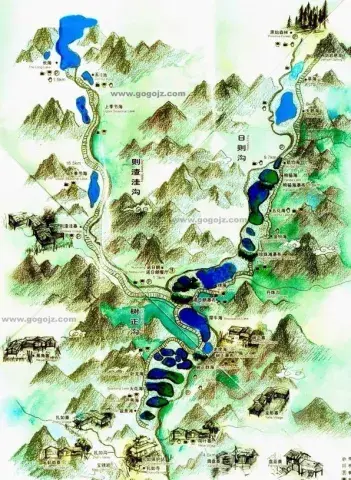
6.九寨沟分为三条沟,单程35公里,沟内每个景点都有一个观光车上下的车站,凭观光车票,当日可在任一站点自由换乘,每辆观光车都有讲解导游。游览景区内三条沟的先后顺序,完全根据观光车调度人员临时安排分沟游览,这样也能更好的分散游客,让您在拍照的时候舒心一些。观光车一般是到每条沟最高景点下车,然后往下走游览,所以走路也不会觉得累。
6.Jiu Zhaigou has three branches, one-way 35km, every travel spot has a tour bus station,with the ticket you buy at the gate, you can change into any tour bus at the stations, each tour bus has a guide. The order of visiting the three branches of the valley mainly depends on the dispatchers of the tour buses, in order to spread the visitors in Jiu Zhaigou, which is also better for you to take pictures. Generally the tour bus will go to the highest part of each valley, and then you can walk down and start your visit, so you wont feel too tired.
7.九寨沟景区最佳的游览方式还是自由活动,乘坐的观光车运行方式和城里的公交车是一样的,因此导游也无法全程陪同。
九寨沟内推荐游览路线:沟口乘车---原始森林乘车---箭竹海观倒影走栈道或乘车---熊猫海乘车---五花海乘车---珍珠滩走栈道看完瀑布后走栈道至镜海停车场乘车---诺日朗旅游服务中心乘车---长海步行---五彩池乘车---诺日朗瀑布乘车---老虎海走栈道---树正瀑布、水磨房步行至树正群海走栈道---火花海乘车---芦苇海乘车---盆景滩乘车---宝镜岩乘车---出沟。
7.The best way to visit Jiu Zhaigou is to look around freely, the tour buses there work exactly like the buses in city, so even the tour guide can’t walk with you all the time (especially when the guide guides a large group.)
The recommended routes: Tour bus at the gate---Primeval Forest---Fargesia Lake (or Arrow-bamboo Lake) ---Panda Lake---Five-flower Lake---Pearl shoal---Mirror Lake---Nuo Ri Lang Travel Service Center---Long Lake---Multi-color Pond---Nuo Ri Lang Waterfall---Tiger Lake---Shu Zheng Waterfall---Sparkling Lake---Reed Lake---Bonsai Lake---Bao Jing Rock---Go out.
8.九寨沟天气变化频繁;请备好保暖衣物、雨伞、防晒霜,太阳镜等物品;可自备感冒药、治腹泻和创口贴等药品。
8. The weather in Jiu Zhaigou is very changeable, please bring enough warm clothes, umbrellas, sun cream, and sunglasses and prepare some cold or diarrhea medicine and band-aids with you.
9.九寨沟景区内诺日朗餐厅用餐,自助餐60元/人起,用餐比较简单,而且会影响您的游览时间,建议您自带干粮进沟。
9. If you are going to have meals in Nuo Ri Lang Restaurant inside Jiu Zhaigou, the price for the buffet is at least 60yuan/person, the dishes are plain and it may waste the time for you to visit, it’s better for you to bring some foods by yourself.
10.九寨景区禁止吸烟,有吸烟习惯的客人请忍耐,或是到专门的吸烟区,否则会受到高额罚款。九寨沟是世界自然遗产,爱它您就保护它。
10. You are not allowed to smoke inside Jiu Zhaigou Valley, if you have smoking habit, please go to the smoking area, or you will get a hefty fine. Jiu Zhaigou is World Natural Heritage, please protect it and love it.
Jiuzhai Valley
...
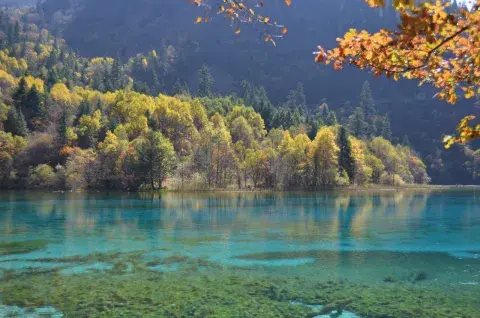
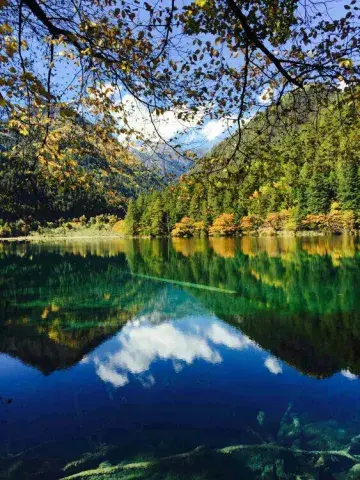
Jiuzhai Valley is nestled amongst a dozen high mountain peaks which can remain snow covered throughout the year. Meanwhile far below the white capped peaks the river valley glistens and reflects amazing landscapes in crystal clear waters.
Scattered in trapezoid fashion between these heavenly lakes, ponds and pools are one hundred & fourteen large & small waterfalls, seventeen waterfall gathering areas, five travertine banks, forty seven fountains, and eleven turbulences. All of which span, in the form of a Y shaped necklace, over an area of some 60km. Majestically sitting amongst the twelve, mostly snow covered peaks, at an elevation of 1870m, Jiuzhai Valley is the only scenic spot boasting alpine lakes, waterfalls, and travertine banks in China, and numbered amongst only a few such landscapes in the world.
The smallest water pool of the valley is only several square meters in size, while the largest, Changhai Lake, stretches on for 7 eye-pleasing kilometers. Clear all year round, the lakes simmer with gorgeous blues, yellows, oranges, greens that literally glow in the sunlight. On such bright clear days, reflecting the blue sky, white clouds, snow peaks and the surrounding forests, the lakes present a most picturesque scene throughout all four seasons. Thus it is said “no water is as good as that at the Jiuzhai Valley”.
Jiuzhai also boasts abundant flora and fauna species. The 300km2 primeval forest is home to 3,553 indigenous species including Kingdonia Uniflora, Circaeaster Agrestis, Fargesia and several other plants from the late Cretaceous to early Tertiary periods. The forest also provides a very favorable habitat for a wide variety of animals. Preliminary surveys indicate there are 693 invertebrates and 313 vertebrates in the valley. Rare species such as giant panda, snub-nosed monkey, red panda and antelope also constitute another unique attraction.
Certainly not the only reason to visit Leshan but most certanly a massive reason to do so. At over 70 meters tall Leshan's iconic 1200 year old giant seated Buddha (the worlds tallest) draws world wide visitors to this laid-back river town.
Overlooking the confluence of the rivers Dadu and Min whilst resting on feet with big toes each longer than 8 meters. Leshan's giant Buddha has shoulders spanning a whopping 28 meters, sitting below ears that dangle for 7 meters, this beautiful giant statue carved into a pink rock-face can bring visiting crowds to a near stand-still.
After getting up-close and personal with the Buddha's enormous stone head, and taking in the panoramic cliff views, descending a rather steep set of stairways allows visitors to linger at the Buddha's feet for a neck-craning view of this wonderfully incredible sight. Even the return climb to the cliff's top via hidden stone steps recessed into the right side of the cliff continues to inspire admiration for this magnificent man-made wonder.
By adding a quick boat trip , visitors will be afforded about 10 minutes to snap the perfect selfie, and or full length picture from the river to include the two river-side guards also carved into the cliff but not visible from land. The boat trips, costing 70CNY per person, leave at very regular intervals from Leshan dock are fun, and safe with each passenger being required to wear a life vest upon boardin
A word of caution, where possible try to avoid visiting this grand old Buddha during a Chinese national holiday, or on weekends when crowds are typically at their largest.
Huanglong
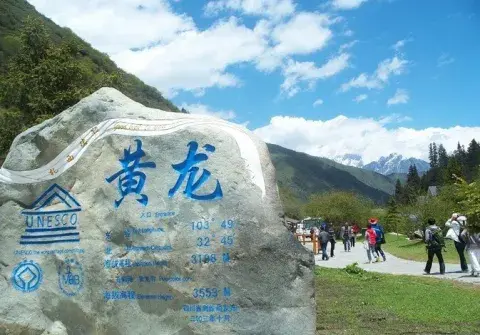
Huanglong (黃龍; literally: “yellow dragon”) is a scenic and historic interest area in the northwest part of Sichuan, China....
Huanglong (黃龍; literally: “yellow dragon”) is a scenic and historic interest area in the northwest part of Sichuan, China. It is located in the southern part of the Minshan mountain range, 150 kilometres (93 mi) north-northwest of the capital Chengdu.[1] This area is known for its colorful pools formed by calcite deposits, especially in Huanglonggou (Yellow Dragon Gully), as well as diverse forest ecosystems, snow-capped peaks, waterfalls and hot springs. Huanglong is also home to many endangered species including the giant panda and the Sichuan golden snub-nosed monkey.[1] Huanglong was declared a World Heritage Site by UNESCO in 1992.
If you need our guide/assistant/sourcing/interpreter, welcome to contact us.:)
We can custom your trip and guide you.
Please click my photo and add my contact. Let's talk details.
Thanks for reading.
Jessica In China (86-13570345653)
Top Aba Tours
$1 Per Day
One day in Huanglong
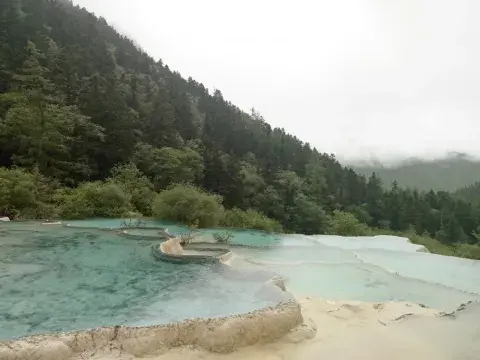
If you choose to Jiuzhaigou, and then the Huanglong Scenic area should not be forgotten! Maybe the waterfall here is not so big compares to Jiuzhaigou, but the colorful small lakes sure worthy to try.
Before this trip, we should take 2-munites bus to take the cable way, then when we on the cable way , we can see many beautiful mountains under our feet, which seems that we can touch the cloud if we want.
When drop off the cable way, we are on the top of the Huanglong, what we need to do next step is to walk down the way and enjoy the fresh air and view on the way.
...Read moreIf you choose to Jiuzhaigou, and then the Huanglong Scenic area should not be forgotten! Maybe the waterfall here is not so big compares to Jiuzhaigou, but the colorful small lakes sure worthy to try.
Before this trip, we should take 2-munites bus to take the cable way, then when we on the cable way , we can see many beautiful mountains under our feet, which seems that we can touch the cloud if we want.
When drop off the cable way, we are on the top of the Huanglong, what we need to do next step is to walk down the way and enjoy the fresh air and view on the way.
By the way, if you are not good at excising, pls tell me in advance , so that i can take you to buy the oxigeny bottle in case you will be deficit-oxigeny first.
Although in summer season, we can still enjoy the cool temprature and feel relaxed on the way.
No matter how many words i said about Huanglong, which cannot make you ti feel the true amazing view, just see the pictures i attached afterwards.
P.S.Under the functions of Calcium, the water here are different color in diffent day time, and some of them are blue, some of them are yellow, even some of them are colorful!
$200 Per Day
3 days land tour of Jiuzhaigou & Huanglong
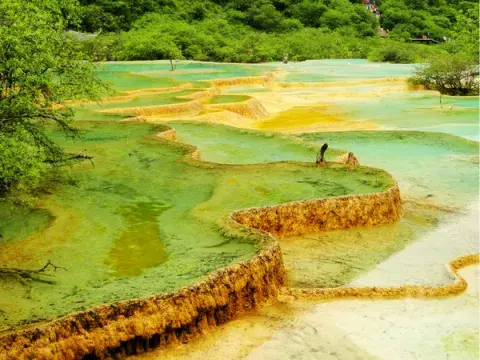
Day 1 pick you up in your hotel,then drive through Dujiangyan,Wenchuan,Songpan to Chuanzhusi.We have lunch in Chuanzhusi before heading toward Huanglong National Park.It has the most amazing landscape on the earth surface,which is featured with”Six Wonders”of unique colored ponds,tufa banks,snow mountains,fascinating canyons,ancient temples and folk customs.Usually,we spend 3.5 to 4 hours in this place,then leave for Jiuzhaigou,and spend overnight there. ...Read more
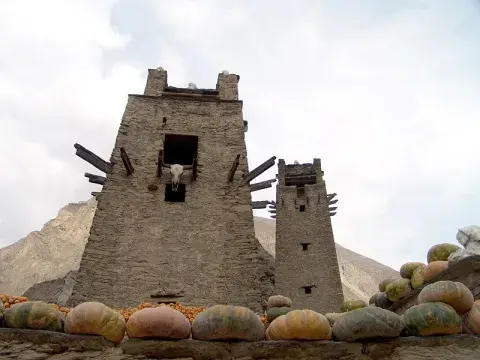
Day 1 pick you up in your hotel,then drive through Dujiangyan,Wenchuan,Songpan to Chuanzhusi.We have lunch in Chuanzhusi before heading toward Huanglong National Park.It has the most amazing landscape on the earth surface,which is featured with”Six Wonders”of unique colored ponds,tufa banks,snow mountains,fascinating canyons,ancient temples and folk customs.Usually,we spend 3.5 to 4 hours in this place,then leave for Jiuzhaigou,and spend overnight there. Day 2 We spend a whole day,hike and enjoy Jiuzhai Valley National Park,the No.1 scenic spot in China.Jiuzhaigou is located in the Min Shan mountain range, Northern Sichuan in South Western China. It is best known for its fabled blue and green lakes, spectacular waterfalls, narrow conic Karst land forms and its unique wildlife. It was declared a UNESCO World Heritage Site in 1992; the park joined the Man and Biosphere Conservation Network in 1997 . Day 3 It is a long drive today. On the way back to Chengdu,we have an chance to pay a visit to local Qiang People's stockades,which serve for both residence and fortification purpose in ancient times.
$300 Per Day
Mt.Siguniang 5-day tour
Mt.Siguniang 5 day tour
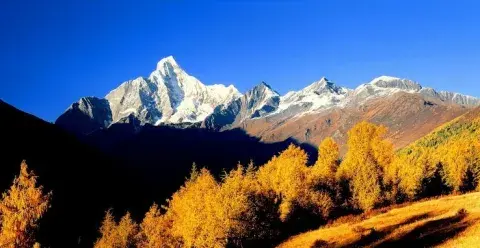
Mt.Siguniang is located in Rilong Town, on the border of Xiaojin and Wenchuan County. Aba Autonormous Prefecture , Sichuan, China. Guniang in Chinese means girl( sisters), Si means four, so Mt.Siguniang means four girls Moutain. There are four mountain peaks : Da guniang( No.1 girl/sisiter) -aititude 5355 m , Er Guniang (No.2 girl/sister)-5454 m, San Guniang( No.3 girl/sister) 5664 m, and Si guniang( No.4 girl/sister) 7556 m.
...Read moreMt.Siguniang 5 day tour
Mt.Siguniang is located in Rilong Town, on the border of Xiaojin and Wenchuan County. Aba Autonormous Prefecture , Sichuan, China. Guniang in Chinese means girl( sisters), Si means four, so Mt.Siguniang means four girls Moutain. There are four mountain peaks : Da guniang( No.1 girl/sisiter) -aititude 5355 m , Er Guniang (No.2 girl/sister)-5454 m, San Guniang( No.3 girl/sister) 5664 m, and Si guniang( No.4 girl/sister) 7556 m.
There are three valleys you will see while going to see Mt.Siguniang: Changping Valley, Shuangqiao Valley and Haizigou. and Mt.Siguniang is located in Changping Valley, 16 km away from the entrance.
Day 1: Chengdu-Rilong town, ( about 5 hours drive if the road is good )
rest in hotel
Day 2: Changping Valley
9:00 morning drive from Rilong Town hotel to Changping Valley entrance. around 10 minutes
9:15 am hike from Lama Monstery-Kushutan-Dahaizi-Lianghekou. 12;20 arrive at Muluozi, which is a grassland of 3760 m altitude. if you are really good at hiking, you can hike to Bipenggou valley which is in another county. but you need to spend one night in the forest, not easy.
or you can ride horse in the valley.
Day 3:Haizi Valley
drive from hotel to entrance.
9:15 hike from the entrance: zhaijieping-Guozhuangping-Chaoshanping, 12:00 arrive at the service station( Dajiabao) , break and lunch .
keep hiking through the Primary Forest( or you may choose to ride a horse) , around 13:30 arrive at Dahaizi, in Chaoshanping, you can view the whole scenery of Mt.Siguniang.
Day 4: Shuangqiao Valley
all these valleys if you don't want to hike, there are sightseeing buses you can take, hip-on hip-off buses
Day 5: Rilong Town to Chengdu
drive from Rilong Town-Balang Mountain-Wolong -Ya'an -Chengdu