Yangzhou Attractions
Da Ming Temple Vegetarian Restaurant
This place is a treat. Vegetarian food can be tough to find in Yangzhou, but this restaurant, recently opened in collaboration with the historic Da Ming Temple, serves an impressive assortment of dishes ma...
This place is a treat. Vegetarian food can be tough to find in Yangzhou, but this restaurant, recently opened in collaboration with the historic Da Ming Temple, serves an impressive assortment of dishes made completely without the use of animal products. Buddhist vegetarian cuisine is an entirely different style of Chinese fare, and the owners are more than happy to discuss the philosophy behind it. The cuisine is based on the Huai Yang School, and displays notably creativity. The restaurant also boasts very reasonable prices. Smaller dishes start around 5 Yuan and the more intricate, such as a large fake fish or ribs, go for about 30 Yuan. Another plus is each dish is pictured on the menu next to its description, which even includes a list of the exact ingredients. This restaurant is well worth a visit.
To find the restaurant head south on Yangzi Jiang Road (扬子江南路). Pass the Times Supermarket and then look to the northeast corner of the intersection with Wenhui East Road (文汇东路)
Lu Residence Restaurant
A feast at the recently restored Lu Residence Restaurant makes one feel like an important dignitary or foreign merchant visiting Yangzhou during the Qing Dynasty. The setting and menu are completely traditional, if only spruced up a few notches. Sure, there are traces of kitsch, but it is a uniqu...
A feast at the recently restored Lu Residence Restaurant makes one feel like an important dignitary or foreign merchant visiting Yangzhou during the Qing Dynasty. The setting and menu are completely traditional, if only spruced up a few notches. Sure, there are traces of kitsch, but it is a unique dining experience nonetheless. Lu was an incredibly wealthy merchant during the Qing Dynasty. He built this residence - the largest in Yangzhou - with the intention of hosting large gatherings. Perfect for a larger group, the recent renovations focused on the original high ceiling dining halls, and the restaurant is now an interesting series of these halls that largely dominate the complex as a whole. Come here to dine, but then be sure to walk around the residence as a distraction. By the entrance is an impressive museum of Yangzhou cuisine complete with plastic mold dishes, old cooking utensils, and everything one could possibly want to learn about the local cuisine. English captions are a plus too.
Yangzhou Articles
Ordering at Restaurants
Here is a basic description of the different types of ordering systems at restaurants and some helpful terms.
Normal
Order using a menu and pay the waiter or waitress when you are done....
Here is a basic description of the different types of ordering systems at restaurants and some helpful terms.
Normal
Order using a menu and pay the waiter or waitress when you are done. Servers will generally wait with you while you decide on what to order. They are there to answer questions and make suggestions.
If you need something go ahead and call a server over. You may need to call loudly; don't be afraid to do so, you will certainly see other Chinese customers yell for a staff member.
Some useful terms:
Mai dan (买单) = cheque please
Fuwuyuan (服务员) = server. Used to call waiters of waitresses over.
By the end, you might thinking about how to tip in a restaurants.
By the end, you might thinking about how to tip in a restaurants.
Fast Food
These locales are just like a standard fast food restaurant anywhere in the world. Give them the money and they give you the food. Drive thru restaurants are very rare though.
Food on Display
Some restaurants have food on display in addition to their menus. This is great for people that can’t read the menus, because all you have to do is point!
Learning the following two phrases is highly recommended:
Yao (要) = want
Bu Yao (不要) = don’t want
Tokens
These are found in some places that sell only a few items. It’s kind of like a fast food restaurant in that you order at the till. However, they will give you a token that you should take to a server or directly to the cooks.
Quick Tips on Dining Etiquette
Traditionally, at dinner, Chinese people sit in a circle at a round table while the dishes are placed in the middle of the table to be shared by all....
Traditionally, at dinner, Chinese people sit in a circle at a round table while the dishes are placed in the middle of the table to be shared by all. In more health-conscious environments, only “public” chopsticks and spoons are used to remove food from the plates in the middle of the dining table, so as to prevent any possible spread of diseases. In China, a standard banquet usually consists of four to eight prepared cold dishes, eight hot dishes, two to four whole-size showpiece dishes (such as a whole fish, a whole chicken), as well as soup, steamed rice and pastries, and fresh fruit for dessert.
Often beer, yellow rice wine and strong white liquor are served at a Chinese banquet. During the meal, you can hear people saying “Gan Bei” when toasting each other, which means “cheers” or “bottom up”. People “Gan Bei” to communicate the message that they are sincere and joyful.
Quick Dining Etiquette Tips
While Eating
Like Chinese etiquette in other areas, if a foreign guest broke one or two of these rules it’s not likely that a Chinese person would be offended. Many Chinese people are even impressed if non-asian foreigners can use chopsticks.
- Do not play with your chopsticks.
- Do not leave your chopsticks sticking out of your food.
- Do slurp your soup. Chinese people don’t mind some noise while eating.
- If you are at a “feast” then you do not need to finish all the rice in your dish.
- If you are eating a small meal with family then do finish the rice that you take.
- Do leave bones, shells or other things you don’t want to eat on your plate or on the table.
- Do help yourself to the food.
- Do not be too quiet.
- Do not leave your chopsticks sticking out of your food.
- Do slurp your soup. Chinese people don’t mind some noise while eating.
- If you are at a “feast” then you do not need to finish all the rice in your dish.
- If you are eating a small meal with family then do finish the rice that you take.
- Do leave bones, shells or other things you don’t want to eat on your plate or on the table.
- Do help yourself to the food.
- Do not be too quiet.
The Bill
By breaking these rules you could potentially offend someone. In China the bill is payed once by one person and then next time by the other person and this process continues. Leaving some personal debt between friends, family or business contacts keeps the relationship strong and ongoing.
- Do offer to pay the bill.
- DO NOT split the bill.
- You do not have to pay the bill. ;) Usually if you are a guest of a Chinese person they will insist on paying the bill.
- Do pay the bill the next time, or if you did pay the bill the first time then do let them pay the bill the next time.
- Do offer to pay the bill.
- DO NOT split the bill.
- You do not have to pay the bill. ;) Usually if you are a guest of a Chinese person they will insist on paying the bill.
- Do pay the bill the next time, or if you did pay the bill the first time then do let them pay the bill the next time.
- Do not tip any of the restaurant staff.
Rules for Drinking:
Rules for drinking are less clear cut. The rules can vary based on the situation and can also based on which part of China you are drinking in. In general, people in Northern China drink more than people in Southern China.
- If you are drinking beer and someone says “gānbēi” (干杯, dry the glass, cheers) to you, you should drink the whole glass. If you are not sure about that then just take their lead.
- If you are drinking white liquor (白酒, báijiǔ) then just take a sip of liquor from the glass when you “gan bei” with somebody.
- If you are with a group of people that you have just met you should “gan bei” to each of them individually.
- Sometimes Chinese people will get drunk during supper. They can get just as drunk during supper and Kareoke as “wàiguórén” (外国人, foreigners) can during parties and at bars.
- Having open liquor on the street is legal but it just doesn’t look good.
- If you are drinking white liquor (白酒, báijiǔ) then just take a sip of liquor from the glass when you “gan bei” with somebody.
- If you are with a group of people that you have just met you should “gan bei” to each of them individually.
- Sometimes Chinese people will get drunk during supper. They can get just as drunk during supper and Kareoke as “wàiguórén” (外国人, foreigners) can during parties and at bars.
- Having open liquor on the street is legal but it just doesn’t look good.
Quick Tips on Basic Etiquette
As in any culture, there are so many little rules about basic etiquette that is hard to think of where to start. The average Chinese person will not get angry if you break these rules as long as they know you are new to China (which they will generally assume if you are a foreigner)....
As in any culture, there are so many little rules about basic etiquette that is hard to think of where to start. The average Chinese person will not get angry if you break these rules as long as they know you are new to China (which they will generally assume if you are a foreigner). However, if you do know these rules they may find it impressive. The exception to this is foreigners who look Chinese. These "huaqiao" (overseas Chinese) will not consistently be shown the same slack that other foreigners enjoy. A typical comment from a Chinese person to a foreigner who appears to be Chinese would be, "You don’t speak Chinese!? But you are Chinese, why can’t you speak it?"
Line Ups / Queues
Chinese people are beginning to take to line ups and/or queues. In banks and train stations there will be organized queues for the ticket booths and teller windows. However, in most other places Chinese people prefer to crowd and push rather than line up. Getting on a bus can be a challenge, because everybody is trying to get on as fast as they can in order to get a seat.
Staring
In some areas, people have not seen many foreigners before and you can expect them to stare at you. This is just out of curiosity. They do not mean to offend you. It’s also common for people on the street to blurt out a loud, giggly “HELLO” to foreigners.
Greetings
A normal way to greet is by saying “ni hao” and giving a handshake. Saying “hello” would be an acceptable greeting for a foreigner to give too.
Business Cards
Chinese people love to exchange business cards. Click for a separate article on business cards.
Gifts
If somebody is treating you to dinner or inviting you into their home then it is always nice and courteous to bring a small inexpensive gift. Fresh fruit is a good choice. Red wine or Chinese baijiu would be appropriate for a more formal occasion.
Spitting
In some cities spitting is very common, while in others it is not seen as often since it is not allowed.
Female Dress Code
You don’t need to worry much about this. Young Chinese women in modern cities often wear short shorts and tight t-shirts. Compared to North Americans or Europeans they rarely show their stomachs. Men are fairly well behaved, but don’t forget about the “staring” point made above, women in particular.
Personal Space
People are used to standing quite close to each other: both with their friends and people they don’t know. Males will put their arm around other male friends and females will hold hands or link arms with female friends. Male and female friends do not touch much.
Accepting Cigarettes
If somebody offers you a cigarette they will probably hold out 2 or 3 in their hand. You should accept the one on the bottom as a sign of respect. Non-smokers should not worry, as it’s not considered rude to refuse a smoke.
Top Yangzhou Tours
$47 Per Day
Yangzhou 1 day tour
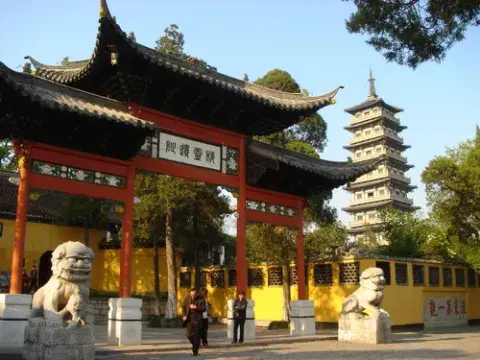
Yangzhou, known as a city of gardens and alleys, is a destination that makes a trip to China unforgettable. Little known to most foreign travelers, Yangzhou is a proud retainer of ancient Chinese architecture, art, culture, traditional gardens and parks, cuisine, leisure, and commerce in a beautiful mixture of modernity with its rich 2,500 year history. The demolition sledgehammer has not made much headway here, leaving an increasingly harder to find view into the past....Read more
Yangzhou, known as a city of gardens and alleys, is a destination that makes a trip to China unforgettable. Little known to most foreign travelers, Yangzhou is a proud retainer of ancient Chinese architecture, art, culture, traditional gardens and parks, cuisine, leisure, and commerce in a beautiful mixture of modernity with its rich 2,500 year history. The demolition sledgehammer has not made much headway here, leaving an increasingly harder to find view into the past. All in all, Yangzhou is the ideal place to experience unique aspects of Chinese culture, and is a relaxing break from other overly developed and commercialized urban centers in the region.
Slender West Lake (Admission: 80 yuan - includes Potted Plant Garden) -----> Da Ming Temple (Admission: 45 Yuan/ticket)------> He Yuan (Admissoin:40 Yuan/ticket)------> Ge Yuan (Admission:30-40 Yuan/ticket)
$47 Per Day
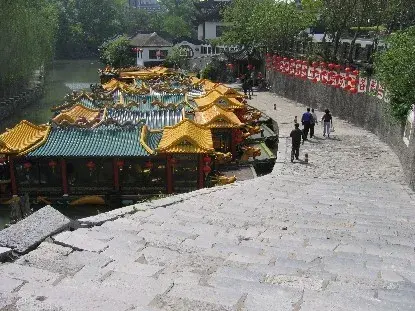
2 days tour itinerary in Yangzhou
Yangzhou 2 days Tour Itinerary:
Day 1
Slender West Lake(Admission: 80 yuan/ticket - includes Potted Plant Garden ) -----> Da Ming Temple(Admission: 45 Yuan/ticket )------> He Yuan(Admissoin:40 Yuan/ticket )------> Ge Yuan( Admission:30-40 Yuan/ticket )
Day 2
...Read moreYangzhou 2 days Tour Itinerary:
Day 1
Slender West Lake(Admission: 80 yuan/ticket - includes Potted Plant Garden ) -----> Da Ming Temple(Admission: 45 Yuan/ticket )------> He Yuan(Admissoin:40 Yuan/ticket )------> Ge Yuan( Admission:30-40 Yuan/ticket )
Day 2
Qian Long Waterway( It`s up to what kind of boat you choose to take)------>Dong Guan Old Street(Free entrance)----->Dong Quan Men Alley(Wang's Residence 10 yuan )------->Han Dynasty Tombs(Admission:30 yuan (15 students) )
$47 Per Day
Yangzhou, where you can relax yourself
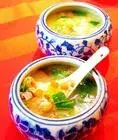
" In the flowery March, I am on the way to Yangzhou." is the real description of most ancient Chinese poets ' love to Yangzhou. Yangzhou is also a famous historic city in China. The prosperity of salt trade in the past left lots of private classic gardens and outstanding tasty dishes.
...Read more" In the flowery March, I am on the way to Yangzhou." is the real description of most ancient Chinese poets ' love to Yangzhou. Yangzhou is also a famous historic city in China. The prosperity of salt trade in the past left lots of private classic gardens and outstanding tasty dishes.
In the morning, you will wander in the Slender West Lake Park. Your eyes are so greedy to see so beautiful sceneries. In the afternoon, you will take your time in Fu Chun Teahouse to satisfy your stomach with assorted Baozi, Sliced Tofu with shrimp Soup, and fried rice dish. Then, you will walk to Da Ming Temple to experience China's traditional temple culture. Afterwards, you will find yourself bargaining in the plush toy market and the offers are much cheaper than you expect.
Interested? 