Xian Attractions
Xian Articles
How did the Qin warriors get burnt and destroyed? 兵马俑被谁烧了?
When we found the warriors in 1974, they were buried 6-7 meters deep underground. Originally, there was a 3.5 meters high wooden ceiling which covered all of the warriors. The archaeologists think there are 3 meters of dirt on top of the ceiling....
When we found the warriors in 1974, they were buried 6-7 meters deep underground. Originally, there was a 3.5 meters high wooden ceiling which covered all of the warriors. The archaeologists think there are 3 meters of dirt on top of the ceiling. Furthermore the wooden ceiling was burnt 2,200 years ago and almost all the figures and horses were found broken. Sima Qian’s “Records of History” indicates that Emperor Qin’s palaces were destroyed and burnt by the rebellions in 206 B.C. The archaeologists think that the rebels needed weapons ,so they opened the pits, took the weapons away, then set a fire and destroying them. One question this begs is that if the wooden ceiling was buried three meters underground for many years,the wood would most likely be wet and/or rotten. How can you burn rotten and wet wood, especially underground where there is sure to be little if any oxygen? My opinion is that the ground level here was much lower 2,200 years ago. The warriors, in my opinion, were buried half underground with the ceiling one meter above the ground in the open air. This would resemble a very normal house of the time. I furthermore believe that once the emperor was pronounced dead his son or some high-ranking official ordered the mausoleum to be burned. In China, the oldest religious tradition, dating back even before the time of the First Emperor, is Daoism. According to Daoism, the only way to send objects to the dead is by burning them as a sacrifice.This tradition persists even today, as people continue to burn paper money, horses, cars, etc., as offerings to their loved ones who have passed away. I think the same thing happened 2,200 years ago. The Emperor Qin had ordered more than one million people to work for nearly 40 years and spent a lot of money to build his underground army, surely he wanted to make sure that all this work would benefit him in the afterlife. The only way he could be sure, according to Daoism, was to burn everything that had been prepared. Many new pits such as the Stone Armor pit, Acrobats’ pit have all been found in this same burnt state. This leads me to believe that the pits in this whole area were burnt at the same time. To the south of the mausoleum, there is a mountain. On this mountain there was once a forest.It is said that after the mausoleum was completed the forest in the mountain disappeared. This is primarily due to the fact that the trees from the mountain forest were the ones used to build the mausoleum. With no trees to help keep the soil on the mountain in place, when the heavy rains came the water brought the mud down hill into the valley in which the mausoleum was built. The warriors were buried deeper and deeper, and the water made the section-earth-wall,which supported the wood ceiling, wet and soft. Eventually, the ceiling caved in and all the warriors were broken. Almost all the warriors found here were broken into pieces, but the flank guards in pit 1 and the kneeling archers in pit 2 were intact. The flank guards were situated on the edges of the pit where the pressure would have been less intense. The kneeling archers, who sit lower than the rest of the army and may in fact have been already partially buried by flood material by the time they were buried were also in better shape upon discovery. There are more than 7,600 warriors and horses in the three pits, only 2,200 had been excavated as well as over 40,000 bronze weapons, which means there are more than 5,400 warriors still buried with about one million weapons. If the pits had been opened during the rebellion, they would have looted all the weapons here. Therefore it doesn’t seem likely that they looted the pits. The terrain around Xian is mostly loess, a special kind of silt or clay. People in this region have been living in the caves for several thousand years, and there are still more than 40 million people living in caves around Shaanxi province. I think the people who built the tomb lived in the caves as well. If the Emperor had indeed wanted the figures safely buried underground it would have been much more reasonable and secure to place them in caves rather than bury them under a wooden ceiling. Why did they build a wooden ceiling and not dig a cave which would have been cheaper, easier and would have lasted longer? Because the wood is the material to be burnt after the funeral. According to my understanding of ancient Chinese religions, practices and historical traditions, it would seem to me that the Emperor ordered the complex to be burned as a rite to his spirit after his death, and the warriors were damaged by the ceiling collapsing.
Top Xian Tours
$2202 Per Day
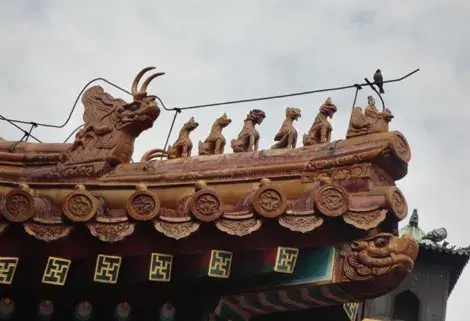
Beijing - Xi'an - Shanghai 10days study tour
Day 01 Arrival at Beijing
On arrival in Beijing, you will be met by our tour guide and transferred to your hotel in Beijing. Free for the rest of the day.
Day 02Beijing (B L)-- Tiananmen Square, Forbidden City, Beijing Zoo
After breakfast at your hotel, start your tour with the visit to Tiananmen Square(40minutes), the largest public square in the world. Then move on to the Forbidden City(2hours), the Chinese imperial palace from the mid-Ming Dynasty to the end of the Qing Dynasty.
Lunch at a special restaurant.
...Read moreDay 01 Arrival at Beijing
On arrival in Beijing, you will be met by our tour guide and transferred to your hotel in Beijing. Free for the rest of the day.
Day 02Beijing (B L)-- Tiananmen Square, Forbidden City, Beijing Zoo
After breakfast at your hotel, start your tour with the visit to Tiananmen Square(40minutes), the largest public square in the world. Then move on to the Forbidden City(2hours), the Chinese imperial palace from the mid-Ming Dynasty to the end of the Qing Dynasty.
Lunch at a special restaurant.
Then move on to Beijing zoo(1.5hours), which is one of the oldest zoos in China and has one of the largest animal collections in the country. The zoo and its aquarium has over 450 species of land animals and over 500 species of marine animals. In all, it is home to 14,500 animals. More than six million visitors come to the zoo each year. The zoo was founded in 1906 during the late Qing Dynasty. Like many of Beijing's parks, the zoo's grounds resemble classical Chinese gardens, with flower beds amidst natural scenery, including dense groves of trees, stretches of meadows, small streams and rivers, lotus pools and hills dotted with pavilions and historical buildings.
Day 03 Beijing ( B L )--Mutianyu Great Wall, Olympic Green, outside look the Bird's Nest and Water Cube, Shaolin kungfu school
Morning excursion to the most beautiful section of the Great Wall - the Mutianyu Great Wall. The hike takes about 2-3 hours. After lunch at Chinese Restaurant, Then head to the Olympic Green to have an outside look at the Bird's Nest and Water Cube(1hour). Shaolin Kung Fu is a huge scientific system, not the general sense of the "branches" or "boxing kinds". Chinese martial arts enjoy a huge structure complex with many branches, among which shaolin kung fu has the dominant place by its long history, the complex system and excellent technology boundary. Back to your hotel.
Day 04 Beijing-Xi'an( B L )
Hands-on D.I.Y Chinese dumplings(2hours) at the local family in Gaobeidian, enjoy these with other Chinese dishes and this will be your Lunch. Afternoon learn the Art of paper cutting, visit the gaobeidian school. After the tour, we go to the train station to Xian. Overnight on the train.
Day 05 Xian ( B L )--Big Wild Goose Pagoda square, Muslim Bazaar, Xi'an City Wall
Arrive in Xian, pick up. Breakfast at hotel. The Muslim Bazaar, the Muslim quarters lies 100 meters west of the Bell tower in downtown Xi'an.The 500 meters long avenue paved by bluestones are dotted with many unique stall,souvenir shop,coffee and bars which are mostly run by Muslim people. We visit massive Xian City Wall. Have a nice walk in the North Square to view the fully illuminated Big Wild Goose Pagoda. Musical Fountain Performance.
Day 06 Xian ( B L )-- Qin Terracotta Army, Shaanxi Historical Museum
Morning pick up by local guide. Enjoy your full day visit to the Qin Terracotta Army, one of the world's most important archaeological finds, with troops, horses and carriages in battle formation. Afternoon, visit the Shaanxi Historical Museum. Among the 400,000 items on display are treasures from many of the Dynasties, including some magnificent bronzes and porcelain, many of which have never been on permanent display before.
Day 07 Xian--shanghai ( B L )
Visit Bell tower and Drum tower. Farmer paintings, and learning the painting. Then go to airport to catch a flight. Pick up by shanghai local guide, only transfer to hotel.
Day 8 Shanghai ( B L )-- Jade Buddha Temple, Yuyuan Garden, the Bund
Breakfast at hotel. Visit Jade Buddha Temple. Jade Buddha Temple is a key temple in Shanghai that thriving with flows of disciples every day, especially on the 1st and 15th day of every lunar month as well as all the traditional Buddhism festivals. Visit pearl factory, it's a nice place to buy a necklace or bracelet. It is very good gift from China. Visit the lovely old Yuyuan Garden look nine zig zag bridge with golden fish pond, bridges and pavilions. Explore the Bund in the evening.
Day 9 Shanghai ( B L )--Shanghai Museum, People Square, Nanjing Road, Oriental Pearl TV tower, Children's Palace
The Shanghai Museum which is the largest museum of ancient Chinese art in Shanghai. Visit the People Square and Nanjing Road for shopping. Visit the Oriental Pearl TV tower 2nd level. Visit the Children��s Palace 30-45minutes.
Day 10 Shanghai ( B )
Your China Experience is over all too soon as you transfer to the airport and board the homebound international flight, bidding a fond farewell to this ancient land.
$89 Per Day
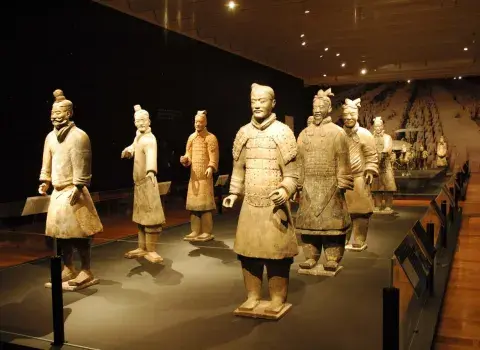
Private Xian Highlight Tour of Terracotta Warriors and Customized Sightseeing
This full-day Xi’an highlights tour starts at 9am in the morning with pick-up service from your hotel lobby. Your will firstly visit the Terracotta Warriors and Horses Museum, the must see in Xi’an and most significant archeological excavations of the 20th century. Follow your tour guide and spend enough time to explore all three sections No. 1 Pit, No. 2 Pit, and No. 3 Pit tagged in the order of their discoveries. No. 1 Pit is the largest, first opened to the public, there are columns of soldiers at the front, followed by war chariots at the back.
...Read moreThis full-day Xi’an highlights tour starts at 9am in the morning with pick-up service from your hotel lobby. Your will firstly visit the Terracotta Warriors and Horses Museum, the must see in Xi’an and most significant archeological excavations of the 20th century. Follow your tour guide and spend enough time to explore all three sections No. 1 Pit, No. 2 Pit, and No. 3 Pit tagged in the order of their discoveries. No. 1 Pit is the largest, first opened to the public, there are columns of soldiers at the front, followed by war chariots at the back.
Lunch will be at your own expense, please ask the tour guide to get some advice and enjoy the local authentic food. In the afternoon, you can choose your preferred two more sites in the downtown area to continue the sightseeing, like City Wall, Big Wild Goose Pagoda, Small Wild Goose Pagoda, Shaanxi History Museum, Square of Bell & Drum Tower, Muslim Quarter, Great Mosque, Gao's Grand Courtyard, or Forest of Stone Steles Museum. You tour guide will give you suggestion based on the traffic condition and time. Later, enjoy private transfer back to your hotel to conclude the full-day Xi’an tour.
$31 Per Day
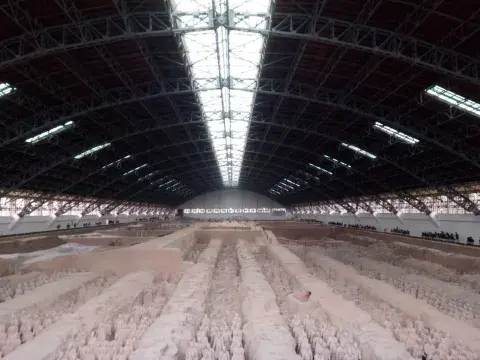
A Full-Day Highlights tour on Terra cotta Warriors museum
Xi'an is the oldest ancient capital in China with the longest history and richest historical heritages.
The Terra cotta warriors and horses show you the wisdom and military art of our ancestors 2,200
years ago, attracting people all over the world. The Big Wild Goose Pagoda and Imperial Ci'en ...Read more
Xi'an is the oldest ancient capital in China with the longest history and richest historical heritages.
The Terra cotta warriors and horses show you the wisdom and military art of our ancestors 2,200
years ago, attracting people all over the world. The Big Wild Goose Pagoda and Imperial Ci'en
Temple are telling people the stories of both Buddhism and Emperors of Great Tang Dynasty.
The fascinating ancient City Wall evident the complicated defense system. It is only a tip of
the iceberg, thus you are welcome to ask me any more informations about things to do in Xi'an!
So I believe that would be the perfect package if you have only a full day here.
The itinerary can be changed flexibly at your request since it is a private tour.
I'm looking forward to hearing from you!
Thanks