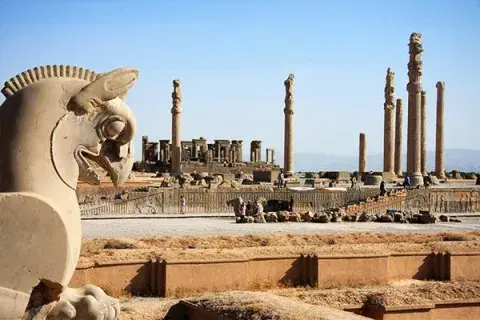
Persepolis Select ratingGive it 1/5Give it 2/5Give it 3/5Give it 4/5Give it 5/5 Rate The name “Persepolis”is a Greek word for “the city of Persians”. It is located seventy miles northeast of Shiraz in Iran, which was built in terraces up from the river Pulwar to Kūh-e Raḥmat (“Mount of Mercy”). Persepolis, as the capital of the Persian Empire was founded by Darius I in 518 B... The name “Persepolis”is a Greek word for “the city of Persians”. It is located seventy miles northeast of Shiraz in Iran, which was built in terraces up from the river Pulwar to Kūh-e Raḥmat (“Mount of Mercy”). Persepolis, as the capital of the Persian Empire was founded by Darius I in 518 B.C., and then the construction of it, was continued by his Successors. It is a half artificial and half natural job of many architects, artists, master builders and too many other men and women who were insured as well as being paid by monthly salaries. Building of this masterpiece was lasted for about 120 years and by the exciting evidence from an unfinished palace we can say that it never got the chance to attain perfect. Persepolis was designed primarily to be a showplace and spectacular center for the receptions and festivals of the kings and their empire. It expanses for about125000 square feet. This magnificent masterpiece is a unique job which every year gathers too many tourists from all around the world just to see its Mysterious, extraordinary, elegant sights which contains of:Official Palace and ceremonial palaces of Persepolis (Palace of the Gate of Nations).Living rooms and small private chambers.Treasury of the kingFortress and Protective CastleEntrance steps and Xerxes gateMacedonian Alexander Gordian attacked Iran and set fire to Persepolis. But the ruins of this place are still known as one of the largest historical works all around the world as there are detailed pictures on the walls which is a true prodigity of the humans art and scince for its time.
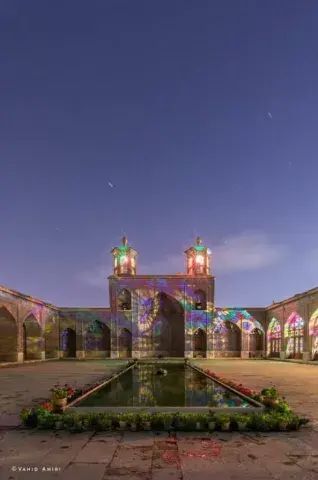
Nasir al-molk mosque Select ratingGive it 1/5Give it 2/5Give it 3/5Give it 4/5Give it 5/5 Rate This place is the most favorite attraction in Shiraz among visitors and has an amazing atmosphere with all the magical lights and colors
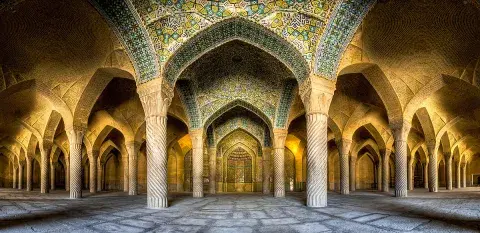
Vakil Mosque Select ratingGive it 1/5Give it 2/5Give it 3/5Give it 4/5Give it 5/5 Rate Vakil Mosque which belogns to Zand era is a historical mosque in Shiraz, Iran and it was built by the order of Karim Khan Zand. The mosque has a gross area floor of 11 square m and the building covers an area of 8660 square m. This mosque is considered as one of the ... Vakil Mosque which belogns to Zand era is a historical mosque in Shiraz, Iran and it was built by the order of Karim Khan Zand. The mosque has a gross area floor of 11 square m and the building covers an area of 8660 square m. This mosque is considered as one of the prominent examples of Islamic architecture, tiling, and carving. The southern shabestan consists of stone columns with beautiful spiral carvings. One of the unique characteristics of the mosque is that it owns 48 integrated stone columns. A 14-step minbar made from marble is one the other prominent part of the shabestan. The tiling of the courtyard and southern and northern verandas are made of main seven colors mosaic.In the north side of the building, you can see a great vault, known as The Purl arch, on which one of the Surahs of Holy Quran has been written with Thuluth. It has an amazing architecture which is a must for visiting.
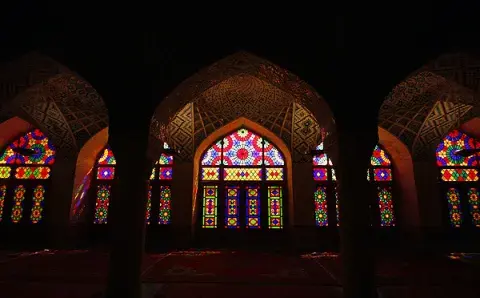
Pink Mosque Select ratingGive it 1/5Give it 2/5Give it 3/5Give it 4/5Give it 5/5 Rate The mosque is called by many different names. Mostly known as the “Pink Mosque”, it is also called the “Mosque of colours,” the “Rainbow Mosque” or the “Kaleidoscope Mosque”. This is a space where light and worship intertwine. The mosque comes to life with the sunrise and colours dance throughout... The mosque is called by many different names. Mostly known as the “Pink Mosque”, it is also called the “Mosque of colours,” the “Rainbow Mosque” or the “Kaleidoscope Mosque”. This is a space where light and worship intertwine. The mosque comes to life with the sunrise and colours dance throughout the day like whirling dervishes. It reflects on the ground, walls, the arches and the towering spires. It even reflects on the visitors as if a colourful ball is hit by the first sun ray and explodes to thousands of butterflies all around. The original name of the mosque in Persian is Masjed-e Naseer ol Molk. It was Built by the order of one of the lords of the Qajar Dynasty, Mirza Hasan ‘Ali Nasir al-Mulk, it took 12 years to complete in 1888. Its interior reveals a magnificent masterpiece of design with stunning colours. The designers Muhammad Hasan-e-Memar and Muhammad Reza Kashi Paz-e-Shirazi used extensively stained glass on the façade and other traditional elements such as panj kāseh-i (five concaves), which create a breath taking effect of the interior like standing in a kaleidoscope. Once the sunlight hits the stained glass, the entire building is flooded by a vibrant rainbow of colours. In popular culture, the mosque is also called Pink Mosque, because its tiles are beautifully decorated with a pre-eminently pinkish rose colour.Today this gorgeous mosque is still in use under protection by Nasir al Mulk's Endowment Foundation. Built in late 19th century, not very new and not very old, it is a celebration of both classic and modern times embedded in Islamic heritage. Speaking of this heritage, it has roots in Islamic art, architecture, tile making, geometry, patterns and other arts that flourished in the Golden Age of Islam. The best time to visit there an see the bezutiful colours is from 8:00 Am to 10:00 Am. You can take magnificiant pictures in these hours.
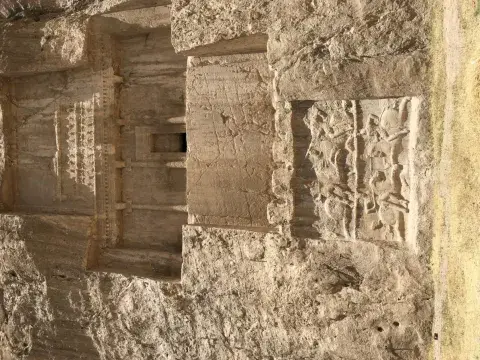
Naghsh-e rostam Select ratingGive it 1/5Give it 2/5Give it 3/5Give it 4/5Give it 5/5 Rate Naqsh-e Rustam is an ancient necropolis with a group of ancient Iranian rock reliefs cut into the cliff, from both the Achaemenid and Sassanid periods (more than 2500 years ago) . Location: Marvdasht - Iran .
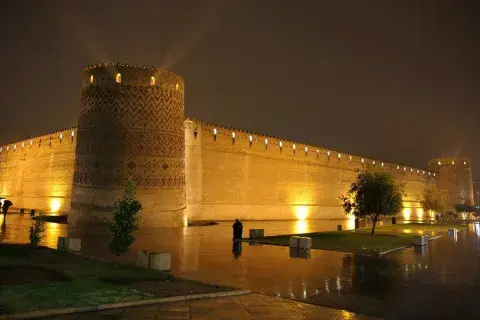
Karim Khan citadel Select ratingGive it 1/5Give it 2/5Give it 3/5Give it 4/5Give it 5/5 Rate The Karim Khan Arg, also known as the Karim Khan Prison, was built in 1108 AH and ordered by Karim Khan Zand, the founder of the Zandi Dynasty in Shiraz. This building, which is one of Zandian's most prominent works of art, attracts many tourists every year. In 1350, the organ was entrusted with ... The Karim Khan Arg, also known as the Karim Khan Prison, was built in 1108 AH and ordered by Karim Khan Zand, the founder of the Zandi Dynasty in Shiraz. This building, which is one of Zandian's most prominent works of art, attracts many tourists every year. In 1350, the organ was entrusted with the Cultural Heritage Organization, and its restoration began several years ago and is intended to be used as a major Fars museum upon completion of the restoration. It has beautiful brick-wood-stone architecture and garden. Rooms with colorful glasses. Some walls and a tower are subsided by settlements during years, but fixed now. Small memorial statuettes and handicrafts in good price are there for selling.
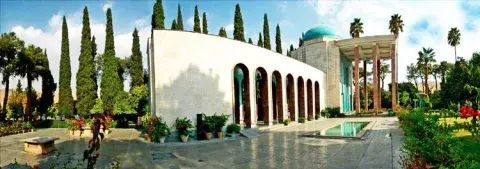
Saedi Tomb Select ratingGive it 1/5Give it 2/5Give it 3/5Give it 4/5Give it 5/5 Rate Abū-Muhammad Muslih al-Dīn bin Abdallāh Shīrāzī, Saadi Shirazi(Persian: ابومحمد مصلح الدین بن عبدالله شیرازی) better known by his pen-name as Saʿdī (Persian: سعدی) or simply Saadi, was one of the major Persian poets of the medieval period. He is n... Abū-Muhammad Muslih al-Dīn bin Abdallāh Shīrāzī, Saadi Shirazi(Persian: ابومحمد مصلح الدین بن عبدالله شیرازی) better known by his pen-name as Saʿdī (Persian: سعدی) or simply Saadi, was one of the major Persian poets of the medieval period. He is not only famous inPersian-speaking countries, but has also been quoted in western sources. He is recognized for the quality of his writings and for the depth of his social and moral thoughts. Saadi is widely recognized as one of the most prominent and greatest poets of the classical literary tradition. His tomb is in a huge garden where you can sit for hours, there are coffee shops and stores in the garden, and do not forget to taste the Falode of Shiraz in there.