Wulong Karst National Geology Park

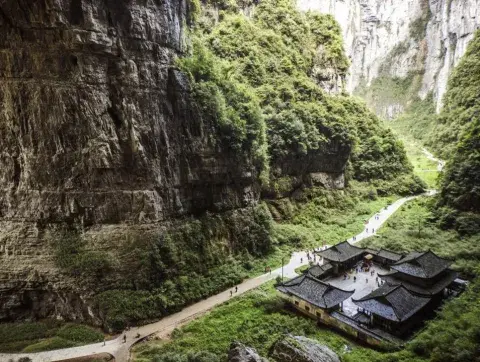
Wulong Karst National Geology Park, an important part of South China Karst, is situated at the lower reaches of the Wujiang River in southeast Chongqing. It was named as a world natural heritage by UNESCO in 2007. Wulong Karst features spectacular karst landscapes, including the three main p...

Wulong Karst National Geology Park, an important part of South China Karst, is situated at the lower reaches of the Wujiang River in southeast Chongqing. It was named as a world natural heritage by UNESCO in 2007. Wulong Karst features spectacular karst landscapes, including the three main parts of Furong Cave, Three Natural Bridges, Houping Giant Doline (Houping Tiankeng) and other scenic spots.

Wulong Karst is a valuable treasure that nature created. It is a cluster of several karst landscapes, consisting of gorges, natural bridges, caves, eroded dolines, shafts and underground streams. These karst landforms developed in the carbonate rocks, vividly recording the development and evolution of karst terrain in the Three Gorges area since Pleistocene Era. Furong Cave, Three Natural Bridges and Houping Giant Doline are the three representative karst landforms, developing under the condition of intermittent uplifting movement of the earth.

Each of the three karst systems standing alone forms a spectacular landscape. Furong Cave, literally Lotus Cave, abounds with various karren sediments forming many splendid natural wonders. The limestone sediments are also of great significance in scientific study. The three natural bridges constitute the largest natural bridge cluster in Asia, and the natural karst bridges are quite high and grand, a sight rarely seen anywhere in the world. Houping Giant Doline is the prime example and the largest tiankeng cluster formed by erosion in the world, and the longest underground cavern system in Asia.

Compared with Stone Forest Karst in Yunnan and Libo Karst in Guizhou, Wulong Karst National Geology Park is located in a relatively remote area away from the impact of human activities. Therefore, Wulong Karst retains the original features of karst landforms that have been despoiled elsewhere, hence its outstanding universal value.

Nanxin Granary Food Culture Street

Nanxin Granary Food Culture Street is another cultural street in Beijing with distinctive features, which can compete with the Shanghai New World. Every restaurant, tea house and club in the street is visited by many customers. There are art galleries and Latin dancing clubs in the ancient ...

Nanxin Granary Food Culture Street is another cultural street in Beijing with distinctive features, which can compete with the Shanghai New World. Every restaurant, tea house and club in the street is visited by many customers. There are art galleries and Latin dancing clubs in the ancient granaries and pseudo-classic architectural complex, with some Chinese and foreign specialty restaurants and bars as their neighbors, among which, McDonald's, Friday's, Da Dong Roast Duck Restaurant and BENZ Car Exhibition Hall have their popularity outside. The culture and arts market combine the "culture" of Nanxincang and the "business" together. Here will be the new gathering place which integrates art appreciation and delicious food.

Nanxin Granary, a historic site located on what is now Dongsi Shitiao, was a storehouse for grain meant exclusively to be served to the royal family during the Ming (1368-1644) and Qing (1644-1911) dynasties. It was built in 1409 during the reign of the Yongle Emperor (1403-1424) on the foundations of the Yuan Dynasty’s (120-1368) Beitai Granary. This makes it as old as The Forbidden City. The imperial granaries measured its volume in ao, which initially meant three store rooms and later, five. In its heyday, Nanxin Granary had 76 ao, the most in a Qing granary. The structure still has nine ao, making it the largest and best-preserved imperial granary in the country. Today, the vicinity of the granary’s has taken on a new life as a "culture street": it has become a base to more than cultural organizations, artist studios, tea houses, shops and restaurants. Some portions of the granary have been converted into warehouses.

Take Bus No. 42, 113, 115, 118, 406, 70 and get off at Dongsishitiao Station.
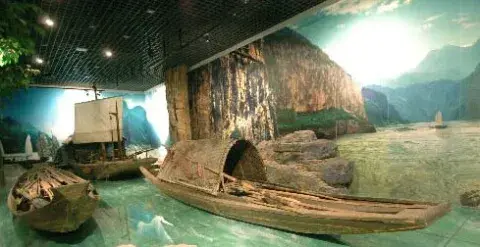
Three Gorges Museum( Sanxia Museum)

History
1951 8 Mar. Southwest Museum was founded.

Length: 157.3m
width : 98.085m
hight: 32 m
Total construction area is over 4 square meters
There are four main exhibitions:
1.the Magnificent Three Gorges hall:
reflect the cultural s...

History
1951 8 Mar. Southwest Museum was founded.

Length: 157.3m
width : 98.085m
hight: 32 m
Total construction area is over 4 square meters
There are four main exhibitions:
1.the Magnificent Three Gorges hall:
reflect the cultural spirit in the Three Gorges;
2.ancient Bayu hall:  reflecting the local historical origins;
3.Chongqing city hall:reflect changes in Chongqing city
4.the War Period Hall: reflecting Anti-Japanese War

The museum also has a 360 degree movie screen reflects the humanistic scenery of the Three Gorges.
There are several other thematic display areas, they are respectively "history of calligraphy and painting", "ancient China", "ancient coins", "the sculpture art of the Han Dynasty", "the folk customs of the southwest" and donated cultural relics from Lichuli.

The construction of the Three Gorges Museum in Chongqing is closely related to the Three Gorges Project. Because of the large scale of the Three Gorges, many places will always sink in a few meters, more than ten meters underwater, in order to try to save the loss of archaeological aspects, the state invested about 1000000000 yuan to rescue the rescue, the Three Gorges Museum is also the main storage of these were excavated.

transportation ( how to get here )
light rail: No.2 Zengjiayan stop .  No.3 : Niujiaotuo stop
buses: Dalitang stop , Xuetianwan stop by bus No.132路、145路、 181路、261路、262路、265路、 421路、829路、862路(内环)、866路、881路、152路、215路、104路、112路、338路、609路、322路