Shudu Lake in Shangrila
Address: Pudacuo National Park, 45 km away from the downtown of Shangrila
Duration: 8.30am--6.00pm
Address: Pudacuo National Park, 45 km away from the downtown of Shangrila
Duration: 8.30am--6.00pm
Address: Kunming North Railway Station, 913 Beijing Lu, Kunming
地址:昆明市北京路913号昆明北站
Tel:0871 - 6138610
Address: Kunming North Railway Station, 913 Beijing Lu, Kunming
地址:昆明市北京路913号昆明北站
Tel:0871 - 6138610
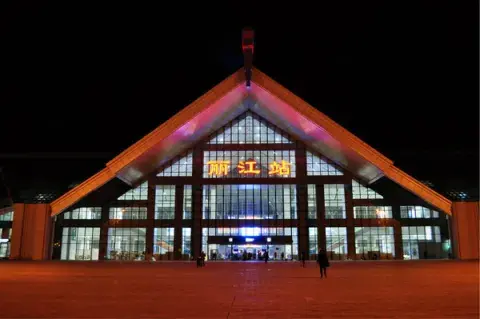
Yunnan Railway Museum is am industry-based museum themed on the construction and development history of railway in Yunnan. It is funded by Kunming Railway Bureau, housing and exhibiting more than 10000 pieces of railway-related cultural objects and literature.It consists of two exhibition halls: South Hall and North Hall. The architectural elements of both classic French-style railway stations and modern high-speed railway stations are combined to achieve a special cultural atmosphere, enabling visitors to relive the history and walk "from history to future" alongside Yunnan railways.
Yunnan Railway Museum has been recognized as a National Youth Education Base, a National Railway Education Base, a Yunnan Provincial Patriotism Education Base and a Yunnan Provincial Science Education Base.
Yunnan-Vietnam Railway constructed from 1903 to 1910 is one of the earliest railways in China. From the historical origin of China's railways and the perspective of transportation, Yunnan-Vietnam Railway fundamentally replaced the old and tradtional caravan transport in Yunnan by a new efficient mode of transport at that time. It is truly a type of technological progress, has an objective enlightenment and a pioneer significance in the creation adn development of Yunnan railway.
The spring of 1910 celebrated the birth of Yunnan's first railway and ushered in a new era.
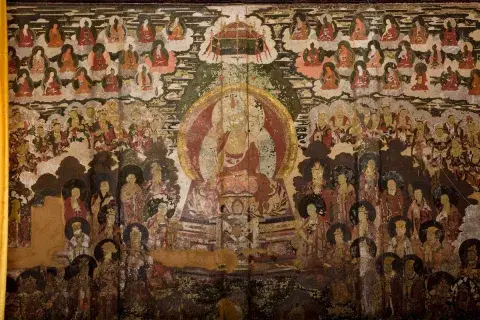
Lijiang Murals
...Lijiang Murals
Lijiang's murals are works of the Ming Dynasty,chiefly created from the Hongwu to the Wanli eras.They were originally distributed among the Juexiansi Temple and twelve others,nine of which fell to ruins.The remaining four temples have altogether 55 murals,with a total area of 139.22 sq.m.The biggest of them is in Dabaoji Palace.the figures depicted in it amount to 100,all disposed naturally and reasonably,with life-like miens expressing a variety of postures the whole gamut of emotions.The murals contained in the glazed chamber of the Dabaoji Palace are provincial cultural relic under enhanced preservation.
The murals in Dabaoji Palace are anonymous.According to the research of Lijiang's artists for many years,they might be regarded as the collective creation of the Ming painters during several hundred years,and is a crystal of are which mergres the painting style of the Naxi,Tibetan,bai and Han people.One of the distinctive features is the mixing together,in one mural,of the classic stories of Buddhism that came from Tibet(Lamaism) and the local people's own Buddhism adopted from India as well as Taoism. The paining technique is characterized by delicate and exquisite strokes containing the elements of condensation and compactness of the inland and Tibetan paining as well as the elements of boldness and dynamism of the Dongba painting and the Tibetan Lamaist painting.They are marked by strong contract of colours,vividness and truthfulness of features,plumpness of figures and elaborateness of production.
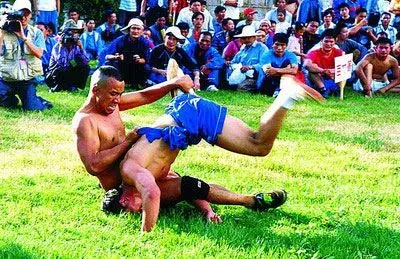
The Torch Festival Of Yi People
...The Torch Festival Of Yi People
On the 24th of the sixth month of the lunar year,the yi people hold their annual Torchlight festival.At the time of festival,in the vast area extending from Guishan Mountain Ranges to the bank of the lancanngjiang River,the Yi people and other local people dresses in their best ,playing "lusheng'(reed-pipe) and plucking the three-stringed lutes,gather on the the meadows of the mountainsides,assemble in the villagers on the shores.The festival is noted for its multifarious activities such as playing dragons,wrestling,bull fighting,horse race,archery contest,seizing for fire crackers,climbing oiled poles.tug-of-war-play,etc.At nightfall,they make various torches by putting together on pine twigs and hemp stalks they have collected.then they race over the fields and through the orchards,holding high the torches and letting off fire crackers,in an attempt to drive away pests and eliminate ermines as well as invoking bumper harvests ans assure of the tranquility of men and stock animals.
the Torch Festival of Yi people might have originated from the fire worship.the forms of celebrating it in different localities are manifold and the folk legends in this regard are numerous,Apart from the above-cited programmers,the festival as held in the Chuxiong yi Autonomous Prefecture has the following additional activities.
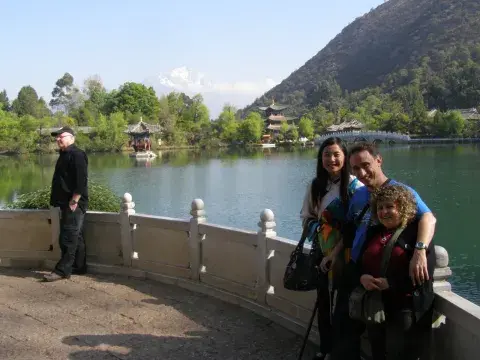
Lijiang Black Dragon Pool Introduction
...Lijiang Black Dragon Pool Introduction
Lijiang Black Dragon Pool was built in Qing dynasty,around three hundred years old,the local people believe there is black dragon live this pool,protect local people,so called Black Dragon Pool,
The shape of Black Dragon Pool is eight diagram(bagua),Deyue Pavilion is yang,was biult in 1963,the bridge is taiji,Yiwen Pavilion is ying,so it is good for Chinese fengshui,.
At the north end of the park there is Five Phoenix (wufeng) Pavilion,was built in 29th year of Wanli era of the Ming Dybasty(1601).it is the main building of Fuguosi Temple,with a height of 20m,and in the style of flying cornices,the threefold overlap.Since the ground floor has octagonal flying cornices,the threefold overlap make up 24 angles;so from every viewpoint the pavilion looks like five phoenixes spreading their wings for flight,hence its name.The structure is built on a noble scale,with elaborate carvings,redolent of antiquity and a strong local flavor as well as distinctive ethnic colour.
The pavilion was originally built on a mountain far away from the town,for the convenience of visitors,it was moved to this park and constructed by the side of Deyue pavilion,to the mutual enhancement of their splendour.its reflection in the clear water of Jade dragon snow Mountain make the view all the more exquisite,In the 12th year of the Chongzhen era of the Ming Dynasty(1639),the famous traveler Xu Xiake came here on his tour and stayed for eights days i the pavilion,which he took a fortune.
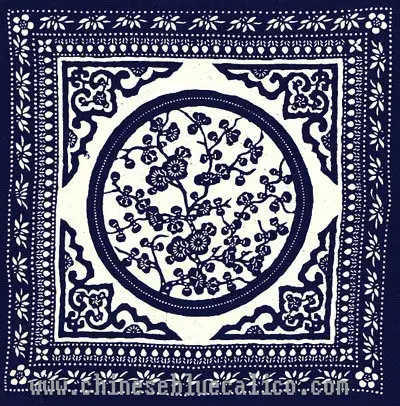
Tie-dyed Cloth
...Tie-dyed Cloth
It is also a traditional product of the Bais in Zhoucheng Village.The process of making this kind of cloth is like this:First,the villagers fold and tie white cloth by hand in the patterns of the Eight Diagrams(bagua),butterflies,the Three pagodas with their reflections and plum flowers,ets.and hen dye the piedes of cloth for more than 10 times in indigo-blue water(both imported indigo-blue and local made indigo-blue are used),and finally,hang them up in the open air to dry and untie the nods and spread them out,Now,you'll see the patterns of white and blue prints on the cloth.The characteristic of the tie-dyed cloth is simple in style but the colour sustains,window ans door curtains,table cloth,wall hangings,souvenir bags and handkerchiefs,which are applauded warmly in both domestic and foreign markets.
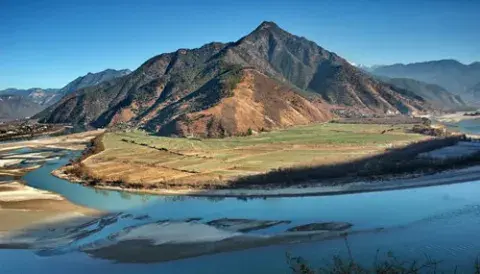
The First Bend Of Yangsze River
The First Bend Of yangsze River is located on the north side of the highway leading from Dali to Lijiang ,about 70KM far from Lijiang city.
...The First Bend Of Yangsze River
The First Bend Of yangsze River is located on the north side of the highway leading from Dali to Lijiang ,about 70KM far from Lijiang city.
According to historical accounts,The jinshajiang River in olden times flowed southward along the Hengduan Mountain ranges and was forced to the turn to north because of the Alpine movement which caused changes in the earth's physiognomy,When the river reaches Shigu township,it makes an abrupt tunr and flows further northward,forming the marvelous view reputed as The First Bend of Yangsze River.
On the hill as the river bend stands the small Shigu(stone drum)Township.it is so called because of existence of a drum-like stone tablet.It is1.5m in diametre,70mm.in thickness,being the memorial tablet making the victory of teritorrial expansion of Lijiang's local ruler Baichun,surnamed Mu,in the 27th to 40th year of the Jiaqing era of the Ming Dynasty(1548-1561).It is one of the earliest stone tablets hitherto found at Lijiang.
The river is broadened at the bend and flows slowly.The famous historical event,such as"Zhuge Liang"s crossing the Lushui River in the Fifth Month",Kublai Khan's "crossing the River on Leather rafts" all chose this place as a ferry>In May 1936,the Red Army Leaders Helong,Ren Bishi and Guan Xianying led the second Route red Army to march north ,crossing the river also at this plase.At present,a slendid memorial tablet marking the victorious crossing is erected here.
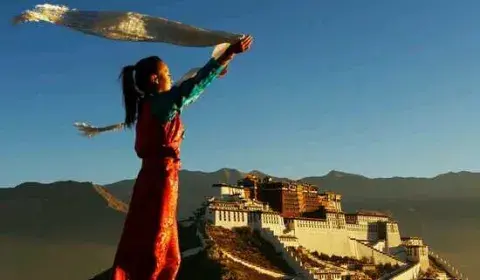
The Tibetan People
...The Tibetan People
The Tibetans in Yunnan have a population of 11,000 people.Most of them live in Diqing Tibetan Autonomous Prefecture with a small number of them scattered over the counties of Lijiang,Gongshan and Yongsheng.
They are the descendants of the Qiang people,an ancient nomadic tribe.The life at precipitous highlands with frigid weather in northwestern Yunnan where are the same as those of the Tibetans living in the Tibet Autonomous region.
The Tibetan people are mainly engaged in animal husbandry and they all live on vast grassland.
To present a "hada" is regarded by the Tibetans as a ceremony of showing one's supreme esteem.A "hada" is usually a piece of white gauze or silk. A"hada" is always presented to the interviewer so as to show respect.
The Tibetan people believe in Lamaism,Their festivals are mostly associated with the religion.On the day just before the Eve of the Tibetan New Year,every family would dump rubbish in the western direction at sunset.In doing so they think rubbishy things would disappear with the setting sun.On the eve of the Tibetan New year,food,such as milk cake,hand -picking meat and blood sausage are prepared.The ceremonies of lighting the Dragon Lantern and Burning Cypress Rosin are abserved on the New Year's Day.On that occasion,everybody will put on the lips a bit of "zanba" flour eaters.when dusk falls,young people celebrate the year of bumper harvest by singing old folk songs and dancing the "guozhuang dance"and xianzi(a three-stringed plucked instrument)dance round a bonfire.In the first month,the pilgrims set out for the Jade Dragon Snow Mountain and the Cock's Foot Mountain,During the 1st - 4th of the fourth month,the time when Sakyamuni was believed to become the Buddha,religious celebrations are held with blazing lanterns,The Tibetan people also participate in horse races during the The Third Moon fair In Dali and Mule and Horse Fair in Lijiang in seventh month.Their brilliant horsemanship gains admiration and respect from various nationalities.
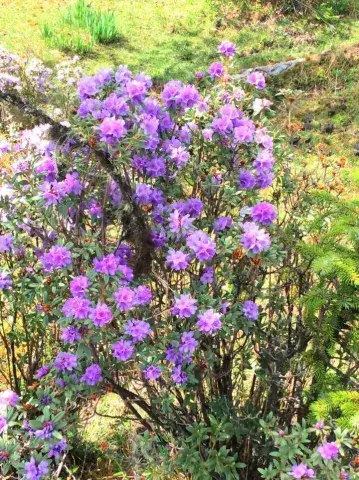
Eight Famous Flowers Of Yunnan
...Eight Famous Flowers Of Yunnan
Camellia,azalea,magnolia,primrose,lily,orchid,rough gentian and meconopsis integrefolia are eight famous flowers of Yunnan province,Except for rough gentian and meconopsis integrefolia,which mainly grow on the highland in northwestern Yunnan,theseflowers can be found growing in all parts of Yunnan,Camellia has now been designated as the "city flower"of Kunming.