Dong Quan Men Alley

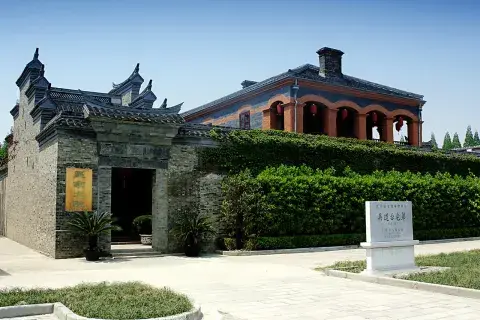
Running parallel to the busy Wenchang Road is a quiet ancient back alley that contains a host of sites well worth visiting. The alley's main gate/entrance dates back to the Qing Dynasty. Small restaurants and craft shopss line the alley, yet it thankfully lacks any sense of commercialization. Oth...

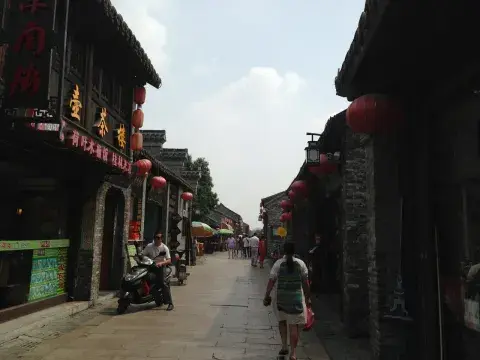
Running parallel to the busy Wenchang Road is a quiet ancient back alley that contains a host of sites well worth visiting. The alley's main gate/entrance dates back to the Qing Dynasty. Small restaurants and craft shopss line the alley, yet it thankfully lacks any sense of commercialization. Other small alleys jet off to the sides, and wooden doors representing multiple eras of China's lengthy history serve as a backdrop to residents sitting on stools, smiling at passersby. Former Chinese president, and Yangzhou native, Jiang Zemin even has a residence in this alley.


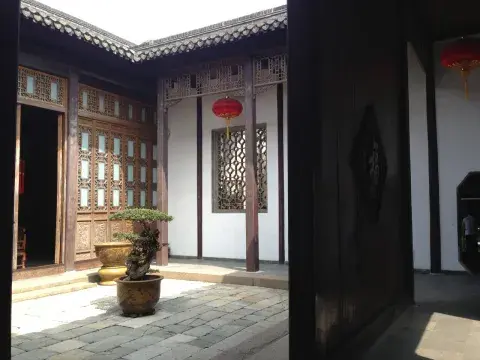
Further down the alley lies one of the best preserved ancient residences in Yangzhou, that of the salt merchant Wang Shi (汪氏小苑). This residence and its nearby offshooting alleys allow for a unique opportunity to look into China's past and observe what has already been demolished in most other Chinese cities. The maze-like residence is a bit dusty and less renovated than other sights, which likely assist in making it feel as if you are walking on a piece of history.


Just east of this area is the Qiong Hua Temple (琼花观) and garden. The former temple, fronted by two 300 year old Gingko trees, is now an art gallery featuring rotating exhibitions of calligraphy and paintings by local artists. Behind the gallery is the quiet Qiong Hua garden which contains an abundance of Yangzhou’s city flower, the qiong hua. This flower was actually part of what drew emperors to Yangzhou for their spring tours.
 

Yangzhou Museum

The Yangzhou Museum is big. Any visitor to Yangzhou quickly finds out the city is proud of its history, but you don’t really get a feel for its age until you visit this newly constructed museum. There are extensive displays here of artifacts, crafts, models...

The Yangzhou Museum is big. Any visitor to Yangzhou quickly finds out the city is proud of its history, but you don’t really get a feel for its age until you visit this newly constructed museum. There are extensive displays here of artifacts, crafts, models and so on from Yangzhou’s pre-history to the Qing Dynasty, with plenty about the future as well.

Nearly every exhibit includes informative, intelligible English captions.

Starting at the top, the 3rd floor is a vast history section that sprawls through thousands of years along with a multi-floor block printing exhibit with live demonstrations and a huge library of printing blocks.

The 2nd floor exhibits Yangzhou's love for the skill of carving various materials into art. Intricately carved jade, bamboo, stone, porcelain, peach pits (incredible!), and wood objects are on display, spanning around two thousand years. The 2nd floor also features a painting and calligraphy exhibit of the famous Yangzhou “Eight Eccentric” artists, and a huge Tang Dynasty dragon boat.

The 1st floor is a 'model lovers' dream. There is an enormous model of a somewhat unrealistic, albeit futuristic city plan and a statistical frenzy of graphs and data hanging on the walls.

Strangely enough, visitors emerge from displays of Yangzhou's beautiful and proud culture back outside into the modern day China of construction and homogenous housing blocks.

Allow about an hour and a half to visit the museum, which is certainly worthwhile for appreciating one of China’s most legendary cities.

Bus numbers 26 (running the length of Wenchang Road), 308, and 22 all stop at the museum. A cab ride from the center of town should cost around 15 Yuan.