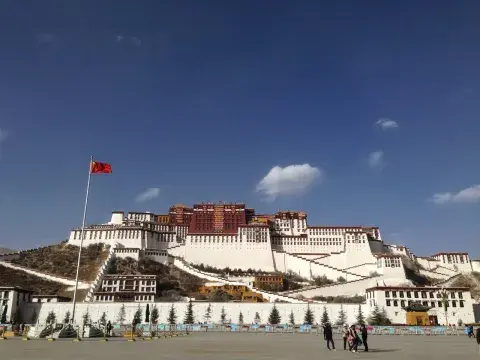
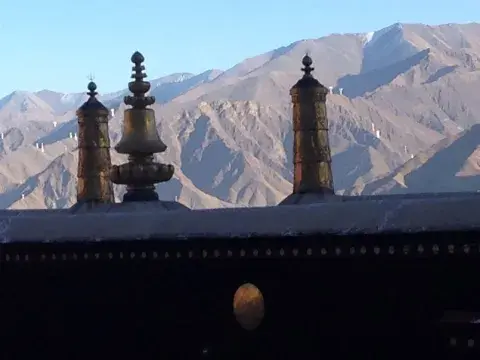
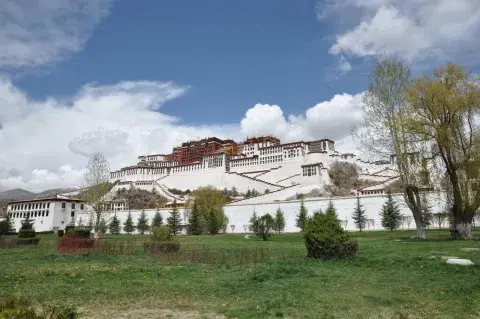
Potala Palace
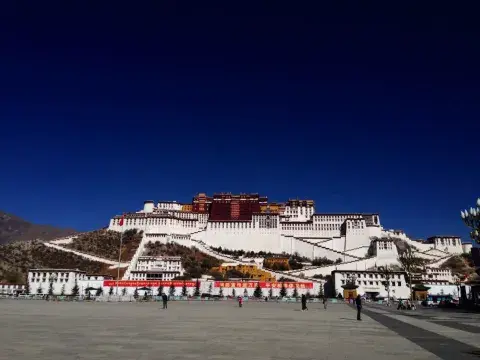
The Potala Palace ( 布达拉宫) in Lhasa, Tibet Autonomous Region was the chief residence of the Dalai Lama until the 14th Dalai Lama fled to India during the 1959 Tibetan uprising. It is now a museum and World Heritage Site....
The Potala Palace ( 布达拉宫) in Lhasa, Tibet Autonomous Region was the chief residence of the Dalai Lama until the 14th Dalai Lama fled to India during the 1959 Tibetan uprising. It is now a museum and World Heritage Site. The palace is named after Mount Potalaka, the mythical abode of the bodhisattva Avalokiteśvara. The 5th Dalai Lama started its construction in 1645 after one of his spiritual advisers, Konchog Chophel (died 1646), pointed out that the site was ideal as a seat of government, situated as it is between Drepung and Sera monasteries and the old city of Lhasa. It may overlay the remains of an earlier fortress called the White or Red Palace on the site, built by Songtsän Gampo in 637.
If you need our guide/assistant/sourcing/interpreter, welcome to contact us.:)
We can custom your trip and guide you.
Please click my photo and add my contact. Let's talk details.
Thanks for reading.
Jessica In China (86-13570345653)
Namtso Lake
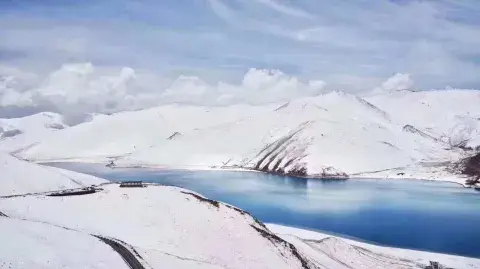
Namtso Lake (纳木错) is a mountain lake on the border between Damxung County of Lhasa prefecture-level city and Baingoin County of Nagqu Prefecture in the Tibet Autonomous Region of China, approximately 112 kilometres (70 mi) NNW of Lhasa....
Namtso Lake (纳木错) is a mountain lake on the border between Damxung County of Lhasa prefecture-level city and Baingoin County of Nagqu Prefecture in the Tibet Autonomous Region of China, approximately 112 kilometres (70 mi) NNW of Lhasa. Namtso was born in the Paleogene age, as a result of Himalayan tectonic plate movements. The lake lies at an elevation of 4,718 m (15,479 ft), and has a surface area of 1,920 km2 (740 sq mi). This salt lake is the largest lake in the Tibet Autonomous Region. However, it is not the largest lake on the Qinghai-Tibet Plateau. That title belongs to Qinghai Lake (more than twice the size of Namtso); which lies more than 1,000 km (620 mi) to the north-east in Qinghai.
If you need our guide/assistant/sourcing/interpreter, welcome to contact us.:)
We can custom your trip and guide you.
Please click my photo and add my contact. Let's talk details.
Thanks for reading.
Jessica In China (86-13570345653)
Everest Base Camp
Everest Base Camp is either of two base camps on opposite sides of Mount Everest. South Base Camp is in Nepal at an altitude of 5,364 metres (17,598 ft) , and North Base Camp is in Tibet at 5,150 metres (16,900 ft)....
Everest Base Camp is either of two base camps on opposite sides of Mount Everest. South Base Camp is in Nepal at an altitude of 5,364 metres (17,598 ft) , and North Base Camp is in Tibet at 5,150 metres (16,900 ft). A visit to the North (China-side) Base Camp currently requires a permit from the Chinese government, on top of the permit required to visit Tibet itself. Such permits must be arranged via travel companies in Lhasa as part of a package tour that include hiring a vehicle, driver and guide. The North Base Camp is accessed by vehicle through a 100 km road branching to the South from the Friendship Highway near Shelkar. The “tourist Base Camp” is located about halfway between Rongbuk Monastery; the actual climbers’ Base Camp is at the foot of Rongbuk glacier.
If you need our guide/assistant/sourcing/interpreter, welcome to contact us.:)
We can custom your trip and guide you.
Please click my photo and add my contact. Let's talk details.
Thanks for reading.
Jessica In China (86-13570345653)