Yunnan is featured in nearly every travel book about China. The province is home to Shangri-la, a fictional heaven on earth, and Lonely Planet calls it “the most diverse province in all China, both in its extraordinary mix of peoples and in the splendor of its landscapes.”
Yunnan’s name means “the place south of the colorful clouds,” an apt description of the province’s unique scenery. It is home to high mountains, unusual and dangerous landscapes and dozens of minority cultures.
Located in the southwest, Yunnan borders Vietnam, Laos and Myanmar. Internally, it is a neighbor to Guizhou, Guangxi, Chongqing, Sichuan and Tibet.
While the province is best known for its beautiful scenery and unique mix of cultures, its food is equally captivating.
Also known as Dian cuisine, Yunnan cuisine is an amalgam of Han Chinese cooking and the native dishes of its 51 ethnic minorities. Yunan cuisine is easily China’s most varied cuisine and hardest to generalize.
Some Yunnan dishes are quite spicy because of the influence from its well-known neighbor, Sichuan. But unlike Sichuan’s tongue-numbing hotpot, Yunnan cuisine contains a pleasant combination of Sichuan peppercorns, Yunnan chilies and Chinese black cardamom.
One of the most distinguished and unique spicy dishes is Spicy Erkuai Chicken. Although less famous than spicy dishes from Sichuan, this dish was named by CNN as one of the 10 spiciest Chinese dishes in 2010. Erkuai is a type of cake that is made of glutinous rice paste. It has a distinctive flavor and dense chewy texture. Often times, erkuai is cut into small cubes and stir fried with deep-fried chicken and fresh chili peppers.
As the province with the greast diversity of plant life, Yunnan cuisine is also known for incorporating edible mushrooms foraged from the mountains and unique varieties of plants plucked from the countryside.
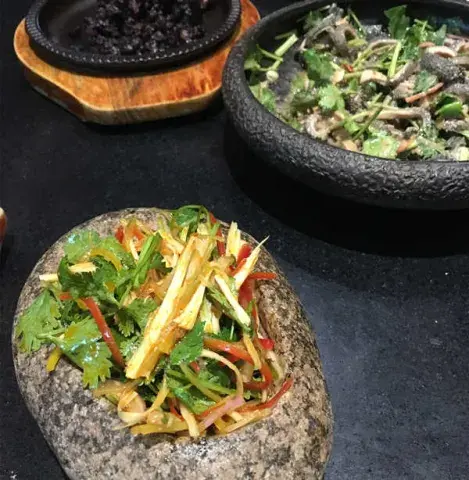
Fishwort is one of the best-known wild plants used in Yunnan cuisine. The leafy vegetable is also commonly used in foods in Guizhou and Guangxi, but due to its strong “fishy” taste it is not enjoyed countrywide. It is often served as a cold salad after being washed, diced and tossed with sauces. In spite of its notorious taste, many eaters order it Yunnan restaurants only to leave the dish barely touched.
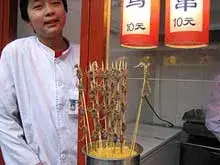
Flowers, ferns, algae and insects are also seen in the cuisine. Insects may not be the most appetizing materials for a dish, but to some degree their culinary use reflects Yunnan’s character. Blessed with a favorable climate, Yunnan’s people rely on their natural environment rather than more popular commercially grown foods.
Yunnan’s beauty is praised in many travel books, and it is considered China’s most romantic province. Yunnan offers a perfect mixture of softness, peculiarity and unaffectedness – just like its cuisine, a perfect mixture of freshness, spice and originality.