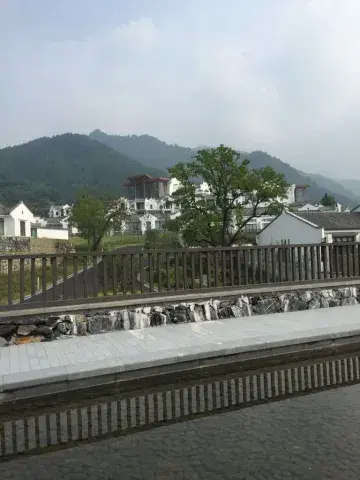


Ban Yan Tree Hotel

My last clients and guests lived there last week in the end of August, 2015. To be honest, the housing and architecture are not that akin to HUI architecture and most of decorations and horticulture are still on construction, which bring some bad impression on visitors' mind. Compared with other ...

My last clients and guests lived there last week in the end of August, 2015. To be honest, the housing and architecture are not that akin to HUI architecture and most of decorations and horticulture are still on construction, which bring some bad impression on visitors' mind. Compared with other Banyan Tree villas, this one near Hongcun village is of not satisfactory service including food and others.

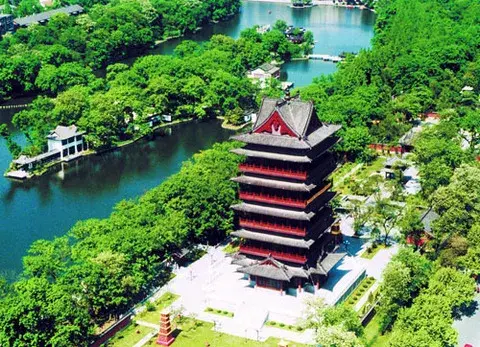
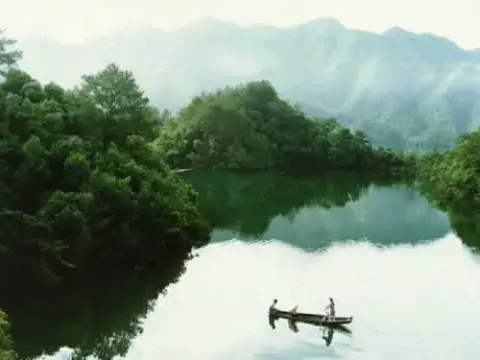
Veiled in mist and cloud, the ethereal beauty of Mount Huangshan has endured throughout the ages. Eloquently portrayed in classic Chinese ink paintings and poems, its surreal scene of peculiarly shaped granite peaks, resilient-angled pines, sunrises and sunsets continue to mesmerise and strike a chord in many hearts. After bathing in ‘Buddha's Light', a magnificent sunrise phenomenon at Mount Huangshan, climb the iconic Hundred-step Cloud Ladder to the Jade Screen Peak and give a salutatory nod to the 1,500 year old Welcoming-Guest Pine on your way to the Lotus Peak. At this 1,873 metre-high summit, witness the awe-inspiring sea of clouds with the world at your feet. A UNESCO World Heritage Site, complete your Mount Huangshan experience with a spot of flora and wildlife viewing, a dip in the Purple Cloud Peak hot springs and sips of Fur Peak Tea. Visit Xidi and Hongcun ancient villages, both UNESCO World Heritage Sites, the preserves of traditional Chinese villages from the Ming and Qing dynasties and the authentic embodiments of regional culture and architectural style.

It needs time to make those ideas come alive and true.

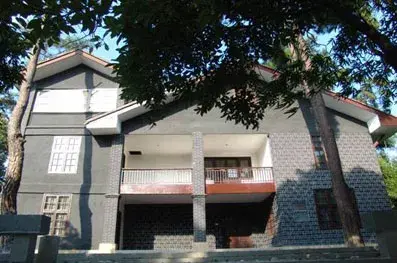
Chiang Kai-Shek's Residence

Chiang Kai-shek(October 31, 1887 – April 5, 1975) was a political and military leader of 20th century China.

He was an influential member of the Kuomintang and Sun Yat-sen's close ally.

He became the commandant of Kuomintang's Whampoa Military Academy and took Sun's place ...

Chiang Kai-shek(October 31, 1887 – April 5, 1975) was a political and military leader of 20th century China.

He was an influential member of the Kuomintang and Sun Yat-sen's close ally.

He became the commandant of Kuomintang's Whampoa Military Academy and took Sun's place in the party when the latter died in 1925. In 1928, Chiang led the Northern Expedition to unify the country, becoming China's overall leader.

He served as chairman of the National Military Council of the Nationalist Government of the Republic of China (ROC) from 1928 to 1948.

Chiang led China in the Second Sino-Japanese War, during which the Nationalist Government's power severely weakened, but his prominence grew.

Chiang's Nationalists engaged in a long standing civil war with the Chinese Communist Party (CCP).

After the Japanese surrender in 1945, he attempted to eradicate the CCP.

Ultimately, bolstered by support from Soviet Russia, the CCP defeated Chiang, forcing the Nationalist government to retreat to Taiwan, where martial law was continued while the government still tried to take back mainland China.

Chiang ruled the island with an iron fist as the President of the Republic of China and Director-General of the Kuomintang until his death in 1975.


Chiang Kai-Shek and wife Soong May-Ling


Chiang Kai-Shek's Residence in Huangshan

Bus:NO.384