Shanghai Attractions

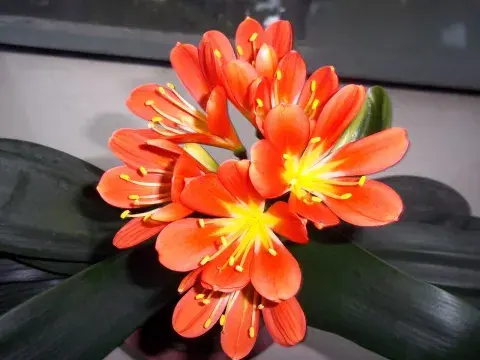
Shanghai Botanical Gardens
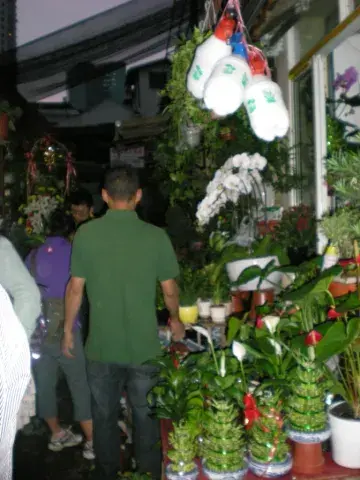
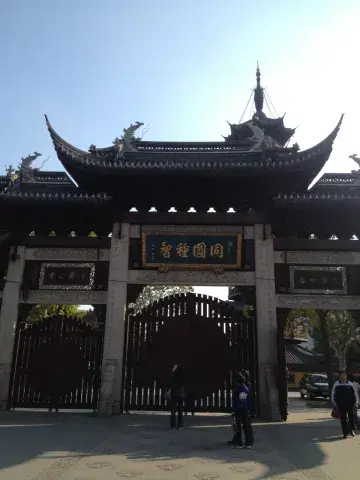
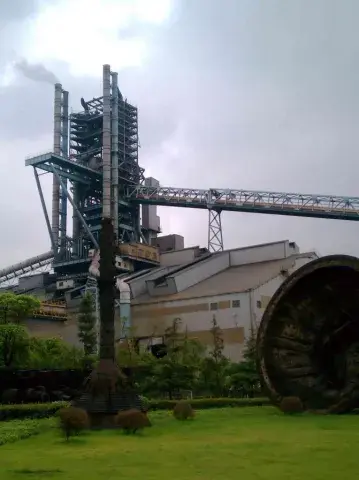
Located in the southern reaches of Xuhui district, Shanghai botanical gardens is tucked away from the main strips of the city. For those in desperate need of refuge from the noise and bustling pace of Shanghai, the botanical gardens guarantee a spot where visitors can enjoy much needed pe...
Located in the southern reaches of Xuhui district, Shanghai botanical gardens is tucked away from the main strips of the city. For those in desperate need of refuge from the noise and bustling pace of Shanghai, the botanical gardens guarantee a spot where visitors can enjoy much needed peace and quiet.
15RMB is the entrance fee to the park, but for 40RMB an "all-access ticket" makes all areas available including the “Tropicanium” conservatory. Situated in the northeast section of the park, this giant greenhouse is an authentic taste of the tropics, complete with mosquitoes! The greenhouse’s interior is so warm that a rather impromptu and rapid stripping off of clothing often takes place just inside the entrance, much to the amusement of the Chinese staff.
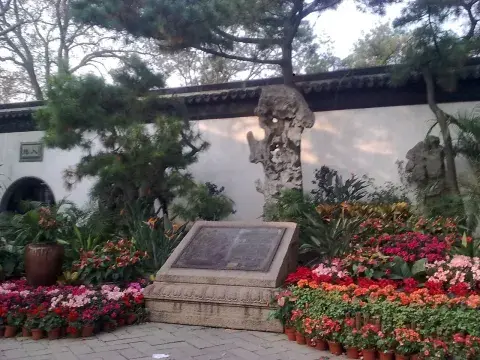
For true tranquility, find Penjing Garden which offers a place to perch, to reflect, or to snooze whilst enjoying the Bonsai trees.
Official Website (Only in Chinese)
Take metro line 3 to Shilong Lu station then follow tourist maps.
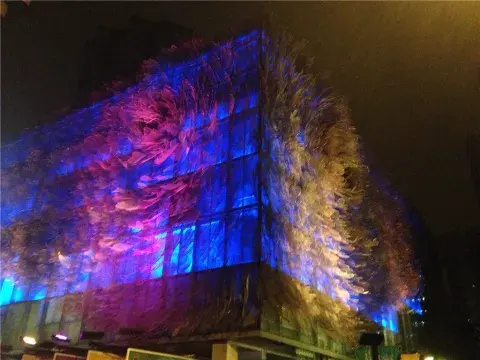
Shanghai Articles
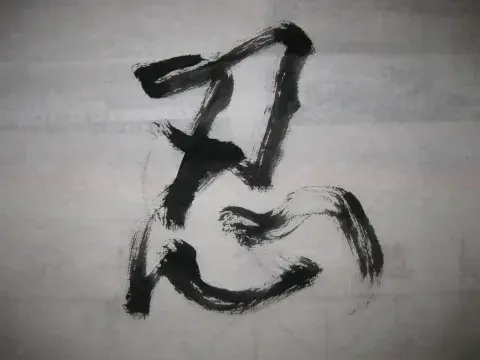
Chinese Calligraphy
Chinese written characters are pictographic symbols of spoken words. Calligraphy is the art of writing characters in an expressive manner employing the use of the brush.
...Chinese written characters are pictographic symbols of spoken words. Calligraphy is the art of writing characters in an expressive manner employing the use of the brush.
The most ancient written characters were written on oracle bones, or were inscriptions on bronze vessels found in the Shang and Zhou dynasties (16th century – 776 B.C.). It was during the late Warring States, Qin, Han, Wei, Jin, Northern and the Southern Dynasties (475 B.C. – A.D.581) that official, cursive, running and regular scripts developed. Thus a multi-script system evolved for Chinese written characters. Different scripts were used for different regions and for different times, and this diversity let newer forms take root and flower.
The aesthetic appeal was already present in the inscriptions on oracle bones and bronzes. During the Han and Wei dynasties, this developed further from a natural style to one of deliberate expression. Numerous calligraphers emerged in the Jin, Sui and Tang dynasties (A.D.265 – 907) and the theoretical study of calligraphy became important. Most notable was the establishment of certain models and rules for cursive and regular script.
The conventions of the Jin and Tang dynasties continued into the Song, Yuan and Ming dynasties (A.D.960 – 1644) with a focus on the expression of personal feeling and incorporation of poetic and artistic genius. The development of these skills and moods in calligraphy inspired new calligraphic schools and styles.
The unique Qing (A.D.1644 -1911) style of calligraphy was centered upon the study of the more ancient styles and inscriptions found on steles. The stone steles of the Northern Wei were particularly popular in the late Qing and when combined with the traditions of “tie” rubbings and the multi-script system, ushered in a bolder, more vigorous calligraphic stlye.
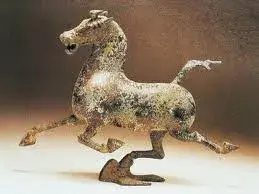
Chinese Bronze Ware
Epitomizing China’s ancient civilization and rich cultural heritage, bronze artifacts have been treasured items ever since the time of the Shang and Zhou aristocrats for whom they were made.
...Epitomizing China’s ancient civilization and rich cultural heritage, bronze artifacts have been treasured items ever since the time of the Shang and Zhou aristocrats for whom they were made.
Ritual bronzes served as ceremonial offerings to ancestors, as banquet utensils, and occasionally as formal gifts. Members of China’s nobility possessed sets of bronzes, the sizes and types of which conveyed the social status of their owners.
Bronze Age artisans mastered complex casting techniques and produced vessels with rich decoration. In the period from the fifth to the third century BC, China’s Iron Age began, but the metal industry was still dominated by bronze casting.
Many bronzes have been found in the border areas of China. Characterized by distinctive shapes and local styles these bronzes exhibit the artistic achievements of minority peoples living in the border areas, and they also supply valuable evidence of cultural exchanges among the different nationalities of ancient China.
Around the 21st century BC, China entered the Bronze Age. The earliest Chinese bronze culture so far known is the Erlitou culture of the late Xia dynasty. Bronze containers, musical instruments, weapons, tools, and personal ornaments, as well as foundry remains, have been found at the Erlitou site in western Henan province.
Ritual bronzes of the period were thin-walled and cast by a clay piece-mold technique that was already mature. Their forms began to show decided character. The animal-mask motif appeared at this stage, as did the use of turquoise inlay.
During the early and middle Shang dynasty, bronze casting evolved further. Rituals that mainly involved wine vessels became important, and bronze weapons increased in variety. The animal-mask motif decorated many bronzes, executed with bold, deeply-cut linear elements and becoming ever more complex. The mold-making process became sophisticated, and an ingenious technique was developed for casting a complicated shape in a sequence of separate pours of metal. Many bronzes dating from this time have been unearthed along the middle reaches of the Yellow and Yangtze rivers.
The late Shang and early Western Zhou dynasties witnessed the zenith of Chinese bronze casting. During this period the sets of bronzes used in ritual (originally mainly wine vessel) changed. Although at first the early Western Zhou people followed the Shang ritual system, they gradually developed ceremonies in which food containers played an important role.
Using techniques that produced both high and low relief, artisans designed bronzes entirely covered with elegant patterns. They also further refined the mysterious animal-mask motif. Inscriptions first appeared on late Shang bronzes. The inscriptions on Western Zhou bronzes are often lengthy.
The Chinese bronze tradition enjoyed a second flowering beginning in the middle Spring and Autumn period. As the bronze industries in the feudal states matured, regional styles with unique characteristics arose. Bronzes cast in the northern states of Jin and Qin, the eastern states of Qi and Lu, and the southern state of Chu reflect a mutually beneficial exchange of ideas and materials, and their bronze arts achieved great splendor.
While the ritual functions of the bronze vessels gradually diminished, their use as daily utensils increased, with the result that new and delicate vessel types appeared. Decorative dragon patterns became minute and intricate, and scenes of daily life were used for the first time as bronze decoration. The lost-wax technique and the use of impressed molds enabled artists to obtain rich inlay decoration of unsurpassed delicacy and intricacy.
During the Eastern Zhou, Qin, and Han dynasties bronze casting flourished among the minority peoples inhabiting the border areas of China. The Yue minorities in the south, the Ba-Shu in the west, the Yi in the southwest, and the Xiongnu in the north all developed their own bronze-casting industries. Their bronzes were deeply influenced by the Shang and Zhou traditions of the Central Plains, but they also showed unique features and styles. Exchanges between the border areas and the Central Plains inspired lively and inventive works of bronze art.
Mining, smelting, and casting reached high levels of technology in ancient China. The proportions of copper, tin, and lead in bronze, the first invented alloy became perfected as time passed. Stone, clay, and metal molds were used, with clay piece-molds being highly developed. Great expertise was required in the choice and combination of materials, the making of models and molds, the carving of inscriptions and decoration. The main casting techniques were one piece casting, casting in several pours, and stack-casting. Bimetallic casting showed the skilled use of different alloy formulas. Magnificent surface decoration for bronzes resulted from inlaying and gilding techniques. Lost-wax casting was an important advance in foundry technique. The transparent “mirror of the Western Han with its unique optical properties, might be described as a last afterglow of China’s extraordinary Bronze Age.
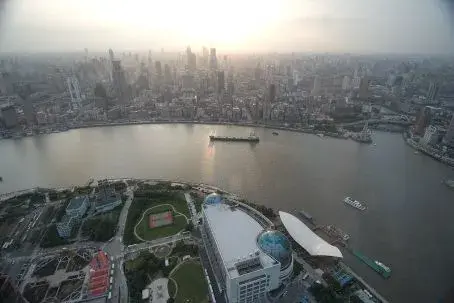
Cruising on the Huangpu River
When the Huangpu River is wrapped up in the dim light of the night, the noise and busyness on it under the scorching sun in the daytime fades out and the twinkling neon light in the deepening dim light of the night covers it in a mysterious veil....
When the Huangpu River is wrapped up in the dim light of the night, the noise and busyness on it under the scorching sun in the daytime fades out and the twinkling neon light in the deepening dim light of the night covers it in a mysterious veil. All sorts of feelings are bound to be well up in the mind of many people getting acquainted and well acquainted with such beautiful scenery, which forms an interest regardless of overlooking it, enjoying the sight of it nearby or seeing it from afar. Appreciating the beauty of the scenery of the Huangpu River has unconsciously become a fashionable act, for which tourists scramble. --- So, someone said that the best place for appreciating the beauty of scenery of the Huangpu River is not on the Bund and the Riverside Avenue but rather on the cruisers on the Huangpu River.
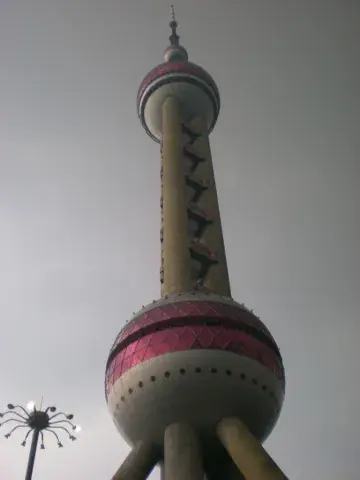
Going boating on the Huangpu River and having a panoramic view of the landscape on either bank of the river. On the one side, are the cluster of buildings standing lofty on the Bund, the famous Waibaidu Bridge and the Huangpu Park – the earliest park in Shanghai – and on the other side are the Oriental Pearl TV Tower, the Pudong New Area in development and the cluster of skyscrapers in Lujiazui. Looking ahead, you can see large ships from all over the world being in the thousands of postures and sprinkling over the surface of the river, presenting a splendid view. Cruising along the river, you can see the busy Shanghai Port International Cruise Terminal, the row upon row of docks, the site of Wusong old battery and the confluence at the Mouth of the Yangtze River composed of green seawater, yellow Yangtze River and the dark blue Huangpu River water.
The Huangpu River, literally “Yellow Bank River”, is a 97km-long river flowing through Shanghai, dividing the city into Puxi (West) and Pudong (East). It is the last significant tributary of the Yangtze River before it empties into the East China Sea.
Top Shanghai Tours
$238 Per Day
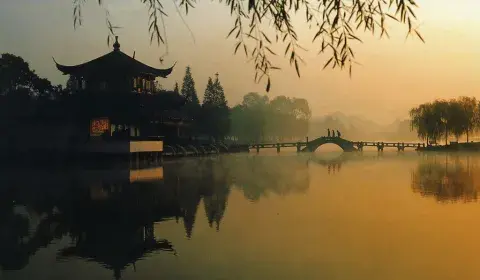
Private Hangzhou Day Trip from Shanghai by Bullet Train
Take in the highlights of beautiful Hangzhou on a private full-day tour from Shanghai. After hotel pickup and transfer by high-speed train to Hangzhou, your private guide takes you to see some city attractions, such as Faxi temple. Moreover, enjoy a tasty lunch at a local restaurant before heading to Longjing village. There, learn about the process of farming and producing dragonwell tea, the region’s most famous product. Finally, enjoy a scenic boat cruise on UNESCO World Heritage-listed West Lake before returning to Shanghai.
...Read more
Take in the highlights of beautiful Hangzhou on a private full-day tour from Shanghai. After hotel pickup and transfer by high-speed train to Hangzhou, your private guide takes you to see some city attractions, such as Faxi temple. Moreover, enjoy a tasty lunch at a local restaurant before heading to Longjing village. There, learn about the process of farming and producing dragonwell tea, the region’s most famous product. Finally, enjoy a scenic boat cruise on UNESCO World Heritage-listed West Lake before returning to Shanghai.
This is a private, full-day trip from Shanghai to Hangzhou. After you are picked up in your hotel lobby in the early morning, you will take a bullet train to Hangzhou. This is the fastest way to Hangzhou and you can experience train speeds of up to 300 kilometers per hour. Your tour begins at one of Hangzhou's signature sites, the West Lake. Enjoy a lake cruise to see the top ten West Lake scenic views. You will then be taken to experience the wonderful cuisine of Hangzhou at a local restaurant. After lunch, you will visit Faxi temple, a well-known Temple dating back to the Jin Dynasty. See its famous wooden Buddha. Here, you will see fewer tourists and more locals. Finally, enjoy a cup of green tea when you visit the famous Longjing village to see wild fields of Longjing tea bushes where the locals produce the world famous green tea- Longjing Tea. In the village, all locals are tea farmers and you will see the entire procedure of making the famous tea and will get the chance to taste the best quality emperor tea. Afterwards, you will take the bullet train back to Shanghai and you will be returned to your hotel.
$70 Per Day
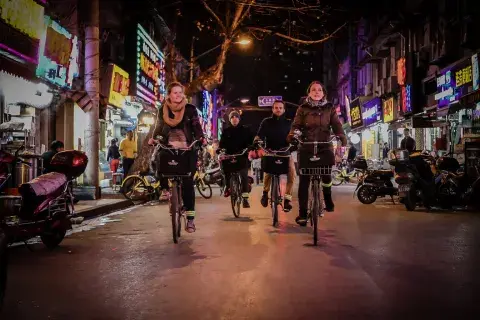
Bike Tour - "Shanghai by Night"
What would be a better way to experience the “City That Never Sleeps” than hopping on one of our vintage Forever bicycles and explore a whole New World after dark?...Read more
What would be a better way to experience the “City That Never Sleeps” than hopping on one of our vintage Forever bicycles and explore a whole New World after dark? Follow our foreign expert Tour Leader on a multi-themed route from the narrow streets of the Old Town all the way to the dazzling lights of the Bund. Meanwhile, cycle around the famous landmark Yu Garden, learn about Ghost Wedding rituals, visit a Traditional Chinese Medicine outlet and get to learn more about the "Paris of the East". Finally, tickle your taste buds with some delicious street food in order to immerse yourself deeper into local life. In just one evening, we'll explore the many faces of Shanghai that make this city so unique. Easy and accessible ride for all!
USEFUL INFORMATION
- English-speaking (for other languages, please contact us)
- About 9 km ride, easy ride for all.
- From 18:15pm to 21:30pm
- Up to 6 participants
- Departure and arrival at our Culture Shock Office in Xintiandi district.
- Minimum height is 1.50m. Tandem bikes are available for kids below 12
- Prices are all inclusive (Snack food, a bottle of water, a foreign experienced guide, a helmet and single-gear vintage bike rental with all lights)
- Join-in Group every Tuesday/Friday/Saturday (USD 70 per person)
- Private Tour possible every day (USD 210 in total for 2 participants)