Tour Description
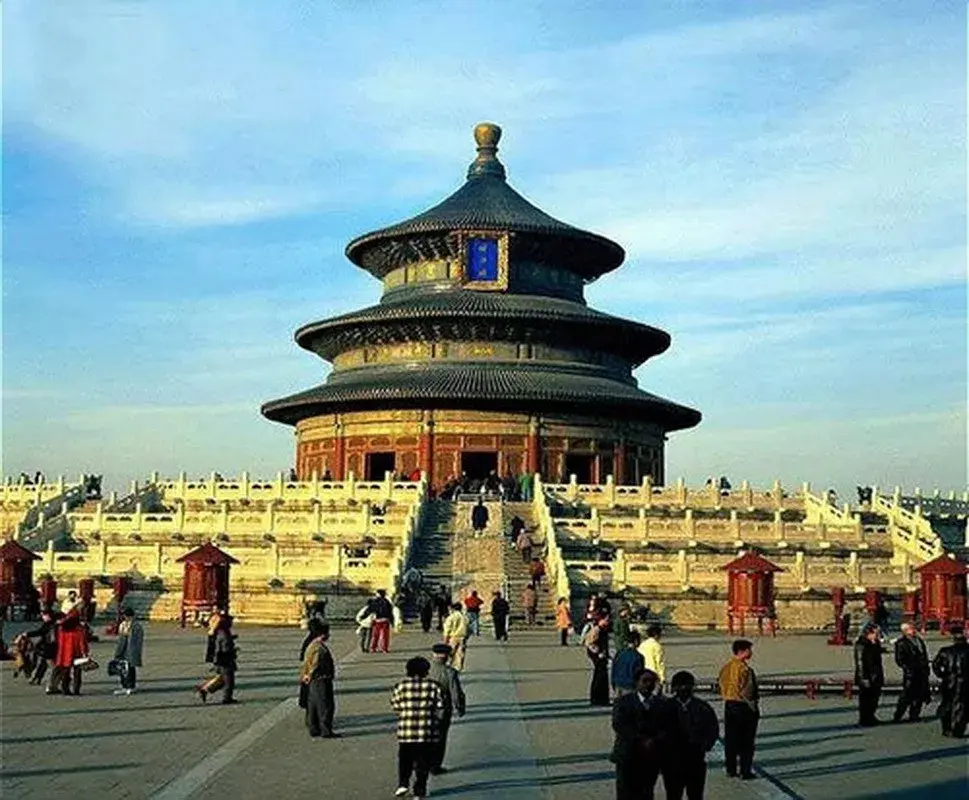
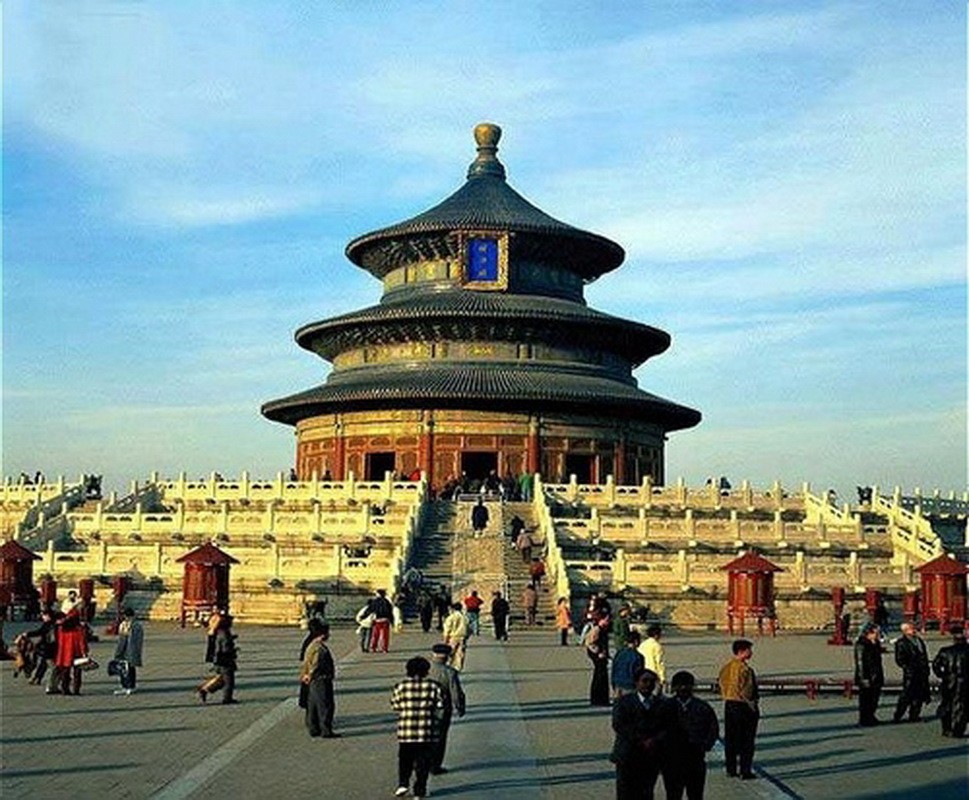
The Temple of Heaven
The Temple of Heaven is the largest existing architectural complex in the world for the purpose of praying to heaven for good harvests. It was included in the World Heritage List by UNESCO in December 1998.
Located to the southeast of the Forbidden City, the Temple of Heaven was where emperors of the Ming (1368-1644) and Qing (1644-1911) Dynasties worshipped heaven. It covers 273 hectares; the layout is circular in the north and square in the south to symbolize the circular heaven and the square earth. The compound has two surrounding walls; the main buildings for worship are located within the inner wall. The main buildings - the Circular Mound Altar in the south and the Altar of Prayer for Good Harvests in the north - are linked with a 360-meter-long passage, called Danbiqiao or Red Stairway Bridge. To the west of the Altar of Prayer for Good Harvests lies the Hall of Abstinence; to the southwest are the Divine Music Administration and the Department for Sacrifices.
The Chinese have a long history of worshipping heaven. Because the rulers of the Western Zhou Dynasty (11th Century-771 BC) claimed that they were empowered by heaven, the worship of heaven was continued by almost all state rulers as a way to uphold their right of administration.
The Summer Palace
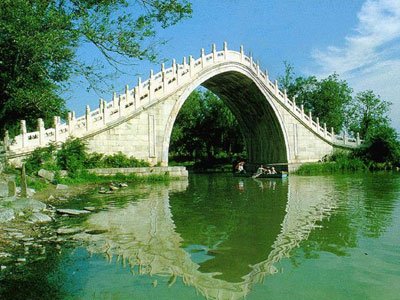
Situated in the western outskirts of Haidian District, the Summer Palace is 15 kilometers (9.3 miles) from central Beijing. Containing examples of the ancient arts, it also has graceful landscapes and magnificent constructions. The Summer Palace is the archetypal Chinese garden, and is ranked amongst the most noted and classical gardens of the world.
Constructed in the Jin Dynasty (1115-1234), during the succeeding reign of feudal emperors; it was extended continuously. By the time of the Qing Dynasty (1644-1911), it had become a luxurious royal garden providing royal families with rest and entertainment. Like most of the gardens of Beijing, it could not elude the rampages of the Anglo-French allied force and was destroyed by fire. In 1888, Empress Dowager Cixi embezzled navy funds to reconstruct it for her own benefit, changing its name to Summer Palace (Yiheyuan). She spent most of her later years there, dealing with state affairs and entertaining. In 1900, it suffered again, being ransacked by the Eight-Power Allied Force. After the success of the 1911 Revolution, it was opened to the public.
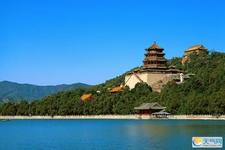
Composed mainly of Longevity Hill and Kunming Lake, The Summer Palace occupies an area of 294 hectares (726.5 acres), three quarters of which is water. Guided by nature, artists designed the gardens exquisitely so that visitors would see marvelous views and be amazed by perfect examples of refined craftwork using the finest materials.
Centered on the Tower of Buddhist Incense (Foxiangge) the Summer Palace consists of over 3,000 structures including pavilions, towers, bridges, and corridors. The Summer Palace can be divided into four parts: the court area, front-hill area, front-lake area, and rear-hill and back-lake area.
hutong
beijing 's hutongs, lanes or alleys formed by lines of siheyuan (a compound with houses around a courtyard) where old beijing residents live, witness the vicissitude of the city.
the word "hutong" originates from the word "hottog" which means "well" in mongolian. villagers dig out a well and inhabited there.
the gray-tiled houses and deep alleys crossing with each other in identical appearance like a maze, you will find it much fun to walk through but be care not to lost yourself.
Attractions Visited in This Tour