Potala Palace
Tours That Go to Potala Palace
Adventure to Mt. Everest
-
Tour Itinerary
Day 1 : Lhasa
Lhasa
Arrival in Lhasa, you will be met and transferred to your hotel for three nights stay. The rest of the day at own leisure to acclimatize the local condition.
4* Tibet Hotel (Or the same class)
Dinner
Day 2 : Lhasa
Lhasa...Read more
-
Tour Itinerary
Day 1 : Lhasa
Lhasa
Arrival in Lhasa, you will be met and transferred to your hotel for three nights stay. The rest of the day at own leisure to acclimatize the local condition.
4* Tibet Hotel (Or the same class)
Dinner
Day 2 : Lhasa
Lhasa
The first stop of today's tour is Potala Palace-the home of the Dalai Lamas, which dates back to the 7th century and looms large over the city of Lhasa. After the visit move on to Norbulingka, the Dalai Lama's summer palace. In the afternoon, we visit Jokhang Temple, the home of the most precious Buddha image the country possesses-the Sakyamuni Buddha. We also take a stroll at Barkhor Square in the center of Lhasa to absorb the local culture.
4* Tibet Hotel (Or the same class)
Breakfast / Lunch / Dinner
Day 3 : Lhasa
Lhasa
Today we will visit the Drepung Monsatery which used to be the largest and wealthiest monastery in Lhasa. In the afternoon tour to Sera Monastery, which was once rival to Drepung Monastery.
4* Tibet Hotel (Or the same class)
Breakfast / Lunch / Dinner
Day 4 : Lhasa/Gyangtze
Lhasa/Gyangtze
Car trip to Gyantze, the third city in Tibet. We will visit Kampala Pass and enjoy the breath-taking view of Yamdrok Lake on the way and in the afternoon we visit Palkor Temple, which was built in the 14 th Century. Stay at Gyantze Hotel for one night. Picnic lunch today.
3* Gyangtze Hotel (Or the same class)
Breakfast / Lunch / Dinner
Day 5 : Gyangtze/Shigatze
Gyangtze/Shigatze
Car trip to Shigatze which once rivalled Lhasa for the political and spiritual control of Tibet. Visit Tashihunpo Monastery in the afternoon
4* Shigatze Hotel (Or the same class)
Breakfast / Lunch / Dinner
Day 6 : Shigatze/Tingri
Shigatze/Tingri
Transfer to Dingri and check in at your hotel. Visit the Sakya Monastery and Lhatse city on the way. Two nights stay in Tingri.
Everest Hotel (Or the same class)
Breakfast / Lunch / Dinner
Day 7 : Tingri/Everest Base Camp/Tingri
Tingri/Everest Base Camp/Tingri
Transfer to the Everest Base Camp and visit Rongbuk Monastery which is the highest monastery on the earth and houses Lamas and nuns in the same monastery.
Everest Hotel (Or the same class)
Breakfast / Lunch / Dinner
Day 8 : Tingri/Lahsa
Tingri/Lahsa
Drive along the Yalutsangpu River to Lhasa.
4* Tibet Hotel (Or the same class)
Breakfast / Lunch / Dinner
Day 9 : Lhasa/Yangpachen/Damxiong
Lhasa/Yangpachen/Damxiong
Visit Yangpachen Hot Spring and the Yangpachen Monastery. Trekking on the grasslands at Yangpachen.
Jin Zhu Hotel (Or the same class)
Breakfast / Lunch / Dinner
Day 10 : Damxiong/Namtso Lake/Lhasa
Damxiong/Namtso Lake/Lhasa
Drive and trek to Namtso Lake to enjoy the spectacular view of the surrounding snow-capped peaks. Drive back to Lhasa for one more stay.
4* Tibet Hotel (Or the same class)
Breakfast / Lunch / Dinner
Day 11 : Depart Lhasa
Depart Lhasa
Transfer to the airport for the flight to your next destination. The Everest Adventure Tour ends here.
Breakfast
Lhasa - Nyingchi - Lulang town
Description :Easy accessibility, good accommodation, comparatively lower altitude, mild and pleasant climate, beautiful natural scenery There is every reason for you to come and take a visit to the mysterious land.
...Read moreDescription :Easy accessibility, good accommodation, comparatively lower altitude, mild and pleasant climate, beautiful natural scenery There is every reason for you to come and take a visit to the mysterious land.
Day 1 Lhasa (No meal included)
Upon your arrival, our guide will meet you and transfer you to the city center.
Hotel Option
Four Points by Sheraton Lhasa Hotel / Lhasa Hotel / Yak hotel Lhasa
Day 2 Lhasa (B, L)
Visits : Potala Palace, Barkhor Street, Jokhang Temple
Today visit Potala Palace which is the symbol of Lhasa. After having lunch pay a visit to Jokhang Temple, the first Buddhist temple in Lhasa and China's key cultural relic for protection and a world cultural heritage. Then enjoy a stroll along the Barkhor Street nearby which is the favorite place for all visitors.
Hotel Option
Four Points by Sheraton Lhasa Hotel / Lhasa Hotel / Yak hotel Lhasa
Day 3 Lhasa (B, L)
Visits : Drepung Monastery
This morning pay a visit to Drepung Monastery (Vault of the Crops in Tibetan). It is famous for the debates on Buddhist doctrines frequently held, which is also known as the Tibetan Library. After having lunch travel to Sera Monastery. It is known as one of the three greatest monasteries of Tibet and the representative temple for Gelugza. There are lots of Buddhist sutras, Buddhist instruments, Cassocks, gold and silver articles inside this temple.
Hotel Option
Four Points by Sheraton Lhasa Hotel / Lhasa Hotel / Yak hotel Lhasa
Day 4 Lhasa -> Nyingchi (B, L)
Today you will be driven to Nyingchi. On the way you will see Tianfo Waterfall and Batsom Lake, a Jade like lake which will show you how sweet the water in Nyingchi is.
Hotel Option
Linzhi Shambhala Hotel / Linzhi Shambhala Hotel / Linzhi Shambhala Hotel
Day 5 Nyingchi -> Lulang town -> Lhasa (B, L)
After enjoying your breakfast you will be driven to Lulang town. You will visit Lunang Forest Sea. With densely growing trees, it is one of the eight biggest forests of China. Then you will be transferred to Lhasa by private car.
Hotel Option
Four Points by Sheraton Lhasa Hotel / Lhasa Hotel / Yak hotel Lhasa
Day 6Lhasa (B)
Free till being transferred to the airport. End of the fabulous tour in Tibet.
14-day China Holy Tibet Tour
Day 1 Arrive in Tsetang
Upon arriving at Gongga Airport, accommodate at your hotel in Tsetang (90 km). Located in the southeast of Lhasa, Tsetang is 3,500 meters high. It was said the legendary ancestors of Tibetans, a monkey (Bodhisattva Avalokitesvara in the shape of a monkey) and his wife a Dakhini once lived on the Gongpori mountain in the east of the city. And so the city of Tsetang is regarded as the “Playground of Monkeys” and the Tibetans as the descended of the Monkey....Read more
Day 1 Arrive in Tsetang
Upon arriving at Gongga Airport, accommodate at your hotel in Tsetang (90 km). Located in the southeast of Lhasa, Tsetang is 3,500 meters high. It was said the legendary ancestors of Tibetans, a monkey (Bodhisattva Avalokitesvara in the shape of a monkey) and his wife a Dakhini once lived on the Gongpori mountain in the east of the city. And so the city of Tsetang is regarded as the “Playground of Monkeys” and the Tibetans as the descended of the Monkey.
In terms of geography, the fertile valleys of Yarlung and Chongye here are appropriate for development of Tibetan civilization; there were once numerous temples, shrines and Stupas in this area. Besides, Chongye is the birthplace of the 5th Dalai Lama (1617-1682). Stay at your hotel for adapting to the high altitude. It is helpful to take things easy for the first few days, and try to drink some water.
Day 2 Tsetang
Morning: At first visit monastery Samye. Located in the north of Yarlung Tsangpo River and hold in the arms of mountains, it is the oldest monastery of Tibet (8th century). The stele hanging on the entrance to the main temple shows that king Trisong Detsen took Buddhism as the state religion in 779. The monastery complex consists of several buildings, whose arrangement reflects the Buddhist conception of the structure of the universe.
Afternoon: Make a trip to visit the Yumbulakhang, a castle built in the 7th and 8th centuries during the time of the first Tibetan kings. It is far viewed that the castle is high on the rock hills and looks brightly white. The original fortress is now converted into a chapel; in the ground floor there is a shrine in honor of the early kings. The steps up are steep but it is worthy because on the top of the hill you can far view the valley and the surrounding mountain.
The Potala Palace
Day 3 Tsedang,Lhasa
After breakfast drive to Lhasa, the capital of Tibet. On the way visit Mindrolin Monastery. It was built in the late 10th century and had its current name when it was rebuilt in 1677. It is one of the three great monasteries of the Nyingma Sect. The monastery has paid attention to the research of Buddhist classics, astronomical calendar, calligraphy rhetoric and Tibetan medicines and is famous for its achievements in these fields. Over the years the recommendation of the “Chronology of the Tibetan Calendar” has been formulated by the monastery, and it is famous as the first academy of Lamaism in Tibet.
Day 4 Lhasa
Morning: Visit Potala, which was originally constructed in 637 by Songtsen Gampo, the first king of the united Tibet, and later expanded and served as the winter residence of the Dalai Lamas as well as the religious-political nexus of traditional Tibet. The crowds of pilgrims, innumerable magnificent murals, Buddhist statues, scriptures and rare treasures altogether create a dense religious and art atmosphere that impresses every visitor.
Afternoon: Visit Jokhang monastery, the center of the Tibetan Buddhism and the sacred land of Buddhist followers where thousands of pilgrims come for worship everyday. The temple, built in 647, is the earliest wood-and-masonry structure still existing in Tibet. Walk on the Barkhor street surrounding Jokhang, a big free market with its prolific stalls for selling local specialties.
Day 5 Lhasa
Morning: Visit Drepung monastery the sacred land of Gelug Sect., which was established in 1416 and the second, third and fourth Dalai Lama once resided in. Afterwards visit Norbulingka, the summer residence of the Dalai Lamas.
Afternoon: Visit Sera monastery, which was created in 1419 and has always been an important Buddhist seminary. As rose are planted everywhere in the monastery, it is also called “the court of wild rose”. Today still 200 lamas live in there. The "Buddhism Scriptures Debate" in Sera is very famous.
Day 6 Lhasa
In the morning drive to visit Ganden Monastery, which was built by Tsongkhaba in present-day Dagaze County to the east of Lhasa in 1409 soon after the Monlam Festival was over. Ganden is one of the three main monasteries of Gelug Sect. Anyhow, different from Drepung and Sera, it once played a more prominent political role in Tibetan history.
The abbot of this monastery possess of a high religious position within the system of Gelug Sect, just inferior to Dalai and Panchan. The monastery was reconstructed in 1993 and restored its original appearance. The holy stupa of Tsongkhaba is just in the monastery. On the way visit the Dark Yerpa Monastery, where you’ll visit the famous ancient meditation caves in the spectacular limestone cliffs of the Yerpa Valley.
The Nam Tso Lake
Day 7 Lhasa,Nam Tso,Lhasa
In the morning drive to Nam Tso Lake along the Qinghai-Tibet Highway. Pass by the 5,150-meter Lhachen La and reach the Nam Tso or Tengri Nor (heaven lake in Mongolian) along the newly paved way and set up camp at Tashi Dorie peninsula. Nam Tso, the biggest salty lake of Tibet, is 70 kilometers long from east to west and 30 kilometers wide from north to south, covering an area of 1,920 square kilometers with an altitude of 4,700 meters above sea level.
It is said the holy lake and the holy mountain Nyenchen Tanglha are a couple of lovers, who altogether guard the vast pasture and cattle. Explore the Tashi peninsula by walking around the holy hill, the cliffs of which have eroded over the centuries. On the way piles of mani stones stand. Also visit the nomads in yak hair tents who have been living on the pastures between the holy Nam Tso and Nyenchen Tanglha . Drive back to Lhasa.
Day 8 Lhasa,Yamdrok Lake,Gyantse
Drive to Gyantse. On the Kamba La (4796 m) have a fantastic view of the holy lake Yamdrok (4,441 m), one of the three holy lakes in Tibet and the largest habitat of waterfowls in south Tibet. On arriving, visit Pelkor Monastery as well as the splendid Kumbum Stupa (100-Thousand-Buddha Pagoda) nearby, both of them built in the 15th century and situated in the northwestern edge of Gyantse.
This typical Tibetan Buddhist monastery is the only one large building complex in Tibet that old monastery and stupas are completely preserved and characterized as a monument. It is recorded 14,000 kilograms of copper was used to make the 8-meter-high sitting statue of Sakyamuni Buddha housed in the grand hall of the temple. The 8-storey stupa is 42m high and 62m in diameters contains a total of 76 chapels with wonderful murals revered by art scholars around the world.
Day 9 Gyantse,Shalu Monastery,Shigatse
Morning: Drive to Shalu monastery, situated 20 kilometers (12 miles) southeast of Shigatse, is a perfect combination of Han and Tibet architectural styles. It was built in 1087 by Jigzun Xerab Qoinnyai. Then drive to Shigatse (3,880 m), the second largest city with 40,000 inhabitants in Tibet and the traditional capital of the Tsang.
Afternoon: Visit Tashilhunpo monastery of Gelug Sect, the seat of the Panchen Lama built in 1447 and one of the six grand monasteries in Tibet. The monastery houses a giant statue of the Maitreya Buddha, the biggest gilded statue of Maitreya (Buddha of the future) in China, and a tomb of the 4th Panchen Lama containing masses of jewels and gold. In Tibet Buddhism, Panchen Lama is just the reincarnation of Maitreya Buddha.
Day10 Shigatse,Sakya,Shegar
In the morning drive to Sakya Monastery (4.280 m), the master monastery of the Striped Sect, it is well famed with its long history, large-scale construction complex and great influence in Tibet history. Its North Monastery was built in 1073 and named Sakya (meaning “gray” in Tibetan) as it was situated on a gray mountain. What we see today is the Sakya South Monastery built in 1269 by Phagpa. The outside walls of the monastery were painted with red, white and gray, symbolizing Avalokitesvara, Manjushri and Vajrapani. Then drive over Yalung La (4,520 m) and Gyathso La (5,220 m) to Shegar (new Tingri; 4.350 m; approx. 245 km).
Mt. Everest
Day 11 Shegar,Rongbuk,Mt. Everest
After breakfast drive to Rongbuk monastery, the highest monastery in the world. This evening you will have intoxicating view of the north face of Mt. Everest, (8848) the tallest mountain on earth. Overnight at guesthouse or tent guesthouse.
Day 12 Mount Everest Base Camp,Shigatse
In the morning, enjoy the sunrise from Mt. Everest. Then drive to the Base Camp of Mt. Everest for you to take a close look at this great mountain. And you could enjoy seeing the biggest and the most well perserved glacier- Rongbu if you are lucky enough for the weather.Back to Shigatse.
Day 13 Shigatse,Lhasa
After breakfast take a different route back to Lhasa.
Day 14 Leave Tibet
Transfer to the airport or the railway station, leave Tibet
21-day China Panorama Tour
Day 1 Arrive Beijing
Arrive in Beijing and accomodate at your hotel.The rest of the day is you can have a good rest or explore this dynamic metropolis on your own.
Day 2 Beijing...Read more
Day 1 Arrive Beijing
Arrive in Beijing and accomodate at your hotel.The rest of the day is you can have a good rest or explore this dynamic metropolis on your own.
Day 2 Beijing
Morning:This morning, you'll visit the world's largest urban center square, Tiananmen Square, which is a site where many major historical and celebratory events happened. Walk through the square to the Golden Water Bridge, you'll enter the largest as well as best-preserved imperial palace complex, Forbidden City. Once the palace of twenty-four emperors from the Ming and Qing dynasties, it not only exhibits the incomparable architecture arts and precious cultural relics, but also shows how the China ancient emperors administered the country and lived their lives 600 years ago.
Afternoon:In the afternoon, tour the Temple of Heaven, which is the largest ancient imperial worship architecture group in the world.If you have time, you can take a visit to the Summer Palace,the largest and most beautiful Chinese imperial garden.
Evening:Go to the Red Theatre to watch a lively Chinese Kung Fu Show.
Day 3 Beijing
Daytime:Visit the majestic Great Wall (Badaling section). Then go to the Ding Tomb of Ming Imperial Tombs and the Sacred road——"the way leading to Heaven",which is guarded on both sides with 12 stone statues.
Evening:Enjoy a famous Peking Duck banquet or kill time in a bar at the Houhai Area.
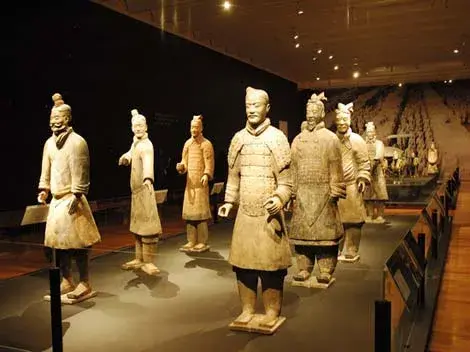
The Terracotta Warriors
Day 4 Beijing/Xian
Morning:Visit Hutongs by rickshaw to experience the original Beijing flavor.Two recommended Hutongs are Nanluoguxiang(the most popular Hutong in Beijing) and Yandai Xiejie(One of the most age-old streets in Beijing).
Afternoon:Take afternoon flight to Xi'an. You will arrive in Xian in one to two hours.After accomodating at your hotel,have a city tour to the Ancient City Wall,which is the best-kept and biggest city walls in China.
Day 5 Xi`an
Morning:The highlight of your tour today is the 'Eighth Wonder' of the world, Terracotta Warriors and Horses Museum, which is a huge underground military museum constructed as an accessory pit of Qin Shi Huang Mausoleum.A English-speaking guide is necessary for you to understand the greatness of the Terracotta Warriors.
Afternoon:In the afternoon, visit the Bell Tower and one of the landmarks of Xi`an, the Big Wild Goose Pagoda. Originally built to collect Buddhist scriptures, now the pagoda has been a symbol of this ancient capital city.
Evening:Enjoy a marvelous Tang Dynasty Dinner Show at the Tang Dynasty Palace.
Day 6 Lhasa
After breakfast,transfer to the airport to board a flight to Lhasa, capital of the Tibetan Autonomous Region.
Day 7 Lhasa
Morning: Visit Potala, which was originally constructed in 637 by Songtsen Gampo, the first king of the united Tibet, and later expanded and served as the winter residence of the Dalai Lamas as well as the religious-political nexus of traditional Tibet. The crowds of pilgrims, innumerable magnificent murals, Buddhist statues, scriptures and rare treasures altogether create a dense religious and art atmosphere that impresses every visitor.
Afternoon: Visit Jokhang monastery, the center of the Tibetan Buddhism and the sacred land of Buddhist followers where thousands of pilgrims come for worship everyday. The temple, built in 647, is the earliest wood-and-masonry structure still existing in Tibet. Walk on the Barkhor street surrounding Jokhang, a big free market with its prolific stalls for selling local specialties.
The Potala Palace
Day 8 Lhasa
In the morning drive to Nam Tso Lake along the Qinghai-Tibet Highway. Pass by the 5,150-meter Lhachen La and reach the Nam Tso or Tengri Nor (heaven lake in Mongolian) along the newly paved way and set up camp at Tashi Dorie peninsula. Nam Tso, the biggest salty lake of Tibet, is 70 kilometers long from east to west and 30 kilometers wide from north to south, covering an area of 1,920 square kilometers with an altitude of 4,700 meters above sea level.
It is said the holy lake and the holy mountain Nyenchen Tanglha are a couple of lovers, who altogether guard the vast pasture and cattle. Explore the Tashi peninsula by walking around the holy hill, the cliffs of which have eroded over the centuries. On the way piles of mani stones stand. Also visit the nomads in yak hair tents who have been living on the pastures between the holy Nam Tso and Nyenchen Tanglha . Drive back to Lhasa.
Day 9 Lhasa,Chongqing, Embark
Morning: Visit Drepung monastery the sacred land of Gelug Sect., which was established in 1416 and the second, third and fourth Dalai Lama once resided in. Afterwards visit Norbulingka, the summer residence of the Dalai Lamas.
Afternoon: transfer to the airport for your afternoon flight to Chongqing, the so called 'Mountain City’ and the start point of the Yangtze River Cruise.
Day 10 Yangtze River Cruise
Enjoy your Yangtze cruise! You will have a shore excursion to Fengdu, the “Ghost City”.
Day 11 Yangtze River Cruise
Today pass Three Gorges that namely Qutang Gorge, Wu Gorge and Shennong Stream .
The Yangtze cruise in Three Gorges
Day 12 Disembark,Yichang,Shanghai
Then it is time to pass through the locks of Three Gorges Dam, the climax despite of the nature sightseeing. You could really feel the might of the dam. After the visiting, disembark at Yichang and be transferred to the airport for your flight to Shanghai. Arrive in Shanghai and be transferred to the hotel to catch up on some rest.
Day 13 Shanghai
Morning:First visit Yu Garden.It used to be a private garden with 400 years' history, it features traditional architectural style of Yangtze Delta. Then go to Xintiandi,a pedestrian street composed of traditional street format of Shanghai Shikumen and modern development.
Afternoon:Visit Oriental Pearl TV Tower,which is the best viewing spot of Shanghai located by the Huangpu River with the height of 468 meters.
Evening:Visit the Bund——Shanghai 's famous waterfront to see new-erect modern skyscrapers and aged buildings of the colonial period.You can have a evening cruise of Huangpu River by takeing a ferry.The night scenery along the river is quite glorious.
Day 14 Suzhou
Get up early this morning, transfer to the train station for your express train to Suzhou (0.5 hour driving). Your sightseeing tour of ancient Suzhou starts with the visit to Lingering Garden, which is one of the great four gardens in China. And then, take a short visit to Suzhou Museum, the masterpiece of I.M. Pei. Afterwards, continue to Silk Factory to find out how silk is being made.
Day 15 Suzhou,Hangzhou
In the morning, you can spend some time to explore the old city. The Pinjiang Road is a good choice. In the early afternoon, transfer to the train station for your 2 hours train riding to Hangzhou, to explore the beauty there. On arrival, you can have a short stroll along the Hefang Ancient Street to take your first impression of this city. The street, which is much different with the old street in Suzhou, as it is a cobble street lined with traditional shops selling herbal medicines, handicrafts and silk products.
The West Lake
Day 16 Hangzhou
Enjoy your full day relaxing tour that covers the visit to the West Lake, Lingyin Temple , Liuhe Pagoda and Tea Museum.
Day 17 Guilin
Take a morning flight to Guilin. On arrival, visit the wonder Reed Flute Cave and Elephant Trunk Hill, the symbol of Guilin City. The Rice Noodle Banquet will be a good choice as an optional dinner if you wanna have a try.
Day 18 Guilin,Yangshuo
The highlight of today's sightseeing is a leisurely cruise down the Li River to Yangshuo. Meandering through valleys, bamboo groves and mysterious Karst rock formations, the cruise will affords you a glimpse of a life far removed from the concrete jungle. Stay overnight in Yangshuo. In the evening, if you are interested, you can enjoy the night show called Impression of Liu San Jie as an optional activity, or stroll in the West Street.
Day 19 Yangshuo,Guilin,Hong Kong
Enjoy your relaxing tour in this peaceful place. You will have a bus driving around to enjoy the countryside view (if you are interested, you can even choose take a cycling around the countryside and visit Moon hill and the Big Banyan Tree, etc). After lunch, be transfer to the airport for your afternoon flight to Hong Kong.
The Li River
Day 20 Hong Kong
Half day sit-in-coach tour to Victoria Peak, Aberdeen and Repulse Bay.
- Victoria Peak: the most popular tourist destination in HK. It features the city's of oldest mode transport, the 112-year old Peak Tram and Hong Kong 's most unusual building and icon, The Peak Tower. It combine shopping, restaurants, and entertainment.
- Aberdeen: It was formerly a fishing village. People can have a glimpse of boat-dwellers at Aberdeen Bay.
- Repulse Bay: a relaxing sandy beach with a strong characteristic of local culture. It features statues of Goddess of Mercy and Tin Hau, both protectors of fishermen.
Day 21 Hong Kong departure
Transfer to airport and fly to your next destination.
Four-day Lhasa Holy Tour
Day 1...Read more
Day 1
Tour starts from the religious Potala Palace (3700 m ) built in the 7th century by the famous Tibetan king-Songtzen Gampo. The present one was built by the 5th Dalai Lama in the 17th century. It became known as the "Winter Palace" by the 1750, when the 7th Dalai Lama built the Norbulingka Park as his summer residence. After lunch, you will visit Jokhang monastery, situated in the old section of Lhasa. King Songtzen Gampo built this temple in the mid-7th century A.D. Now it is the most sacred place in Tibet. Pilgrims come here to pay homage from all over Tibet. Visit Barkhore Street in the evening.
Day 2
Morning: Visit Drepung monastery the sacred land of Gelug Sect., which was established in 1416 and the second, third and fourth Dalai Lama once resided in. Afterwards visit Norbulingka, the summer residence of the Dalai Lamas.
Afternoon: Visit Sera monastery, which was created in 1419 and has always been an important Buddhist seminary. As rose are planted everywhere in the monastery, it is also called “the court of wild rose”. Today still 200 lamas live in there. The "Buddhism Scriptures Debate" in Sera is very famous.
Day 3
In the morning drive to visit Ganden Monastery, which was built by Tsongkhaba in present-day Dagaze County to the east of Lhasa in 1409 soon after the Monlam Festival was over. Ganden is one of the three main monasteries of Gelug Sect. Anyhow, different from Drepung and Sera, it once played a more prominent political role in Tibetan history.
The abbot of this monastery possess of a high religious position within the system of Gelug Sect, just inferior to Dalai and Panchan. The monastery was reconstructed in 1993 and restored its original appearance. The holy stupa of Tsongkhaba is just in the monastery. On the way visit the Dark Yerpa Monastery, where you’ll visit the famous ancient meditation caves in the spectacular limestone cliffs of the Yerpa Valley.
User reviews
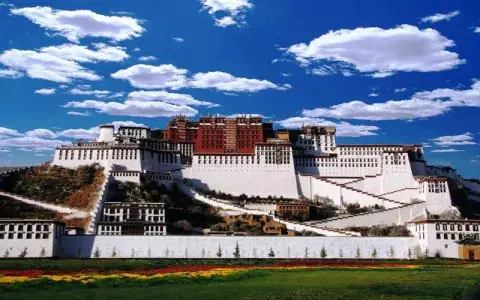
The Potala Palace is Lhasa`s best-known landmark.
Potala Palace on top of the ruins of Songsen`s old abode. Today the Potala Palace continues to dominate the Lhasa skyline and is the most visible of all the city`s sights.
It offers one of the best views of Lhasa and the surrounding area, especially in the early morning. The Potala Palace is comprised of the White Palace, which was the living quarters of the Dalai Lama and the central religious Red Palace.
Leave a review
Add Review

By Samantha
Photos of Potala Palace


