The Ancient Capital of China World’s Datong The World’s Heritage Yungang Grottoes
Introduction to Yungang Scenic Area
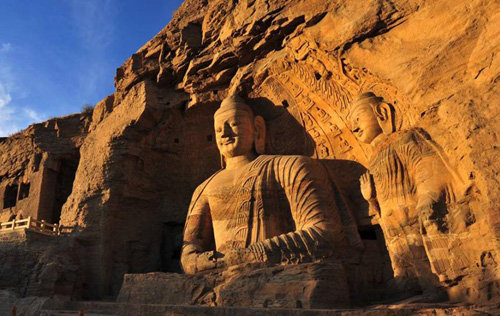
Yungang Grottoes is situated on the southern side of Mt. Wuzhou and northern side of Wuzhou Stream, which is about 16km to the west of Datong City. Construction firstly started from AD 460 (First Year of Heping Period of North Wei Dynasty) with the construction period of nearly 70 years, the Grottoes were excavated by the eminent monk Tanyao under the order of the emperor with more than 1500 years’ history.
Introduction of Main Tourist Spots
The scenic spots of Yungang Scenic Area mainly include Tourist Service Center. Tanyao Square. Buddha Worship Avenue, Lingyan Temple (Mountain Paradise and Water Palace), Grottoes Group, Memorial Room of Premier Zhou, Shadow Puppet and Wooden Image Hall, Exhibition Hall, Catering and Shopping Street and etc.
Tourist Service Center
Located at the eastern side of the Yungang Tourist Spot and bordering with Tanyao Square on the south, the Tourist Service Center is the place providing ticket service, explanation service, left luggage deposit, merchandise sales, tea bars, e-commerce service and etc. Carved by Camphorwood with the height of about 6 meters, the four-Buddha statue facing four directions are located at the center of the hall on the first floor of the service center. The four Buddha statues are lead against the back of each other with different hand postures toward the four directions, which likes they are welcoming the guests from all over the world.
Tanyao Square
There is a drama stage at the eastern side of the square and two gates are arranged at the south and north side of the square. The west side of the square is the gate for entering into the mainly scenic area. Surrounded and connected by bungalows, the copper statue of Tanyao is located at the center of the square. The bungalows and architectures on the square have demonstrated the intense royal style of North Wei Dynasty. With the application of the unique elegant and unconventional approach, the wholly copper Tanyao statue has created the artistic image of the Buddha Tanyao. With elegant and unworldly style, the statue brings the virtue and wisdom of the ancient times to the tourists, which will largely inspire our spirit.
Buddha Worship Avenue
The Buddha Worship Avenue could be boasted as “Grace covers Wu and Zhou Dynasty, Merciful Ferry Help You to the Ideal Place of Buddha”. Under the background of pine forest, the 13 pairs total 26 pieces pillars with the shape of elephants with towers are standing on both sides of the Buddha Worship Avenue, which has provide the impression of magnificence and splendid. The six-tooth white elephants with splendid dresses seem very stable and robust. Based on the Buddhist scriptures, Sakyamuni Buddha has experienced the transmigration of souls with the six-tooth white elephant. The six teeth just indicate the Six Paramitas in Buddha. The Buddha Pictures on the pillars symbolize the infinity of Buddha power. There are many lotuses on the avenue. With the lotuses under your feet and the devoted belief, the tourists will have the impression they are getting closer and closer to the hold land of Buddha through the avenue.
Lingyan Temple ( Mountain Paradise and Water Palace)
The famous literature writer and geographic specialist in North Wei Dynasty described the mountain in his works “Shuijingzhu” The mountain had welcomed its peak prosperity after the completion of Five Grottoes of Tanyao. With holy mountains, beautiful waters, eminent monks, outstanding temples, glorious Buddha statues and flowing Buddhist fragrant, the Mountain, Wuzhou Mountain was a holy destination for the people of royal class in North Wei Dynasty.The people there could enjoy the sunshine at the east and embrace the light of Buddha. Stretched from the east to the west, the main constructions consist of mountain gate, central statue tower, the secondary tower, huge Dharma on each side, surrounding corridors and pavilions and corner buildings in sequence from the east to the west. With the coverage of 1100 square meters, the Mahavira Hall is a kind of double-hipped roof top architecture. The three Buddha statues including Pass Buddha, Present Buddha and Future Buddha are standing within the Mahavira Hall. The overall architectures built with bricks and woods have adapted the construction style in North Wei Dynasty with the features of primitive simplicity and magnificence, which has demonstrated the imperial style of North Wei Dynasty.
Memorial Room of Premier Zhou
Located at the southeast of the 5th Grotto, the memorial hall was a villa built by Cavalry Commander of Yan Xishan in 1931. In 1973, President Zhou visted Yugang Grottoes with the President of France named Pompidou and the scenic area receiped them at this villa. The layout of the living room is very simple and clean, which only has one rectangular table at the center of the living room with seven pairs of chairs and desks on both sides of the table. Premier Zhou once called a press conference and put forward that Yungang Grottoes needed to be repaired within three years. Therefore, the protection engineering for Yungang Grottoes had been performed between1974 and 1976, which has largely improved the appearance of the grottoes and solved the stabilities issue of Yungang. In order to memory of Premier Zhou, the scenic area specially built the Memorial Room of Premier Zhou to demonstrate the image and videos at that time for the memory of Premier Zhou.
Shadow Puppet and Wooden Image Hall
Located at the 20th Grotto by the side of the Lotus Avenue, the Xiaoyi puppet show and wooden image show are the typical performance of the Hall. As the only puppet show troupe preserved in Shanxi Province, Xiaoyi Shadow Puppet was initiated in Yuan Dynasty and flourished in Ming and Qing Dynasty. In May of 2006, the puppet shadow has been listed into the directory of the first batch of national non-material cultural heritages. With the participation of old artists inherited from their old generations, the Xiaoyi Puppet Shadow and Wooden Image Troupe is a shining star representing the art of film making in China. The Troupe has performed many shows in England, Japan and North Korea. The Troupe has chosen Yungang as its location in March of 2011. The Troupe has become a unique scenic area that has enjoyed high reputation and popularity from the visitors from both home and abroad.
Exhibition Hall
The Exhibition Hall of Yungang Grottes was located at the western part of Yungang Scenic Area. The exhibition hall has adapted the architectural styles of large span steel structure and shearing wall. Together with the staggered arragement of arched upper beams, the hall is just like the flowing huge waves, which has great visual impact to the visitors. the exhibition hall has also exhibited the glorious history of North Wei Dynasty and the carving progress of the grottoes through multimedia videos, which has demonstrated the magnificent scene of Buddha. Several large multinedia screens have been arranged in various exhibition areas of the hall for the interaction with tourists. With these interactions, the tourists could strengthen the understanding of the grottoes and thoroughly appreciate the features of both extensive and profound of Yungang Grottoes during the leisure tour.
Catering and Shopping Street
As an antique street with the style from the architectures of Liao and Jin, the Catering and Shopping Street mainly provide catering and shopping service to the tourists. Here visitors could taste the unique delicious food of Datong and by the local specialties, books, carved coal Buddha statues, audio-visual product , special tourist souvenirs, gifts and crafts . The street will further increase the traveling interest. The street will also give the tourists the chance to aftertaste the history and enjoy the culture at that time.
Performance of the Buddha Worship of Imperial Families
(Performance time shall be based on the announcement of the scenic area)
As the center of politics, economic and culture during the North Wei Period, Datong has played an important role in the nationality integration of the Chinese Nation. Meanwhile, Datong is also the pioneer city for the creation of Chinese style Buddha culture and the starting point of Buddhism politicization and localization. As the grottoes created under the order of the emperor. Yungang Grottoes was the main place for the Buddha worship of imperial families. “Buddha Worship of Imperial Families” has dug out the historic cultural deposits of North Wei and specially refined the North Wei cultural elements with the historic and traditional folk culture. The performance was planned and directed by many national level producers and directors with several months’ hard work. During the performance, the actors with the clothes in North Wei Period (including emperor, servants, civil and military officials and monks) will demonstrate the activities like Buddha worship ceremony of North Wei emperor and ancestor worship ceremony. With the solemn atmosphere and magnificent scenes, the performance has represented the historic events happened more than one hundred years ago. After the performance, the tourists could conduct interactions with the actors and take some photos for memory.
