Kunming Attractions
Cobra Disco
Cobra Disco is one of the biggest and busiest dance clubs in Kunming. It is located away from the three main nightlife areas, but is still very popular among the Kunming locals, especially the mafioso type. The music pumps until the sun comes up, and the disco usually draws a crowd, even on...
Cobra Disco is one of the biggest and busiest dance clubs in Kunming. It is located away from the three main nightlife areas, but is still very popular among the Kunming locals, especially the mafioso type. The music pumps until the sun comes up, and the disco usually draws a crowd, even on weeknights. Beware of passport hunters, locals looking to fight foreigners, and in general, keep your wits about yourself and you should have a good time.
Hop in a taxi and tell the driver "Yan Jing She Disco".
Yi Zuo La Brazilian Barbeque
It is often difficult to get one’s hands on a nice, juicy steak in most of China’s major cities (with obvious exception to Shanghai, Beijing, and Hong Kong). With that said, Yi Zuo La Brazilian Barbecue in downtown Kunming is sure to satisfy anyone’s cravings for western m...
It is often difficult to get one’s hands on a nice, juicy steak in most of China’s major cities (with obvious exception to Shanghai, Beijing, and Hong Kong). With that said, Yi Zuo La Brazilian Barbecue in downtown Kunming is sure to satisfy anyone’s cravings for western meat cuts. Brazilian barbecue restaurants are becoming popular all around Asia, and understandably so. These restaurants feature an army of waiters that walk about the establishment cutting pieces of barbecued beef, lamb, pork, chicken, goose, fish, fruit, and much more right onto your plate. Naturally there is also a buffet with even more selections, all of which the customer is allowed to eat until his or her heart (and stomach) is content. Patrons are given a double-sided table marker. The green side means "feed me Seymour," and the red side means "if I eat anymore I might explode and die a horrible, horrible, meat-filled death." Your future heart attack, courtesy of Yi Zuo La will only cost you 68 RMB for dinner, or 58 RMB for lunch (lunch not recommended unless you will enjoy spending the rest of the day in a food coma). Yi Zuo La also boasts a Brazilian dance show with scantily-clad performers beginning nightly around 7 pm.
Yi Zuo La is located at 186 Wuyi Lu (五一路), just south of Renmin Zhong Lu (人民中路).
Halfway House
Halfway House is often a good option for late-night drinks in Kunming. The atmosphere is comfortable, the owners are friendly, and the rotation of music is good. There is an open mic every Monday night, starting around 9 pm. During the rest o...
Halfway House is often a good option for late-night drinks in Kunming. The atmosphere is comfortable, the owners are friendly, and the rotation of music is good. There is an open mic every Monday night, starting around 9 pm. During the rest of the week, Halfway House is a nice, mellower alternative to the Speakeasy up the street. Halfway House generally sees its biggest crowds on the weekends. Dali beer is available on tap - only 5 RMB a mug!
Find it on the map
Find it on the map


Korean Food
There are thousands of Koreans living, working, and studying in Kunming. Considering those numbers, it is no surprise that there are quite a few options for Korean food in the city. There are four Korean restaurants on Wenhua Xiang near Yunnan University. You simply cannot go wr...
There are thousands of Koreans living, working, and studying in Kunming. Considering those numbers, it is no surprise that there are quite a few options for Korean food in the city. There are four Korean restaurants on Wenhua Xiang near Yunnan University. You simply cannot go wrong with any of them. Two of the restaurants (one of them depicted below) have the same owner and menu and are probably slightly better than the other two options on Wenhua Xiang.
Directions: The restaurants are all near the west gate of Yunnan University. Wenhua Xiang, known as "foreigner street" is a little winding road sandwiched between Wenlin Jie (文林街) and Yi Er Yi Dajie (一二一大街).
Find it on the map

Prague Café
The Prague Cafe is one of the better options in Kunming as far as cafes go. Prague serves up a nice selection of food and drinks at very reasonable prices (meals range between 15 - 30 RMB.) The breakfast options are very tasty and the atmosphere is quite comfortable. Customers a...
The Prague Cafe is one of the better options in Kunming as far as cafes go. Prague serves up a nice selection of food and drinks at very reasonable prices (meals range between 15 - 30 RMB.) The breakfast options are very tasty and the atmosphere is quite comfortable. Customers also get the convenience of free wi-fi internet while at the Prague Cafe.
Directions: 40-5 Wenlin Jie. Near Yunnan University and Green Lake Park next to Teresa’s Pizza on Wenlin Jie.
Find it on the map
.JPG)
Kunming Articles
Railway System
|
It is convenient, safe and cheap to use the long-distance trains in China. Train stations in many... |
|
It is convenient, safe and cheap to use the long-distance trains in China. Train stations in many cities are fairly centrally located or at least conveniently placed next to a public transit center. Once you learn a few things about the trains and get used to them you should find them to be a fine way to get around China. Seat ClassesThere are 4 standard classes of seats: hard seat (yìngzuò), soft seat (ruǎnzuò), hard sleeper (yìngwò) and soft sleeper (ruǎnwò).
|
 Photo by Terry |
| Hard Seat (yìngzuò, 硬坐)
There are 3 seats on each side of the aisle which makes this the most crowded choice. The seats are not as hard as wood but the upholstery is not as comfortable as the soft seats. They are also not as consistently clean.
|
 Hard seat on a T-class train.
|
|
Soft Seat (ruǎnzuò, 软坐)
This is a fairly comfortable seat. There are 2 seats on each side of the aisle. Getting a soft seat ticket will usually get you into a “soft seat lounge” as well. The soft seat lounges have sofas and are not as crowded as the hard seat lounges.
|
 Soft Seat on a T-class train.
|
| Hard sleeper (yìngwò, 硬卧)
Hard sleepers are usually arranged in a triple bunk bed type set up. There are two triple bunk beds in a berth (a berth is like a small door-less room). That is, there is one bed on the bottom, one on the middle and one on the top. On one side of the aisle there are triple bunk beds arranged perpendicular to the windows. Opposite every berth is one or two seats and a very small table. Sheets, blankets and pillows are included.
 Hard sleeper. |
 Hard sleeper aisle. |
|
Soft Sleeper (ruǎnwò, 软卧)
There are both 2-bed berth and 4-bed berth soft sleepers. 4-bed berths are the standard. Due to the higher price, it is easier to book a ticket for a soft sleeper than it is for a hard sleeper. The beds are more comfortable and it’s a quieter environment inside. The berths are lockable.
|
 Soft Sleeper - Photo by Terry |
Train Classes
The chart below contains the more common train classes.
| Abbreviation | Pinyin | Characters | Brief Meaning in English |
| No Letter | Pukuai | 普快 | normal |
| N | Kuaisu | 快速 | fast |
| K | Kuaisu | 快速 | faster |
| T | Tekuai | 特快 | even faster |
| Z | Zhida | 直达 | faster still. Few or no stops. |
| D | D Zitou or Zidantou or Dongchezu | D字头 or 子弹头 or 动车组 | Bullet train (fastest). (pics) |
| Y | Luyou | 旅游 | travel |
| A or L | AnxuLinke, linkuai, linshi, linke | 按需临客, 临快, 临时, 临客 | temporary |
The video below is only in Chinese, but it shows the inside of the D class (bullet) trains well.
Inside the Train
|
Toilets
Don’t expect them to be very hygienic. The rules from the other article about toilets also apply to toilets on trains. The picture to the left shows an overhead view of a squat toilet.
Restaurant-car
All long-distance trains should have a restaurant-car. The variety of food is surely less than your average Chinese restaurant but the price will be higher.
Carts
Carts are also pushed through by servers. You can buy snacks, maps and other little things.
Sales People
During a short trip you are likely to see a sales person give a 5 to 10 minute performance. Low price items such as toys and socks are sold.
Water
Don’t drink the water from the bathrooms. Boiled water should be available. Bottled water is also sold.
Tickets and Tokens
On overnight trains the attendant will swap your ticket with a token. Shortly before your stop is reached they will give you back your ticket in exchange for the token. This ensures you won’t miss your stop.
|
How and When to Buy Tickets
You can get tickets at train stations, from hotels, travel agencies or railway ticket offices. The train stations typically have line-ups and these line-ups can become enormous during peak times. The ticket offices do not often have long line-ups and they only charge a 5 Yuan service fee. Travel agencies and hotels charge higher service fees.
Theoretically, tickets can be booked starting 10 days in advance and booking continues right until the train leaves. In practice, booking doesn’t always start 10 days in advance and sometimes even when booking begins many of the tickets are immediately not available at the train station. It’s best to get tickets early because trains can become fully booked anytime during the year.
The train system can become very busy during the 3 peak travel periods which are around May 1, Chinese new years and October 1. Actually, all transportation methods in China are busy during that time. It will be hardest to get tickets around Chinese New Years which is from the middle of January to the middle of February. As of the 2007 Spring Festival, prices at the train stations are no longer supposed to be raised. However, travel agencies may still increase their ticket prices during this time.
Tickets are needed to enter the departure station, board the train and exit the destination station.
Stations
Individual Stations
You can find information on individual stations for the cities listed below:
| Shanghai | Beijing | Nanjing |
| Shenzhen | Wuhan | Ningbo |
| Wuxi | Jinan | Qingdao |
| Kunming | Shenyang | Hangzhou |
| Chongqing | Xiamen | Guilin |
| Suzhou | Dalian | Xi`an |
| Chengdu | Lhasa | Shaoxing |
Theft
Theft can be a problem and is more likely when the train stations are packed during the peak seasons. It’s best to keep your valuables close to you.
Links
Seat 61 - More information on the Chinese Rail System.
People’s Daily Article - Ticket prices should not be raised during peak travel seasons anymore.
Links - Train Schedules
Where can you get 100% up-to-date train schedule information? Nowhere! Every 6 months a nation-wide "National Rail Timetable" is printed but it’s reported that even this can be inaccurate.
English language print-version train schedule - A translated and re-organized version of the National Rail Timetable.
Online English language train schedule - This could be checked for preliminary information.
China's Long Distance Buses 中国的长途客车
Buses are more expensive (compared to hard seat train tickets) and more dangerous than trains, but also a bit faster and generally more convenient. Buses leave continuously for most major locations...
Buses are more expensive (compared to hard seat train tickets) and more dangerous than trains, but also a bit faster and generally more convenient. Buses leave continuously for most major locations; so unlike the train stations, you can usually show up at your leisure with no ticket and not have to wait more than an hour or so to catch a bus. However, this is not a guarantee! If punctuality is particularly important on your trip, plan ahead, especially in the summer time, during Chinese national holidays (Spring Festival—late Jan. to early Feb., October 1-7, May 1-7), and at the beginning or end of university semesters. At night fewer buses depart, so it may be more difficult to purchase tickets.
Long Journeys: Most people find that buses are suitable enough for 6-8 hour trips. Beyond 6-8 hours however, buses can become quite uncomfortable. For taller persons the legroom is usually insufficient; and unlike the trains, there are very few chances to stand up and stretch your legs. Also, many of the buses don’t have toilets on-board. Buses generally stop every 3-4 hours for a meal break, or at the very least, a bathroom break.
In many parts of Yunnan, Sichuan, Tibet, and Guangxi (just to name a few provinces) the railway network is rather undeveloped making buses the primary form of transport. These provinces along with most rural destinations throughout China tend to be linked by somewhat undeveloped, not well maintained, curvy, and sometimes mountainside roads. Sometimes it is in one’s best interest to take a bus during the day as opposed to night when visibility, and even the driver’s rest, may be limited.
In many parts of Yunnan, Sichuan, Tibet, and Guangxi (just to name a few provinces) the railway network is rather undeveloped making buses the primary form of transport. These provinces along with most rural destinations throughout China tend to be linked by somewhat undeveloped, not well maintained, curvy, and sometimes mountainside roads. Sometimes it is in one’s best interest to take a bus during the day as opposed to night when visibility, and even the driver’s rest, may be limited.
Some bus companies offer “sleeper buses” (卧铺, wo pu) for long-distance journeys. These buses have a line of bunk beds on each side of the bus, and one line in the middle. While it might sound like a good idea, don’t plan on actually sleeping! The beds are simply too small for an average North American man. Moreover the unnecessarily fast driving, constant swerving, braking, horn honking, and bumpy roads can make 14 hours on a sleeper bus a pretty miserable experience. If you plan ahead a day or two, for just a little bit more money you should be able to get a much more comfortable bed on a train.

A sleeper bus - pic from Tammy Chow
A sleeper bus - pic from Tammy Chow
City Traffic Conditions
Traffic in China is crazy! Learn how to cross the street.
...Traffic in China is crazy! Learn how to cross the street.
If someone new to China were to observe a typical street in a typical Chinese city at 3am, they would think that everything is quite organized. There are street lights, and the signs and road markings are clear. Street signs are written in Chinese characters as well as Chinese pinyin and sometimes English.
By returning to the same street during the day, one would likely see a completely different scene. Starting in the morning and ending late in the evening a typical street in China is crammed with people, bikes, cars and buses. People cross the street as they please, while bicycles, mopeds, and motorcycles swerve in and out of traffic. Cars and buses appear to treat road signs and sometimes even red lights as if they do not exist. Cars do not stop for pedestrians, and with good reason; if they did they would never get anywhere.
Traffic in some cities is more organized than previously described. However, to maximize road safety, always assume that traffic will be somewhat hectic. If the traffic in a given city appears calm and/or organized, then consider yourself lucky.
Just to add to the chaos, there is constant construction in the major cities resulting in many roads being blocked off. In the big cities, the roads are often quite wide. Four to eight lane roads running through the center of the city are common. There are also bicycle lanes on the side of most roads.
Walking - So how do you cross the street in China? Here are some tips:
1 – Bigger is better.
Never expect a vehicle to stop and let you pass! It seems that traffic follows the simple pattern that something smaller yields to something bigger. For example, a person yields to a bike, a bike yields to a car and a car yields to a bus. However, if a crowd of 10-20 people forms on the side of the street, prepared to cross the road, then that crowd is bigger than a car. Therefore crowds will often begin to walk across the street and cars will stop for them. This doesn’t mean you should always go with the crowd, but what it does mean is that you should be cautious by not expecting vehicles to stop and let you pass.
2 – Two heads are better than one.
Hold on to whomever else you are with. Foreigners will quickly notice that Chinese people hold on to their spouses, partners, children or friends. This is a cultural trait, but it is also doubles as a smart move when crossing the road. With two people it is much easier to watch out for unsafe drivers in both directions.
3 – Overpasses and Underpasses
In the busiest areas of the city, traffic is relatively safer. Busy downtown areas usually have fences that block pedestrians from moving onto the road, and fences or dividers that block bikes from wandering into the car and bus lanes. While a bit indirect, it is always safer to make use of the overpasses or underpasses above or below major intersections than it is to directly cross the street.
Cycling
Bicycles remain a major form of transport in most Chinese cities. Cycling is not only often the most convenient way to travel, but it also lets you get some exercise and gives you a more spontaneous way to view the city. We highly suggest riding a bike in China!
When riding a bicycle remember that the rule "bigger is better" still applies. A bicycle trumps a pedestrian, but not much else. Similarly, a bicycle towing a cart of steaming dumplings or sweet potatoes behind it will have some more clout in the road system than an average bicycle!
Another safety issue to be wary of is that the Chinese system of bicycle lanes, traffic lights and intersections may be different than that of your home country. Most large streets have separate bicycle lanes on the right hand side of traffic. This means to turn left at an intersection cyclists first pull up to a marking on the road and then wait for the left turn signal.
The third issue can be made into either a safety issue or fashion issue depending on your choice. Except for serious cyclists, Chinese people very rarely wear bicycle helmets. Even two year old children on the back of a parents’ bike will usually not wear a helmet. Helmets can be purchased at some department stores and bicycle stores, but even we at Synotrip understand that wearing a helmet might make you look less cool. To be fair, the Chinese ride bikes at a rather average pace, as bikes are such a common form of transportation for people of all ages. Unlike driving a car, riding a bike in China doesn’t feel like a competition. Therefore if you can ride a bike safely and competently, not wearing a helmet should not be such a big deal.
A bicycle parking lot in Nanjing
Bicycle theft is an enduring problem. Most people lower their risk by buying bicycles they can afford to lose and locking their wheels in place when parked. Bicycle parking lots such as the one shown above also help prevent theft. Parking your bike only costs a couple mao which is payable to a parking attendant.
Bicycles can be purchased at department stores or specialty stores. They can also be rented at some hotels and many hostels. These stores and rental shops can repair bikes, but the best, cheapest, and most common place to get bicycles fixed is at small one-man operations on the sidewalk. If you need something fixed just look for the guy sitting next to a cart and a bunch of spare bicycle parts. He or she will raise your seat, grease your chain, put air in your tires, etc for a very cheap price.
Driving
You probably have at least a screw loose if you actually want to learn how to drive in China. Nevertheless, we here at Synotrip are one step ahead of you and we’re still alive. Going over all the driving rules is beyond our responsibility, but please (please) check the article on obtaining a drivers license.
Public Transportation
The bus system in a typical Chinese city is massive. However, the sheer number of passengers is even greater – this means buses are easy to catch, but often packed. Buses can be convenient for those that want a cheap ride and either clearly know where they are going or can read Chinese fairly well. Bus signs always contain Chinese characters and often include pinyin but rarely have an English translation. Bus rides within a city typically cost one to three Yuan. Payment is usually made at the front of the bus by depositing coins or using a transit-card. There may be a person whose job is specifically to collect payments from customers.
Subway lines are becoming increasingly common. There are currently about 10 cities in China that have subway lines including Beijing, Shanghai, Nanjing, Shenzhen, Wuhan and Hong-Kong. Conditions vary – some are very modern while others were built over 2 decades ago. Some spotless, others greasy. Some packed, others so empty you may even get a seat. As far as I know, all should be navigable without the need to read Chinese. Most have ticketing machines that include English translations. Others have locations listed in Chinese characters as well as in pinyin and/or English.
Remember to guard your valuables while taking public transit! Crowded buses and subway-cars are prime hunting grounds for pickpockets.
Taxis
Taxis seem to be ever-present in any Chinese city. They can be hailed easily during most parts of the day and clog the roads during rush hour. The honking of taxis can be heard early in the morning until the late evening. Even during the middle of the night, taxis can still be found outside of clubs or Karaoke joints late at night. Prices usually start between 6 and 10 Yuan for the first 2 or 3 kilometers. Using taxis and a Synotrip Itinerary, you should be able to get around many Chinese cities without having to know a word of Chinese.
The rule-based world of their foreign passengers must indeed seem so unusual to a typical Chinese taxi driver. From their point of view traffic laws can be bent and broken as is required. Don’t drive in the wrong lane towards oncoming traffic? Nonsense! Lanes are only general guidelines. I can pull in before that bus crushes us. Don’t cut somebody off? I’m in front so I can do what I want. Obey the speed-limit? What’s a speed limit?
Luckily, Chinese taxi drivers seem to know the dimensions of their cars down to the inch. The hectic road conditions also ensure that they are actively driving rather than passively expecting other cars on the road to obey the rules. Their combination of experience, daring and ability to disobey traffic laws inspired a friend of mine to label them as being “simultaneously the best and worst drivers in the world.”
Besides official, metered taxis there are also “black cars” (Heiche, 黑车) as well as three-wheelers. “Black cars” are unregistered, non-metered taxis. They usually congregate around entry points such as train-stations, bus-stations and airports. They are almost always a rip-off! If you are a lost-looking newcomer to a city you will be overcharged if you take one of these. Take a registered, metered taxi instead. Three-wheelers are cheap (usually 3-5 yuan for a short trip) and good for short rides from one tourist-spot to another.
Top Kunming Tours
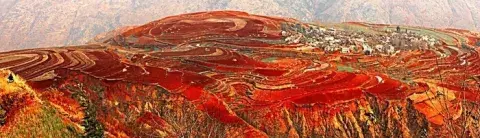
$300 Per Day
13days-kunming-dali-street-meili-snow-mountain-then-back-lijiang
Day 1 - pick up from airport in Kunming - overnight Kunming
Day 2 - Dongchuan Red Lands - overnight Dongchuan
Day 3 - Dongchuan back to Kunming - overnight Kunming
Day 4 - Kunming to Dali - overnight Dali
Day 5 - Dali - overnight Dali
Day 6 - Dali to Lijang - overnight Lijang
Day 7- Lijang to Tiger Leaping Gorge - overnight Tea Horse GH, sister overnight middle gorge
Day 8 - middle gorge - overnight middle gorge
Day 9- Middle gorge to Shangrila -overnight Shangrila...Read more
Day 1 - pick up from airport in Kunming - overnight Kunming
Day 2 - Dongchuan Red Lands - overnight Dongchuan
Day 3 - Dongchuan back to Kunming - overnight Kunming
Day 4 - Kunming to Dali - overnight Dali
Day 5 - Dali - overnight Dali
Day 6 - Dali to Lijang - overnight Lijang
Day 7- Lijang to Tiger Leaping Gorge - overnight Tea Horse GH, sister overnight middle gorge
Day 8 - middle gorge - overnight middle gorge
Day 9- Middle gorge to Shangrila -overnight Shangrila
Day 10 - Shangrila to Feilaishi - overnight Feilaishi
Day 11 - Drive to Mingyong - overnight Feilaishi
Day 12 - Feilaishi to Shangrila - overnight Shangrila
Day 13 - Flight back to Kunming.
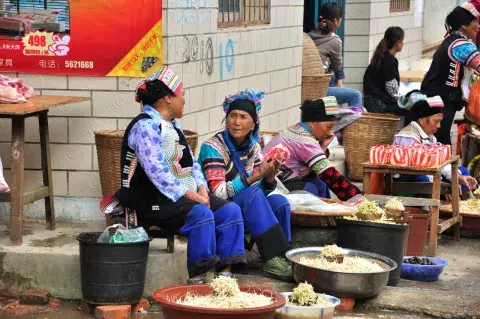
$800 Per Day
5 Days Kunming Jianshui Yuanyang Hani Rice Terraces Photograph Tour
Tour Cateogry: Yunnan Classic Tour
Tour Dates: Daily
Starts/Ends: Kunming/Yuanyang
Trip Type: Photograph Tour
Activity Level: Easy
Tour Route:
Kunming-Shilin-Yuanyang-Jianshui-Kunming
...Read more
Tour Cateogry: Yunnan Classic Tour
Tour Dates: Daily
Starts/Ends: Kunming/Yuanyang
Trip Type: Photograph Tour
Activity Level: Easy
Tour Route:
Kunming-Shilin-Yuanyang-Jianshui-Kunming
Trip Highlights:
Yuanyang is renowned for its rice terraces, sculpted by bare hands by the Hani people one thousand years ago, transforming a barren valley into a humid Eden; perfect for rice crops. The 1000m of mountain slopes of terraces is still in use today, claiming to be the world's most spectacular and extensive terraces. It is a self sustaining ecosystem and a perfect example of a symbiosis with nature.
Day 1 Kunming Arrive in Kunming City,transfer to the hotel.
Day 2 Kunming-Shilin-Jianshui Drive to Shilin County and visit the Stone Forest, drive to Jianshui, Visit the Ancient Wells and Chaoyang Tower and Jianshui Old Town.
Day 3 Jianshui-Yuanyang
Visit Zhu Family Garden, Jianshui Confucius Temple, Tuanshan Village and Zhang Family Garden, transfer to Yuanyang
Day 4 Yuanyang Visit Hani and Yi ethnic villages and the Yuangyang Rice Terraces including Duoyishu, Laohuzui, Bada and Longshuba
Day 5 Yuanyang-Kunming Transfer back to Kunming, visit Xingmeng Mongolian Village on the way
Day 6 Departure from Kunming Transfer to Kunming Airport for returning. Service ends

$300 Per Day
13days-kunming-dali-street-meili-snow-mountain-then-back-lijiang
Day 1 - pick up from airport in Kunming - overnight Kunming
Day 2 - Dongchuan Red Lands - overnight Dongchuan
Day 3 - Dongchuan back to Kunming - overnight Kunming
Day 4 - Kunming to Dali - overnight Dali
Day 5 - Dali - overnight Dali
Day 6 - Dali to Lijang - overnight Lijang
Day 7- Lijang to Tiger Leaping Gorge - overnight Tea Horse GH, sister overnight middle gorge
Day 8 - middle gorge - overnight middle gorge
Day 9- Middle gorge to Shangrila -overnight Shangrila...Read more
Day 1 - pick up from airport in Kunming - overnight Kunming
Day 2 - Dongchuan Red Lands - overnight Dongchuan
Day 3 - Dongchuan back to Kunming - overnight Kunming
Day 4 - Kunming to Dali - overnight Dali
Day 5 - Dali - overnight Dali
Day 6 - Dali to Lijang - overnight Lijang
Day 7- Lijang to Tiger Leaping Gorge - overnight Tea Horse GH, sister overnight middle gorge
Day 8 - middle gorge - overnight middle gorge
Day 9- Middle gorge to Shangrila -overnight Shangrila
Day 10 - Shangrila to Feilaishi - overnight Feilaishi
Day 11 - Drive to Mingyong - overnight Feilaishi
Day 12 - Feilaishi to Shangrila - overnight Shangrila
Day 13 - Flight back to Kunming.