Guangdong Province Attractions
Guangdong Province Articles
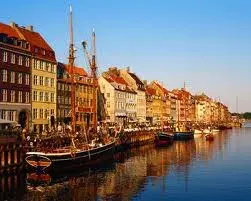
Copenhagen in Denmark - the Tourist Paradise
Copenhagen in Denmark is one of Europe's oldest capitals and home to the nation's parliament, government, and monarchy. It is a city suited for tourists and easy to explore. It is the nation's largest city with a population of over 1 million....
Copenhagen in Denmark is one of Europe's oldest capitals and home to the nation's parliament, government, and monarchy. It is a city suited for tourists and easy to explore. It is the nation's largest city with a population of over 1 million. It is also the cultural center for the country featuring art, music, theater and design. It is also known as a 24 hour party city for those looking for a swinging time.
The city can be cold in the winter so the most popular times to visit are in the summer months. Accommodations range from youth hostels and budget accommodation to exclusive five star hotels. For visitors there are many theaters, museums, art galleries and musical entertainment choices which will make your stay in the royal city memorable.
Copenhagen City Hall Square in the center of the city can hold over 50.000 people for events. At one side of the square is the world famous Tivoli Gardens which features an amusement park which was established in 1843. It is worth a stroll around to check out the old world village like atmosphere featuring rides and restaurants. On the other side of the City Hall Square is the pedestrian shopping street Strøget a excellent starting point for shopping expeditions.
Another famous attraction is the Amalienborg Palace which is the residence of the Danish royalty and is actually four different palaces set out surrounding a square. At noon visitors gather to watch the changing of the guard.
For kids there are many attractions including the Copenhagen Zoo, the National Museum, the Aquarium or the New Carlsberg Glyptotek. There are also public beaches within easy reach of the city. Be sure to try out a saunas which is part of the Danish culture.
Cuisine in Copenhagen offers a variety of choices ranging from basic meals including smorrebrod (open sandwiches), frikadeller, (meatballs) and pølser, (hot dogs) to the ultimate in fine restaurants. There is a growing number of North African and Middle Eastern restaurants influenced by recent immigrants to the area. Cafes and pubs abound as Denmark is renowned for its beer including the world famous Carlsberg lager.
Copenhagen has a thriving nightlife. Most nightclubs get going around midnight and are busy until dawn. Dancing, live music, and jazz clubs are all popular night time attractions. Copenhagen's international casino draws large crowds interested in gambling. For opera lovers the Opera House in Copenhagen is one of Europe's most modern and impressive buildings and features top notch opera. The Danish Royal Theatre dates from1872 and is home to the country's highly rated theater and ballet performances.
The Christiania area of the city was developed in the early 1970s by hippies who developed their own laws which were independent of the Danish government. It is now an area famed for art and a diversity of cultures.
The famous Little Mermaid statue is one of Copenhagen's most famous landmarks and attracts almost one million tourists every year. Nyhavn is the old harbor area and is a picturesque area not to be missed. Nyhavn includes many quays with boats and is a fun area to explore.
One of the largest European construction projects is the Oresund Bridge which was opened for traffic in July 2000. This bridge and tunnel connects the Copenhagen area in Denmark with Malmo in Sweden and has opened up the area to new economic growth and development as well as sightseeing opportunities.
Copenhagen has something for everyone! These attractions range from royal palaces and fairytale parks to a cosmopolitan nightlife and modern shopping experiences. It's a city not to be missed.
Classic Chinese movies-Farewell My Concubine
Farewell My Concubine is the story of two actors of the Peking Opera, told with the sweeping historical backdrop of China in the 20th Century. We see them through nearly the entire span of their lives....
Farewell My Concubine is the story of two actors of the Peking Opera, told with the sweeping historical backdrop of China in the 20th Century. We see them through nearly the entire span of their lives. We see their greatest triumphs and their greatest failures, while China herself alternates between rejecting them and embracing them, until at last, their story is complete. Very few films have the ability not simply to touch the heart but pierce the soul. This is one of those films. The plot is driven inexhorably forward not only by fate and the tides of change but by the breathtaking, career topping performance of Leslie Cheung, as Cheng Dieyi. Cheung gives himself over completely to his character, just as his character gives himself over to his lifelong role, of Concubine Yu.
When little Cheng's mother first delivers him to the opera school, he is just a small, beautiful child. It is 1924. Cheng, then called Douzi, is not accepted by the school master because he has a deformity in his hand, a sixth finger. His mother is a simple prostitute and cannot afford and does not desire to raise the child herself, and in desperation, chops young Douzi's extra finger off, at which point the master accepts him into the school. Even as a child, then, he is not quite of this world, different from the others. He is able to make friends at the school, though, with the young boys Laizi and Shitou. Shitou would grow up as his closest companion, would become the King to his Concubine. Laizi's fate is altogether different.
The school is absolutely brutal. The master inflicts severe punishment indiscriminately, brooking not even the slightest mis-step or mistake. When Laizi gets a song wrong, he his hit for his error. When Shitou gets a song correct, he is hit so that he will remember correctly again the next time. It is an altogether different world from the opera school depicted in Painted Faces, a world of fear, repression, and pain. It is here, under the masters strict punishments, that Douzi learns to perform as a Dan, a female impersonator on the Peking Opera. But not just to impersonate a woman -- to become one, in thought, in expression, in song. He practices the challenging monologue "Dreaming of the World Outside the Nunnery," until he learns to say, "I am by nature a girl, not a boy," instead of the other way around.
The monologue is a popular one in the repetoire of the Peking Opera, and there are many versions. Probably it comes from an old Chinese story, "The Record of an Evil Sea," the Evil Sea being a Buddhist term for a life of sorrow. The heroine of the story was committed to a monastery by hearless parents, and took the religious name Se K'ung -- All is Void. It is not difficult to see an analogy here to young Douzi himself.
To be a nun with tresses shorn, how pitiful is my plight, The altar lamp my sole companion burning through the night! The days and months speed swiftly by, too soon I shall be old, My beauty gone, the glow of youth, shrivelled, pale and cold.
A convent is incompatible with a nuptial chamber;
Nor are these altar-candles befitted for bridal use.
I am a pretty maiden, not a boy.
Why should I wear these monastic robes and suffer my waist to be bound with a silken sash?
Where can another be found as sad and forlorn as I?
The troupe gives a performance and young Douzi meets the first patron of the arts that he must appease. An old eunuch, who once served under the Emperess Dowager. Douzi is taken to the eunuchs room after the performance, with all the adults knowing what was to transpire in his private chambers. The young boy spies a beautiful sword, which he would like to give to Shitou. He does not think about it long before the eunuch advances on him. On his way back to the school, broken and ruined, he comes across a baby, lying abandoned in the street. His master pleads that "each of us has our fate," but young Douzi does not listen, and takes him into the school.
Later, Douzi and Shitou become famous Peking Opera stars. It is 1937, and they have renamed themselves Cheng Dieyi and Duan Xiaolou (Zhang Fengyi). Although they have aged, and gained in fame, still the story is the same; there is a rich patron that must be appeased, there is a play that must be performed. The opera that they are famous for also becomes the opera of Cheng Dieyi's life: Farewell My Concubine.
The opera, also sometimes called The King's Parting with his Favorite, calls for two major roles. First there is the King of Chu, a jing (painted face) role, which is played by Shitou. The second is Concubine Yu Ji, a Hua Dan role, played by Douzi. The opera is based on a story about the last moments of Xiang Yu, the King of Chu, who was defeated by Liu Bang, the King of Han, around 202 B.C. The opera begins with Concubine Yu, singing about her spouses campaign, and that she has followed him throughout.
I think and wonder, since first I traveled to theatres of war, how many years have run, how many times the frost of winter has fallen, the planets have spun! Ah, when, if ever, will my prayers be answered? When shall I see home again? And when will the vapours of war melt away into tranquil moonlight and radiant sun?
Enter Xiang Yu, who has been ambushed by the enemy and forced to retreat. Yu Ji consoles him, and they drink wine together to forget their troubles. He falls asleep, and she wanders the camp, ruminating:
What did they fight for, all those past heroes of mighty mettle, when all they won was their bones lying chill on the field of battle?
On her walk, Concubine Yu overhears that the Kings soldiers are set to desert him. The surrounding countryside is already taken by the Han. The king wakes, and upon hearing the news, realizes his final battle must be upon him. His horse, neighing loudly and nearby, senses the end as well. Soon more bad news: they are surrounded on all sides by the enemy, who is attacking. There may still be a chance for the King to fight his way through. But he is beset by worries about his favorite Concubine. How will she survive? He suggests she ride with him, but this is absurd. He suggests that she go over to the other side, thus saving herself, but this she refuses. She cannot bear to be such a burden on him, and instead insists:
It is my prayer that I may have that sword at your waist, Great King, and cut my throat with it here in your presence, so that you will not be hampered by any more anxious longings for me.
The King of Chu refuses this request outright, but then, she distracts him, and while his attention is diverted, takes the sword, and with a quick cut, ends her own life.
The tragic opera has a long history, having derived from an older play with many more characters and scenes, called The Story of the Precious One. Mei Lanfang, one of the most famous Dan actors of the opera stage, re-wrote the play, restaged it, and made it an instant classic. Of Mei Lanfang's performance in the opera, one critic wrote, "In his sword dance from '', it is my considered opinion that he has reached one of the supreme possibilities."
Shitou, now Duan Xiaolou, finds himself enjoying the good life that stardom in the opera allows. Cheng Dieyi loves him as strongly as ever, and wishes aloud that they would stay together forever. But Xiaolou is quite the ladies man, and falls for a beautiful courtesan named Juxian (Gong Li), who eventually gets him to agree on a marriage between them. Dieyi is unmoved by her, insults her, calls her a 'dragon lady.' Everyone feels he is simply jealous, though the truth of the matter is he understood implicitly what her game was. She wanted out of the whorehouse, into a regular life, with someone who could support her. Xiaolou became that person, and Dieyi became a sort of concubine in real life, as with his character in the play. As Xiaolou says to him, one day: "I'm just a fake king. You really are Concubine Yu."
When the Japanese invade, and occupy portions of China, they imprison Xiaolou and force Dieyi to perform for them. This he does, willingly. He is above all nationalistic and patriotic emotions. His first and foremost goal is performing the opera. And having a receptive audience.
Many performers felt this way during the Japanese occupation. Especially in Shanghai, where the occupation was for the longest duration. Shanghai was the seat of China's burgeoning film industry. Those that chose to make films for the Japanese, however, were blacklisted afterwards, their careers destroyed. All manner of performers would suffer the same fate. To avoid performing for the Japanese, the famous Mei Lanfang grew a mustache, and devoted his time to writing. Before the war, however, Lanfang did perform for the Japanese, in Japan (in 1919). One of his many admirers in that trip was the dramatist Seiji Aoki, who continued to study and promote Peking Opera until his death at the end of WWII. A nice historic touch in Farewell My Concubine has Cheng Dieyi give his performance to the Japanese, who were very appreciative. He even mentions Aoki as being particularly knowledgeable and interested.
By the time the Communists rise to power, in 1949, Dieyi has performed for the Nationalists, the Japanese, the remains of the Qing dynasty. Now he is asked for his opinion on the new, communist era plays. He finds them shallow and unconvincing, which they almost certainly are. These are the Eight Model Plays, which dropped the painted faces entirely, used modern street dress, and told tales, predictably, of the workers rising up to claim their birthright against the old regime. He is shouted down, but history will prove him right.
But Farewell My Concubine is not about politics, nor history, nor even theater. It is a story about two men: one who worked as a Peking Opera actor, the other who lived the opera. Their lives are intertwined, the bonds they built in childhood cannot be severed, no matter how much Miss Juxian tries to do so. Xiaolou tries to go with the flow, to not make waves. Dieyi stays true to his art, no matter what. The ending is predetermined from the moment young Douzi is able to say the line,
I am by nature a girl, not a boy.
The story rests on the strength of its three principal actors: Leslie Cheung, Zhang Fengyi, and Gong Li. They are all superb. Leslie Cheung plays a tragic character, but does not allow us to pity him, nor to love him. Zhang Fengyi, as Xiaolou, is perfect as a kind man who perseveres and does what he must to survive. Gong Li is the most difficult character to sympathize with. She attempts to tear apart Xiaolou and Dieyi, but we can feel for her eventually anyway, when we realize she is doing it to protect her husband, not just herself.
I would be remiss if I did not mention the child actors in this story as well, the actors who played young Shitou, Douzi, and Laizi. They were wonderful. If actors this good played the young opera kids in Painted Faces, then that movie could have been so much better. As it stands, though, for a raw, honest look at Peking Opera schools, look nowhere further than here.
Farewell My Concubine is an achievement. It lingers in the mind, long after the last credits have run, and all that remains is the memories of Concubine Yu, and her last dance:
Drink, my sovereign lord, I pray, drink and listen to my lay,
I shall melt your cares away by dancing light and whirling gay.
Wicked Qin, the house of Ying, conquered all the land, he held the world in sway,
till mighty heroes bold, on every hand, rose to fight in fierce array.
They always said, and always say: 'Abuse me not, nor treat me ill today,
for failure and success are not to stay, but come in a moment and pass away.'
So come, relax, give pleasure play, sit in your tent, all care with wine allay.
(The King of Chu laughs, bitterly...)

Plenty of tasted food at shenzhen
Shenzhen is young and magic city ,only you cannt imagine,otherwise you can find all kind of food you like. if you want to try light food ,Guangdong soup,sea food , or want to hot ,spicy food ,there are so many Sichuan ,and Hunan food restuant ....
...Shenzhen is young and magic city ,only you cannt imagine,otherwise you can find all kind of food you like. if you want to try light food ,Guangdong soup,sea food , or want to hot ,spicy food ,there are so many Sichuan ,and Hunan food restuant ....
Try it , then you never regret when you are in shenzhen
Top Guangdong Province Tours
$150 Per Day
Guangzhou
Day 1 Arrive in Guangzhou
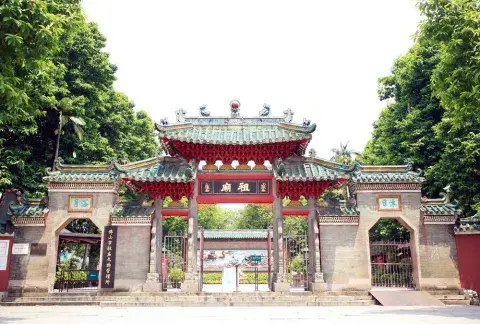
Arrive in Guangzhou in the morning, you will be met and transferred to hotel, then visit Sun Yat-sen Memorial Hall. The Memorial Hall is a very famous historical scenic spot. It is in memory of Sun Yat-sen, the great revolutionary forerunner. After that proceed to visit the Ancestral Temple of the Chen Family. It is a unique site for offering up sacrifices to worship ancestors of 72 Chen families in Guangdong. This ancestral temple is also the largest, best preserved and best decorated ancient architecture existing in Guangdong province.
...Read moreDay 1 Arrive in Guangzhou
Arrive in Guangzhou in the morning, you will be met and transferred to hotel, then visit Sun Yat-sen Memorial Hall. The Memorial Hall is a very famous historical scenic spot. It is in memory of Sun Yat-sen, the great revolutionary forerunner. After that proceed to visit the Ancestral Temple of the Chen Family. It is a unique site for offering up sacrifices to worship ancestors of 72 Chen families in Guangdong. This ancestral temple is also the largest, best preserved and best decorated ancient architecture existing in Guangdong province.
Day 2 Guanzhou Tour
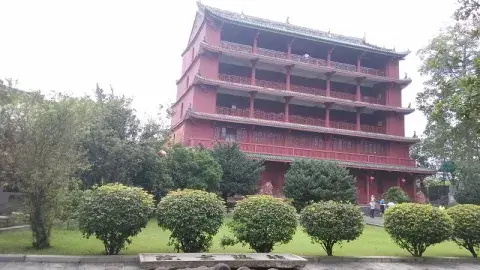
After breakfast, you will go to Yuexiu Park first, the largest and the most famous park in downtown Guangzhou. There are three artificial lakes and seven hills of Yuexiu Mountain. Then you will visit Temple of Six Banyan Trees, which is one of the four best Buddhist temples in Guangzhou and located on the Liurong Road (meaning the Six Banyan Trees Road). The Nanyue King Tomb Museum is a must-see Guangzhou attraction, which dates back to 2,000 years ago, is the earliest large scale painted stone chamber tomb ever found south of the Five Ridges. Buried with the tomb owner in a jade shroud are a gold seal and a lot of exquisite jade adornments. It has become a world famous museum. After the day tour you will be transferred to airport for your next destination.
$150 Per Day
Discovery of Martial Art City-One Day Sight Seeing Trip To Ancestor’s Temple And Bruce Lee Ancestor House In Foshan
Chinese new year, the most important festival for chinese. Many staff will have 7 days vacation, which can make good use of these day to travel and have relax. Most customers from Synotrip contact me whether to be their tour guide and interpreter during the new year .I was born in Guangzhou ,my hometown is Guangzhou, I know the culture of Guangzhou and Guangdong the best, that's why so many clients choose me to their interpreter.
...Read moreChinese new year, the most important festival for chinese. Many staff will have 7 days vacation, which can make good use of these day to travel and have relax. Most customers from Synotrip contact me whether to be their tour guide and interpreter during the new year .I was born in Guangzhou ,my hometown is Guangzhou, I know the culture of Guangzhou and Guangdong the best, that's why so many clients choose me to their interpreter.
One of clients contact me from Synotrip, now we become friends. He is obsess with chinese martial art and Bruce Lee, so he decide to come to China to follow the step of martial idol.
He ask me to plan a “discovery of martial art” trip for him. No doubt that Foshan, which is renowned for its martial art form, is the best place to him. In fact, the city of Foshan can be called the birth place and home town of this particular martial art form. The notable celebrity are Ip Man, Bruce Lee, and Wang Fei Hong who is a legendary martial art master and doctor and seldom foreigner know him.
We plan to visit Ip Man memory hall in Ancestral Temple first, after that, go to Bruce Lee ancestor house. Actually, we can go Ancestral Temple by metro from Guangzhou. There is a Guangfo line connected Guangzhou and Foshan, which it is more convenience for the people of two city. But considering the distance from Guangzhou East to Foshan, tight schedule, and the place of Bruce Lee ancestor house is a remote village hard to get there by public transportation, we decided to rent a car for traveling.
My friend arrived at about 9:30 am at Guangzhou East station,and after picking him up we headed to Ancestral Temple. The Foshan Ancestral Temple is commonly called Zumiao. It is a Daoist temple, museum, and exhibition center. The architecture, decor and articles on view in Foshan Ancestral Temple are remarkably refined, and are part of the unique historical heritage of Foshan.
Because my friend is a martial art fans, so we directly to the Ip Man memory hall.Ip man, a man dedicated to a Wing Chun, is a famous Chinese martial art master, had been a master of Bruce Lee. Bruce Lee learn Wing Chun and develop it in his Jeet Kune Do. In the museum, you can see a likeness of Ip Man, martial arts training equipment, and a plaque with information about him.
There is another memory hall for famous legendary martial artist and doctor named Wang Fei Hong. In this place,we also see a chinese traditional customs performance ---lion dance.
We are so deep addicted to enjoying the time in the Ip Man hall and lion dance without noticing that it comes to the afternoon. We need to head to next place - Bruce Lee Ancestor House, which it take one hour to arrive from temple.
Bruce Lee who is considered by many as the most influential martial artist of the 20th century, and an important cultural icon. He used Wing Chun, as his base, learned from the influences of other martial arts, and later created his own martial art philosophy — Jeet Kune Do.
The Bruce Lee Ancestral House located in Jun'an Town is another site for Bruce Lee fans to visit.Built by his grandfather, Lee came back to the house once and lived in the house for only a few days. Even though we only just saw the furniture and the introduction of him and his family, we still felt exciting stand a place which Bruce had been lived.
We spent a great day to feel the martial art culture and gorgeous historical building in Foshan. My friend is pretty good impressed and said that he must would share this experience to his martial art friend when he go back to UK.

$100 Per Day
Guangzhou and Foshan tour guide
Hello, there, this is Albert who based in Guangzhou. I am a native and have been a tour guide and interpreter for more than 4 years, if you come to China , I deficinately can help you,the itinerary maybe like this:
Day 1,Guangzhou Baiyun mountain in the morning, after lunch go to Shangxiajiu street for shopping or visit the Muslim temple or other temples, around 6pm to dinner, after dinner go to the night cruise nearby Canton tower,which has the amazing view you will ever see.
Hello, there, this is Albert who based in Guangzhou. I am a native and have been a tour guide and interpreter for more than 4 years, if you come to China , I deficinately can help you,the itinerary maybe like this:
Day 1,Guangzhou Baiyun mountain in the morning, after lunch go to Shangxiajiu street for shopping or visit the Muslim temple or other temples, around 6pm to dinner, after dinner go to the night cruise nearby Canton tower,which has the amazing view you will ever see.
Day 2 can choose go to region where far away from downtown or nearby city center, we can discuss in day one, Nansha district of GZ there are sunflower garden, goddess temple, and etc…Sunflower garden is famous throughout the entire Guangdong province,people are willing bare the long distance journey to experience the amazing floewr garden.
Wine, beer or specialty sampling we can try. After 6 pm ,we can go to some bar to try the local beers or cocktails, if you have interest. At midnight we even can enjoy the China nightclubs where hasve many chinese young pretties,and I am sure you will love it.
Day 3 we can go to the nearby cities,like Foshan,Dongguang,Zhonfshan.Zhuhai.most factories are situated in Dongguan city,therefore if you want to source some products,there will be a good place for you;likewise, Foshan is famous by its furniture manufactories.during the trip perhaps you can see some tables or beds which are your type. In my perspective,we go to other cities, the transportation should br TAXI or train. TAXi is convenient but a little bit expensive and you need to pay the toll as well.
Day 4, If you want to see the southern China sea, you can go to Zhuhai or back to GZ,or even go to Hongkong.If not ,continued to discover this beautiful area full of passion-driven winegrowers.
Visit the traditional local farm land and the cellars, where hundreds of wooden barrels are lined up. During this visit, you will improve your regarding of chinese farmers.
A stroll into the past: Enjoy a nice walk in Foshan and discover this City of Art and History, In the company of your local expert, visit the charming heart of the city with its historical half-timbered houses and private mansions. explore one of the underground caves that was dug from the 10th-12th century, in order to extract the famous stone used to build all the monuments of the region. Before saying goodbye, share an aperitif made of local products
7.00 pm: Back to the hotel in Tours.
Day3, if you choose to Foshan, the schedule is like this :
After hotel pickup, your driver and English-speaking guide will take you by private, air-conditioned vehicle to Foshan City. Located just 50 minutes from Guangzhou in Guangdong province, Foshan is a city famous for its long cultural history. Founded during the Jin Dynasty, Foshan was a well-populated village inhabited by fishermen and farmers as early as the Qin and Han dynasties. By the Tang (618-907 AD) and Song (960-1279 AD) dynasties, Foshan was already an important trade port in Southern China – renowned for its handicrafts, commerce and culture. First, visit the Foshan Ancestral Temple (Foshan Zu Miao), built in 1078-1085 for sacrificial offerings to the Northern Xuantian Heavenly Emperor, a revered Daoist deity. Reconstructed in 1372 after the original building was destroyed, the formerly named Zumiao Temple was Foshan’s first temple. As you tour the Ancestral Temple, admire the locally produced decorations, furnishings and ceramics for which Foshan is known. Your guide will enlighten you about the temple’s use, before the Qing Dynasty, as a meeting place to conduct official business. Your guide will take you to a local restaurant to enjoy a lunch of traditional Chinese specialties. Then, head to Shiwan village to visit the Nanfeng Ancient Furnace, a kiln built in the early 16th century and still used for firing ceramics today. Named for the cool summer winds that blew at the back of the furnace through the banyan trees growing there, Nanfeng is a fine example of a ‘dragon kiln,’ as its roof resembles the scales of a dragon’s back. Learn from your guide about the flame, which has burned continuously for 500 years – ever since the Tang Dynasty! Watch a demonstration by a skilled artisan and try your hand at the pottery wheel. With a 5,000-year-long history of ceramic making that reached its peak in the Ming and Qing dynasties, Shiwan’s ceramic tiles are considered some of the best in the world. Wander through the Shiwan Art Ceramics Market with your guide and see animal sculptures and human figurines for which the kiln became famous during the Qing Dynasty of the 1600s. Browse the stalls to see different replicas of modern and ancient designs. Your day trip concludes with private transport back to your hotel in Guangzhou.
Last but not the least,
Tailor-made trip of course can be offered,you can tell me what is your favourite place and food and etc...
I could give you some suggestions about hotel conditions, locations, services, whether the staff speak English when you choose a hotel.
- I can pick you up at the Airport or Train Station so you wont feel nervous if this is your first time to Guangzhou and dont know much about Chinese language.
- If you need to book train/flight tickets i might can help you too.
- I could be your shopping assistant or assistant of living in Guangzhou, such as Guangzhou local food, supermarket, open markets, electrical appliances, where to go for nightlifes, theaters or so. Looking forward to meeting you.