China Attractions

Foshan Shunde Baolin Temple

Foshan Shunde Baolin Temple inherits the legal system, which belongs to Linjizong, the birth of Baolin Temple, which laid the position of Baolin Temple in the history of Lingnan Buddhism.
The original Shunde Baolin Temple is located in the south of Fengshan Mountain in the s...

Foshan Shunde Baolin Temple inherits the legal system, which belongs to Linjizong, the birth of Baolin Temple, which laid the position of Baolin Temple in the history of Lingnan Buddhism.
The original Shunde Baolin Temple is located in the south of Fengshan Mountain in the south gate of Daliang Town, Shunde. The mountain is like a phoenix. The trees are lush and green, and it is surrounded by mountains and waters. The scenery is quiet. Baolin Temple is famous for its collection of Buddhist temples and cultural relics. It is a cultural treasure with rich historical and cultural connotations.

Baolin Temple
Religion is a social phenomenon and an inevitable outcome of the development of human society. After being introduced to China from the Han Dynasty, Buddhism merged with China's national culture to make it more colorful. After the two Jin, the Southern and Northern Dynasties, and the Sui and Tang Dynasties, the Zen Buddhism was carried forward and influenced the development of Buddhist culture in the later generations.
The Pearl River Delta, a long history, a vast expanse of the sea, from the south of the Central Plains culture, Buddhist culture also followed by the south, as a religious belief, Buddhist culture is also believed by the masses. In the Sui and Tang Dynasties, Buddhism entered its heyday, and the Lingnan area was also widely spread. Under the support of the feudal dynasty, the monks established temples in the beautiful mountains.
The five ancestors of the Southern ancestors of Hui Neng, namely, Yang Yang, Yun Men, and Fa Yan, were lost after the Song Dynasty. Only Linji and Caodong coexisted. Linji Zong advocated “seeing Zen”, that is, the Zen of the Word; Cao Dongzong advocated "silent meditation", that is, the meditation of silence.
As the saying goes: "There is no Shunde, there is Baolin first". More than a thousand years ago, the ancient Taitai village, the land control is very smoke, the danger is even steep, the Taihao Gorge passes through the mountain, the Liubo port sails, the port side Huiqiao, leaving a slim shadow to the blurred water. In the Five Dynasties of the Southern Han Dynasty Emperor Guangtian (AD 942), Buddhism has spread widely in the Pearl River Delta region. In the past, there were monks who built simple houses here. The first name was: "Liu Bozhen", which was built first. Guanyin Temple, the Guanyin statue in the temple is said to be the precious plastic products of the Tang Dynasty. At the time of the Southern Song Dynasty, the buildings in the temple were defeated and declined. During the reign of Ningzong, the temple was rebuilt. At the end of the Song Dynasty, the Zen dynasty swept the world, the monk of the Ming Dynasty, the deputy monk of Jiangxi, and the cloud tour. See Liubo’s back mountain and water, the ancient wood and the sparse, and the springs and clears, that is, led the disciples, stayed here, and Purchased land production, cultivation and submersible, and gradually expanded. The Taihao Gorge where Liu Bozhen is located, the mountains around the water, facing the south, forming a treasure of Feng Shui, Deqin presided over, creating a river of law, going to the altar, and gradually increasing the number of people who came to listen to the scriptures. He widely spread the essence of Zen and guide believers. Realize Buddhism and carry forward Buddhism. One day, Deqin got up early to burn incense, bathing and changing clothes. On the eve of the evening, his disciple, Tan Jia Meng Deqin, asked for the raft, and invaded the morning, it was already silent. The disciple and Tan Jia put his widow's varnish on his body and put it into the shackles, enshrined in the Guanyin Temple, and the book language: "There is no way to go from the Northern Song Dynasty, the law is not old and so on." At the beginning of the founding of New China, it was a pity that the body was destroyed when the Baolin Temple was demolished.
After a long period of adjustment, the Zen Buddhism of the two generations of the Song and Yuan Dynasties laid a more solid humanistic foundation for the revival of the Ming and Qing dynasties. At the end of the Ming Dynasty, due to the stagnation of the times and the heavy taxation, Liu Bozhen was really difficult to maintain. Therefore, he was forced to pawn and sell the original industry, gradually spreading the gangsters and ruining them once.
During the Wanli Period of the Ming Dynasty, the Shunde Longshan Township was separated by Ke, and the No. 1 was in the dorm, and was introduced to the Nanhua Temple in Shaoguan (named Baolin Temple in the early Jin Dynasty). Dharma. Ming Chongzhen has made great contributions to the creation of Qingyun Temple in Zhaoqing for eight years.
In the early years of Emperor Kangxi of Qing Dynasty, Zhaoqing Qingyun Temple was stunned by Yuan Liang, the word Hao Ze, the road was beautiful, the Fengshan Mountain was like a phoenix, and the mouth of Liu Bozhen was like a phoenix, and the mouth spit lotus, could not help but heart; see this Fengshan Shengjing, he It is believed that this is a Buddhist resort, and it is predicted that the Zen Buddhism will be carried forward here in the future. In order to promote the revival of Shunde Buddhism, it is necessary to carry forward the long-term residence for the promotion of the Zen Buddhism. Yuan Liang won the respect of the county people. He raised funds to donate, redeem the farmland, expand the ancestral hall, and restore the temple industry. At that time, seven towering ancient trees were planted in the urn, and the garden was like the mountain of Xitian Baolin. Yuan Liang took the meaning of “the pure land of seven treasure trees” (the seven treasures mentioned by Amitabha are: gold, silver, glaze, coral, amber, canal, Agate), so Liu Bozhen will be renamed as "Baolin Temple". After that, he planted trees here, making the appearance of Baolin Temple gradually change. Yuan Liang spared no effort in promoting the Zen Buddhism, which made the Baolin Temple more prominent.
In the 16th year of Emperor Kangxi, the county magistrate Yingtai (Liaoning Jinzhou, 15 years) donated money to redeem two hundred acres of Harada, and charged the rent to support the monks.
Baolin Temple
Baolin Temple (15 photos)
 There is a color in the beginning. At this time, Baolin Temple has been expanded and renovated, and its architecture has been quite large. It has a total of four courts and five entrances, including the head of the mountain gate, the Tianwang Hall, the Daxiong Hall, the Zen Hall, the Abbot Hall, the Galan Hall, the Zutang Hall, the Guest Hall, and the Flesh Church. There are more than ten mortuaries, warehouses and shacks. The Heavenly King Hall is for Maitreya, Wei Wei, the Four Heavenly Kings, Guandi, etc. The Daxiong Hall is dedicated to the Three Sides of the Buddha, the Eighteen Arhats, the Sixth Anniversary Hui Neng and the Tibetan Bodhisattva. The guest hall is mainly dedicated to the thousand-handed Guanyin Bodhisattva. At that time, there were 30 gangsters, and 1916 Tibetan gammas, divided into 8416 volumes and 414 volumes. In addition, Baolin monks attach importance to tree planting and greening, protect the environment, plant a few linden trees, and shade as a cover, becoming the feng shui tree in the jungle.
Baolin Temple became the first place in the locality. People regard it as a resort. Every time the national ceremony or the imperial court order is opened, the local governor still gathers the temple to raise the ceremony. Later, the county magistrate added a Wanshou Palace in the temple for the civil and military officials to pay tribute to the emperor, to the birthday and to listen to the "Holy".
As a Buddhist place, Baolin Temple has been in the Qing Dynasty, and the incense is flourishing. The scale of the temple is gradually expanding and the temple is majestic. The linden trees planted in the temple are leafy and leafy; there are also eucalyptus trees that are vigorous and dragon-like, hidden in the shade of greenery, thus attracting many tourists. Every Buddha's birthday, Guanyin's birthday and the first and the fifteenth of each month, nearby believers, pilgrims and merchants Jialai Temple worshippers are in constant stream. People say that the body of Baolin Temple Deqin is the most effective. "Going for the flesh" has become a popular language at that time. This is the most prosperous period of Baolin Temple. "The bitter sea is boundless, the back is the shore; the Zen is the road, the first step is the first" is the couplet of the mountain gate in the late Qing Dynasty and the early Republic of China.
During the Republic of China, due to successive years of war, many temples were destroyed by fire, and folk Buddhist beliefs were in a state of self-destruction. However, because Buddhist teachings were deeply rooted in the hearts of the people, mass beliefs and ethnic customs and habits combined to form secularized religions. Non-Buddhists are also happy to support Buddhist activities. During the Anti-Japanese War, the Baolin Temple was presided over by the Zen Master of the Dinghu Lake in Zhaoqing (commonly known as the Master of Iron Tie). It was a kind-hearted person, and he was well-known for his good health. He also used the evil power of the place. After the fall of Shunde, Baolin Temple was stationed in the Japanese devil and became the camp of the sundial. At the same time, the underground workers of our party also entered the Baolin Temple, the Communist Party member Peide monk, went deep into the tiger's den and collected the information of the devils. Baolin Temple became the contact point of the second detachment of Guangyou, and the shovel did not avoid the difficulties and injured. The guerrillas entered the Baolin Temple and concealed it, making a certain contribution to the war against Japan.
In the late 1940s, the Secretary of the National Government and the provincial government member Yan Xuelu returned to the Buddhism and practiced Buddhism. There is another monk in Baolin Temple. He practiced medicine and served the eye disease. The people in the four towns sought it very much. His medical ethics and medicine were deeply loved by the world.
In the early days of the founding of the People's Republic (1950 - 1952), Baolin Temple was taken over by the local government. Some of the buildings were designated as the resident of the People's Liberation Army in Shunde. The company's company commander Zhu Jixiang had a good relationship with the shovel. The people's soldiers and the monks in the temple lived in harmony. , played a certain role for local stability. At this time, there are still more than a dozen people in the Baolin Temple, serving Buddha cigarettes. The Buddha statues in the temple are still worshipped by Buddhist believers. On the 15th day of the lunar calendar in 1951, the shovel got up early and died, and was unfortunately killed and killed.
In 1952, the troops withdrew from the station, and the government arranged the right-hand building of the temple to be the first small school site of Daliang Town. After 1955, after the "superstition" movement was broken, the Buddha statues and instruments in the temple disappeared. The temple was changed to "Shunde County Cultural Center" and later expanded into a cultural park. By the 1990s, the land around the original Baolin Temple was so devastating that the original site was difficult to repair. After receiving the opinions of overseas good faith from the Religious Section of the United Front Work Department of the Municipal Party Committee, it was reported to the Guangdong Provincial Bureau of Religious Affairs and approved. The city's relevant personnel formed a fundraising committee to raise funds for reconstruction, and the reconstruction site was located in Taipingshan, the southern suburb of Dalian. The ancient temple of the millennium has experienced new disasters.

Foshan Shunde Shunfengshan Park

Main Attractions
Scenic structure
Including Taiping Mountain, Shenbu Mountain, Guiye Lake, Qingyun Lake and other areas. The construction of the park is highlighted by
Shunfeng Mountain Park
Shunfeng Mountain Park (18 photos)
 The theme of “Mountain Color Rhyme” full...

Main Attractions
Scenic structure
Including Taiping Mountain, Shenbu Mountain, Guiye Lake, Qingyun Lake and other areas. The construction of the park is highlighted by
Shunfeng Mountain Park
Shunfeng Mountain Park (18 photos)
 The theme of “Mountain Color Rhyme” fully considers the characteristics of Shunfeng Mountain Zhenshan Zhenshui and profound humanistic historical heritage, and cleverly uses the natural space layout and historical sites such as the old Zhai Tower and Qingyun Tower to form “Qingshan, according to the mountainous landscape. The natural and cultural landscape of Bishui, Yisi, two lakes and two towers. Taking the two lakes (Qingyun Lake District, Guiye Lake District), the two towers (Qingyun Tower, and the old Zhai Tower) as the main tourist axes, the unique scenic spots are set up to form “Guihai Fang Cong”, “Ting Yu Yuan” and “Step Cloud”. There are 24 scenic spots such as “Ya Zheng Yuan”.
Shunfeng Mountain is the main supporting project for the construction of “Qing, Bi and Blue” key projects and urban remodeling work in Shunde District of Foshan City. The construction of Shunfeng Mountain Park will become one of the key tasks of “Shunde District in Foshan City to take the lead in basically realizing modernization planning”. In the modern city-style river port city of Shunde District of Foshan City, the symbol of the century.
Entrance
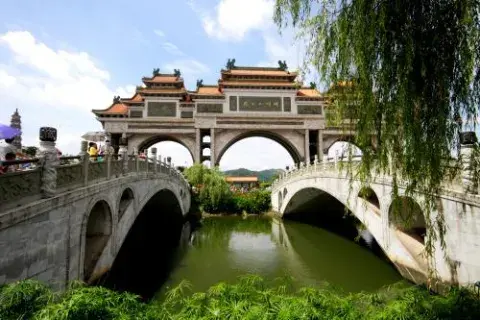
Shunde Shunfeng Mountain Park [1] The entrance archway is a three-span giant Chinese archway. The whole archway is 88 meters wide, with a total height of 38 meters, the base is 3 meters thick, the main span is 35 meters, and the whole building is 14,000 tons. There are 16 dragon pillars carved out of marble between the arches on the front and back sides of the archway. The weight of the single bar is 25 tons. All of them are screwed upside down on the top of the door building, creating a momentum of volley and subtlety. Its large scale, majestic shape, gorgeous patterns, and exquisite stone art are rare at home and abroad, so it enjoys the reputation of the first Chinese archway.
Detailed archway
Shunfengshan Park archway has a reinforced concrete frame as the skeleton, and the exterior is adorned with granite. It is mainly composed of two kinds of rocks: “black jute stone” and “rich red”. Due to the huge archway, it is different from the archway of the domestic three-five-story tile face. The park's archway has 11 layers of tiles, which are high and low, and are spectacular. The number of tiles is also very rare in China. The tile surface is generally used in the concave yellow convex green half glazed dragon ridge commonly used in the Royal Palace. The choice between the tile faces is made of hollowed stone, which can both decorate and balance the upper and lower tiles.
Shunfengshan Park Archway
The arch in the middle of the front of the archway reads the five characters of "Shunfeng Mountain Park", while the north side reads the words "Shunfeng Range Rover". There are door gods on both sides of the page, and the door gods are gantry panels on both sides. The flower panels on the three door holes are all symmetrical patterns, including the three lions, the Kowloon play beads, the Eight Immortals and Eight Treasures, the Songhe Yannian and the form. Different flowers and birds, the flower boards on the archway are carved regardless of their size. The ends of the curved door holes are decorated with bluestone carp heads, and the simplicity is noble and noble. Liang Kunhao said that it is rare to use Chinese ancient dragon and phoenix patterns for the carvings in the archway. There are so many dragon and phoenix carvings in the Shunfeng Mountain archway, which is also innovative.
In particular, it is worth mentioning that on the four pedestals of the archway, in addition to the four cement columns supporting the archway, there are two dragon columns on the front and back sides with a diameter of 1.1 meters and a length of 12 meters, each weighing 25 tons. According to reports, the 16 dragon columns are made of hollow stones, with steel pipes placed inside, and three dancing dragons are drawn on the stone surface. All the dragon columns are hung upside down with screws, and the arches are on both sides. Two of them are suspended at a height of 5 meters from the ground. Because of their skillful work, they are particularly eye-catching.

Foshan Shunde Qinghuiyuan Museum

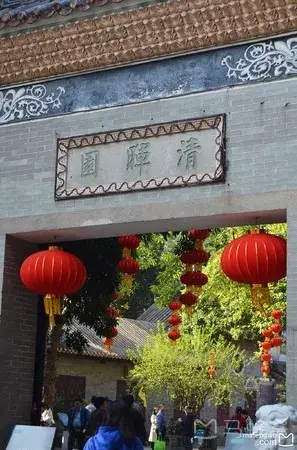
Foshan Shunde Qinghuiyuan Museum, a national cultural relics protection unit, a national AAAA-level tourist attraction, and one of China's top ten famous gardens.
Ming Dynasty Wanli Dingwei (1607) champion Huang Shijun (1570-1661) in the first year of the reign of the Ming D...

Foshan Shunde Qinghuiyuan Museum, a national cultural relics protection unit, a national AAAA-level tourist attraction, and one of China's top ten famous gardens.
Ming Dynasty Wanli Dingwei (1607) champion Huang Shijun (1570-1661) in the first year of the reign of the Ming Dynasty (1621) to build the Huangjiatun, Tianzhangge and Lingya Pavilion. During the Qing Emperor Qianlong period (1711—1799), Daliang Jinshilong purchased the old site from time to time (1716-1800), repaired and expanded, planted flowers and grass, and gradually became a scale. In 1805, Long Tingyu (1749 - 1827) built Xiaofangyuan. In 1806, his son Longyuan was expanded, called "Qinghui Garden", please join the list of scholars, Jiangsu calligraphy master Li Zhaolu inscribed the garden name. Zilong Yuanzhang (1809-1884) built Longtaichang Garden and Chuyu Garden. After several twists and turns, Longtaichang Garden was renamed as “the vast garden”. Long’s descendants were refined over the years, and this ancient garden gradually became rich in Lingnan. Characteristics. After 1959, Tao Zhu, the then secretary of the Guangdong Provincial Party Committee, inspected Shunde, paid close attention to the repair of Qinghui Garden, instructed key protection, and allocated funds for repair, and merged Chufu Garden, Garden, Jiemei Hall and Jingqin Hall. It is collectively referred to as “Qinghui Garden” and later became the first guest house of Shunde County Committee. After the reform and opening up, it added restaurants, hotels and parking lots to provide comprehensive services for tourism, catering and accommodation. In the 1990s, the Shunde government allocated funds for repair and expansion. Qinghui Garden. At the end of the 20th century, the government expanded again and added many scenic spots. In the spring of 1984, Comrade Deng Xiaoping came to Qinghui Garden. In the spring of 1994, Comrade Deng Xiaoping paused in front of Qinghui Garden. It left a precious history for this ancient garden. .now Covers an area of ​​22,500 square meters and Qinghui Park Foshan Liang Yuan, Yu Yin Shan Fang, Panyu, Dongguan, Guangdong can park and said the four famous gardens of the Qing Dynasty.

Foshan Lecong Chenjia Temple Museum

Lecong Chenjia Temple Museum was built in the 21st year of Qing Guangxu (1895) [2] and completed in twenty-six years (1900). It is rumored that the plaque was built by local Chen’s descendants, and the layout and form of the building resembled the Chen’s College in Guangzhou. It ...

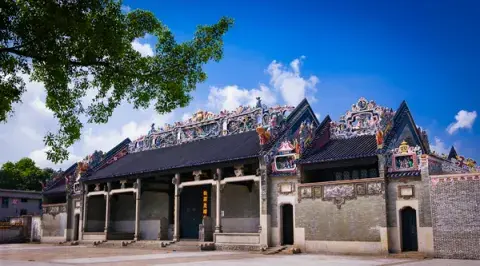
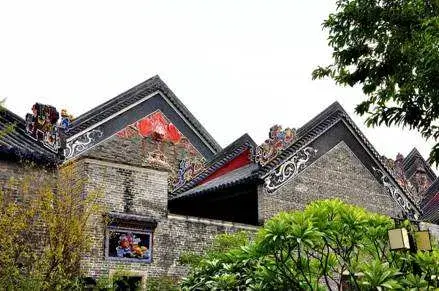
Lecong Chenjia Temple Museum was built in the 21st year of Qing Guangxu (1895) [2] and completed in twenty-six years (1900). It is rumored that the plaque was built by local Chen’s descendants, and the layout and form of the building resembled the Chen’s College in Guangzhou. It is a courtyard of the Sanjin Courtyard. It covers an area of ​​more than 4,000 square meters. The main building is a hard mountain top. The width and depth of each are three, and the beam and the bucket are mixed. In front of the middle seat is a large stone platform, surrounded by stone pillars and white boards, fine craftsmanship. The porch on both sides is separated by a wooden carved flying hood, each divided into three, flower and bird worms, hollow carvings, and long corridor screen doors. On the top, the heart is colored with colored glass, and the next is engraved with a skirt, and the Zhulan paintings are magnificent. The back wall of the middle seat is full of five-meter-high Pontianak wood carved large screen, exquisite carving, ancient and magnificent, the existing giant wood carving table, the head of the beast, the ancient dignified. The existing ridges of the middle and back seats are gray plastic, more than one meter high, and the group paintings are exquisite, the lines are rough and powerful, and the ancients are vivid. The wood carvings, stone carvings, pottery sculptures, brick carvings, gray plastics and other decorative techniques in the urn are incomplete, but they are also indispensable. [1]
It is said that all the wood branches of Chenjiatun, Pontianak, teak, rosewood, and Tokyo were donated by overseas Chinese Chen Tai who lived in Nanyang. In order to purchase good materials, he traveled to Thailand and other places, went deep into the forest, and personally selected. Finally, it was shipped to Hong Kong via Singapore and transported back to Satay.

Foshan Shunde Muboli Ancient Buildings

In Shaojiao South Village, Lecong Town, Shunde, in addition to the largest surviving ancient Chen Chen's ancestral temple in Shunde, there is also an ancient dwelling. This is called the Shepherd.
    The Muboli Ancient Buildings is a relatively complete residential ...

In Shaojiao South Village, Lecong Town, Shunde, in addition to the largest surviving ancient Chen Chen's ancestral temple in Shunde, there is also an ancient dwelling. This is called the Shepherd.
    The Muboli Ancient Buildings is a relatively complete residential complex with an area of ​​more than 20,000 square meters and is evenly separated by 17 flat and identical alleys. Divided into the front and back streets, the houses have different architectural styles, ranging from the older Chinese-style houses to the Western-style buildings in the early Republic of China. These houses are all blue brick exterior walls. Some houses are made of red sandstone. The doors and window sills are decorated with fine gray plastic or brick carvings. Some houses are covered with gables, dragon ridges, and some are Chinese-Western buildings. The houses are mostly two-storey with wood carvings, brick carvings, stained glass screens and ancient Roman columns. Most of the houses have three doors at the door, and some houses have a complete set of furniture. Most of the buildings are old buildings, and there are about 30 representative buildings, which basically have a history of more than 100 years. In front of Mubury, there is a stone monument convention, which prohibits the opening of a smoking hall, a gambling hall, the prohibition of imposing a house on a pawnshop or selling it to a foreign surname.

Foshan Shijilian Sports Center

Foshan Shijilian Sports Center is a sports stadium in Foshan City, Guangdong Province, China. It was built as an auxiliary facility for the 12th Guangdong Provincial Games and was also the landmark building of Foshan New Town. Its main role is to replace and supplement the stadium that was l...

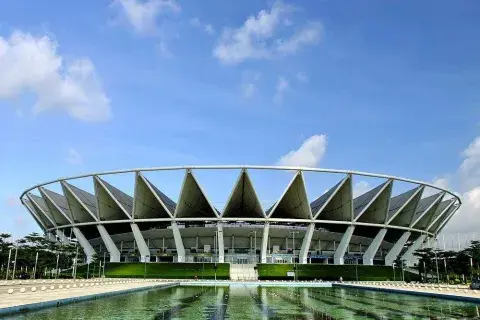
Foshan Shijilian Sports Center is a sports stadium in Foshan City, Guangdong Province, China. It was built as an auxiliary facility for the 12th Guangdong Provincial Games and was also the landmark building of Foshan New Town. Its main role is to replace and supplement the stadium that was later demolished, Foshan New Square. The opening ceremony of the 12th Guangdong Games was also held here.

Foshan Shijilian Sports Centeris located in Foshan New Town, Foshan City, with a total area of ​​42 hectares, designed by the German GMP company. The northeast side is the Dongping Bridge, and the west side of the plot has become a real estate development jointly developed by China Merchants Real Estate and Wheelock. The total investment of the project is 939 million yuan, and the main facilities are stadiums and swimming and diving halls. The stadium is the main building of the sports center. The name of “Century Lotus” comes from this stadium resembling a lotus flower. The stadium has a construction area of ​​78,193 square meters and a height of 50 meters. The diameter of the roof is 310 meters.
Its roof is a membrane structure roof, the roof is ring-shaped, with an outer diameter of 310 meters and an inner diameter of 125 meters. The inner ring consists of 10 tension rings consisting of 8 cm diameter steel cables. The outer ring is a pressure ring, which is divided into upper and lower layers. The upper layer is 310 meters in diameter and consists of concrete-filled steel tube with a diameter of 1 meter. The lower layer is 275 meters in diameter and consists of concrete-filled steel tube with a diameter of 1.4 meters. The two layers of steel ring are separated by 20m. The concrete slanted columns are joined to form a rounded table shape.
There are 36,686 seats in the stadium. The venue includes a natural turf standard football field, a 400-meter runway, an athlete training ground and other field venues.

After the Guangdong Provincial Games, the stadium is mainly used for football matches. On October 21, 2007, Foshan Century Lotus Stadium held the first international football A-level event. The Chinese national team swept the Myanmar team 7-0 here and won the 2010 World Cup qualifier. In 2007 and 2008, Foshan Century Lotus Stadium was the home of Guangdong Sunzhiquan in the Chinese Football League. In addition, in 2010, due to the renovation of Guangzhou Yuexiushan Stadium, Guangzhou Evergrande team Guangzhou Evergrande also borrowed this venue. On July 21st, Foshan Century Lotus Stadium witnessed Guangzhou Evergrande's 10-0 victory over Nanjing's largest professional score in the Chinese professional league.
In addition, Foshan Century Lotus Stadium is also used for cultural events such as concerts. There was originally a football training ground next to the stadium, which was now converted into a golf training ground. The swimming and diving hall has a construction area of ​​31,052 square meters, a length of 220 meters, a width of 88.8 meters and a height of 22 meters. There are 2,800 seats in the audience. The building structure is a steel structure with a glass curtain wall and a cable membrane roof. There are 4 international standard swimming pools equipped with ozone water treatment technology to purify water. [1]
From August 2013 to December 2013, he was the home of Guangdong Rizhiquan Football Club. [1-2]

Foshan Shijilian Sports Centeris located in Foshan New City (in Foshan New Town, Foshan City). The planned transportation is developed, and many bus lines pass through. The south extension of Foshan Metro Line 1 under construction (the south extension of Foshan section of Guangfo Metro) Foshan Metro Line 3 and the planned Foshan Metro Line 6 are at the intersection of Dongping Station, and there are several subways in the construction and planning of the Pearl River Delta Intercity Rail Transit in the construction of the Century Century Station or Dongping Station. Convergence. The road traffic around Century Lotus is developed, and the main roads in the urban area (Zengui) are closely connected through the Dongping Bridge.

Foshan Library

The new library project of Foshan City was started in January 2010. The civil engineering was capped in January 2012 and the trial was opened on December 6, 2014. The new building is located in Foshan New City. The new building is designed by the British ARUP Engineering Consulti...

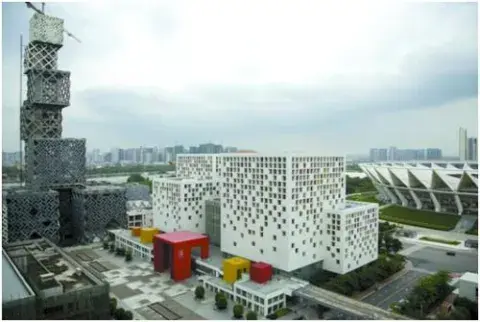
The new library project of Foshan City was started in January 2010. The civil engineering was capped in January 2012 and the trial was opened on December 6, 2014. The new building is located in Foshan New City. The new building is designed by the British ARUP Engineering Consulting Co., Ltd. Shenzhen Branch and the Danish HLA Consortium. The chief designer is Mr. Gao Hu, the chief designer of the Danish HLA architectural design company in Asia. His work focuses on refining the Foshan tradition. Cultural elements, focusing on the combination of international cultural trends and local culture. The building of the new library of Foshan Library overlooks a huge “goods”, representing the goals of the library: taste, character and quality; the exterior design of the new building uses Foshan paper-cut elements; the textual connotation is taken from the Song Dynasty poet Wengsen "Spring, Summer, Autumn, Winter" of "Four Time Reading Music", the poet regards all seasons as a good time to read, to promote the elegance and fun of reading, to encourage people to study hard, which has the service concept of the library. The same thing.

Foshan Wetland Park

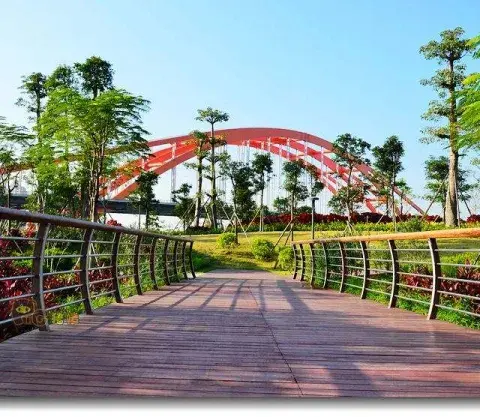
The Foshan New Town Central Park project covers an area of ​​2.4 million square meters, including Foshan City Park and Waterfront Park. It is a large public urban park system invested by the Chinese government.
Foshan Park combines urban planning and landscape design, includ...

The Foshan New Town Central Park project covers an area of ​​2.4 million square meters, including Foshan City Park and Waterfront Park. It is a large public urban park system invested by the Chinese government.
Foshan Park combines urban planning and landscape design, including a hood that can accommodate 20,000 people, leisure facilities along with a sports and swimming center, a walk through the garden, a botanical garden and a large exhibition building.
The first phase included a range of approximately 1.5 million square meters, which shrunk everything outside the Australian Homebush Olympic Center. After its completion, it will be put into use at the Guangdong Games held in Foshan in October 2006.
The design uses land as a “green machine” that collects, processes and reuses a large amount of park water and collects water from surrounding streets and commercial buildings. A series of energy-creating systems will run through the park's waters, using solar lighting and the winds of the Dongping River to study electric cars and bicycles for use inside the park.
The project is presided over by the Foshan Municipal Government. The important steps are to extend the park and extend the south side of the city to the Dongping River. The extension of the green infrastructure will guide the extension of the city.

Foshan Qianjin Exhibition Center

Advantageous geographical position
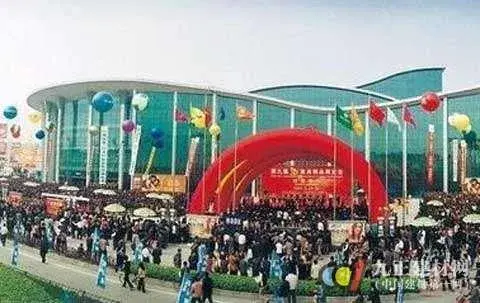
  Constructed from May 1999,ShundeQianjin Exhibition Center is one of the key program among‘Moon Projects’ of Longjiang Town.It is modern commercial project which was completed in January 2001 and solemnly opened in March 2001.
  The C...

Advantageous geographical position
  Constructed from May 1999,ShundeQianjin Exhibition Center is one of the key program among‘Moon Projects’ of Longjiang Town.It is modern commercial project which was completed in January 2001 and solemnly opened in March 2001.
  The Center is located at the crossing of National Way 325 and Longzhou Road,the heartland of Longjiang Town which belongs to 2+5 city-group of Foshan. It enjoys convenient transportation:just 1 km away from Fo-Kai highway, 20 minutes to Daliang, Foshan new town, and Gaoming, and 50 minutes to Guangzhou Baiyun Airport by car. Around the Center there scatters several bus-stops and taxi stops extending to all directions, as well as some Large dining and entertainment centers,hotels,a furniture shop covering 3,000,000㎡ and a furniture material market covering 1,500,000㎡.Qianjin Exhibition Center,which provides convenience for exhibitions,is a precious land for business.

perfect supportingFACILITIES 
  All established facilities are designed in conformity with requirement for large exhibition building and commercial project.
  1.Two special power supply system can provide a high capacity of 4850kv-amperes in dual-loop control,which allows for maximum 300W/㎡ for the first floor and 100W/㎡ for 2-4 floors.
  2.Central-controlled air conditioner system may distribute a cooling capacity up to 2000 tons and ensures good air circulation indoors.
  3.Advanced automatic alarm system for fire control,coming with separate fireproofing rolling gates and automatic spray system;measure up national fire secure control.
  4.Nine escalators;two special elevators for goods conveya`nce;
  5.Modern closed-circuit TV watch system ensures all-day guarding;
  6.Equipped with radio base station and WLAN,the building can serve for 3000 cellular phones simultaneously;
  7. Double loop group special line optical fiber supporting project used in the Center can provide 100M wired network in anywhere of the center.

 8.Nearby Longjiang Club can serve 1000 persons each meal;five-star BiguiyuanPhoenix Hotel offers standards business travel service for guests.
  With first-class establishment,Qianjin Exhibition Centeris an ideal location for exhibition and commercial activities.


MULTI-FUNCTIONAL REAL ESTATE PROJECT
  The diversity of operationswas full considered in every part ofQianjin Exhibition Center which is a multi-purpose and multi-functional building, including design, construction and Configuration ofsupporting equipment. Qianjin Exhibition Center is multi-functional combined with exhibition,shop,professional market,hotel with office building.

GLOBAL BUSINESS PLATFORM
  The Center is a four-storied building covering more than 10,000㎡ each floor, 40000㎡total construction areas.In front of and behind the building,there are two squares with the area of 13000㎡ used for parking and goods loading.
  Qianjin Exhibition Center is acclaimed as the first boom in local exhibition economy.Through these years,it has successfully staged more than 30 times large-scale fairs,such as ‘Dragon ’Furniture Fair,ShundePaint & Chemical Product Fair, ShundeFurniture Material and Mechanical Parts Fair, Huanan Plastic Mechanical Fair, Tea Expo, Furniture Direct SellingFestival and Shopping Festival.It has altogether attracted over 1 million businessmen coming from more than 80countries and regions. Thus as a professional exhibition center,Qianjin enjoys a high reputation at home and abroad and became a global business platform.

China Articles

Top China Tours

$150 Per Day

Guangzhou

Day 1 Arrive in Guangzhou

Arrive in Guangzhou in the morning, you will be met and transferred to hotel, then visit Sun Yat-sen Memorial Hall. The Memorial Hall is a very famous historical scenic spot. It is in memory of Sun Yat-sen, the great revolutionary forerunner. After that proceed to visit the Ancestral Temple of the Chen Family. It is a unique site for offering up sacrifices to worship ancestors of 72 Chen families in Guangdong. This ancestral temple is also the largest, best preserved and best decorated ancient architecture existing in Guangdong province.

Day 2 Guanzhou Tour 

After breakfast, you will go to Yuexiu Park first, the largest and the most famous park in downtown Guangzhou. There are three artificial lakes and seven hills of Yuexiu Mountain. Then you will visit Temple of Six Banyan Trees, which is one of the four best Buddhist temples in Guangzhou and located on the Liurong Road (meaning the Six Banyan Trees Road). The Nanyue King Tomb Museum is a must-see Guangzhou attraction, which dates back to 2,000 years ago, is the earliest large scale painted stone chamber tomb ever found south of the Five Ridges. Buried with the tomb owner in a jade shroud are a gold seal and a lot of exquisite jade adornments. It has become a world famous museum. After the day tour you will be transferred to airport for your next destination.
$53 Per Day

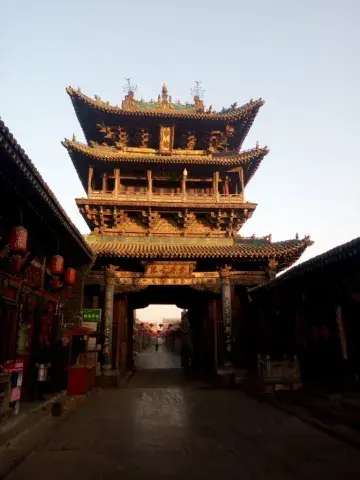
Pingyao Highlights Walking Tour

Pingyao Highlights Walking Day Tour

With our guide to know the Ancient Pingyao better!

Our guide will meet you at your hotel lobby at 08:00 or 08:30, then show you the ticket office to get the ticket for the museums we will visit later.

First we will visit the 700 years old City wall, We will climb up from south gate and have a walk on the wall. We are not sure how many km we can walk, because of the renovating of the wall. Normally we will walk from south gate to the Yunlu Exit.

Then visit the Confucius temple, there is a old building named Dacheng Hall which is over 840 years old. From outside, we can see the big wood joints to lift the big roof around the building which is named Dougong. Due to this design, there are less columns inside the hall for giving the big space for the statues and the prayer. We have chance to see the Confucius statue and learn the philosophy of Confucius. If you like, you can pray for you and your children to get better study.

There is the Paper Cutting master named Wentao nearby the exit of Confucius temple. She is very smart and create the new style paper cutting with much more details and good wishes on it. Her products are made by hanks. It is worth to visit and buy as a souvenir from Pingyao. From the table standing and wall hangings. Please remember, take the red one because of red is the traditional and happy color. But the white one is the best. It is really difficult to choose, because of all of them are really nice.

Then you can have coffee break or tea break if you need at Chummy coffee, after this, visit the City god temple (ChenghuangMiao) which is most beautiful temple inside the wall. Because of the roof is covered by the colorful glazed tiles. There is not only city god and also the three money gods, Now you know why pingyao was the financial center.

Next we will visit the Ancient government building, to see the pingyao politics center in the ancient time. It is the complete building with officials bed room, kitchen and private garden. Follow the guide to look the official’s life from the 250km far away from the hometown.

Have a stroll in the alley to the Rishengchang exchange bank, which is the first bank all of china.You can not miss it.

After lunch, walk to the Ming and Qing street, this is the shopping street full of the stores on the both side of street. You can find alot things here , from post card to lacquered boxes, and wall panels. One more place to see, it is the Armed escort agency also named security and transport service for the business man before the bank founded.

Inlcusions

1.private english speaking tour guide servcie

2.bottle water for the tour
 

$310 Per Day

3- Day Popular Tour In Zhangjiajie

Day 1    Zhangjiajie National Forest Park

Full day trip to Zhangjiajie National Forest Park,take Bailong Elevator up Yuanjiajie,Bailong Elevator is the said to be the worlds tallest full-exposure outdoor lift,double-deck sightseeing elevator.Yuanjiajie is the inspiration for Hallelujah Mountain in AVATAR , Where you will also find the aptly named First Bridge under Heaven, Lover Peaks and so on.

Continuing to Tianzi Mountain, it takes you 40 minuts from Yuanjiajie to Tianzi Mountain by public bus, after arriving in Tianzi Mountain, you will have a bird’s-eye view of all the mountains and valleys of the Wuling Mountains. Visit Western Sea, Helong Park, Viewing Terrace etc.Take Tianzi cablecar down and check in hotel for a rest.
Accommodation: Wulingyuan Downtown

Day 2    Baofeng Lake & Glass Bridge

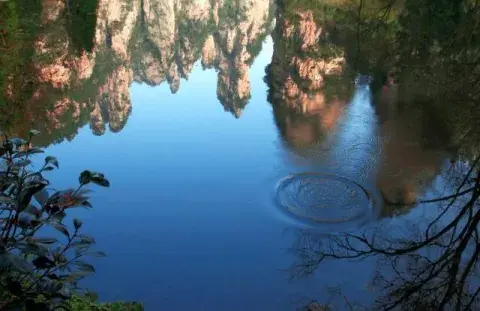
After breaking in the hotel, we head to Baofeng Lake where is the masterpiece of nature and human beings’wisdom. Baofeng Lake is pure just like a big crystal among Bao feng mountain Range.When you cruise, you can hear authentic song from Tujia minority people,you can fully understand the harmony and peace between human beings and nature.

Transfer to Zhangjiajie Grand Canyon, have a walking on the Glass Bridge, Glass Bridge is the highlight of Zhangjiajie Grand Canyon, located in Zhangjiajie Grand Canyon, Zhangjiajie Grand Canyon Glass Bridge is the highest and longest transparent glass bridge with a length 430 meters and a width 6 meters. It is 300 meters above the ground level and it can bear 800 persons standing on it at the same time. (need to book the tickets in advance)
Accommodation: Wulingyuan Downtown

Day 3    Tianmen Mountain

Full day to explore Tianmen Mountain,take the longest cablecar in the world up Tianmen Mountain,have a walk on the mountain plank road built along the face of cliffs. You will feel like walking in a fairy land when the mist is still heavy.The must-visit scenic spots are: Tianmen Cave, Glass Road, Tianme Temple.

See you off in the airport and looking forward to seeing you again in Zhangjiajie.