China Attractions


China Articles
Grand View GardenⅠ
The classical Grand View Garden is an imperial family garden described in the famous Chinese works A Dream of Red Mansions written by a Qing Dynasty (1644 - 1911) writer Cao Xueqin (17l5 - l763)....
The classical Grand View Garden is an imperial family garden described in the famous Chinese works A Dream of Red Mansions written by a Qing Dynasty (1644 - 1911) writer Cao Xueqin (17l5 - l763). This contemporary construction compass a large greenery garden dotted with pavilions, halls, temples and miniature gardens with a total of 7.6 acres (30,785 square meters).
According to the novel, Grand View Garden was the residence of the wealthy Jia family. It tells the story of the demise of the prominent aristocratic Jia family against the background of the feudal society in which it had thrived. The leading male character of the novel was Baoyu. He and his two cousins and some other family members shared the home. The tragic love affairs among the three characters were the result of the feudal society. These amorous and sensitive couples are China's Romeo and Juliet. You could peep inside not only the Chinese culture but its rich garden heritage in the Grand View Garden.
White Tower TempleⅢ
The White Dagoba is higher than the neighborhood at 51meters (167 feet) and has a diameter of over 30 meters (98 feet) at its base....
The White Dagoba is higher than the neighborhood at 51meters (167 feet) and has a diameter of over 30 meters (98 feet) at its base. It is composed of five major sections: a terrace platform, a lotus bud shaped body painted white with lime and holding sealed religious artefacts, a steeple of thirteen shrinking layers (known as the 'thirteen heavens'), a beaten bronze canopy with 36 bronze bells hanging from its rim, and a spire. Unlike most dagobas which have a crescent moon or a precious bead at the top, this dagoba has a small bronze Lamaist sutra mounted on the steeple's canopy.
Entrance Fee: CNY 20 (adults); CNY 10 (kids under 1.2 m)
Opening Hours: 08:30 - 17:30
Bus Routes: Take Bus No. 7, 13, 42, 101, 102, 103, 709, 846 or 850 and get off at Baitasi (White Tower Temple) Stop.
White Tower TempleⅡ
In 1457 Emperor Tianshun of the Ming Dynasty (1368 - 1644) commanded a reconstruction of the temple which then covered an area of 13,000 square meters (3.2 acres), much smaller than its original dimensions. Then it was renamed Miaoying Si ('si' means temple)....
In 1457 Emperor Tianshun of the Ming Dynasty (1368 - 1644) commanded a reconstruction of the temple which then covered an area of 13,000 square meters (3.2 acres), much smaller than its original dimensions. Then it was renamed Miaoying Si ('si' means temple). The temple complex has retained the same layout since then until today. It is now under the state protection. The temple mainly consists of the White Dagoba and four main halls. One highlight for visitors is inside Dajue Dian (Hall of the Great Enlightened Ones), the first main hall; it contains thousands of small golden Buddhas, which are now enclosed in glass cases.
Top China Tours
$53 Per Day
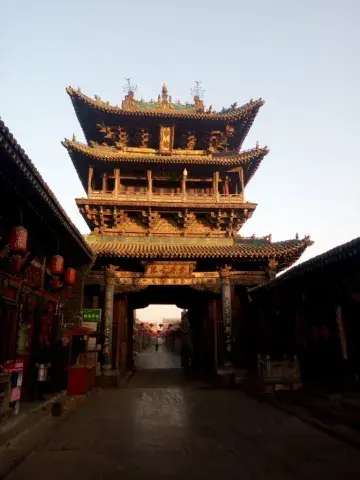
Pingyao Highlights Walking Tour
Pingyao Highlights Walking Day Tour
With our guide to know the Ancient Pingyao better!
Our guide will meet you at your hotel lobby at 08:00 or 08:30, then show you the ticket office to get the ticket for the museums we will visit later.
...Read morePingyao Highlights Walking Day Tour
With our guide to know the Ancient Pingyao better!
Our guide will meet you at your hotel lobby at 08:00 or 08:30, then show you the ticket office to get the ticket for the museums we will visit later.
First we will visit the 700 years old City wall, We will climb up from south gate and have a walk on the wall. We are not sure how many km we can walk, because of the renovating of the wall. Normally we will walk from south gate to the Yunlu Exit.
Then visit the Confucius temple, there is a old building named Dacheng Hall which is over 840 years old. From outside, we can see the big wood joints to lift the big roof around the building which is named Dougong. Due to this design, there are less columns inside the hall for giving the big space for the statues and the prayer. We have chance to see the Confucius statue and learn the philosophy of Confucius. If you like, you can pray for you and your children to get better study.
There is the Paper Cutting master named Wentao nearby the exit of Confucius temple. She is very smart and create the new style paper cutting with much more details and good wishes on it. Her products are made by hanks. It is worth to visit and buy as a souvenir from Pingyao. From the table standing and wall hangings. Please remember, take the red one because of red is the traditional and happy color. But the white one is the best. It is really difficult to choose, because of all of them are really nice.
Then you can have coffee break or tea break if you need at Chummy coffee, after this, visit the City god temple (ChenghuangMiao) which is most beautiful temple inside the wall. Because of the roof is covered by the colorful glazed tiles. There is not only city god and also the three money gods, Now you know why pingyao was the financial center.
Next we will visit the Ancient government building, to see the pingyao politics center in the ancient time. It is the complete building with officials bed room, kitchen and private garden. Follow the guide to look the official’s life from the 250km far away from the hometown.
Have a stroll in the alley to the Rishengchang exchange bank, which is the first bank all of china.You can not miss it.
After lunch, walk to the Ming and Qing street, this is the shopping street full of the stores on the both side of street. You can find alot things here , from post card to lacquered boxes, and wall panels. One more place to see, it is the Armed escort agency also named security and transport service for the business man before the bank founded.
Inlcusions
1.private english speaking tour guide servcie
2.bottle water for the tour
$310 Per Day
3- Day Popular Tour In Zhangjiajie
Day 1 Zhangjiajie National Forest Park
Full day trip to Zhangjiajie National Forest Park,take Bailong Elevator up Yuanjiajie,Bailong Elevator is the said to be the worlds tallest full-exposure outdoor lift,double-deck sightseeing elevator.Yuanjiajie is the inspiration for Hallelujah Mountain in AVATAR , Where you will also find the aptly named First Bridge under Heaven, Lover Peaks and so on.
...Read more
Day 1 Zhangjiajie National Forest Park
Full day trip to Zhangjiajie National Forest Park,take Bailong Elevator up Yuanjiajie,Bailong Elevator is the said to be the worlds tallest full-exposure outdoor lift,double-deck sightseeing elevator.Yuanjiajie is the inspiration for Hallelujah Mountain in AVATAR , Where you will also find the aptly named First Bridge under Heaven, Lover Peaks and so on.
Continuing to Tianzi Mountain, it takes you 40 minuts from Yuanjiajie to Tianzi Mountain by public bus, after arriving in Tianzi Mountain, you will have a bird’s-eye view of all the mountains and valleys of the Wuling Mountains. Visit Western Sea, Helong Park, Viewing Terrace etc.Take Tianzi cablecar down and check in hotel for a rest.
Accommodation: Wulingyuan Downtown
Day 2 Baofeng Lake & Glass Bridge
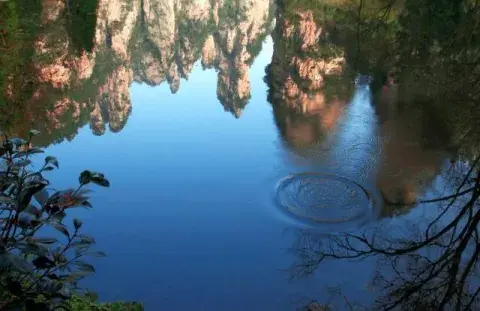
After breaking in the hotel, we head to Baofeng Lake where is the masterpiece of nature and human beings’wisdom. Baofeng Lake is pure just like a big crystal among Bao feng mountain Range.When you cruise, you can hear authentic song from Tujia minority people,you can fully understand the harmony and peace between human beings and nature.
Transfer to Zhangjiajie Grand Canyon, have a walking on the Glass Bridge, Glass Bridge is the highlight of Zhangjiajie Grand Canyon, located in Zhangjiajie Grand Canyon, Zhangjiajie Grand Canyon Glass Bridge is the highest and longest transparent glass bridge with a length 430 meters and a width 6 meters. It is 300 meters above the ground level and it can bear 800 persons standing on it at the same time. (need to book the tickets in advance)
Accommodation: Wulingyuan Downtown
Day 3 Tianmen Mountain
Full day to explore Tianmen Mountain,take the longest cablecar in the world up Tianmen Mountain,have a walk on the mountain plank road built along the face of cliffs. You will feel like walking in a fairy land when the mist is still heavy.The must-visit scenic spots are: Tianmen Cave, Glass Road, Tianme Temple.
See you off in the airport and looking forward to seeing you again in Zhangjiajie.
$200 Per Day
CHENGDU, A PANDA CITY, A GOURMET CITY, A TEA CITY, LOOKING FOWARD TO YOUR ARRIVAL
Chengdu, with an area of 12,400 square kilometers and a polulation of about 14,170,000 is not just the biggest provincial capital in west China, but also the only city in the history of China whose name has reminded the same for 3,000 years since its establishment. In Chinese, "Cheng" means "success or successful" and "Du" means "big city or capital". This "Successful City" boasts a long history. It is believed that everything about Chengdu has their origin from "Sanxingdui Ruins", from where you can deeply discover the history story of Chengdu.
...Read moreChengdu, with an area of 12,400 square kilometers and a polulation of about 14,170,000 is not just the biggest provincial capital in west China, but also the only city in the history of China whose name has reminded the same for 3,000 years since its establishment. In Chinese, "Cheng" means "success or successful" and "Du" means "big city or capital". This "Successful City" boasts a long history. It is believed that everything about Chengdu has their origin from "Sanxingdui Ruins", from where you can deeply discover the history story of Chengdu.
Giant pandas definitely are the best calling card and trademark of Chengdu. Every year, million of people are attracted by giant pandas to spend their holidays here, go sightseeing here, make investment here and even settle here permanently. The reason is that for people around the world, the charm of giant pandas cannot be replaced by anything else.
Various kinds of wonderful food shall be another reason attracting you to visit Chengdu. Of the four most famous schools of culinery art in China (Beijing cuisine, Sichuan cuisine, Jiangsu cuisine, Guangdong cuisine), Sichuan cuisine boasts tongue-numbing, hot, delicate and fresh taste and a variety of flavors, as "each dish has its unique taste and no two dishes have the same flavor." Such spcial flavors as fish-flavored, gongbao (with peanuts), and water-boiled are incomparable at home and abroad.
"The teahouses in Sichuan top the world, and those in Chengdu Top Sichuan." This widespread saying not only points out the status of Chengdu's teahouses but also the inseverable ties between Chengdu culture and tea. Like bars in Paris and cafes in Vienna, teahouse add a touch of refinement and leisureliness to Chengdu, an ancient yet modern metropolis. The practice of driking tea prevailed in Sichuan as earlt as prior to the Qin and Han Dynasties.
Wish you can have a nice trip in Chengdu. You will love it.