China Attractions

St. Pauls Church
Established in 1923, St. Paul’s Church is the first official Christian church in Nanjing. The church’s design is meant to imitate the style of European churches in rural areas. It is gothic architecture with...
Established in 1923, St. Paul’s Church is the first official Christian church in Nanjing. The church’s design is meant to imitate the style of European churches in rural areas. It is gothic architecture with exquisite decoration. The inner structure reflects traditional Chinese style. The walls were built with polished stones taken from Nanjing’s ancient city walls. However, the main structure is built from delicately carved white marbles. Lections were carved carefully on the inner walls and are adorned with some gold foil. A bell tower which contains a bell 2 meters in diameter sits on the roof of the church.
Sanya Beaches
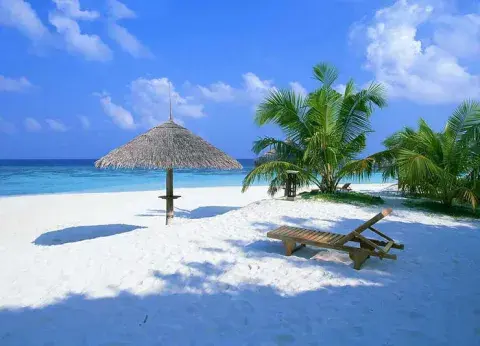
Sanya is one of the most beautiful places in China,and it is always the first choice for many tourists who want to enjoy the beach and sunshine. Golden beaches and golden people,sun,sand,sea,food,and surf..and so...
Sanya is one of the most beautiful places in China,and it is always the first choice for many tourists who want to enjoy the beach and sunshine. Golden beaches and golden people,sun,sand,sea,food,and surf..and somewhere between the blue skies and the palm trees...we're hooked.

Mountain Emei
Orographically, Mt. Emei sits at the western rim of the Sichuan Basin. The mountains west of it are known as Daxiangling.A large surrounding area of countryside is geologically known as the Permian Emeishan Large Igneous Province, a large igneous province generated by the Emeishan Traps volcanic ...
Orographically, Mt. Emei sits at the western rim of the Sichuan Basin. The mountains west of it are known as Daxiangling.A large surrounding area of countryside is geologically known as the Permian Emeishan Large Igneous Province, a large igneous province generated by the Emeishan Traps volcanic eruptions during the Permian Period. At 3,099 metres (10,167 ft), Mt. Emei is the highest of the Four Sacred Buddhist Mountains of China.
Administratively, Mt. Emei is located near the county-level city of the same name (Emeishan City), which is in turn part of the prefecture-level city of Leshan. It was made a UNESCO World Heritage Site in 1996.
Attractions:1.As one of the Four Well-Known Sacred Buddhist Mountains of China.
2.Buddhist architecture on Emei.
3.Sunrise and clouds sea.
4.Climate.
5.Plenty of monkeys.

Yellow Dragon Cave
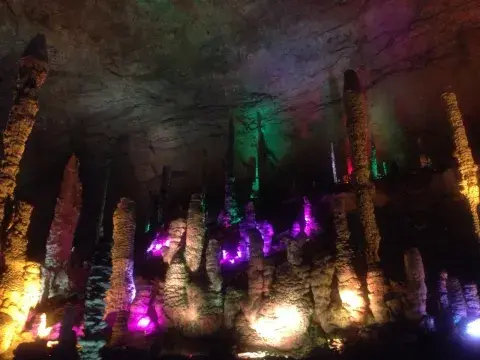
Yellow Dragon Cave, squared at 100,000 square meters, is the longest one in Asia; it is an incomparable realm of gigantic subterranean chambers, fantastic cave formations, and extraordinary features. Many of the wonders of Yellow dragon cave are well known, yet the experience of exploring its cha...
Yellow Dragon Cave, squared at 100,000 square meters, is the longest one in Asia; it is an incomparable realm of gigantic subterranean chambers, fantastic cave formations, and extraordinary features. Many of the wonders of Yellow dragon cave are well known, yet the experience of exploring its chambers is every bit as exciting. The cave remained mystic to local villagers before the first caving adventure took place in 1982. In the cave there’s a stalagmite length at 19.2m in the cave, in 1998 the Yellow dragon cave company has bought one hundred million insurance for it, that’s the event to make this cave become so famous in China.
There's even a river in side and you can enjoy 10 minutes boat riding in the cave! While in the cave, there're lots of steps up, around 2000 steps altogether, takes about 2 hours to visit it.

Meili Snow Mountain
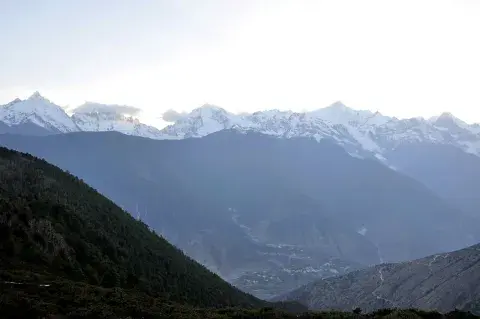
Meili Snow Mountain, also known as Prince Snow Mountain, is located 10 kilometers (6.2 miles) northeast of Deqin County of Yunnan Province. It sits on the border of Yunnan Province and Tibet, where the three famous rivers, namely the Jinsha, Mekong (Nu) and Salwen (Lancang) flow.
Known for ...
Meili Snow Mountain, also known as Prince Snow Mountain, is located 10 kilometers (6.2 miles) northeast of Deqin County of Yunnan Province. It sits on the border of Yunnan Province and Tibet, where the three famous rivers, namely the Jinsha, Mekong (Nu) and Salwen (Lancang) flow.
Known for the grandest view in Yunnan Province, Meili Snow Mountain boasts numerous snow-clad ridges and peaks, thirteen of which exceed 6,000 meters (19.685 feet) above the sea level. The most splendid view is of the Kawagebo Peak, the highest in Yunnan Province rising about 6,740 meters (22,112.86 feet). It is still a 'virgin peak' for no one has ever reached the top. Thus, Meili Snow Mountain is a challenge for all mountain explorers from home and abroad.
Visitors are treated to spectacular view from all vantage points. The continuous mountain ridges feature snowy peaks and the sun throws golden lights on the low-floating clouds which form various extraordinary shapes, affording yet another splendid view! But mostly, the mountain presents itself as mystery when dense fog and clouds made it a gleaming sight to see and you could hardly resist the temptation to unveil it. You can have a panoramical view of the thirteen towering peaks from the Feilai Temple which is in the west of Deqin County.
From the foot of the Kang Karpo Peak, you see the peculiar low-altitude glaciers formed in modern times. Strong updrafts collide with cloud airflow from the inner continents in this area producing frequent dense fog and heavy snow. The resulting topographic extremes include hanging glaciers, icefalls and snow slides. The Mingyong Glaciers, in particular, rushes from an elevation of 5,500 meters (18.045 feet) down to the forest zone 2,700 meters (8,858 feet) above the sea level in rainy seasons. From afar it looks like a huge white snake wriggling its way among the verdant mountains. On the south side of the peak, a waterfall named 'holy collapsing rain' falls from thousands of meters high. Pure water splashed from snow cracks and with the help of the sunlight, rainbows are often seen hanging above the fall.
Owing to its high altitude, the mountain owns several climatic zones with a diversity of plants, vast expanse of grassland and rich fungi species that are vertically distributed. The types of vegetation here range from the Torrid Zone to Frigid Zone vertically. From the altitude of 2,000 meters (6562 feet) to 4,000 (13123 feet) meters, forests flourish with varieties of spruce. The depth of the forest is an exotic world of rare birds and animals. The meadows surrounding the forests are embellished by countless flowers which add more vitality and charm.
Meili Snow Mountain is one of the most sacred mountains of Tibetan Buddhism. 'Kang Karpo Peak' means the God of Snow Mountain in Tibetan, and is a holy land for worshiping. Pilgrims from Tibet, Qinghai Province, Sichuan Province,and Gansu Province come here at the beginning of each winter to worship. Thousands of devout pilgrims worship together and encircle the holy mountain, adding even more mystery and loftiness to it.
Admission Fee: Mingyong Glacier Combo Ticket: CNY 228 (including Moon Bay, Misty Summit, Temple Flying Afar)
Yubeng Village Combo Ticket: CNY 230 (including Moon Bay, Misty Summit, Temple Flying Afar)
Temple Flying Afar Combo Ticket: CNY 150 (including Moon Bay and Misty Summit)

Jianshui Confucian Temple
·This building was built in the Yuan Yuan twenty-two years, has been more than 700 years of history. Experience on behalf of 50 multiple expansion upgrading, covers an area of 76,000 square meters, the existing scale, the level of the construction and preservation of soundness, are second ...
·This building was built in the Yuan Yuan twenty-two years, has been more than 700 years of history. Experience on behalf of 50 multiple expansion upgrading, covers an area of 76,000 square meters, the existing scale, the level of the construction and preservation of soundness, are second only to the Temple of Confucius in Qufu, Shandong Province and Beijing Confucius Temple, among the best in the the large Confucian Temple in the country. As a national key cultural relics protection units.

Hutong Tour (Old beijing tour)
1. Hutong's Origin
The word "hutong" is Mongolian in origin, meaning a "water well". In the old time with the digging of new wells, came the new communities. Later it was referred to as narrow streets or lanes formed by quadrangle courtards.
The word "...
1. Hutong's Origin
The word "hutong" is Mongolian in origin, meaning a "water well". In the old time with the digging of new wells, came the new communities. Later it was referred to as narrow streets or lanes formed by quadrangle courtards.
The word " hutong" with the meaning of narrow lanes was formed during the Yuan Dynasty in the 13th century when the Mongols, led by Genghis Khan, occupied Beijing, then the capital of the Jin Dynasty. In 1260 Kubla Khan, grandson of Genghis Khan, established the Yuan Dynasty. Kubla Khan chosed Beijing as his capital 1264.
During the takeover by the Mongols, the old city had been largely demolished, and so he decided to rebuild the city. When the new city was finished, there were clear definitions of streets, lanes and hutongs. A 36 metre wide road was called a "big street". An 18 metre wide one a "small street", and a 9 metre wide lane was called a "hutong".
Surrounding the Imperial Palace, hutongs were established throughout the Yuan (1206-1341), Ming (1368-1644) and Qing (1644-1911) Dynasties. Most of the hutongs we see today were built during the Ming and Qinq. You only still find a very few hutongs preserved from the Yuan Dynasty.
2. Hutong's names
Like streets, hutongs have their names. Some have had only one name since their establishment and others have had a few names throughout their history. Beijing was once a consumer city. A lot of hutong names are linked to the names of food.
Some hutong names are connected to the names of the places, the temples, daily necessities, trades, light industry, plants, people's names and even government's organs.
Food names, such as Miancha Hutong ( noodle and tea )
Temples, Baoguosi Hutong ( Baoguo Temple )
Daily necessities, Caomao Hutong ( straw hat )
Place names, as Inner Xizhimen Hutong
Plants, such as Liushu Hutong (Liushu means willow)
Light industry, as Damuchang Hutong ( big wood factory )
People's names, as Songguniang Hutong ( Ms Liu )
Government organs, as Jingcha Hutong ( Police Bureau )
3. Hutong Development
When the new city of Yuan Dynasty was established, it is recorded that there were about 390 roads formed by the rows of quadrangles. Some of were called streets and lanes, and some "hutongs". There were over 900 hutongs listed in Qing Dynasty. The records were increased to 1,330 by 1949.
Now many of the old hutongs have been turned down and replaced by the high buildings and wide roads of today's Beijing. Many citizens have to leave the narrow lanes where their families have lived there for generations, and residing in apartment buildings with modern facilities.
However,some of Beijing's ancient hutongs still survive, due to the local government's protection policy and people's request. Many have been listed as protected areas. So these ancient neighborhoods today provide a glimpse of the real life in the capital city as it has been for generations.
Many hutongs are being restored and renovated. In Beijing, there are mainly two hutong areas well preserved - Shichahai area in Dongcheng District and Qianmen area in Xuanwu District. The hutongs in the area of the Bell Tower and Shichahai Lake are especially well preserved which attract lots of tourists who travel the hutongs by pedicabs.
4. Siheyuan (quadrangle courtyard) and its layout
It is a private residence very popular in China, but most common in Beijing. Siheyuan literally means a courtyard house, a house enclosed by four walls, called a quadrangle courtyarrd. In Chinese history, the Siheyuan building was the basic system of the building for housing, palaces, temples, and government offices.
In 1264, Kubla Khan chosed Beijing as his capital. Then he began the large scale of city coonstruction which saw the emergence of the residential quadrangle courtyards along with the palaces, government office buildings, street blocks and hutong in Beijing.
There are three kinds of Siheyuan - small, medium and big courtyard houses. For small and simple Siheyuan, the main gate is open to the south; the main rooms in the north for grandparents are facing south; the corner rooms for grandchildren; the west rooms and east rooms are for sons or daughters; the rooms by the main gate facing north are used as the living room or studio.
For medium and big courtyard houses, there are more than one yard, two, three or even more yards with lots of rooms for some high ranking officials or rich merchants. The layout of a typical courtyard is actually a vivid showcase of traditional Chinese morality.
Why such a layout? Well, the four buildings in a single courtyard get different amount of sunlight. The northern rooms receives the most, thus using as the living room and bedroom for the eldest, usually the Siheyuan owner. The eastern and western rooms get less, and used as the rooms for the young or the guests. The southern rooms, just opposite the owner's rooms, get the least sunlight, and usually served as the rooms for service staff or studios.
The northern, eastern and western rooms are linked by pretty decorated passages. These passages are used as shelters from the sunshine during the day, and offer a cool shade and have a good view of the courtyard at night. Behind the northern rooms, there would often be an independent building for unmarried daughters.
In the old China, unmarried girls were not allowed directly to be seen in the public, hence living in the most secret building in the courtyanrd house. What's more, a Sheyuan has a scientific, human-oriented feature.
The wall in the north-western building are normally higher than the other walls to stop the inner building from the cold winds, blowing from the north-west side in the winter. The curved eaves helps the the accumulated rainwater flow along the curved rather than dropping direcctly down. The ridge-type rooftop gives much shade to have the rooms escape from the heat in the summer.
5. Siheyuan (quadrangle courtyard)'s present and future
Many of the city's residents in still live in the traditional courtyards within the second ring road, which features the limits of old Beijing. Part of the central part of Beijing is composed of hutongs or narrow lanes caused by the quadrangle courtyards. The well preserved residential quadrangles are mainly scattered over the East District, West District of the city.
However, Beijing faces much problem of housing shortage. Beijing is a city that is growing both spatially with its population growing at a fast rate. Many old quadrangle courtyards are being torn down to address problems of overcrowding, replaced by modern apartment blocks. So quite a few of those who have lived in the courtyards for generations have now moved to high-rise apartments of blocks in new residential areas.
As Beijing advances into one of the world 's metropolises, laws have also been formulated in Beijing to protect its 25 hutong ( lanes ) and quadrangle courtyards in the ancient areas, rangging from Prince Gong's Mansion to the common houses that have still kept the most complete forms of the courtyard dwellings.
6. Reasons to visit Beijing old hutong and courtyard
1) A stroll along shady Chengxian Street, the east-west roadway, starting about 700 years ago with its structures built in line with ancient Chinese customs,once one of the China's most important humanist centers.- the Confucius Temple and Guozijian (Imperial College). On the street, you will visit "Rongbu Tang" with a century old craftsmanship at its boutique store on Chengxinjie Street. The title of Rongbu Tang is given to a famous craftman - Tang Qiliang, a well-known elder craftsman in making toys with downy materials including wool and cotton (rongbu) which is listes as the intangible cultural heritage in China.
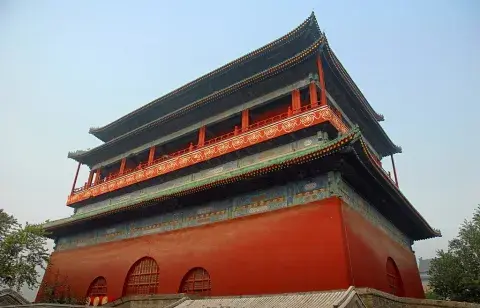
2) Ascending the 4-meter high and two-story Drum Tower dating from 1420, seeing the big drum tower and having bird's eye view of the surrounding communities of hutongs and siheyuan - existing traditional Beijing.
3) Walk along Yandai Xiejie ( Tobacco Pipe Lean Street ), a quaint 800-year-old hutong located directly north of Yinding Bridge between Qianhai and Houhai and the south of the Drum Tower, used to be well-known for sellers of long-stemmed pipes, hence the name. Standing on the Silver Ingot Bridge ( Yinding Bridge ) , a narrow channel joining Qianhai Lake and the Houhai Lake, the hub of Shichhai area with surrounding quiet hutongs
4) Visiting the Prince Gong' Mansion. It was once the private living place of He Shen, a favorite minister of Emperor Qianlong of the Qing Dynasty (1644-1911), it was first constructed in 1777. In 1851, the mansion was offered to Prince Gong by Emperor Xianfeng (1851-1862), hence the name. Now it is the most well preserved mansion in Beijing.
5) Experiencing some typical hutongs in the Shichahai area like Da Jinsi Hutong Tao, the most famous hutongs keeping the original layout of Hutong Area and also visit a local nursery.
6) Taking a boat cruising on the Shichahai Lake in the center of old Beijing. The lake is the only remaining water system, dating back to the Yuan Dynasty (13th Century). The lake is a scenic area with 34 hectares which is surrounded by former princes'houses, well kept Chinese courtyards and residencess of celebrities.
7) Interviewing with Mr.Dacheng Bai, a local folk craftsman, famous for making "Zongren Bai", a traditional "Zongren", a kind the figurines of drama characters made of the hair of a pig or a horse, cloth and silk, listed a city-level intangible cultural heritage in Beijing.
8) Immersing with an ordinary family courtyard home, having lunch there and exploring the real local life in Beijing. In addition, you can have a hand-on experience with Beijing Opera make-up and performance learning!
9) Visiting the former residence of Mr.Mei Lanfang (1894 - 1961),the best known Beijing Opera master ever, the greatest artist the world, founder of one of the three greatest acting methods created by Shakespeare Stanislavsky and Meilanfang.
10) Visiting the former residence of Soong Ching Ling ( 1890-1981 ), once a garden of one of the Qing Dynasty princes's mansions. She was late Honorary Chairman of the People's Republic of China, be known as "the Mother of China".
Pagination
China Articles

Draw lots
Draw lots is a Chinese custom, it is still used in modern China. It tells when a baby is one year old, that is the first birthday, the family will put a lot of thing in front of the baby, and let him pick one without any guidance by the old people....
Draw lots is a Chinese custom, it is still used in modern China. It tells when a baby is one year old, that is the first birthday, the family will put a lot of thing in front of the baby, and let him pick one without any guidance by the old people. This was a very old tradition. In the old days, the rich people have more selection than the poor people. Usually they put seal, pen, food, abacus, if the baby is a girl, they will add some cooking tools. If the baby pick a seal, it presents the baby will be an official in the future, if pick a pen, it symbols the baby will be something like poet, if pick an abacus, it seems like the baby will be good at controlling finance, if pick some food, it presents the baby will be good at enjoying life, if the girl pick the cooking tools, it means she will be a good wife in the future. This is the procedure of draw lots, a old custom in China. Interesting, right? The picture is a wax statue, was taken in Qiaojiadayuan in Shanxi province.
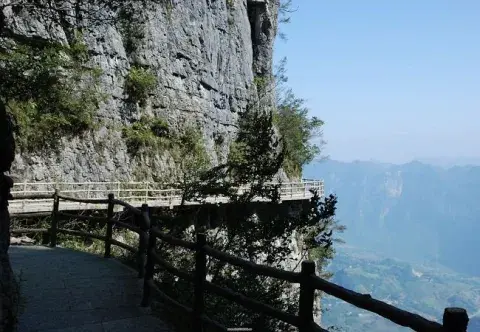
See a man cross China's Enshi Grand Canyon on a tightrope with no safety net!
Enshi Grand Canyon locates in the outer suburb of Enshi city proper, Hubei province. It is one section of Qingjiang Grand Canyon. This section is 108 kms long with many bold cliffs, waterfalls, isolates peaks and virgin forest and stockaded villages....
Enshi Grand Canyon locates in the outer suburb of Enshi city proper, Hubei province. It is one section of Qingjiang Grand Canyon. This section is 108 kms long with many bold cliffs, waterfalls, isolates peaks and virgin forest and stockaded villages. Except of its great canyon and small rivers, its another unique feature is karst landform on the shores. There are karst tiankeng, geofracture and karst caves which have more than 200.
Last month Dean Potter, a daredevil from New Hampshire, U.S. Was crossing the slackline between two isolated peaks at Enshi Grand Canyon. He had no rope or safety net.Remarkably, Potter was able to complete the superhuman task in under two minutes– taking the last few steps at a graceful run!
Kindly cues: Enshi Grand Canyon is composed with three huge mountains. It will take 4-6 hours to clime the huge canyon. Please wear comfortable shoes. It is better to have a walking stick. You will have to walk a lot, for there is no shortcut to the exit. Although the elevator is available, it is not going to take you directly to the exit. If you travel with a baby under three-year old, you may not touch everywhere of the Grand canyon.
Welcome to Enshi my distinguished guests from other parts of the Pacific. I would like to offer more practical information if you need. I hope you will have a pleasant discover in the new land, Enshi Tujia and Miao Autonomous Prefecture.

Kunming City in the 1980s
China is a developing country.The opening up in 1970s helped China made rapid progress to be part of the international country.It's amazing that China achieves rapid and considerable development in recent years....
China is a developing country.The opening up in 1970s helped China made rapid progress to be part of the international country.It's amazing that China achieves rapid and considerable development in recent years. Located in the southwest of China,Yunnan is an important tourism province because of rich tourism source .As the capital city of Yunnan province,Kunming city plays a significant role in the development of the whole province. Compared with the past,Kunming now has changed a lot.Go back to the 1980s,you will see .
Pagination
Top China Tours

Private Hangzhou Day Trip from Shanghai by Bullet Train
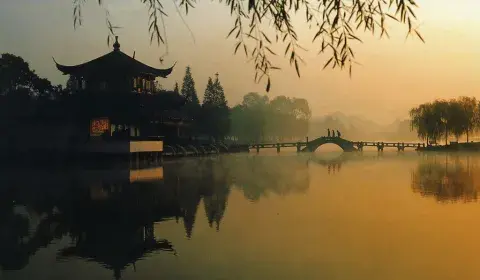
Take in the highlights of beautiful Hangzhou on a private full-day tour from Shanghai. After hotel pickup and transfer by high-speed train to Hangzhou, your private guide takes you to see some city attractions, such as Faxi temple. Moreover, enjoy a tasty lunch at a local restaurant before heading to Longjing village. There, learn about the process of farming and producing dragonwell tea, the region’s most famous product. Finally, enjoy a scenic boat cruise on UNESCO World Heritage-listed West Lake before returning to Shanghai.
...Read more
Take in the highlights of beautiful Hangzhou on a private full-day tour from Shanghai. After hotel pickup and transfer by high-speed train to Hangzhou, your private guide takes you to see some city attractions, such as Faxi temple. Moreover, enjoy a tasty lunch at a local restaurant before heading to Longjing village. There, learn about the process of farming and producing dragonwell tea, the region’s most famous product. Finally, enjoy a scenic boat cruise on UNESCO World Heritage-listed West Lake before returning to Shanghai.
This is a private, full-day trip from Shanghai to Hangzhou. After you are picked up in your hotel lobby in the early morning, you will take a bullet train to Hangzhou. This is the fastest way to Hangzhou and you can experience train speeds of up to 300 kilometers per hour. Your tour begins at one of Hangzhou's signature sites, the West Lake. Enjoy a lake cruise to see the top ten West Lake scenic views. You will then be taken to experience the wonderful cuisine of Hangzhou at a local restaurant. After lunch, you will visit Faxi temple, a well-known Temple dating back to the Jin Dynasty. See its famous wooden Buddha. Here, you will see fewer tourists and more locals. Finally, enjoy a cup of green tea when you visit the famous Longjing village to see wild fields of Longjing tea bushes where the locals produce the world famous green tea- Longjing Tea. In the village, all locals are tea farmers and you will see the entire procedure of making the famous tea and will get the chance to taste the best quality emperor tea. Afterwards, you will take the bullet train back to Shanghai and you will be returned to your hotel.
Guangzhou
Day 1 Arrive in Guangzhou
Arrive in Guangzhou in the morning, you will be met and transferred to hotel, then visit Sun Yat-sen Memorial Hall. The Memorial Hall is a very famous historical scenic spot. It is in memory of Sun Yat-sen, the great revolutionary forerunner. After that proceed to visit the Ancestral Temple of the Chen Family. It is a unique site for offering up sacrifices to worship ancestors of 72 Chen families in Guangdong. This ancestral temple is also the largest, best preserved and best decorated ancient architecture existing in Guangdong province.
...Read moreDay 1 Arrive in Guangzhou
Arrive in Guangzhou in the morning, you will be met and transferred to hotel, then visit Sun Yat-sen Memorial Hall. The Memorial Hall is a very famous historical scenic spot. It is in memory of Sun Yat-sen, the great revolutionary forerunner. After that proceed to visit the Ancestral Temple of the Chen Family. It is a unique site for offering up sacrifices to worship ancestors of 72 Chen families in Guangdong. This ancestral temple is also the largest, best preserved and best decorated ancient architecture existing in Guangdong province.
Day 2 Guanzhou Tour
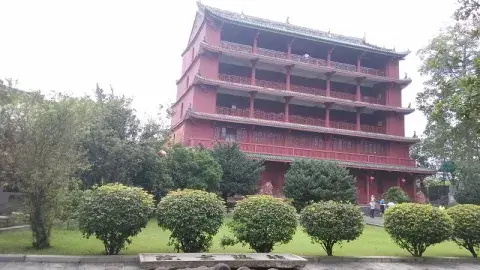
After breakfast, you will go to Yuexiu Park first, the largest and the most famous park in downtown Guangzhou. There are three artificial lakes and seven hills of Yuexiu Mountain. Then you will visit Temple of Six Banyan Trees, which is one of the four best Buddhist temples in Guangzhou and located on the Liurong Road (meaning the Six Banyan Trees Road). The Nanyue King Tomb Museum is a must-see Guangzhou attraction, which dates back to 2,000 years ago, is the earliest large scale painted stone chamber tomb ever found south of the Five Ridges. Buried with the tomb owner in a jade shroud are a gold seal and a lot of exquisite jade adornments. It has become a world famous museum. After the day tour you will be transferred to airport for your next destination.
Pingyao Highlights Walking Tour
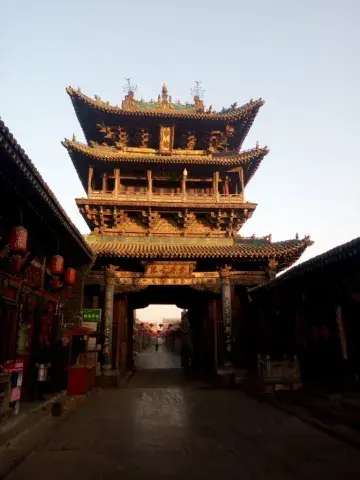
Pingyao Highlights Walking Day Tour
With our guide to know the Ancient Pingyao better!
Our guide will meet you at your hotel lobby at 08:00 or 08:30, then show you the ticket office to get the ticket for the museums we will visit later.
...Read morePingyao Highlights Walking Day Tour
With our guide to know the Ancient Pingyao better!
Our guide will meet you at your hotel lobby at 08:00 or 08:30, then show you the ticket office to get the ticket for the museums we will visit later.
First we will visit the 700 years old City wall, We will climb up from south gate and have a walk on the wall. We are not sure how many km we can walk, because of the renovating of the wall. Normally we will walk from south gate to the Yunlu Exit.
Then visit the Confucius temple, there is a old building named Dacheng Hall which is over 840 years old. From outside, we can see the big wood joints to lift the big roof around the building which is named Dougong. Due to this design, there are less columns inside the hall for giving the big space for the statues and the prayer. We have chance to see the Confucius statue and learn the philosophy of Confucius. If you like, you can pray for you and your children to get better study.
There is the Paper Cutting master named Wentao nearby the exit of Confucius temple. She is very smart and create the new style paper cutting with much more details and good wishes on it. Her products are made by hanks. It is worth to visit and buy as a souvenir from Pingyao. From the table standing and wall hangings. Please remember, take the red one because of red is the traditional and happy color. But the white one is the best. It is really difficult to choose, because of all of them are really nice.
Then you can have coffee break or tea break if you need at Chummy coffee, after this, visit the City god temple (ChenghuangMiao) which is most beautiful temple inside the wall. Because of the roof is covered by the colorful glazed tiles. There is not only city god and also the three money gods, Now you know why pingyao was the financial center.
Next we will visit the Ancient government building, to see the pingyao politics center in the ancient time. It is the complete building with officials bed room, kitchen and private garden. Follow the guide to look the official’s life from the 250km far away from the hometown.
Have a stroll in the alley to the Rishengchang exchange bank, which is the first bank all of china.You can not miss it.
After lunch, walk to the Ming and Qing street, this is the shopping street full of the stores on the both side of street. You can find alot things here , from post card to lacquered boxes, and wall panels. One more place to see, it is the Armed escort agency also named security and transport service for the business man before the bank founded.
Inlcusions
1.private english speaking tour guide servcie
2.bottle water for the tour