China Attractions


China Articles
Raffles Beijing HotelⅠ
Address: 33 East Chang An Avenue, Beijing 100004 China
City: Beijing
Address: 33 East Chang An Avenue, Beijing 100004 China
City: Beijing
Description
Raffles Beijing Hotel, built as early as in the 1900s, has become a glorious historical icon of the city of Beijing and the permanent deluxe in the Far East in the eyes of foreigners. After restoration, Raffles Beijing Hotel now is the best spot in Beijing where the guests will witness how Oriental elegance and French flavour are rolled into one perfectly. It provides the guests not only the best support in business but also a wonderful experience both political and cultural. Take two of the numberous awards the hotel has won to illustrate its glory and coziness, that is, TTG China Travel Awards, Best Luxury Hotel in Beijing, 2008 and Best New City Hotel, 2007 awarded by Andrew Harper’s Hideaway Report.
Dongfang HotelⅡ
Location...
Location
Dongfang Hotel is located in the city centre, surrounded by the well-known scenic spots such as Tiananmen, Forbidden City, the Temple of Heaven, Taoranting Park, Daguanyuan Park, Liulichang ancient culture street and Qianmen commercial area. Overlooking the city on the top floor of the hotel you can have a panoramic view before eye sight. The hotel is fully equipped with modern facilities. The traffic is convenient, 1.5 Kms from Tiananmen Square and 5 Kms from the Beijing Railway Station. It takes 35 minutes to get to the Capital Airport by car.
Dongfang HotelⅠ
Address: No.11 Wanming Road,Xuanwu District, Beijing,China.
City: Beijing
Address: No.11 Wanming Road,Xuanwu District, Beijing,China.
City: Beijing
Description
Beijing Dongfang Hotel is a three-star joint venture hotel, subsidiary of Beijing Tourism Group. It was open for business in 1918. The restoration of its historic 1918 building accentuates the Orient Hotel''s nostalgic atmosphere. Incorporating a European style courtyard garden and a tower dating from the early 20th century, the hotel blends classic Chinese and Western design. The hotel''s ''Old House 1918 Coffee Shop'' and the enclosed adjacent garden blend together seamlessly. After the current renovation, all the guest rooms in the main building are installed with flaring balcony that provides comfortable space and excellent lighting effects. The brand new furniture and fittings make cozy living conditions for the guests.
Top China Tours
$310 Per Day
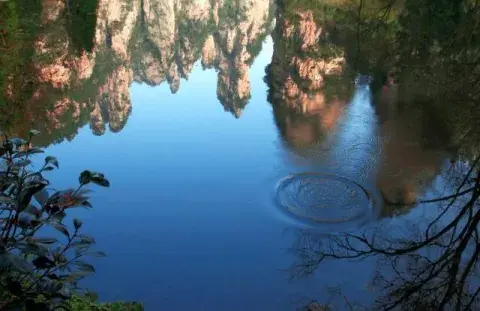
3- Day Popular Tour In Zhangjiajie
Day 1 Zhangjiajie National Forest Park
Full day trip to Zhangjiajie National Forest Park,take Bailong Elevator up Yuanjiajie,Bailong Elevator is the said to be the worlds tallest full-exposure outdoor lift,double-deck sightseeing elevator.Yuanjiajie is the inspiration for Hallelujah Mountain in AVATAR , Where you will also find the aptly named First Bridge under Heaven, Lover Peaks and so on.
...Read more
Day 1 Zhangjiajie National Forest Park
Full day trip to Zhangjiajie National Forest Park,take Bailong Elevator up Yuanjiajie,Bailong Elevator is the said to be the worlds tallest full-exposure outdoor lift,double-deck sightseeing elevator.Yuanjiajie is the inspiration for Hallelujah Mountain in AVATAR , Where you will also find the aptly named First Bridge under Heaven, Lover Peaks and so on.
Continuing to Tianzi Mountain, it takes you 40 minuts from Yuanjiajie to Tianzi Mountain by public bus, after arriving in Tianzi Mountain, you will have a bird’s-eye view of all the mountains and valleys of the Wuling Mountains. Visit Western Sea, Helong Park, Viewing Terrace etc.Take Tianzi cablecar down and check in hotel for a rest.
Accommodation: Wulingyuan Downtown
Day 2 Baofeng Lake & Glass Bridge
After breaking in the hotel, we head to Baofeng Lake where is the masterpiece of nature and human beings’wisdom. Baofeng Lake is pure just like a big crystal among Bao feng mountain Range.When you cruise, you can hear authentic song from Tujia minority people,you can fully understand the harmony and peace between human beings and nature.
Transfer to Zhangjiajie Grand Canyon, have a walking on the Glass Bridge, Glass Bridge is the highlight of Zhangjiajie Grand Canyon, located in Zhangjiajie Grand Canyon, Zhangjiajie Grand Canyon Glass Bridge is the highest and longest transparent glass bridge with a length 430 meters and a width 6 meters. It is 300 meters above the ground level and it can bear 800 persons standing on it at the same time. (need to book the tickets in advance)
Accommodation: Wulingyuan Downtown
Day 3 Tianmen Mountain
Full day to explore Tianmen Mountain,take the longest cablecar in the world up Tianmen Mountain,have a walk on the mountain plank road built along the face of cliffs. You will feel like walking in a fairy land when the mist is still heavy.The must-visit scenic spots are: Tianmen Cave, Glass Road, Tianme Temple.
See you off in the airport and looking forward to seeing you again in Zhangjiajie.
$200 Per Day
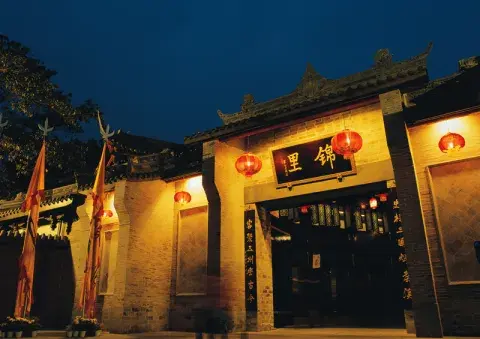
CHENGDU, A PANDA CITY, A GOURMET CITY, A TEA CITY, LOOKING FOWARD TO YOUR ARRIVAL
Chengdu, with an area of 12,400 square kilometers and a polulation of about 14,170,000 is not just the biggest provincial capital in west China, but also the only city in the history of China whose name has reminded the same for 3,000 years since its establishment. In Chinese, "Cheng" means "success or successful" and "Du" means "big city or capital". This "Successful City" boasts a long history. It is believed that everything about Chengdu has their origin from "Sanxingdui Ruins", from where you can deeply discover the history story of Chengdu.
...Read moreChengdu, with an area of 12,400 square kilometers and a polulation of about 14,170,000 is not just the biggest provincial capital in west China, but also the only city in the history of China whose name has reminded the same for 3,000 years since its establishment. In Chinese, "Cheng" means "success or successful" and "Du" means "big city or capital". This "Successful City" boasts a long history. It is believed that everything about Chengdu has their origin from "Sanxingdui Ruins", from where you can deeply discover the history story of Chengdu.
Giant pandas definitely are the best calling card and trademark of Chengdu. Every year, million of people are attracted by giant pandas to spend their holidays here, go sightseeing here, make investment here and even settle here permanently. The reason is that for people around the world, the charm of giant pandas cannot be replaced by anything else.
Various kinds of wonderful food shall be another reason attracting you to visit Chengdu. Of the four most famous schools of culinery art in China (Beijing cuisine, Sichuan cuisine, Jiangsu cuisine, Guangdong cuisine), Sichuan cuisine boasts tongue-numbing, hot, delicate and fresh taste and a variety of flavors, as "each dish has its unique taste and no two dishes have the same flavor." Such spcial flavors as fish-flavored, gongbao (with peanuts), and water-boiled are incomparable at home and abroad.
"The teahouses in Sichuan top the world, and those in Chengdu Top Sichuan." This widespread saying not only points out the status of Chengdu's teahouses but also the inseverable ties between Chengdu culture and tea. Like bars in Paris and cafes in Vienna, teahouse add a touch of refinement and leisureliness to Chengdu, an ancient yet modern metropolis. The practice of driking tea prevailed in Sichuan as earlt as prior to the Qin and Han Dynasties.
Wish you can have a nice trip in Chengdu. You will love it.
$238 Per Day
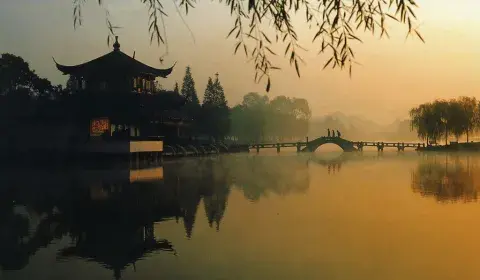
Private Hangzhou Day Trip from Shanghai by Bullet Train
Take in the highlights of beautiful Hangzhou on a private full-day tour from Shanghai. After hotel pickup and transfer by high-speed train to Hangzhou, your private guide takes you to see some city attractions, such as Faxi temple. Moreover, enjoy a tasty lunch at a local restaurant before heading to Longjing village. There, learn about the process of farming and producing dragonwell tea, the region’s most famous product. Finally, enjoy a scenic boat cruise on UNESCO World Heritage-listed West Lake before returning to Shanghai.
...Read more
Take in the highlights of beautiful Hangzhou on a private full-day tour from Shanghai. After hotel pickup and transfer by high-speed train to Hangzhou, your private guide takes you to see some city attractions, such as Faxi temple. Moreover, enjoy a tasty lunch at a local restaurant before heading to Longjing village. There, learn about the process of farming and producing dragonwell tea, the region’s most famous product. Finally, enjoy a scenic boat cruise on UNESCO World Heritage-listed West Lake before returning to Shanghai.
This is a private, full-day trip from Shanghai to Hangzhou. After you are picked up in your hotel lobby in the early morning, you will take a bullet train to Hangzhou. This is the fastest way to Hangzhou and you can experience train speeds of up to 300 kilometers per hour. Your tour begins at one of Hangzhou's signature sites, the West Lake. Enjoy a lake cruise to see the top ten West Lake scenic views. You will then be taken to experience the wonderful cuisine of Hangzhou at a local restaurant. After lunch, you will visit Faxi temple, a well-known Temple dating back to the Jin Dynasty. See its famous wooden Buddha. Here, you will see fewer tourists and more locals. Finally, enjoy a cup of green tea when you visit the famous Longjing village to see wild fields of Longjing tea bushes where the locals produce the world famous green tea- Longjing Tea. In the village, all locals are tea farmers and you will see the entire procedure of making the famous tea and will get the chance to taste the best quality emperor tea. Afterwards, you will take the bullet train back to Shanghai and you will be returned to your hotel.