expansion of Tiananmen
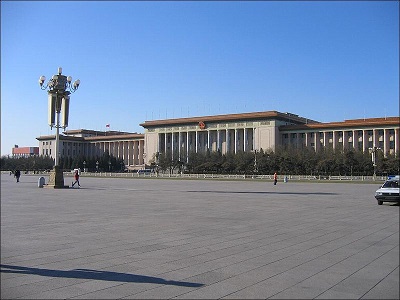
In 1954, the Gate of China was demolished, allowing for the enlargement of the square. In November 1958, a major expansion of Tiananmen Square started, which was completed after only 11 months, in August 1959. This followed the vision of Mao Zedong to make the square the largest and most spectacular in the world, and intended to hold over 500,000 people. In that process, a large number of residential buildings and other structures have been demolished. On its southern edge, the Monument to the People's Heroes has been erected. Concomitantly, as part of theTen Great Buildings constructed between 1958–59 to commemorate the ten-year anniversary of the People's Republic of China, the Great Hall of the People and the Revolutionary History Museum (now the National Museum of China) were erected on the western and eastern sides of the square.
The year after Mao's death in 1976, a mausoleum was built near the site of the former Gate of China, on the main north-south axis of the square. In connection with this project, the square was further increased in size to become fully rectangular and being able to accommodate 600,000 persons.
The urban context of the square was altered in the 1990s with the construction of National Grand Theatre in its vicinity and the expansion of the National Museum.